
Forbidden Hymns | John Francis O’Mara

Wesleyan Vile-tality

The following is description of the album Forbidden Hymns by John Francis O’Mara. It’s a featured Speakeasy selection, and you can preorder it here.

In his first full-length album in a decade, Irish-American singer-songwriter, John Francis O’Mara offers Forbidden Hymns, a collection of thirteen songs encompassing Alt-Country, Americana, Folk, and Rock, exploring social justice, theology, hope, and heartbreak due October 10, 2025. Produced by Ken Coomer (GRAMMY winning producer, and drummer for Wilco, Uncle Tupelo, Steve Earle) and delivering with O’Mara in the studio for the Forbidden Hymns band are guitarist Kenny Vaughan (Marty Stuart, Lucinda Williams), multi-instrumentalist Chris Scruggs, John Lancaster on keys, the late great bassist Dave Roe (Johnny Cash, John Mellencamp, Dwight Yoakam) and backing vocalist, Vinchelle Woods. John Carter Cash (son of June and Johnny) joins O’Mara with the co-written “No One Gets Out of Here Alive,” –  a deeply human and empathetic reminder to “love pure and strong while there’s time.” In addition to his career as a singer-songwriter, O’Mara is an ordained Epsicopalian priest and Liberation Theology scholar, (Princeton and General Seminaries) currently working toward his Doctorate in Theology with a Social Justice focus, from Howard University School of Divinity.

“But, why ‘Forbidden’? Look around! The social and political landscape has taken a very dark and ugly turn,” says O’Mara of his album. “Stateside, the innocent and most vulnerable are being kidnapped and denied basic civil and human rights, while literal genocide and starving children’s screams are live-streamed in real time. Elites and the billionaire class rule from their ill-gotten thrones. Truth, beauty, and conscience are being legislated into silence, banned, and literally ‘forbidden’. The soul of America, and the very soul of humanity, is at stake. Many among us are being made to fear raising our voices.”

“Many among us are not afraid! I’m here to tell you, not on my watch,” the songwriter continues. “This is the precise moment many of us have been preparing for, and I will not be silenced. We who believe that a world full of empathy, justice, dignity and love is possible, will not be silenced! This record will not be silenced! Time to turn up the volume! Time to sing Forbidden Hymns.”

Forbidden Hymns opens with dynamic, “Walking In Babylon,” where O’Mara’s dulcet and soul-stirring, tremolo-tinged vocals and Kenny Vaughan’s reverberating guitar hook, are on full display.  The track opens with an a cappella fragment of Bob Marley’s, “Rastaman Chant,” – drawn from The Book of Revelation. O’Mara uses the ‘Babylon’ metaphor as referring to an occupying imperial force, under which ‘we the people’ suffer in exile. “In the shadow where the empire spreads, me and my brothers are breakin’ bread’. In the framework of the song, that empire is marked by brutality, poverty, and racial violence, particularly against black and brown bodies. The songwriter outcries, “if you can’t breathe, I can’t breathe…another brother layin’ in a chalk outline.” The song’s questioning lament is punctuated with a plea: “Somebody tell me that hope’s not gone? Everybody’s sayin’ they’ve had enough! Let the people sing, ‘what about love?!’”

The guitar groove of “Lately Mary” invokes early Elvis Costello, and this very sticky hook, straight ahead folk, pop-rock song winks at Springsteen. True to the motifs of the album, O’Mara bellows out core human questions, yet relevant for our times. “How we  gonna fill these mouths to feed? Gonna take more than a rosary bead,” he sings. O’Mara critiques the nauseating trend of many religious people in the face of tragedy, poverty, and despair, which is to offer ‘thoughts and prayers,’ rather than substantial, empathetic help. In this song, we see “Mother Mary” as she was, in her plain humanity,  a homeless, refugee, single mother facing her reality where “it seems again there’s no room at the inn.” Note that the cover art centers an historically accurate, brown-skinned, Palestinian, Mary. Caution: song causes contagious call and response crowd participation.

The delicate and acoustic, “Jesus Walked on Water,” features O’Mara’s intricate finger-picking, and pedal steel, driving this newborn classic. A title that might suggest another Gospel song from O’Mara, but this ballad is a curve ball. The songwriter asks a close loved one, “do you still believe in me? All this time it’s taken me? All this time been breakin’ me?” The song is a tender, direct and open-chested surrender, and an admission that he is no miracle-worker, and no prophet, just a man with nothing to offer other than, “for you, I would die.” O’Mara whispers a universally human question, “can you see me?”

“Often, things fall apart,” says the songwriter, speaking from experience. “Dreams and hopes burn down. We are left with nothing but wreckage and ash.” “Ashes, Ashes,” is a subtle rocker, opening with a blues inspired guitar lick.  Originally a piano ballad, John Francis pulled this treasure of an alt-country/Americana, guitar driven rocker, out of the smoldering ashes with the help of his longtime collaborator, melodic guitar-slinger Kenny Vaughan (Lucinda Williams, Marty Stuart). The first single released from Forbidden Hymns, “Ashes, Ashes” is reminiscent of early Wilco, in no small part due to the drumming and production of Ken Corner (Wilco, Uncle Tupelo). Bassist for Johnny Cash and Dwight Yoakom, the late great Dave Roe (for whom the record is dedicated) rounds out the low end of this reflective rallying cry about the aching beauty found in ashes, and the dazzling light behind the curtain of a world of shadows.

A soft, waltzy, guitar ballad, “Maria, I Would Dance With You But My Hands Are On Fire,” finds John Francis examining a biblical theme from an unexpected angle.  Rolling Stone Magazine reviewed Dylan’s John Wesley Harding saying it was the “first Biblical Rock ’n’ Roll record.” Dylan might have been the first, but O’Mara’s is the newest. In fact, the chorus, which is also the title, is a direct quote from Bob Dylan. In the immediate aftermath of Dylan’s notorious Newport Folk Festival ‘going electric’, Maria Muldaur reached out to Dylan, and asked him to dance. Declining her invitation, Dylan gave her a very Dylanesque reply, “Maria, I would dance with you but my hands are on fire.” O’Mara borrowed this line of dialogue, reframed it, and breathed it into the refrain for this poetic piece. In the epic love ballad, O’Mara conjures pillars of fire in the wilderness, stages like cages, cosmic loneliness, and “canyons quaking like young lovers waking in the shelter of each other’s bodies.” Like Leonard Cohen before him, O’Mara consecrates religious and erotic thematic images, and lets them bleed into one narrative. The sacred and the sensual coexist when he serenades, “with God as my witness / the only prayer on my lips is / the poem of her sweet name.”

With its groovy guitar work punctuated by a tambourine playing double time, the earcandy folk-rock, poppy hooks and crooning of “Miracle,” invokes one of O’Mara’s heroes, the original Irish soul man, Van Morrison. Already in heavy rotation when leaked as a single in Switzerland, the songwriter sings, “she’s an angel in flight as she glides across the kitchen floor, into my arms…my, my, my!” There is supernatural magic in the romantic swooning of new love, “Miracle,” sings the praises of passionate bonds. O’Mara woos, “Woman, you’re the only woman in the world I’m wantin’.”

In a remote log cabin in the deep woods of central Tennessee, John Carter Cash (son of Johnny and June) and John Francis O’Mara were minding their own business one brisk morning, when a song came knocking. The two good friends stopped what they were doing, and let the new song in. The theme and feel of it brought John Carter back to some of his final conversations with his father. In that moment, JFO and JCC channeled a song that would soon tug on the heartstrings and water the eyes of audiences far and wide for many years to come. “No One Gets Out Of Here Alive,” is a hauntingly stark and vulnerable call to imbue each moment with the courage to love boldly, because life is fleeting. A deeply human and empathetic reminder to “love pure and strong while there’s time / keep the ends out for the ties that bind / let love be your only song, til the day that you die…,” lest we forget that our days are numbered. John Francis and John Carter performed ‘No Gets Out…’ for a live PBS taping, for 20,000+ fans in the Arkansas State arena, on the inaugural ‘Johnny Cash Music Festival’, also featuring George Jones, Kris Kristoffeson, and Rosanne Cash. The official DVD of the event was released globally, and featured this co-written masterpiece.

John Lancaster’s churchy Hammond organ and O’Mara’s solitary vocal open, “Mighty Power.” Written to be a gritty, spiritual marching order, to get to shoutin’ in both sanctuaries and saloons, and then spill out into the streets. “It is a declaration of spiritual empowerment. This is not a religious song, yet it rings out like a massive bell,” says the songwriter. Vinchelle Wood’s backing vocal delivery sweeps us right up into the rapture of a Black church revival. “There’s a mighty power inside of me, stronger than the wind and the waves / stronger than the sting of the grave / stronger than the poison I used to put in my veins…” O’Mara grabs us by the shoulders, shakes us, and invites us to encounter what some folks call a “higher power”, and then testify that it is ‘stronger than the Pharaoh and his armies / stronger than the twisted chains of slavery / stronger than the sorrow a-hangin’ on your city..”. Throughout, Chris Scruggs’ lap-steel talks in a heavenly tongue. Like a young Robert Plant, O’Mara shrieks, “Do you feel the power!!” asking the listener: “well, do you?”

O’Mara may be known for being “ripe with the kind of honest questions we used to rely on guys like Dylan and John Prine to raise” (Philadelphia Inquirer), but goddamn he can write a heartbreak song of love gone wrong. “Secrets Are Safe” is one of them, although the irony isn’t lost on us, because O’Mara is literally telling secrets. “Secrets Are Safe” hits like one of those songs that’s always been around, opening with the lines, “I guess I lost you somewhere between the moon and the falling snow / Or did I lose you out there, where my wheels were full of road?” O’Mara finds hidden treasure in the darkness of loss and pain, drags it out, and dusts it off to share it with the listener.

Forlorn and inconsolably sad songs are one of O’Mara’s signatures, though the  phenomenon of “schadenfreude” comes to mind when listening to the lyrics of, “Maybe.” The listener can’t help but to glean resonant satisfaction from closure after all that pain. “Shadows stretch across our bed / across the words that we had said / how long have you known that you don’t know?” O’Mara is true to form as an Irish songwriter, and as G.K. Chesterton said of the Irish, “…all their wars are merry, and all their songs are sad.” This is a high and lonesome breakup song.

Touching the hem of U2’s garment, O’Mara’s band here is pulsing and driving, dynamic in tension and release. The tag at the end is gutwrenching, “My mouth still remembers the shape of your name.” Joining “Secrets Are Safe” and “Maybe,” “Wild Bleeding Heart” is third in the line-up of the broken-hearted trilogy on Forbidden Hymns. Once again, O’Mara spins together mythological images and literary figures to populate his landscape of cosmic loneliness.

Punching in at track 12, O’Mara delivers a riveting folk-rock pop song, in the vein of U2 or early Coldplay with the penultimate, “Heart Be Still” – an unabashed, tell it like it is, love song. The songwriter asks, “Love, could it be, that for love, the whole world bends the knee? / So come here to me! Come here! Come here! Come here! Come here to me!” Anyone who has longed to be near someone – and that’s everyone – knows this desire. “Gotta let your heart be still…next to mine.”

Closing the LP is the soaring, “Let it Be So,” which shines when the guitar solo nods at George Harrison, and the backbeat hits like Ringo. The song is the proclamation that another world is possible; a better world. If we are waiting for an anthem of change with a chorus to be echoed by everyone who still believes in justice, peace, dignity, and equality for all, our wait is over. John Francis O’Mara delivers that anthem, with the perfect ending to an exquisitely realized album:  “Somebody say ‘Amen!”

About the Artist
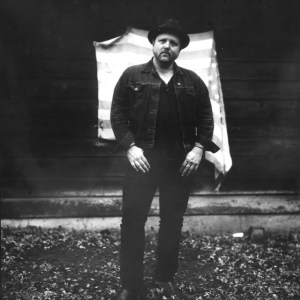
John Francis O’MaraJohn Francis O’Mara is an Episcopalian priest, theological scholar, activist, and acclaimed songwriter whose work bridges the sacred and the profane. With advanced degrees from Princeton Theological Seminary (M.Div) and General Theological Seminary (STM), and now pursuing a doctorate in Theology and Social Justice at Howard University, O’Mara roots his ministry in Liberation Theology and a tapestry of faith traditions including Celtic Christianity, Black Liberation Churches, and Native American spirituality. Hailed by Sojourners as “haunting as Springsteen,” dubbed by Wild Goose Festival as “one of the most prophetic voices of his generation,” and praised by Shane Claiborne as a “poet and instigator of movements,” O’Mara has performed everywhere from cathedrals to prisons, from UN gatherings to city streets, and alongside artists such as Sinead O’Connor, Mavis Staples, and Kris Kristofferson. Whether leading marches, teaching youth, or offering workshops and concerts worldwide, O’Mara shares stories and songs with theological depth, hard-earned experience, and transformative hope.

John Francis O’Mara’s Website

Forbidden Hymns Website


Troubling the Waters: Navigating Apocalyptic Currents with Jim Perkinson

Have you ever had a conversation that you wished you could immediately replay after it finished? I did, after this recording withI James W. Perkinson—theologian, poet, and street activist—exploring what it means to practice political spirituality in an age of ecological collapse. From the embattled streets of Detroit to the ancient wells of biblical memory, Perkinson weaves together insights from Black urban culture, Filipino wisdom, and indigenous teachings to offer a fiercely grounded hope for our unraveling times.

In our riveting back-and-forth covering ground from his book Political Spirituality for a Century of Water Wars The Angel of the Jordan Meets the Trickster of Detroit and beyond, Perkinson shares his remarkable journey from evangelical charismatic to street theologian, shaped by decades of learning from low-income African American communities in Detroit’s inner city, his marriage to a Filipina scholar, and deepening relationships with indigenous teachers. Through his involvement in Detroit’s water wars—where emergency managers imposed by the state shut off water to thousands of predominantly Black households—Perkinson discovered water not merely as a resource, but as ancestor, portal, and rebel.

Our conversation explores several key themes:

  • The Bible as “a book of weather” – Perkinson reveals Jesus as a “water warrior” and uncovers indigenous wisdom buried beneath layers of state-sponsored text
  • Ancient resistance to empire – How the Hebrew scriptures preserve a minority report of peoples who lived symbiotically with the land before extractive city-states
  • Ecological pedagogy in scripture – From the Exodus narrative as de-imperializing journey to the Sabbath-Jubilee tradition as teaching sustainable relationship with land
  • The overwhelming scale of crisis – Grappling with the 60-145 million indigenous people killed in the Americas and our daily extinction of 100-200 species without falling into justification or collapse
  • “Walking on two legs” – Perkinson’s practice of responding to immediate emergencies while asking deeper questions about ultimate aims
  • Animist re-enchantment as resistance – How developing personal relationships with the more-than-human world becomes both spiritual practice and political action

Throughout our dialogue, Perkinson challenges the assumption that technological progress equals moral progress, arguing instead that we need to learn from cultures with track records of living sustainably in place for generations. His work in Detroit includes everything from delivering water to families facing shutoffs to developing relationships with red cardinals outside his window—practices that have taught him to listen to the more-than-human world in revolutionary ways.

The episode concludes with Perkinson’s vision for urban dwellers seeking to reconnect with wild nature and ancient wisdom traditions. His work challenges listeners to become “seeds”—people worth descending from—who plant ourselves in the soil of this moment for futures we may never see, but nonetheless can prepare for.

Watch here!

To find more about James Perkinson’s poetry, insights, and work in the world, please check out his online home.

Contemplation, Community, and Courageous Compassion: A Trinity Sunday Manifesto

One of the most seminal depictions of interbeing, Rublev’s icon of the Trinity (c. 15th century) depicts three angels at Abraham and Sarah’s table – an image of divine fellowship. Tradition holds that there was space at the front of the table, sometimes depicted with a mirror, inviting us into the circle of communion. This is Trinity – After Rublev, Southwark, by contemporary artist Meg Wroe.

Trinity Sunday is the stealth holiday of the church year – often overlooked, tucked quietly between the fire of Pentecost and the long stretch of Ordinary Time. After the combustive tongues of flame and before “normal life” resumes, Trinity Sunday can feel like an abstract afterthought. Many faith communities admit they don’t know how to speak of, nevermind meaningfully receive, the Triune life of God. As a doctrine, the “Three-in-One” seems elusive, a square monotheistic God attempting to fit in a perichoretic circular hole! Often reduced to a kind of theological math problem, Immanuel Kant once quipped that nothing practical comes from belief in the Trinity; in our modern age of disenchantment this feast has indeed fallen onto hard times. Yet precisely here – in this almost-forgotten lectionary season pause – lies an invitation. Nestled after Pentecost’s blaze, Trinity Sunday offers a sacred breather, a chance to absorb what it means that God is not a distant monarch but a divine circle of Love. 

Could this gentle feast actually set an essential pace for the rest of the year ahead?

In our culture, summers often kick off a headlong rush – work projects, family trips, society’s frenetic rhythms. Add to this increasing societal disintegration in the form of essential social safety nets being eroded, masked ICE agents disappearing our neighbors off the streets, and rising authoritarianism. But the liturgical calendar gifts us Trinity Sunday as a moment of reorientation in the midst of chaos. It whispers center down; sit at the table of Divine Hospitality. As the apostle Paul blessed the rambunctious, gifted, fraught first-century assembly in Corinth:

May the grace of the Lord Jesus Christ, the love of God and the fellowship of the Holy Spirit be with you all.
(2 Corinthians 13:14)

Can we receive this grace, love, and fellowship here and now, in the midst of what feels like the erosion of hospitality and democracy’s demise? 

Far from being impractical, Trinity’s very mystery can refresh our burdened souls and realign our timetables. This day invites us to step back from the cacophony and recover a trinitarian symphony – a balance of contemplation, relationship, and action – to carry us through the year. Like a musical time signature, the Trinity’s threefold beat can keep us dancing in sync with God’s generous love through every season of life.

Let’s explore connecting with Trinity on three intertwining levels – Esoteric, Mesoteric, and Exoteric – from the innermost contemplative encounter to our shared relationships, to outward arcs of justice and healing. At each level, God’s Triune Presence offers a way to pace ourselves and participate in a momentum of love, justice, and belonging.

Esoteric – The Turning Within

On an esoteric level – the level of inner experience and contemplation – the Trinity isn’t a puzzle to be solved but a relationship to be savored. The early Church mystics dared to call God’s Triune life a perichoresis, a circle dance of mutual indwelling. In this view, the Father, Son, and Holy Spirit are engaged in an eternal embrace – a circular celebration of self-giving love, with room at the table for the whole world. In fact, the famous icon by Andrei Rublev (inspired by the three angels who visited Abraham and Sarah) features an open space at the front. Some speculate that a reflective surface was once there, a mirror – hinting that you, the observer, are invited into the scene. At the heart of reality, then, is not solitary, uni-directional power but a Communion. God is an eternal fellowship – the Holy One presenced in the dynamic and loving action of Three. And astonishingly, that fellowship welcomes us in.

As Fr. Richard Rohr and I affirm in The Divine Dance, the Trinity is not a closed circle; we were “always made for this.” Jesus emerges from the Trinity’s eternal fullness to show us that we each have a place at God’s table – “a participant at this banquet and a partner in God’s eternal dance of love and communion.” Salvation, in this view, isn’t a ticket to a far-off heaven but an invitation into intimacy with God, starting now. The apostle Paul hints at this lived experience when he writes that through Jesus “we have peace with God” and “the love of God has been poured out into our hearts through the Holy Spirit.” (Roman 5:1; In other words, the Trinity’s love is something we feel in our depths – a peace and warmth moving through us from Source to Son to Spirit.

Drawing from early 20th century Armenian teacher G.I. Gurdjieff, contemplative teachers like Cynthia Bourgeault offer subtle perspective about how Trinity is woven into the fabric of reality – a kind of “cosmic law and creative template” for how life generates and evolves. She speaks of the Law of Three: whenever there is dynamism and change, it often unfolds through a dance of three forces – an affirming force, a resisting force, and a reconciling force. The Trinity, she notes, embodies this generative principle: it’s the “inherent capacity of threefoldness to break symmetry and let the differences interact,” yielding something new. In plain terms, God’s One-ness is not static or stingy – it’s creative, playful, even. Proverbs 8 paints Wisdom (whom many see as a feminine image of the Logos or Spirit) as God’s partner before and during creation: “When God marked out the vault of the sky… then I was beside God as a master worker, delighting day by day, playing before him… finding delight in the human race.” At the core of the universe, there is a holy playfulness – a Joy that flows between Creator, Redeemer, and Sustainer, spilling out into creation.

What would it mean to trust that we are already included in that flow of love? For me, it begins in contemplative prayer – sitting still, breathing slowly, maybe repeating a sacred word – essentially hanging out in the Love between Father, Son, and Spirit. I sometimes imagine myself at at that table with Abraham and Sarah, the Trinity gazing at me with infinite acceptance. In those moments of quiet, I touch what theologian James B. Torrance called “the divine fellowship of love” – the original community that birthed our souls. This esoteric encounter is not about intellectual understanding; it’s about intimacy. It is where Jesus’ promise becomes real: “When the Spirit of truth comes, he will guide you into all truth… [Spirit] will take what is mine and declare it to you. All that the Father has is mine; therefore I said that he will take what is mine and declare it to you.” In other words, the Spirit is whispering to our spirit: “You are included. All that love and union I share with the Father – I share with you.”

Allowing ourselves to feast on the Holy Trinity can be profoundly healing. It puts our busy minds on pause and lets our hearts soak in Relationship itself. This is the pacing point Trinity Sunday offers: before rushing back into to-do lists and social struggles, drink from the divine well. Let the unforced rhythm of Father, Son, and Spirit set the tempo of your life. In silence, in centering prayer, in a walk in nature, we practice being held in the Trinity’s embrace. This inner grounding then gives rise to the next layer – how we treat others.

Mesoteric – Trinity in Relationship (Interbeing Among Us)

If the esoteric is about the soul’s direct communion with God, the mesoteric is about the spaces between – the relational field where the Trinity’s pattern can echo in our human communities. The word “mesoteric” literally means “middle” or “in between,” and it points to the shared life among people, plants, animals, ecosystems – the social-spiritual reality we create together. Here the Trinity moves from prayer closet to dinner table, from meditation cushion to meeting circle. What does it mean to say not only that God is a fellowship, but that we are invited to mirror that fellowship in our relationships?

It means reimagining community as sacred. Jesus prayed that all his followers “may be one, Father, just as you are in me and I am in you” (see John 17) – an audacious plea for human unity reflecting divine unity. Trinity isn’t just a doctrine about God; it’s an embodied practice of love, listening, and mutual presence. We glimpse it whenever we experience deep kinship or genuine dialogue. As I said in another Trinity Sunday reflection, “as I’ve sat at God’s table more and more, the fellowship of the Trinity has taken away my power to choose who are the good folks and who are bad ones; I no longer have the freedom to choose who I show respect to…” Once we’ve been loved without measure by God, we lose our taste for the bitter binaries of worthy/unworthy, insider/outsider. The Trinity rearranges our social prejudices. We start to see everyone – everyone – as bearing the divine image, welcomed into the circle.

Author and activist Sara Miles learned this through visceral experience. A San Francisco cook-turned-minister, she wandered into a church one day, ate a piece of communion bread, and it upended her life. In her memoir Take This Bread, she describes hearing a Voice that “advocates for the least qualified, least official, least likely; that upsets the established order and makes a joke of certainty. It proclaims against reason that the hungry will be fed, that those cast down will be raised up, and that all things, including my own failures, are being made new. It offers food without exception to the worthy and unworthy… and then commands everyone to do the same. It doesn’t promise to solve or erase suffering but to transform it, pledging that by loving one another, even through pain, we will find more life. And it insists that by opening ourselves to strangers… we will see more and more of the holy, since, without exception, all people are one body: God’s.”

What is this other than a description of trinitarian life bursting forth in the mess of human relationships? Father, Son, and Spirit live in radical equality and unity, and here they are nudging Sara (and us) to practice the same – to open our tables, hearts, and lives to “the least likely,” to welcome the stranger as our own. The Trinity’s inter-relational love “cracks our convictions open” and upsets our neat categories. Suddenly, we have family everywhere. We find the face of Christ in those we thought we had nothing in common with. We start to realize that relationship itself is holy ground.

In the pages of The Divine Dance, Richard Rohr and I experimented with what we call “we-space” practices – exercises that cultivate authentic presence and connection among people. In fact, some years back we co-created interpersonal contemplative games (yes, games!) to help groups tangibly experience “interbeing.” One simple but profound practice we use is called “Noticing.” It’s essentially mindful dialogue in pairs. One person begins by stating, “Sitting here with you, I notice…,” sharing whatever is arising – a sensation, an emotion, a thought. The partner listens and then responds, “Hearing that, I notice…,” and so on. Back and forth they go, trading awareness, without any crosstalk or analysis. It’s amazing what happens: the room’s buzz dies down, a hush of presence falls, and people who were strangers five minutes ago suddenly find themselves deeply connected – breathing in sync, eyes often moist with a tenderness that wasn’t there before. This simple exercise in shared awareness creates a field of presence. In the words of one participant, “I felt like I was standing on holy ground with my partner – like God was somehow in the space between us.” I get chills even recalling it, because I believe that’s exactly right: God is in the space between us. The Trinity is that space-between, the Love that flows back and forth. When we pay attention together – when I truly see you and you truly see me – the Spirit of Truth moves among us, knitting us into one.

This mesoteric layer of Trinity calls us to practice fellowship as sacrament. Table meals, support groups, friendship circles, neighborhood potlucks, honest family conversations – these become little icons of the divine fellowship. Even (or especially) when awkward or messy! Recall how Abraham and Sarah hurried to host the three mysterious visitors in Genesis 18, setting a meal before them; the icon of those three around a table has become the symbol of Trinitarian welcome. Robert Farrar Capon wryly pointed out that Abraham’s hospitality was far from perfect (Sarah literally laughed in God’s face in skepticism!), yet God still blessed the encounter. In Capon’s words, “The City of God began with a meal that didn’t go right; your spilled milk isn’t going to hold up the building of it too much.” In other words, fear not the fumbles. When we gather – even clumsily – in the Spirit of love, the Trinity is eager to work through our community. The ordinary becomes holy. By simply showing up for one another, we participate in the divine life that holds everything together.

So if you want a practice for Trinity Sunday and beyond: invite a few people over for dinner, or coffee, or a walk. Sit in a circle and share from the heart. Try the “Noticing” practice or just let each person speak without interruption. Embrace silence together – perhaps open with a minute of quiet prayer, acknowledging God’s presence. Read a short scripture (maybe Romans 5:1-5 or John 16:12-15 from this week’s Lectionary readings) and let it spark dialogue. Bless one another. These small acts attune us to the Divine Presence between us. Life in the Trinity is meant to be shared – “where two or three are gathered in my name, I am there among them,” Jesus promised. In a world of social isolation and fragmentation, choosing to cultivate communion – real, tangible, face-to-face love – is downright revolutionary. It is also the training ground for the next step: allowing Trinity love to flow out beyond our immediate circles into the wider world in acts of solidarity and justice.

Exoteric – Love and Solidarity in Action


If contemplation is the inhale and community is the heart, then compassionate action is the exhale of our trinitarian life. The exoteric layer is outward-facing: the way we embody God’s love in public, in the structures of society and the struggles of our neighbors. As Cornell West famously said,
“Justice is what love looks like in public.” And public love – solidarity – is what the Trinity looks like when turned outward toward creation. The same flow of love we touched in prayer and practiced in community now propels us to stand with the suffering, speak truth to power, and co-create a more just world.

We live in a time of immense upheaval and need; it’s impossible to contemplate the Trinity as an eternal dance of love without feeling the dissonance of human cruelty and pain. In fact, ignoring that pain would mean we haven’t truly absorbed the lesson of Trinity at all, because the Trinity is not a closed circle of self-concern – God is always pouring Godself out. As theologians say, the Trinity is kenotic (self-emptying) love. God so loved the world that Christ entered our history, and the Spirit groans with us even now. Thus, our participation in the Trinity must lead us to the wounded places.

What does it mean to live the Trinity in the headlines of today? It means we refuse to remain aloof from our siblings’ pain. It means we seek the image of the Triune God even in those our society treats as expendable. Consider Gaza, for instance. This very week, even as some of us sing “Holy, Holy, Holy,” families in Gaza are grieving lost children and shattered homes. The asymmetry of their suffering cries out. How can we honor the Trinity – the God who is relationship and community – and not lament the broken relationships and community in the Holy Land? The Triune God who created all people in the divine image weeps over each life lost, especially on all sides of Abraham’s complicated family tree. To worship this God is to let our hearts be broken with the things that break God’s heart. It also means imagining and working for alternatives: ceasefires, dialogues, justice, and healing – however impossible they seem – because our prophetic imagination refuses to accept that violence and division are the final word.

Or take the plight of immigrant communities in Los Angeles and other U.S. cities. Lately, there have been waves of ICE raids, terrifying predawn operations that round up undocumented neighbors like criminals. Parents drop their kids at school not knowing if a deportation sweep will leave those children orphaned by afternoon. The Trinity teaches us that persons belong with persons – that separation is anathema to God. How then can we not stand up for families being torn apart? To live the Trinity exoterically might mean volunteering with an immigrants’ rights group, accompanying someone to a court hearing, or as simple an act as befriending a newcomer who faces loneliness and fear. It means saying, in effect, “Your family is my family, your suffering is not yours alone – we bear it together.” That is solidarity – love with its work boots on. It’s the outward expression of the inward grace we’ve received.

Even in the natural world, we see groaning and need. The climate crisis threatens the magnificent “very good” creation that the Triune God declared in the beginning. Record heat waves, wildfires, and storms are battering the earth. Just last fall in my own city of Asheville, we experienced Hurricane Helene, a storm of almost biblical proportions. In late September it stalled over the Appalachians and dumped record-breaking rains, causing devastating floods and mudslides across western North Carolina. It was the deadliest, costliest natural disaster in our state’s history. Entire communities were cut off, without power or clean water for weeks. Yet in that valley of shadows, I also witnessed something holy: neighbors becoming the answer to each other’s prayers. While FEMA and Red Cross did their part, much of the real recovery was grassroots. Local mutual aid groups and churches popped up as relief hubs.

One example is BeLoved Asheville, a scrappy community nonprofit long dedicated to the under-served. In Helene’s aftermath, BeLoved volunteers went street by street with food, blankets, potable water, and medical care for those who couldn’t access a shelter. National media cameras eventually moved on, but the local work continues: rebuilding homes, providing counseling for trauma, advocating for those who lost everything. Six months later, when network TV did revisit, they spotlighted how groups like BeLoved were “stepping up to help those in need”, and how people across the country could contribute. It was a striking image of community organizing as an expression of love. I recall one morning standing in a distribution center – it was actually a repurposed church fellowship hall – watching volunteers cook hot meals while others sorted donated diapers and toiletries. A diverse bunch – college students, off-duty firefighters, trans anarchist organizers, old hippie farmers – all working side by side, laughing and crying and passing out supplies. It hit me: This is church. This is Trinity-in-action. It’s messy, but it’s incarnation – love taking on flesh in the here and now.

In moments like that, I hear the resonance of Walter Brueggemann’s words and legacy. Walter – a towering Old Testament scholar and humble servant of God’s Word – departed this life recently, leaving us a treasury of insight. One of his most famous ideas is the “prophetic imagination”, which he defined as the calling to “nurture, nourish, and evoke a consciousness and perception alternative to the… dominant culture around us.” We honor Walter’s memory by refusing to accept the cynicism and despair of our age. He reminded us that every empire wants us either numb or hopeless – because if we can’t imagine a different world, we’ll never work for it. But the prophets – and I’d add, the trinitarian mystics and saints – dare to imagine God’s “reign” on earth as it is in heaven. They hold onto God’s dream of shalom: swords fashioned into plowshares, deserts blooming, exiles coming home, tables big enough for everyone. Brueggemann also spoke of preaching as “dangerous work” because truly prophetic preaching demands an “epistemological break” from the lies of the status quo. It’s emancipatory in that it frees our minds from what we thought was inevitable (say, endless war or poverty) and proclaims, “Another way is possible!” I can’t think of a more trinitarian task. Father, Son, and Spirit – that divine community of hope – is always inviting us toward New Creation, toward liberation. When we join in acts of justice, when we protect the vulnerable, when we speak truth in love to those in power, we are, in effect, preaching with our lives. We become the continuation of that prophetic tradition Walter championed – a people who do not flinch from the world’s pain, yet also refuse to accept that pain as permanent. We become sacraments of the Trinity’s restorative love in the world. Walter often signed off his emails and lectures with an exhortation to “Keep imagining!” – and that is exactly what we must do, in prayerful action, as we face today’s crises.

It strikes me that Trinity Sunday 2025 (Year C in the lectionary) gave us Romans 5 as a reading, and in it Paul says, “we even boast in our afflictions, knowing that affliction produces endurance… and hope does not disappoint us.” How audacious is that? Boasting in affliction! It’s not a masochistic thing – it’s that Way-faring hope knows suffering isn’t the end of the story. Why? Paul continues, “because God’s love has been poured into our hearts through the Holy Spirit.” The Trinity’s love on the inside empowers us to face the suffering on the outside without losing hope. That hope is not wishful thinking; it’s the prophetic imagination at work. It allows us to persevere in loving action, to “show up” again and again at the world’s broken places – with endurance that leads to character, Paul says, and a character that leads to hope. We’ve seen glimpses of that hope: in Gaza ceasefire movements, in immigrant youth (DREAMers) who refuse to stop dreaming, in climate activists planting trees in flooded neighborhoods and in the creative, urgent street theatre of Extinction Rebellion. We see it whenever communities rebuild after tragedy, refusing to abandon one another. This is the Trinity’s footprint in our world. It looks like solidarity and mutual aid. It looks like prophetic protest and courageous peacemaking. It looks like ordinary people doing outrageously loving things, because they know in their bones that all people are one body: God’s, and we truly belong to each other.

So, dear ones, as we mark Trinity Sunday, let’s take it personally and politically. Let’s allow this oft-neglected feast to become a way of life for the months ahead. 

Take a deep breath of the Spirit – drink in the reality that at the center of the universe is a Relationship that holds you. 

Let that divine Threefold Love calm your anxieties and heal some wounded places in your soul. 

Then look around at the people in your life – family, friends, coworkers, even the difficult ones – and remember, you’re all invited to the same table. 

Practice a little extra compassion, a little extra patience, maybe even risk a new vulnerability in your connections. The mesoteric Trinitarian path might be as simple as asking someone, “How are you really doing?” and being fully present to their answer. And finally, open your eyes to the wider world. Is there a local struggle or a global crisis that tugs at your heart? Don’t push it aside as “too big” – that tug may be the Spirit’s prompting. Pray about it, yes, but also consider one concrete action. Maybe it’s donating or volunteering, maybe it’s writing a letter to a lawmaker, maybe it’s joining a peaceful vigil or simply educating yourself and others. Whatever you do, know that you never do it alone. The Trinity goes with you – the very Life of God is energizing your humble actions. The Perichoretic ‘Circle Dance’ of all-encompassing Love is already out there on the streets, in the shelters, at the borders, in the hospitals, working anonymously through millions of unsung heroes. Go join them. Join us! This is the opti-mystic way – optimistic mysticism that prays as if everything depends on God and works as if everything depends on us, all the while knowing it’s Grace from start to finish.

Trinity Sunday may not come with catchy customs or colored lights, but it offers something far better: a recalibration of our lives to the heartbeat of God’s love. It’s a yearly reminder – an invitation – to dance. 

To dance inwardly with the Divine, to dance together with our neighbors, and to dance into the world’s pain with hope and courage. As we enter the long green season of Ordinary Time, may we not lapse into ordinary complacency. Instead, empowered by the extraordinary love at the center of the Trinity, may we dream and do extraordinary things. In memory of Walter Brueggemann, let’s nurture that alternative consciousness – that prophetic, trinitarian imagination – and dare to believe that another world is possible. Because the One who is Three is at work even now, “making all things new.” And we – all of us – have a standing invitation to take our place at the table of this transforming, triune love.

So come, take a seat. Taste and see. The dance is just beginning, and there’s space for you.

Grace and peace in the name of the Father, Son, and Holy Spirit.

Amen.

Dancing Out of Our Graves: Easter for the World Becoming

Branches Spread Along the Path

‘The Harrowing of Hell‘ by Evan Dahm


I took a stroll around Beaver Lake at dusk last night, her sylvan orbit still strewn with remnants of
Hurricane Helene’s signature debris. It’s been barely six months since the storm’s path of torrential devastation cut through my mountain home. The beauty of a temperate Asheville spring twilight contrasted bitterly with the pollen like cement in my eyes, the tree limbs interrupting my steps; I felt this atmosphere in my chest as a kind of Gethsemane anxiety — a heavy grief at what still lay dying around us while new life attempts to break through.

How do we harness the energies of everyday resurrection in our lives today?

It begins again in the dark.
A tomb. A tear. A trembling.
A trap we’ve faced before.

Each Holy Week — that inflection point where Jesus’ message of evolutionary, revolutionary Love clashes decisively with the totalizing forces of death-dealing colonization — we’re invited to trade the easier nostalgia for a steeper, braver path of initiation. 

This fast-turned-feast, observed in one form or fashion by a third of the planet’s population, is often misunderstood: Lent isn’t about rote reenactment, but instead reentry into this archetypal story. To once again taste and see the Mystery that undoes history.

We stand again on the brink of empire and wonder, of state-sponsored violence and strange quickening.

Days like Maundy Thursday, Good Friday, and Holy Saturday echo our ache—political venom, ecological collapse, and spiritual drift, sounding a minor chord amid the reflexive-reenactment rush-to-Sunday alleluias.

Holy Week doesn’t arrive soft; it’s a blade. The unlikely Messiah from Nazereth didn’t die for milquetoast moralism, and certainly not for the inverted so-called ‘values’ of blood and soil. His life — a blaze of love, justice, and defiance — ignited the monoculture’s fear, and so the monoculture snuffed it out.

At least, they thought they did.

The first Pascha — observed in English and German languages as Easter — tremorred beneath the boot of Rome’s attempts at control; today’s alliances of power and profit are no less formidable.

But in this intimate dusk, a strange invitation highlights almost incandescently on our horizon: that even now, something new can be co-created with the animate forces that intend our good. From Appalachia to Golgotha, I’m reminded that we’re invited to mountains of mystery — to die before we die and thus awaken to a new life, even as the world-as-we’ve-known-it falls apart.

We’re invited to credible hope – hope with dirt under its nails, born from the compost of crisis but reaching toward resurrection.

The Law of Three: A Hidden Trinity of Transformation

The drama unfolds as it always has:
A Teacher. A Table. A Towel.
A betrayal, a beating, a burial.

Georgij Ivanovičh Gurdjieff

The enigmatic mystic G.I. Gurdjieff’s lived in a century just before ours, unfolding across earlier fault lines of empire and revolution—from his family’s flight from Ottoman persecution to near-fatal gunshot wounds during geopolitical uprisings to escape from the Russian Civil War, the ravages of the Great War to survival in Nazi-occupied Paris. War was both outer ordeal and inner fire, shaping his mission to awaken humanity from the mass hypnosis that makes violence possible.

In the midst of his lifelong quest to find value amid life’s suffering, Gurdjieff saw something important about Jesus:

Real love is the basis of all, the foundations, the Source. The religions have perverted and deformed love. It was by love that Jesus performed miracles. Real love joined with magnetism. All accumulated vibrations create a current. This current brings the force of love. Real love is a cosmic force which goes through us. If we crystallize it, it becomes a power — the greatest power in the world. (from Meetings at 6 rue des Colonels-Renard, Paris (1941-46), page 96)

How do we make room to encouter this real love, and the new life it generates? Life’s genuine resurrections — new arisings — often come from threes. At least, that’s one of the central ideas of Gurdjieff’s approach to inner work and outer impact.

Growing up with an Ashokh (storyteller) father at a geo-spiritual crossroads and learning in childhood and young adulthood from Orthodox monastics, Sufi shaykhs, and Yogic masters of bodily rigors, Gurdjieff’s Fourth Way seeks to harmonize mind, heart, and body to recieve and generate a coherent everyday vitality on a planet where conflict isn’t a bug — it’s a feature, whose unwieldy energies belong in the grand scheme of things, available for the curation of evolutionary, revolutionary momentum for our common flourishing.

Gurdjieff proposes that every creation, every new arising, results from The Law of Three (which he tongue-twistingly names Triamazikamno): the interplay of three forces: Holy-Affirming, Holy-Denying, and Holy-Reconciling​.

I appreciate Episcopal priest and Fourth Way student Cynthia Bourgeault’s summary of this Law:

  1.  In every new arising there are three forces involved: affirming, denying, and reconciling.
  2. The interweaving of the three produces a fourth in a new dimension.
  3. Affirming, denying, and reconciling are not fixed points or permanent essence attributes, but can and do shift and must be discerned situationally.
  4. Solutions to impasses or sticking points generally come by learning how to spot and mediate third force, which is present in every situation but generally hidden.

The poles and roles can change positions, depending on who initiates any given dance under consideration, and who responds. These aren’t “good vs. bad” forces, but a dynamic trinity. There is the affirming force – the yes, the creative impulse, the initiating energy. There is the denying force – the resistance, the no, the force of constraint or inertia. 

These forces’ moral directionality isn’t inherently indicated by the seeming positivity or negativity of the terms themselves. Affirming can be tragic (like our neighbors being disappeared from our streets); Denying can be noble (like spiritual communities choosing to be literal sanctuaries for the dispossessed, with diminishing assurance as to their own safety). But what makes this more than a deadlocked Hegalian dialectic is the presence of a neutralizing or reconciling force — the mysterious third element that bridges and harmonizes the other two into a genuinely new result. 

This Law of Three is a (if you’ll pardon the expression) Divine Dance at the heart of reality — and it resonates with the venerable (if strange) Christian intuition of God as Three-in-One, the Blessed Trinity. 

As Cynthia Bourgeault notes in The Holy Trinity and the Law of Three, if we mistake affirming for “positive good” and denying for “obstacle to be eliminated,” we lose the transformative leverage of the third force​.

In truth, all three are holy. The triadic unfolding is not a standoff between Light and Dark with God as referee; it’s a collaboration. Even the denying force (the crisis, the betrayal, the “No” we encounter) has a sacred role – it provides the tension and grounded reality that the affirming force needs in order to produce something new.

I think of this process as gritty nonduality — the transmoral exploration of precisely how everything belongs. Without resistance, no new muscle is grown; without the Cross, no Resurrection occurs.

The lead-up to Pascha or Easter can itself be read as a drama of the Law of Three:

On Good Friday, Divine love (Holy-Affirming) met human violence (Holy-Denying) — and for a moment it seemed like denial won as Jesus was lynched by a coalition of self-protecting religion and power-obsessed state control.

But in the tomb, unseen, a Third Force was at work. Call it Holy-Reconciling or as we named her in many a Pentecostal prayer meeting growing up, the Holy Ghost and Fire. 

On Easter, Holy Reconciling reveals itself as the emergence of something utterly new: 

Life reborn, an emergence beyond mere resuscitation. The polarities of life and death are transcended into a Third Phenomenon: Resurrection. The reconciling plane offers itself not only as a playing field for Divine action, but as an essential ingredient in the process​. 

Today’s crises of planet and people can be seen through this same trinocular vision: 

Totalitarianism and ecological collapse may appear as negations (Second Force, or Denying) to everything we cherish — justice, peace, and the living biosphere herself. And it’s tempting to cast these negations as absolute evils to be vanquished. But what if we viewed them as the partner moving toward us, whom we must push against to take the next dance step?

Magnetized Love: New Arisings

Two forces wrestle.
The Third arrives unbidden.
What draws us together cannot be contained.
The octave completes itself in song.

Our First (or Affirming) Force could be our love for wise governance, for the Earth, for one another — an active force for good. The turmoil and backlash are the Denying Force, provoking us at every turn with their wicked dance-floor moves. If we stop with just these two, we remain locked in endless opposition, ping-ponging between hope and despair. But the Law of Three says: Look for the Third Force. Is there a reconciling energy emerging from this collision that will sweep even the most recalcitrant foes of embodied love off their feet? 

Perhaps it is us – the awakening of a new level of consciousness, a creative response that wasn’t possible before. 

As Richard Rohr reminds us, “The whole of creation—not just Jesus—is the beloved community, the partner in the divine dance.” 

That means even these bleak moments of history belong in time’s repertoire; they can serve in the larger story being told. Our present moment’s Third Force might be a widespread realization of our interconnectivity, a grassroots groundswell of compassion, an inner alchemizing of just enough people on the planet – something surprising that transforms the energy of conflict into the reconciling energy of resurrection. As Richard and I wrote in The Divine Dance: The Trinity and Your Transformation:

The greatest dis-ease facing humanity right now is our profound and painful sense of disconnection—disconnection from God, certainly, but also from ourselves (our bodies and True Selves), from each other, and from creation. We see this in political corruption, ecological devastation, war and violence, fearing and even hating each other because of our differences, whether race, religion, or sexual orientation. Our world needs to be reminded of our interdependence and our inherent union with what is.

[We] believe the Trinity can teach us how to live in creative collaboration, valuing and honoring our differences while also serving each other with humility and compassion.

Easter can, if we’re receptive to its graces, prepare us for new arising – the fruit of love and sacrifice reconciled. Where we allow the full weight of Affirming and Denying forces to be felt in our bodies, making room for something finer. One way Gurdjieff articulates the Law of Three is that “The Higher blends with the Lower to actualize the Middle.”

I have a hunch that the Third Force of Resurrection is already peeking through our soil, in seedling form. Let’s see if we can adjust our vision.


As a postscript, I can offer you no better Paschal audio-video meditation than Peter Gabriel and Mike Bennion’s just-released music video (drawing on, I suspect, many of the themes we’ve been exploring here), Before Night Falls:

Conversation Over Cancellation: Janet Kellogg Ray on Science, Faith & the Evangelical Mind

There’s a phrase that’s haunting me: “Monkey-god science.” A slur hurled at biologist and Christian Janet Kellogg Ray during the early days of COVID, when she dared suggest that public health precautions might be a form of love-thy-neighbor. It wasn’t the insult itself that stuck with her—it was what it revealed. As she writes:

“The description of my masking position as ‘monkey god science’ was not really offensive—it was more perplexing… I wasn’t talking about the science of evolution. I was talking about medicine, vaccines, and public health policy.”

But that’s precisely the point: in much of white American evangelicalism, it’s all part of the same Venn diagram—evolution denial, COVID skepticism, and climate change dismissal overlapping like so many cracked tectonic plates. This dissonant triad forms the beating heart of The God of Monkey Science—a book that, while not solving the rift between faith and science, dares to sit in the divide, bear witness, and sketch a better way forward.

This is very personal for me — COVID killed my mom, in what likely could have been a preventable death had her evangelical, Bible-belt town took mask mandates and other public health measures seriously.

Like me, Ray is not an outsider to the evangelical world. She grew up steeped in it—“twice on Sunday, and again on Wednesday night,” the kind of faith where The Wizard of Oz was off-limits because it aired during church. Evolution? Not just wrong, but unthinkable. She shares:

“We would have no more questioned the Genesis creation story than we would have questioned the existence of Jesus.”

And yet—she fell in love with science. It began with awe. Moved through doubt. And landed in what many post-evangelicals might recognize as a quiet form of heresy: refusing to lie about what she knew to be true. Evolution wasn’t a threat to her faith—it was a revelation of how God might actually work.

Ray’s tone is part Sunday school teacher, part veteran scientist, part cultural detective. She unpacks how anti-science sentiment isn’t just an intellectual failure—it’s a deeply emotional, social, and political one. As she puts it:

“Evolution, climate science, and COVID appear to be some sort of denialist package deal.”

She traces that package to its origin: the 1925 Scopes “Monkey Trial,” where William Jennings Bryan made evolution sound less like a scientific theory and more like a societal cancer. Bryan didn’t bother arguing the data; he painted evolution as a moral danger. Ray writes:

“What the people heard were the consequences of evolution… to their families, to their faith, to their freedoms.”

This—Ray insists—is the evangelical denialist playbook, on repeat:

  1. Cast the science as shoddy or incomplete.
  2. Insist it will erode faith or morality.
  3. Frame acceptance as a threat to personal liberty.

It’s a script she sees re-used, nearly verbatim, when it comes to vaccines, climate science, and even geology. (Her Kansas public school erased chapters about mosasaurs and the Western Interior Seaway because, apparently, fossils are too threatening.)

But Ray isn’t merely deconstructing. She’s not here to shame the evangelical world she still, somehow, claims. She writes:

“I’m not critiquing evangelicals as an outsider… Am I in agreement with everything I hear at church? No, but then I don’t agree with myself of twenty years ago.”

This is where The God of Monkey Science truly shines: in its commitment to conversation over cancellation. Ray models a kind of intellectual hospitality that many of us hunger for. She engages science honestly without weaponizing it. She defends her faith without pretending it hasn’t caused harm. She invites us to hold multiple stories at once, even when they sting.

And she’s not afraid to call out the real stakes. During COVID, she notes, the consequences of science denial turned fatal. White evangelicals, as a demographic, were among the least vaccinated, most mask-resistant, and most hostile to public health guidelines:

“The COVID pandemic revealed a deeply ingrained and carefully cultivated distrust of science by those in the evangelical world.”

This isn’t a neutral point of view. It’s an indictment—but not a blanket one. Ray knows her readers. She knows many feel torn, caught between the wonder of their scientific education and the fear-based tribalism of their inherited faith. She sees you. And she offers a way out that isn’t abandonment—it’s integration.

What I find most refreshing is her emphasis that this isn’t a battle of facts. It’s a question of trust. Who do we believe when science shifts or evolves? Whose story gets centered? Who mediates reality—pastor or professor? Politician or peer-reviewed journal?

Ray gets that this is as much about formation as information. The modern evangelical mind has been shaped by decades of messaging, from creationist rafting trips to homeschooled curricula and Christian radio soundbites. If you’ve grown up swimming in these waters, it’s not as simple as “just follow the science.” As Ray notes, even saying that phrase has become politicized.

And so, she offers not just critique, but tools: discussion prompts, digestible explanations of core scientific principles, and gentle questions meant to spark real conversation. This book is made for church basements and Wednesday night study groups. For deconstructing college students and curious parents. For pastors willing to risk the wrath of their board by opening up hard questions.

Ray closes not with certainty, but with invitation:

“As Christians, we are called to truth. Speaking it. Defending it. Living it. Why be afraid of science? If God is truth, all truth is God’s truth, including scientific truth…

Science and faith are not enemies. Science does not have all the answers. With a mind for Christ, may we live as people of faith in a modern scientific world.”

In that spirit, I find The God of Monkey Science to be a liturgy of re-enchantment. A call to love God with heart, soul, and mind. A balm for those of us who still believe in miracles, but want them to sit comfortably next to mitochondria.

For more on Janet Kellogg Ray:

Spiritual Brewpub Podcast Interview
The Deconstructionists Podcast Interview