Feast of the Epiphany: What Gifts Will You Receive?

‘The Star of Bethlehem’  by Edward Burne-Jones (1890).

Can you feel it? Today is a day of contrasts in our sacred and secular memory: a dance between kairos and chronos, revealing the meal in our midst.

On the one hand, today marks the Feast of the Epiphany, the start of a generous seven-week season marking the transition between the thirteen days of Christmas and Ash Wednesday. The name Epiphany carries an abundance of connotations: revelation and realization and disclosure and manifestation, all with an element of surprise – an illumination of insight in which everything is transformed.

So it is celebrated in ‘sacred time.’ But our ‘profane’ time carries its own apocalypses (literally, un-veilings). On January 3rd—just yesterday, on the cusp of this feast—the United States launched ‘Operation Absolute Resolve’ against Venezuela, conducting airstrikes and capturing President Nicolás Maduro. This followed December’s naval blockade: 15,000 troops, 11 warships, the largest military buildup in South American waters since the Cuban Missile Crisis.

Closer to home, our daily bread tastes quite stale: ICE  raids continue to shatter families. On Christmas Eve and Christmas Day in Minnesota, agents conducted arrests that DHS called “the greatest gift of all.” A pregnant woman lost her husband. A seven-year-old lost both parents. Churches that once served as sanctuary now operate under threat.

As Ched Myers writes in his reflection Kings vs Kids, Matthew’s Epiphany narrative speaks directly to such moments: “The Feast of…Epiphany…offer[s] a grim reminder that there was and is a political cost to the Incarnation. Jesus was born not in a palace but in a feed trough to parents who were refugees, not royalty.  The Bible is clear from beginning to end that the Principalities and Powers of this age—represented by corporate managers and political operatives and military strategists in every epoch, not least that of the [contemporary American] oligarchy—are forever threatened by the God who invades our world from below.  In the name of national security, level orange, suspects (and all others who fit the profile) must be contained and neutralized.  The result: “A voice is heard in Ramah”—the sound of women mourning. It is the children who are always the first victims.”

The presence of Power versus the power of Presence.

The Magi: Renegade Wisdom on Another Way Home

‘Epiphany’ by Munir Alawi

Which brings us back to those wisdom figures, ‘Magi from the East’ — outsiders, magicians, likely renegade Zoroastrians from Persia who discerned the language of celestial bodies and knew that the anointed king they sought dwelled beyond the borders of acceptability.

Ched Myers, quoting biblical scholar Richard Horsley in The Liberation of Christmas: The Infancy Narratives in Social Context, says “these magoi were ‘originally a caste of highest ranking politico-religious advisers or officers of the Median emperor, then in the Persian imperial court.’ As sages and seers they wielded legendary political influence, which explains why in earliest Christian tradition they were portrayed both as ‘wise men’ and ‘kings.’  More importantly, magoi may well according to Horsley ‘have been instrumental in opposing the Hellenistic imperial forces that conquered them and other ancient Near Easter peoples… Throughout the first century C.E., there was a continuing confrontation if not outright war between the Romans and the Parthian empire to the East.  It is not difficult to imagine that the Magi would have been associated with the eastern empire in opposition to Rome.’ Their actions in Matthew are, therefore, both conscientious (saving innocent life) and politically subversive of Herod (who was aligned with Rome).”

These weren’t naïve stargazers but trained priest-astronomers, hereditary keepers of an ancient wisdom tradition. The Greek historian Herodotus noted their fame throughout the Middle East for dream interpretation and stellar knowledge—and from their name we derive our word magic, suggesting how advanced their understanding appeared to outsiders. They may have been following their own tradition’s prophecy of the Saoshyant—a savior figure whose coming would be heralded by celestial signs, described in the Avesta as “the Beneficent One, because he will benefit the whole bodily world.”

King Herod wishes to co-opt these magicians into his own spell of power-maintenance, and the magi pay lip-service to his reconnaissance request. But upon discovering the Christ child, adoring him, and offering their gifts of gold, frankincense, and myrrh, they heed a dream-warning: Return home by another way, steering clear of Herod’s increasingly-unhinged dictates.

(If you’re new to the story, well, as humorist Dave Barry says, I’m not making this up. You can read it for yourself in Matthew 2:1-12.)

Epiphany has it all:

  • Promised liberation – the thrill of hope.
  • The old order flexing its muscles in the face of its certain futility.
  • Dreams, signs in the heavens, intuitive gifts and obedience to magic – keeping the emancipatory dream alive.

The Magi become icons of awakened dissidence—seekers who traveled far, trusted their own experience of the Divine, defied corrupt power when the encounter demanded it, and returned home transformed. Their departure “by another way” represents what St. Ambrose called “holy defiance”:

“The Magi came by one way, but leave by another; for those who had seen Christ, had recognized Christ, surely return better than they had come. There are two ways, one which leads to destruction, another which leads to the Kingdom. The one is the way of sinners which leads to Herod, the other is Christ which goes back to the Homeland.”

Manifesting from Being

Art detail from Edward Burne-Jones

Here we are, history repeating itself; as the Talking Heads sang, same as it ever was. What’s a waking-up human to do with this Epiphany?

We want to embrace apocalypse (revelation, unveiling), resist injustice, and actively collaborate for the common good. Yes and amen. I agree without hesitation.

But it can be tempting, in a ‘gospel’ of achievement, to only ask what gifts we, too, can lay at the feet of Christ. No doubt a thousand sermons will be preached this week (as they are many weeks) begging this very question. And indeed, it’s appropriate to reflect on what ‘time, talents, and treasure’ we’re offering to God and neighbor in the life-cycle of our interconnected planet.

But this can’t be all there is, especially after years of pandemic, racial reckoning, climate crisis, oligarchic dismantling of freedoms, and political cruelty have left so many of us so drained. Paul writes to the first-century Galatian collective to “not grow weary in well-doing,” but how?

The great news is, the grown-up Christ Child upends this mindset of univocal servitude. Jesus himself asks us, in language subversively-but-accurately rendered by the late Eugene Peterson:

Are you tired? Worn out? Burned out on religion? Come to me. Get away with me and you’ll recover your life. I’ll show you how to take a real rest. Walk with me and work with me—watch how I do it. Learn the unforced rhythms of grace. I won’t lay anything heavy or ill-fitting on you. Keep company with me and you’ll learn to live freely and lightly.

– Matthew 11:28-30, The Message

Rather than abasing and aggrandizing ourselves in one fell swoop, seeing ourselves (by the dim light of our own stumbling virtues) as ‘wise’ and in a position to give Jesus something he doesn’t already have, what if we take our union with Christ seriously, and allow ourselves to receive?

Embracing the biblical narrative not only as something that happened, but as something that is happening, what gifts is the newly-rebirthed Christ child, the ever-young God, seeking to give us in this new year?

But here’s where things get interesting. In our culture, “manifestation” is often reduced to a list of acquisitions—New Year’s resolutions about what we want to achieve. The Fourth Way, a paradigm of ‘conscious development’ advanced by early 20th-century Greco-Armenian mystic and dance instructor G.I. Gurdjieff, offers a radically different approach, reminding us that as Gurdjieff taught, “in order ‘to do’ it is necessary ‘to be.'” Most of our desires are “mechanical” reactions to external influences, conditioned patterns we’ve absorbed from family, culture, and trauma. True manifestation requires what Gurdjieff called a “strong desire for liberation”—and the willingness to sacrifice non-essential habits to feed the growth of a permanent, integrated “I.”

Before you ask what you want to achieve this year, ask who you intend to be.

The invitation is to move from the subjective state of “it wants” (where desires arise mechanically from conditioning) to the conscious authority of “I want to be” (where genuine volition emerges from essence).

The Magi’s Gifts: Tools for Inner Transformation

Irakli Parjiani (Georgian, 1950–1991), “The Nativity of Christ,” 1990. Oil on canvas

Which brings us back to gold, frankincense, and myrrh.

Traditional Christian interpretation assigns gold to kingship, frankincense to divinity, and myrrh to Christ’s death. Valid enough. But deeper currents run beneath these meanings. In the esoteric traditions—including Fourth Way and Researchers of Truth ideas—the gifts represent stages of spiritual transformation. The Magi’s gifts of gold, frankincense, and myrrh symbolize the transfer of the essential components of the physical Great Temple to the new, inner temple of the heart.

Gold symbolizes the incorruptible and eternal—what contemplatives call the divine essence burning within each person, your true identity as what Daskalos termed a “Spirit-Soul-Ego,” recognizing the divine inheritance that exists within you. This is not metaphorical flattery but ontological fact: there is something in you that cannot be corrupted, that has never been wounded, that remains connected to Source. The Magi’s gold acknowledges this royal lineage of consciousness.

Frankincense, rising as smoke, represents spirit ascending—the “breath of life,” prayer, and conscious attention. It points to what the Fourth Way calls self-remembering: the refinement of your internal atmosphere through practices of presence. When frankincense burns, it doesn’t just smell sacred; it creates an aromatic field that alters consciousness. So too does the practice of conscious attention create a field within which transformation becomes possible.

Myrrh—used in embalming—points to the necessary death of the ego-self, what contemplatives call the dismantling of the false self. This is what Gurdjieff meant by ‘intentional suffering’—not masochism, but what Joseph Azize describes as ‘the deliberately endured friction between the desires of different impulses.’ It requires confronting what Gurdjieff called one’s ‘nothingness‘—the realization that much of what we take as ourselves is mechanical reaction rather than genuine being. Great mystics of all faiths, especially Christic, teach extensively about this: how we must allow parts of ourselves to die in order for our true being to emerge. Myrrh represents this alchemical process.

Read together, the gifts form a complete initiatic path: recognizing the divine within (gold), cultivating prayerful attention (frankincense), and surrendering attachment to the separate, reactive self (myrrh).

Who or what have your ‘personal Magi’ been?

What individuals or events bring unique gifts of wisdom that have become elements for your specific transformation?

These gifts may be small (a resolved piece of the past) or large (an unshakeable connection to Inner Spirit), but they always serve as essential tools for the journey.

The Practice of the Witness

‘We Three Queens’ by Paul Lovering

So how do we actually work with this? How do we move from mechanical reaction to conscious response?

To manifest a new reality, we must first see the old one with what the Arica School of development calls “mathematical certainty.” This requires developing what both Fourth Way and Seekers of Truth traditions call the Witness—an impartial observer within consciousness that can see our patterns without judgment or identification.

The Witness operates in what Enneagram of Personality co-originator Oscar Ichazo termed a state of “Mind-only,” where we objectively observe our ego-fixations and defense mechanisms without criticism. Daskalos taught that “the inner reaches of introspection become the outer reaches of meditation, as the exploration moves beyond the subjective experience… into the boundless spheres of consciousness.”

Here’s the key: by separating from our autopilot “mechanical” selves, we produce an inner revelation of Truth. As one Fourth Way maxim (articulated by Jacob Needleman in Lost Christianity) puts it, “Truth is the sustained consciousness of Error.” Not truth as a concept we grasp intellectually, but truth as lived awareness of what actually is—including awareness of our habitual patterns, our mechanical reactions, our conditioned responses.

What illusions are you ready to let go of so that reality can finally enter?

Think of it this way: Most of us live with a running commentary in our heads—judging, planning, worrying, rehearsing conversations, replaying grievances. This is the “many I’s” that Gurdjieff described: a thousand conflicting voices, each claiming to be “me,” but none actually in charge. Herod represents these fragmentary selves perfectly: paranoid, grasping, violent, unable to integrate around any genuine center.

The Magi’s unified purpose—journeying together, offering gifts together, departing together—models the integrated self that genuine Inner Work seeks to develop our thinking, feeling, and moving centers.

Practical Epiphany Exercises: Morning and Evening

So let’s get practical. Gurdjieff said the Fourth Way is, “if you like, esoteric Christianity.” Like the Christ Whose inner life it embodies, esoteric Christianity isn’t some abstract philosophy to collect dust on a shelf; it’s a set of life-rhythms (be-attitudes) and practices designed to interrupt mechanical patterns and develop presence. Here are two foundational practices, adapted for Epiphany:

The Morning Preparation

Gurdjieff taught the Morning Preparation as his chief practical method in final years, designed “to help the progression from sleep to waking to continue through to the fuller waking which is ‘self-remembering.'”

Upon awakening, before reaching for your phone or allowing the day’s momentum to sweep you away:

  • Sense the whole body upon waking up. Not thinking about your body, but actually sensing it—the weight, the temperature, the contact with a chair. This is where presence begins: in direct sensory contact with what is. (This is called the Preparation Exercise, and can be profitably done for 15-30 minutes upon rising.)
  • Speak out loud, feeling these words reverberate in your solar plexus: “I am, I can; I am ‘can.’ I am, I wish; I am ‘wish.’ I am.” (this is called the First Assisting Exercise.)
  • Bring attention to all three centers: What do I think? What do I feel? What do I sense in my body? Gurdjieff taught that we have intellectual, emotional, and moving centers, and most of us live lopsided, overusing one while neglecting others. Morning Preparation invites all three to the table.
  • Set intention: “Today I will practice following the Star—keeping some attention on inner contact with Spirit and Self rather than letting it all dissipate outside of me.” The star the Magi followed didn’t blaze continuously; it appeared, disappeared, reappeared. So too does presence. We practice noticing when we’re awake and when we’ve fallen back asleep.
  • Choose one ‘alarm clock’ for the day—a specific recurring activity when you will stop and observe yourself. Every time you open a door. Or every time you reach for a glass of water. Let this ordinary action become a bell that calls you back to presence.

You can follow along with this contemporary articulation of the Daily Preparation, if you’d like:

Initiate these practices each morning to “break the tempo of ordinary life.” Intend to decouple from the “inner chatter” and decide to strike a new note for your year—a way you wish to behave and relate that you will trust even when the world attempts to disturb it. Try this for a week, and see if you’re open to renewing it for another week – no matter if you got it ‘perfectly’ in week one or not. (Hint: You won’t.)

The Nightly Review

The Evening Review echoes both Pythagorean practice and the Ignatian Examen. Gurdjieff instructed students to “try to conscientiously and with all one’s concentration, try to remember, as on a movie film, everything one had done during each entire day.”

Before sleep, as you’re lying in bed:

  • Light a candle (if safe to do so) as symbol of the Magi’s star.
  • Review the day as if watching a film: Not judging, not fixing, just observing. Where was I aware? Where was I mechanical? The practice is to see without the usual emotional charge—neither inflating our successes nor wallowing in failures.
  • Notice: When did I follow my own “star” (inner guidance)? When did I return to “Herod” (fear, ambition, false security, the need to control)?
  • Identify what mechanical patterns are asking to be released. What needs to die so something else can be born?
  • Ask: Where is Christ appearing in unexpected, humble forms in my life? Because here’s the thing: the Magi found not a palace but a peasant house, not a warrior-king but a vulnerable infant. Where are you looking for God in places that reinforce your expectations rather than shatter them?

This examen begins revealing your authentic “I” from its reasonable facsimiles, allowing you to “die daily” to the old so you can be born to the new.

The Epiphany Test: Egoic Goals vs. Genuine Calling

Art by Eric Gill

New Year resolution culture promotes ego-driven “manifestation”—visualizing desired outcomes to attract them into being. Epiphany offers a different paradigm. The Magi didn’t visualize what they wanted and summon it; they followed something beyond themselves toward an encounter they couldn’t have predicted.

Who knows what we can discover? As Mother Theresa said, Christ often arrives in the most “distressing disguises,” as the people and situations we least expect. Paula D’Arcy concurs: “God comes to you disguised as your life.” Even common shrubbery can be the Tree of Life in drag.

Cynthia Bourgeault names Jesus’ path as conscious love: “’love in the service of inner transformation’—or if you prefer, ‘inner transformation in the service of love.’” This differs radically from ego-driven desire. As she writes: “Wanting, craving, needing—these always lead to hurt… When we move to a deeper place, we discover that we can’t be hurt, just as the other can’t give us what we most want.”

Richard Rohr’s True Self/False Self distinction parallels this precisely. The False Self is “our launching pad: our body image, our job, our education, our clothes, our money, our car, our sexual identity, our success.” It corresponds to Gurdjieff’s “personality”—everything artificial we’ve learned and acquired. The True Self “is who you are, and always have been in God… The great surprise is that ‘you,’ or who you think you are, have nothing to do with its original creation.”

So how do we distinguish ego-driven goals from genuine calling? Here are some questions to sit with:

  • Source check: Does this desire arise from True Self (essence) or from conditioning (personality)? Am I wanting this because I think I should, or because something in me genuinely hungers for it?
  • Three-centered check: Does this intention engage head (makes sense), heart (carries genuine feeling), and body (creates energy)? Or is it all in my head, a “good idea” that doesn’t land anywhere else?
  • Herod test: Am I pursuing this for external validation, security, power, or accolades? Is there a desperate quality to the wanting—a sense that I won’t be okay without it?
  • Star test: Does this direction feel like following something luminous I don’t fully understand but sense is true? Am I willing to not know exactly where it leads?
  • Transformation test: Will pursuing this require me to “go home by another way”—to change, grow, leave old patterns behind?

An esoteric legend from Daskalos’ tradition describes how the Magus Melchior broke the tip of his sword and placed it at the feet of the Christ child, stating, “At Thine immaculate feet, O Logos, be all authority.” This represents the Sword of Initiation—a surrender of personal ego-authority to a higher divine intelligence.

What sword-tip are you being asked to break?

What claim to be in control must you lay down?

Manifesting Your Desires is Like Planting a Garden

The Three Magi, Byzantine mosaic, c. 565, Basilica of Sant’Apollinare Nuovo, Ravenna, Italy

Most people focus only on the blossoms (the results), but the Feast of Epiphany asks us to focus on the soil (our being). The gifts of the Magi are the nutrients we work into that soil so that the “mustard seed” of the Christ-consciousness within can grow into a tree large enough to shelter others.

As Anthony de Mello reminds us in his Wellsprings: “The Kingdom is like a mustard seed… let it grow and it becomes a tree, big enough for the birds to come and nest among its branches.” What small seed of “holy desire” will you plant this Epiphany, to shelter a world in need of your unique light?

Because let’s face it: Globally, nationally, and in so many of our more intimate localities and lives, this past year has been—there’s no polite way to say this—a $#!tshow. So many of us in pastoral, prophetic, care-giving and good-neighborly roles…and any of us who seek to follow Jesus in honoring the Greatest Commandments…find ourselves tired, worn-out, and burned-out.

In the face of this fatigue, will I react or respond?

What might come from allying with this unexpected pain in my life, befriending it instead of be-foeing it?

For me, one of the ‘gifts from the East’ I’m seeking to receive is that pearl of Buddhist wisdom: If you’re falling, go ahead and dive.

When I’m faced with a year that includes military adventures in Venezuela, ICE raids at Christmas, continued climate crisis, and the stresses of attempting to parent, work, and live into apocalyptic times as though ‘everything’s fine,’ I’m tempted to crawl under a rock and be a ‘no’ to what’s going on. But what if things aren’t happening to me but for me?

When Christ—disguised as my life—gifts me with something that at first blush I don’t welcome, it can be so counter-instinctual to dive into what I haven’t chosen.

But what’s the alternative? The temptation is to grasp onto what I perceive I’m losing—to steady myself on what’s passing me by.

And what does this get me? Misery!

Pain is unavoidable, but suffering is uniquely borne of resisting what-is. When strong currents rush around me, I can either fight them (and exhaust myself) or make myself as hydrodynamic as possible, entrusting myself to the River of Life to carry me through.

Can I relax this habitual clenching of my inner being, to try something different just for a moment? Might I find that I can float?

“By Another Way”: The Paradigm of Conscious Choice

The Wise Ones © Jan Richardson

The Magi’s return “by another route” represents sacred redirection—an act of holy defiance against collaboration with destructive power, and alignment with the currents of an unsentimental, piercing, courageous Love. Having encountered this Love enfleshed, they could not return unchanged.

This becomes the central Epiphany invitation: What “Herod” have you been reporting to—what patterns of fear, ambition, false security, or destructive compliance? Having encountered the Divine in vulnerable, unexpected form, what new way calls you home?

The contemplative task for Epiphany 2026 is not resolution but transformation—not achieving ego-goals but following the star toward encounters we cannot predict. The Magi’s gifts provide a framework:

Gold: Recognize the divine essence within yourself and others—especially those empire marks as expendable. This is the gift of consciousness, of self-remembering, of presence to what actually is.

Frankincense: Cultivate practices of ascending attention—Morning Preparation, Evening Review, moments of “stopping” throughout the day. Like incense rising, let attention move from mechanical identification toward witness consciousness.

Myrrh: Accept the deaths required—of false self, of mechanical patterns, of comfortable collaboration with systems that destroy. The Magi had to let their assumptions about what kingship looked like die in Bethlehem. We must let our conditioned expectations die to find what genuinely lives.

What realizations might Wisdom—Sophia in all her glory—bring to us, as we continue to open-handedly hold the emancipatory promise, together?

What vast new intelligences and compassions might we manifest as we dive hands-first into this new year?

What gifts might the reborn Christ have in store for you this Epiphany?

And perhaps more importantly: What gifts will you let in to your own radiant heart?

Please comment below and tell me what’s stirring in you.

—

This reflection builds on versions originally written January 6, 2019, January 9, 2021, and January 6th, 2022. Updated for Epiphany 2026.

Becoming Good Ancestors: Daniel Foor on Healing, Lineage, and the Work of Repair

Welcome to The Evolutionary Revolutionary: Opti-Mystic Ways That Work—my re-christened podcast where ancient wisdom meets radical action and contemplative practice dances with community transformation.

I’m Michael Morrell, and today I’m in conversation with Dr. Daniel Foor, author of Ancestral Medicine: Rituals for Personal and Family Healing and founder of Ancestral Medicine, a global community of practitioners doing ancestral lineage healing work.

We’re living in times when the past feels unbearably present. We’re reckoning with histories of violence and colonization. We’re watching our elders die, sometimes alone. We’re inheriting a planet in crisis and wondering: what kind of ancestors will we be?

What if your ancestors aren’t just memories, but living presences who can still offer—and receive—healing?

If you grew up a Protestant (and further fundie) Christian like me, that question might trigger alarm bells. Isn’t this necromancy? Isn’t this everything our preachers and teachers warned us against? Yet something in us longs for this connection—lighting candles for departed loved ones, sensing a grandmother’s prayers still holding us, feeling the weight of history moving through our bodies.

Daniel’s work suggests we don’t have to navigate these waters alone. There might be wisdom, healing, and even repair available through renewed relationship with those who came before us—and with those who will come after.

Dive right in here!

And via audio here:

And wherever you listen to podcasts, here!

In This Conversation, We Explore:

What IS Ancestral Lineage Healing? – Daniel explains the core paradigm: connecting with much older ancestors (often 1,000-2,000 years into our history) who lived before cycles of dislocation and colonization, and asking them to bring healing forward to those still troubled in the lineage. It’s not ancestor worship—it’s ancestor relationship.

The Multi-Faith Question – How does someone hold multiple spiritual commitments? Daniel is a practicing Muslim who also holds initiations in West African Orisha traditions, lives in Granada (that ancient crossroads of Islamic mysticism), and describes himself as an animist. We explore how healing flows across traditions without blurring necessary boundaries.

Animism Within Monotheism – Daniel reframes monotheism as “radical commitment to non-duality” and explains how Islam at its heart is an animist tradition—one that recognizes we’re embedded in a responsive, animate, living universe. He contrasts the mystical Islam of the last 1,400 years with the fringe (but well-funded) Wahhabist movement that’s only become dominant in the last two centuries.

Is This Spiritually Safe? – The billion-dollar question for cautious seekers: Daniel differs from psychologically-oriented colleagues by taking an “old school” approach. He believes relating with the dead can be dangerous if done carelessly, but also that avoiding our departed entirely is dangerous too. He teaches ritual safety and proceeding from a “worst-case scenario” framework.

Settler Colonial Reckoning – For those of us with European settler ancestry, Daniel talks about embracing (not fleeing from) the debts and burdens our lineages have created. He explains why this gives us leverage to participate in cultural repair: “I, on behalf of my people, am sorry for what happened. And I commit to moving in different ways now.”

Becoming Good Ancestors – With 122 million people displaced globally, climate anxiety reaching fever pitch, and reparations movements demanding we face intergenerational trauma—how does ancestral work address the crises of our time? Daniel makes the case that healing our lineages is both personal AND collective work, helping us shift from extreme individualism to interdependent relationship.

Ethics Over Identity – In a powerful turn, Daniel argues that what matters most isn’t which team/tradition you declare, but the fruits we bear: “Don’t be a liar, don’t be a treacherous bad neighbor; look out for people.” The ancestors consistently remind us: constraints on how much we take from the earth, respect for others’ land, sharing rather than hoarding—this is the foundation of becoming a good ancestor.


Just for you:

Daniel’s work has been quite meaningful to me over the past decade; I teamed up with him and his team to bring you as comprehensive an introduction to Ancestral Healing as you’d like. Visit our dedicated landing page with all resources, offers, and free materials named below:

30% Off Ancestral Lineage Healing Course (Through January 13th)

This is THE foundational course—the OG online ancestor course that thousands of people have taken and loved. Ancestral Lineage Healing is what Ancestral Medicine is most known for: a beloved, trusted journey into conscious relationship with your blood lineages.

Learn more and enroll: Visit the course page

15% Off Any First-Time Purchase (Through March)

Explore their full calendar of offerings—they add new courses almost monthly! Whether you’re drawn to ancestral work, ritual practice, or earth-honoring spirituality, there’s something for everyone.

Use these codes at checkout:

  • optimystic15 (for single payments)

  • optimystic15-pmts (for payment plans)

Select and check out here.

Free Chapters from Ancestral Medicine

Download free chapters from Daniel’s book to get a taste of the core teachings and decide if this work resonates with you. Available on the collaboration landing page.

New to This Work? Start Here:

Foundations of Ritual is a lovely entry point for newcomers, especially apt for folks looking for an off-ramp/on-ramp between old religion and new spirituality. It provides grounding in ritual safety and practice that can support whatever spiritual path you’re walking. Explore Foundations of Ritual here.

Evolutionary Revolutionary Wisdom from Daniel in this Episode:

“We’re not individuals. We can choose to experience our relationship with ancestors consciously or unconsciously, but we can’t opt out of it. It’s structural.”

“When I’m relating with the ancestors, I’m not worshiping them—just like when I give my wife a hug or feed our cats, I’m not worshiping them. We’re just in relationship.”

“All of us have the full spectrum of humanity in our lineages—victim and victimizer dynamics. If we want to claim our ancestral blessings, we need to sign up for all of it. In the fine print are all the unpaid debts and burdens.”

“Embrace the debts of our people. Acknowledge the ways your people have caused harm to others, because that gives you leverage to participate in useful cultural repair in the present. Cultural repair is a form of love.”

“We’re going to be dead soon. All of us. Hopefully not today, but one day. And it is good to hold that long-term vision by knowing we’re moving in a way that isn’t just about our lifetime.”

“Having constraints on how much we take from the earth, having respect for others’ land, having proactive affirmation of ancestral diversity and beauty and difference—that’s the foundation of the path, period.”

About Dr. Daniel Foor:

Daniel Foor, PhD, is the author of Ancestral Medicine: Rituals for Personal and Family Healing and founder of Ancestral Medicine, an organization training practitioners in ancestral lineage healing work now available in over 30 languages across nearly 300 practitioners globally. His ancestors of blood are early German and English settler colonists in North America (Ohio/Pennsylvania region), and his work specializes in helping people—particularly those with settler colonial ancestry—engage in healing practices with their blood lineages.

Daniel is a practicing Muslim who affirms the liberatory, animist, and life-affirming sensibilities at the heart of Islam and Islamic mysticism. He also holds initiations in West African Orisha traditions, has lived in North Africa, and now makes his home in Granada, Spain—that ancient crossroads where Islamic mysticism once flourished. With a PhD in psychology and decades of study across shamanic practice, paganism, Buddhism, Native North American ceremony, and Orisha traditions, Daniel’s approach integrates ritual spirituality with psychological insight, always emphasizing safety and respect for the reality of the unseen.

Other Resources Mentioned:

Key Concepts Explored:

  • Animism – Recognizing that living humans are just one kind of person in a wider web of kinship that includes stones, spirits, animals, elements, ancestors, and more

  • Lineage Repair Work – Connecting with much older ancestors to bring healing forward to those still troubled in the lineage

  • Tanzih and Tashbih – Islamic mystical teaching on transcendence and imminence; not making an idol out of God by denying how the One expresses through the many

  • Shirk – In Islam, the concern about “associating” things with Allah; Daniel argues this has been misunderstood as anti-relational

  • The New Animism – Reclaiming animism from colonialist anthropology as an ethic of relationality with all kinds of persons

  • Detox from Modernity – Moving away from extreme individualism, reductive materialism, and supremacist worldviews

  • Cultural Repair – Stitching the world together through acknowledgment, apology, and tangible repair for ancestral harms

  • Becoming Good Ancestors – The UN’s 2024 “Declaration on Future Generations” and thinking seven generations ahead

Questions This Episode Addresses:

  • How do we relate to ancestors without “worshiping” them?

  • Can ancestor work coexist with monotheistic faith traditions?

  • How do we face the violence and colonization in our lineages?

  • What does it mean to embrace (not flee from) our ancestral debts?

  • How does personal spiritual work connect to systemic change?

  • What’s our specific role in the “holy catastrophe” of our times?

  • How do we prepare to be good ancestors ourselves?

Practical Takeaways:

  1. Start with ethics – Good character and fundamental care for others is the foundation

  2. You’re already in relationship – The question isn’t whether to engage ancestors, but whether to do so consciously

  3. Both/and approach – Spiritual practice doesn’t replace systemic change work; both matter

  4. Seasonal focus – Ancestral work doesn’t have to be constant; intense focus for a season can bring lasting benefits

  5. Find your medicine – Ask: What are my specific gifts? What’s my dharma? What are my sacred instructions?

  6. Cultural humility – For settler colonist lineages especially: embrace the debts, participate in repair

  7. Seven generations thinking – Orient yourself as becoming an ancestor, not just honoring ancestors

For the Religiously Cautious:

Daniel specifically notes that practitioners within the Ancestral Medicine network include Catholic, Protestant, Orthodox, and other Christian traditions, as well as Jewish, Muslim, and other monotheistic lineages. If you’re drawn to this work but have theological concerns, you can find practitioners who share your faith background and can help you navigate the work within your tradition’s framework.


Connect with The Evolutionary Revolutionary:

You asked for audio-only dialogues, I listened! In addition to hosting a YouTube channel, I’ve joined forces with my friends at Homebrewed Christianity to bring you ground-breaking interviews wherever you listen to podcasts! This renewed-focus show—which I’m dubbing The Evolutionary Revolutionary—explores contemplative practice, relational transformation, and community organizing at the intersection of esoteric depth, mesoteric healing, and exoteric action. We’re building a community of mystics and misfits, preachers and prophets, artists and activists—all seeking opti-mystic ways that actually work.

To make sure you never miss an episode, subscribe on YouTube, wherever you listen to podcasts, and join our newsletter community for weekly explorations of ancient wisdom meeting radical action.


“We each are down lineage from sources of wisdom and love and specific good medicine. This is not something to undertake alone. And it’s not something we can avoid—we’re already in it. The only question is whether we’ll do it consciously.”
— Dr. Daniel Foor

Are We the Miracle We’re Waiting For? A Christmas Uprising

Where have you heard this story?

In the occupied territories, tens of thousands lie dead. Infants freeze as their parents are forced to flee their homelands. A decree has stripped houses of worship, schools, and places of healing of their sanctuary. Armed enforcers pursue the displaced even to the doors of prayer. An insecure, re-appointed leader seeks to ‘cleanse’ the land of the foreign-born.

You’d be forgiven if you thought I was talking about the Nativity story in first-century CE. I’m talking about right here, right now.

Religious leaders are arrested for sheltering refugees while others are pepper-sprayed by ICE agents. Congregations create protest installations depicting the holy family as displaced persons—the infant bound, the mother masked, the signs reading “ICE Was Here.” In Bethlehem, after two years of mourning, celebrations return tentatively—a city residents describe as “a big jail” hosting fragile hope while imperial forces still patrol. In Sudan, a forgotten war has displaced twelve million—the world’s largest exodus—with churches shuttered and believers persecuted by all sides.

It isn’t so much that these stories happened, as that they happen.

It turns out, a first-century refugee mother, her partner, and their problematic, prophesied, poverty-crushing progeny have a lot to say to us right now.

Clearly, our planet is in need of a Christmas miracle.

The question is, where should we look?

If in Advent the waiting is, indeed, the hardest part, what are we waiting for?

Let’s look back to look forward.

In first-century Palestine, a young unwed mother was told she would bear the Divine. Her homeland was under imperial occupation; her social standing and familial status was uncertain. So what did she do when she received word that she’d become Theotokos, bearer of God-with-us?

Mary of Nazareth couldn’t contain herself:

With all my heart I glorify the Lord!
In the depths of who I am I rejoice in God my savior.
God has looked with favor on the low status of God’s servant.
Look! From now on, everyone will consider me highly favored
because the Mighty One has done great things for me.

Holy is the Name.
God shows mercy to everyone,
from one generation to the next,
who honors God as God.

God has shown strength with a mighty arm.
God has scattered those with arrogant thoughts and proud inclinations.
God has pulled the powerful down from their thrones
and lifted up the lowly.

God has filled the hungry with good things
and sent the rich away empty-handed.

God has come to the aid of God’s beloved children,
remembering Divine mercy,
just as was promised to our ancestors,
to Abraham and to his descendants forever.
— Luke 1:46-55 (Inspired by the NRSVue)

In 20th-century Germany, Dietrich Bonhoeffer, a theologian, instigator, and (ultimately) martyr against Hitler’s Nazi Party’s co-opting of God and country, drew inspiration from Mary’s defiant prayer for a decidedly different kind of Christmas. He said:

The song of Mary is the oldest Advent hymn. It is the most passionate, most vehement, one might say most revolutionary Advent hymn ever sung. It is not the gentle, sweet, dreamy Mary that we so often see portrayed in pictures, but the passionate, powerful, proud, enthusiastic Mary, who speaks here. None of the sweet, sugary, or childish tones that we find so often in our Christmas hymns, but a hard, strong, uncompromising song of bringing down rulers from their thrones and humbling the lords of this world.
— From Dietrich Bonhoeffer’s Christmas Sermons, edited by Edwin H. Robertson.

A doll representing the baby Jesus is zip-tied in the Nativity scene outside of Lake Street Church of Evanston, in Evanston, Ill. / AP

Bonhoeffer drew Christmas strength from this uncompromising carol—a song not likely to be piped in as mall muzak to mollify the masses. Mary’s melody inspired Bonhoeffer and his Underground Seminary to release their religious pretense and practice the arcane discipline of ‘prayer and righteous action’—a faithfulness in the face of what looked like impossible odds.

Theirs were testimonies of resistance to the violently fashionable Christianity that was making Germany great again.

Girded with Mary’s Christmas carol of hope and resistance, and the Son that it heralded, the steadfast of Germany’s Confessing Church movement stood against genocide and the totalizing hijacking of faith for nationalistic ends—even unto death.

It’s not so much that it happened, as that it’s happening.

Once again, our planet is in need of a Christmas miracle.

The question is, what are we waiting for?

In this same plot of Germanic land where Bonhoeffer dwelled, some seven centuries prior, the Dominican mystic and preacher Meister Eckhart lived through a similar period of upheaval and need for fulfilled hope. In direct response to their own dire challenges, he asked his 13th-century Rhineland community:

What is my name?
What is your name?
What is God’s name?

He answered his own questions in this way:

Our name is: That we must be born.
The Creator’s name is: To bear.
We are all meant to be mothers of God.
What good is it for me that Christ was born a thousand years ago in Bethlehem, if he is not born today in our own time?

(Note: You can listen to a beautiful guided Advent meditation based on these Meister Eckhart reflections, narrated by Jennifer Helminski, here.)

In 2025, American churches are answering Eckhart’s question with their bodies. Across the country, congregations are creating protest nativity scenes: Baby Jesus with zip-tied wrists, wrapped in emergency blankets. Mary wearing a gas mask. Roman soldiers donning tactical vests labeled ‘ICE.’ Empty mangers with signs reading ‘ICE WAS HERE.’

Rag-tag soldiers in the Revolutionary ‘Army’ of the Infant Jesus are waking up from our slumber. Mary’s Magnificat is spilling into the streets, interrupting routine, hot in our lungs as testimonies of resistance to an inversion of Christianity being weaponized for nationalism. These are acts of remembering that the Holy Family were themselves refugees, fleeing state violence, finding sanctuary where they could.

In the 21st century, feminist music icon and pastor’s kid Tori Amos re-visioned the classic Christmas hymn Star of Wonder. I hear its refrain as a prophecy of sorts:

Some say a star will rise again
in the hearts of humankind
Some say we have been in exile
What we need is solar fire!

How do we reignite this Solar Fire that once lit our horizons so brightly?
How do we reflect the Son who blazes like a Sun of love and justice?
How do we warm our weary hearts and become all flame?
We’ve been exiled for too long. What if we summon the courage to return through this hinge of history?

As we say goodbye to 2025 in all its upheaval and prepare to greet a brand new year, let’s  Stay Woke —present and witnessing the birth pangs of God being birthed again from the womb we’re growing:

In our bodies, our communities, our planet, and in this moment where chronos becomes kairos.

Our survival as a species and an ecosystem demands that we become the answer to our prayers.

Dare we pray as mother Mary prayed?
Dare we birth as Meister Eckhart midwifed?
Dare we shelter as sanctuary churches shelter?
Dare we die, if needs be, as Brother Dietrich died?

Might it be—in anticipation, grace, and faithful action—that we’re drawing down transcendence in imminent frame?

Can we wake up as the incarnations of Christ we are?

Could we be the ones we’re waiting for?

Three Ways to Answer the Christmas Call in 2026:

Palestinian Christian children at worship.

As Advent gives way to Christmas, let’s stop waiting and start acting. Here are three concrete ways to become the answer to your prayers:

  1. Make Your Church a Sanctuary Space

U.S. bishops have spoken: “We oppose the indiscriminate mass deportation of people.” But opposition without action is merely sentiment. Over 1,500 congregations across traditions—Lutheran, UCC, Catholic, Orthodox, Presbyterian, Methodist, Baptist, Quaker, Mennonite—have declared sanctuary.

Start here:

  1. Stand with Palestinian Christians and All Gaza Families

Cardinal Pizzaballa, visiting Gaza this Christmas, declared: “Christ is not absent from Gaza. He is there—crucified in the wounded, buried under rubble.” Palestinian Christians continue their ministry of presence amidst unimaginable suffering—500+ people sheltering in St. Porphyrius Church compound, clergy refusing to abandon those in need.

Take action:

  1. Remember the Forgotten: Support Sudan Relief

While the world’s eyes turn elsewhere, Sudan’s civil war has created the world’s largest displacement crisis. A Sudanese pastor pleads: “Please tell the leaders of the churches and anyone with a Christian conscience to put pressure on the belligerents. Try sanctions. Try something. Anything. Just stop the dying.”

Respond:

✧ ✧ ✧

“What good is it for me that Christ was born a thousand years ago in Bethlehem, if he is not born today in our own time?”
— Meister Eckhart

May this Christmastide find us laboring — not just waiting.

Deconstructing Without Destroying: A Pastor’s Journey | Keith Long

I haven’t left because I still feel like there’s a way to wrestle with it that isn’t just dogmatic… Radical grace, being inclusive, taking risks, speaking truth to oppression—these are things that matter. You don’t have to believe exactly the way you grew up believing. You don’t have to dismiss it altogether either. — Keith Long

What happens when a pastor begins doubting everything he’s supposed to teach—while still standing in the pulpit every Sunday?

Keith Long is a Lutheran pastor who has done something most clergy won’t: he’s been radically honest about his skepticism. In his book Doubting Faithfully: Confessions of a Skeptical Pastor, Keith explores what it looks like to lead a congregation while wrestling with profound questions about the resurrection, biblical literalism, and whether critical thinking has any place in institutional religion.

This isn’t your typical deconstruction story. Keith hasn’t left the church—he’s stayed to create space for doubt as a spiritual practice, treating questions not as threats but as invitations to deeper growth.

Keith and I sat down to talk. In this conversation, we explore:

  • How his atheist friend Carl taught him more about grace than seminary ever did
  • The “shock to the system” of unexplained infertility that shattered his cause-and-effect worldview
  • Why he compares church to ancient Greek public discourse * His mystical encounter in Gettysburg (yes, really)
  • The difference between “wandering” and burning everything down
  • How Fourth Way inner work and contemplative Christianity can inform a life of sacred unknowing

If you’re a mystical misfit, a post-evangelical seeker, or someone who loves the Christian story but can’t do biblical literalism anymore, this conversation is for you!

Check out Keith’s website here.

Here’s my review of Keith’s excellent book, Doubting Faithfully.

Forbidden Hymns | John Francis O’Mara

Wesleyan Vile-tality

The following is description of the album Forbidden Hymns by John Francis O’Mara. It’s a featured Speakeasy selection, and you can preorder it here.

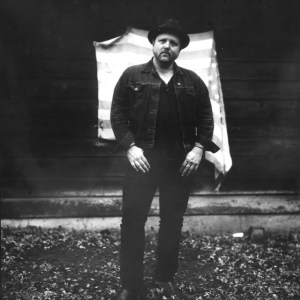
In his first full-length album in a decade, Irish-American singer-songwriter, John Francis O’Mara offers Forbidden Hymns, a collection of thirteen songs encompassing Alt-Country, Americana, Folk, and Rock, exploring social justice, theology, hope, and heartbreak due October 10, 2025. Produced by Ken Coomer (GRAMMY winning producer, and drummer for Wilco, Uncle Tupelo, Steve Earle) and delivering with O’Mara in the studio for the Forbidden Hymns band are guitarist Kenny Vaughan (Marty Stuart, Lucinda Williams), multi-instrumentalist Chris Scruggs, John Lancaster on keys, the late great bassist Dave Roe (Johnny Cash, John Mellencamp, Dwight Yoakam) and backing vocalist, Vinchelle Woods. John Carter Cash (son of June and Johnny) joins O’Mara with the co-written “No One Gets Out of Here Alive,” –  a deeply human and empathetic reminder to “love pure and strong while there’s time.” In addition to his career as a singer-songwriter, O’Mara is an ordained Epsicopalian priest and Liberation Theology scholar, (Princeton and General Seminaries) currently working toward his Doctorate in Theology with a Social Justice focus, from Howard University School of Divinity.

“But, why ‘Forbidden’? Look around! The social and political landscape has taken a very dark and ugly turn,” says O’Mara of his album. “Stateside, the innocent and most vulnerable are being kidnapped and denied basic civil and human rights, while literal genocide and starving children’s screams are live-streamed in real time. Elites and the billionaire class rule from their ill-gotten thrones. Truth, beauty, and conscience are being legislated into silence, banned, and literally ‘forbidden’. The soul of America, and the very soul of humanity, is at stake. Many among us are being made to fear raising our voices.”

“Many among us are not afraid! I’m here to tell you, not on my watch,” the songwriter continues. “This is the precise moment many of us have been preparing for, and I will not be silenced. We who believe that a world full of empathy, justice, dignity and love is possible, will not be silenced! This record will not be silenced! Time to turn up the volume! Time to sing Forbidden Hymns.”

Forbidden Hymns opens with dynamic, “Walking In Babylon,” where O’Mara’s dulcet and soul-stirring, tremolo-tinged vocals and Kenny Vaughan’s reverberating guitar hook, are on full display.  The track opens with an a cappella fragment of Bob Marley’s, “Rastaman Chant,” – drawn from The Book of Revelation. O’Mara uses the ‘Babylon’ metaphor as referring to an occupying imperial force, under which ‘we the people’ suffer in exile. “In the shadow where the empire spreads, me and my brothers are breakin’ bread’. In the framework of the song, that empire is marked by brutality, poverty, and racial violence, particularly against black and brown bodies. The songwriter outcries, “if you can’t breathe, I can’t breathe…another brother layin’ in a chalk outline.” The song’s questioning lament is punctuated with a plea: “Somebody tell me that hope’s not gone? Everybody’s sayin’ they’ve had enough! Let the people sing, ‘what about love?!’”

The guitar groove of “Lately Mary” invokes early Elvis Costello, and this very sticky hook, straight ahead folk, pop-rock song winks at Springsteen. True to the motifs of the album, O’Mara bellows out core human questions, yet relevant for our times. “How we  gonna fill these mouths to feed? Gonna take more than a rosary bead,” he sings. O’Mara critiques the nauseating trend of many religious people in the face of tragedy, poverty, and despair, which is to offer ‘thoughts and prayers,’ rather than substantial, empathetic help. In this song, we see “Mother Mary” as she was, in her plain humanity,  a homeless, refugee, single mother facing her reality where “it seems again there’s no room at the inn.” Note that the cover art centers an historically accurate, brown-skinned, Palestinian, Mary. Caution: song causes contagious call and response crowd participation.

The delicate and acoustic, “Jesus Walked on Water,” features O’Mara’s intricate finger-picking, and pedal steel, driving this newborn classic. A title that might suggest another Gospel song from O’Mara, but this ballad is a curve ball. The songwriter asks a close loved one, “do you still believe in me? All this time it’s taken me? All this time been breakin’ me?” The song is a tender, direct and open-chested surrender, and an admission that he is no miracle-worker, and no prophet, just a man with nothing to offer other than, “for you, I would die.” O’Mara whispers a universally human question, “can you see me?”

“Often, things fall apart,” says the songwriter, speaking from experience. “Dreams and hopes burn down. We are left with nothing but wreckage and ash.” “Ashes, Ashes,” is a subtle rocker, opening with a blues inspired guitar lick.  Originally a piano ballad, John Francis pulled this treasure of an alt-country/Americana, guitar driven rocker, out of the smoldering ashes with the help of his longtime collaborator, melodic guitar-slinger Kenny Vaughan (Lucinda Williams, Marty Stuart). The first single released from Forbidden Hymns, “Ashes, Ashes” is reminiscent of early Wilco, in no small part due to the drumming and production of Ken Corner (Wilco, Uncle Tupelo). Bassist for Johnny Cash and Dwight Yoakom, the late great Dave Roe (for whom the record is dedicated) rounds out the low end of this reflective rallying cry about the aching beauty found in ashes, and the dazzling light behind the curtain of a world of shadows.

A soft, waltzy, guitar ballad, “Maria, I Would Dance With You But My Hands Are On Fire,” finds John Francis examining a biblical theme from an unexpected angle.  Rolling Stone Magazine reviewed Dylan’s John Wesley Harding saying it was the “first Biblical Rock ’n’ Roll record.” Dylan might have been the first, but O’Mara’s is the newest. In fact, the chorus, which is also the title, is a direct quote from Bob Dylan. In the immediate aftermath of Dylan’s notorious Newport Folk Festival ‘going electric’, Maria Muldaur reached out to Dylan, and asked him to dance. Declining her invitation, Dylan gave her a very Dylanesque reply, “Maria, I would dance with you but my hands are on fire.” O’Mara borrowed this line of dialogue, reframed it, and breathed it into the refrain for this poetic piece. In the epic love ballad, O’Mara conjures pillars of fire in the wilderness, stages like cages, cosmic loneliness, and “canyons quaking like young lovers waking in the shelter of each other’s bodies.” Like Leonard Cohen before him, O’Mara consecrates religious and erotic thematic images, and lets them bleed into one narrative. The sacred and the sensual coexist when he serenades, “with God as my witness / the only prayer on my lips is / the poem of her sweet name.”

With its groovy guitar work punctuated by a tambourine playing double time, the earcandy folk-rock, poppy hooks and crooning of “Miracle,” invokes one of O’Mara’s heroes, the original Irish soul man, Van Morrison. Already in heavy rotation when leaked as a single in Switzerland, the songwriter sings, “she’s an angel in flight as she glides across the kitchen floor, into my arms…my, my, my!” There is supernatural magic in the romantic swooning of new love, “Miracle,” sings the praises of passionate bonds. O’Mara woos, “Woman, you’re the only woman in the world I’m wantin’.”

In a remote log cabin in the deep woods of central Tennessee, John Carter Cash (son of Johnny and June) and John Francis O’Mara were minding their own business one brisk morning, when a song came knocking. The two good friends stopped what they were doing, and let the new song in. The theme and feel of it brought John Carter back to some of his final conversations with his father. In that moment, JFO and JCC channeled a song that would soon tug on the heartstrings and water the eyes of audiences far and wide for many years to come. “No One Gets Out Of Here Alive,” is a hauntingly stark and vulnerable call to imbue each moment with the courage to love boldly, because life is fleeting. A deeply human and empathetic reminder to “love pure and strong while there’s time / keep the ends out for the ties that bind / let love be your only song, til the day that you die…,” lest we forget that our days are numbered. John Francis and John Carter performed ‘No Gets Out…’ for a live PBS taping, for 20,000+ fans in the Arkansas State arena, on the inaugural ‘Johnny Cash Music Festival’, also featuring George Jones, Kris Kristoffeson, and Rosanne Cash. The official DVD of the event was released globally, and featured this co-written masterpiece.

John Lancaster’s churchy Hammond organ and O’Mara’s solitary vocal open, “Mighty Power.” Written to be a gritty, spiritual marching order, to get to shoutin’ in both sanctuaries and saloons, and then spill out into the streets. “It is a declaration of spiritual empowerment. This is not a religious song, yet it rings out like a massive bell,” says the songwriter. Vinchelle Wood’s backing vocal delivery sweeps us right up into the rapture of a Black church revival. “There’s a mighty power inside of me, stronger than the wind and the waves / stronger than the sting of the grave / stronger than the poison I used to put in my veins…” O’Mara grabs us by the shoulders, shakes us, and invites us to encounter what some folks call a “higher power”, and then testify that it is ‘stronger than the Pharaoh and his armies / stronger than the twisted chains of slavery / stronger than the sorrow a-hangin’ on your city..”. Throughout, Chris Scruggs’ lap-steel talks in a heavenly tongue. Like a young Robert Plant, O’Mara shrieks, “Do you feel the power!!” asking the listener: “well, do you?”

O’Mara may be known for being “ripe with the kind of honest questions we used to rely on guys like Dylan and John Prine to raise” (Philadelphia Inquirer), but goddamn he can write a heartbreak song of love gone wrong. “Secrets Are Safe” is one of them, although the irony isn’t lost on us, because O’Mara is literally telling secrets. “Secrets Are Safe” hits like one of those songs that’s always been around, opening with the lines, “I guess I lost you somewhere between the moon and the falling snow / Or did I lose you out there, where my wheels were full of road?” O’Mara finds hidden treasure in the darkness of loss and pain, drags it out, and dusts it off to share it with the listener.

Forlorn and inconsolably sad songs are one of O’Mara’s signatures, though the  phenomenon of “schadenfreude” comes to mind when listening to the lyrics of, “Maybe.” The listener can’t help but to glean resonant satisfaction from closure after all that pain. “Shadows stretch across our bed / across the words that we had said / how long have you known that you don’t know?” O’Mara is true to form as an Irish songwriter, and as G.K. Chesterton said of the Irish, “…all their wars are merry, and all their songs are sad.” This is a high and lonesome breakup song.

Touching the hem of U2’s garment, O’Mara’s band here is pulsing and driving, dynamic in tension and release. The tag at the end is gutwrenching, “My mouth still remembers the shape of your name.” Joining “Secrets Are Safe” and “Maybe,” “Wild Bleeding Heart” is third in the line-up of the broken-hearted trilogy on Forbidden Hymns. Once again, O’Mara spins together mythological images and literary figures to populate his landscape of cosmic loneliness.

Punching in at track 12, O’Mara delivers a riveting folk-rock pop song, in the vein of U2 or early Coldplay with the penultimate, “Heart Be Still” – an unabashed, tell it like it is, love song. The songwriter asks, “Love, could it be, that for love, the whole world bends the knee? / So come here to me! Come here! Come here! Come here! Come here to me!” Anyone who has longed to be near someone – and that’s everyone – knows this desire. “Gotta let your heart be still…next to mine.”

Closing the LP is the soaring, “Let it Be So,” which shines when the guitar solo nods at George Harrison, and the backbeat hits like Ringo. The song is the proclamation that another world is possible; a better world. If we are waiting for an anthem of change with a chorus to be echoed by everyone who still believes in justice, peace, dignity, and equality for all, our wait is over. John Francis O’Mara delivers that anthem, with the perfect ending to an exquisitely realized album:  “Somebody say ‘Amen!”

About the Artist

John Francis O’MaraJohn Francis O’Mara is an Episcopalian priest, theological scholar, activist, and acclaimed songwriter whose work bridges the sacred and the profane. With advanced degrees from Princeton Theological Seminary (M.Div) and General Theological Seminary (STM), and now pursuing a doctorate in Theology and Social Justice at Howard University, O’Mara roots his ministry in Liberation Theology and a tapestry of faith traditions including Celtic Christianity, Black Liberation Churches, and Native American spirituality. Hailed by Sojourners as “haunting as Springsteen,” dubbed by Wild Goose Festival as “one of the most prophetic voices of his generation,” and praised by Shane Claiborne as a “poet and instigator of movements,” O’Mara has performed everywhere from cathedrals to prisons, from UN gatherings to city streets, and alongside artists such as Sinead O’Connor, Mavis Staples, and Kris Kristofferson. Whether leading marches, teaching youth, or offering workshops and concerts worldwide, O’Mara shares stories and songs with theological depth, hard-earned experience, and transformative hope.

John Francis O’Mara’s Website

Forbidden Hymns Website