Breath and Light: An Exercise for Reuniting Soul and Body


This past weekend was Thanksgiving in the United States, and now we’ve entered the season of Advent, the traditional period of holy waiting leading to Christmas. This, during a year that has brought most of us even more than our usual hurry, hesitation, and heartbreak.

I find myself puzzling over some complex questions.

Namely, what are we really waiting for in Advent?

And what are we really thankful for in Thanks-giving?

The history of the latter is fraught with sadness. While there may have indeed been pockets of genuine hospitality and mutual exchange between early ‘pilgrims’ and indigenous inhabitants of this land, our subsequent actions of genocidal erasure toward those who lived in harmony with this land for 10-14,000 years prior makes Thanksgiving’s deployment in our national hagiography function as a collective self-absolving amnesia, an insult added to very real injury.

To the ᎠᎳᎫᏪᏘᏱ Tsalaguwetiyi (East Cherokee) people whose land I live on, I am grateful for the gift of this land and her sustenance, and so sorry for the way it came about. In the coming year, I seek openness to pathways of metanoia and repair.

(Want to know whose land you might occupy? Search here. Want to know how you might honor its original inhabitants, today? Download this guide.)

And I pause, left with the composted coordinates of the holiday, itself: A season dedicated to gratitude, when many of us are wondering where thankfulness still dwells.

A season dedicated to meal-sharing, during a time many of us chose to remain absent from family as a form of greater care amid rising COVID-19 hospitalizations, and a U.S. death rate rivaling the record set in April.

Remorse and grace, messiness and connection: Isn’t Thanksgiving a kind of microcosm of our lives right now?

None of us are un-stained by transgression, done by or to us; and yet, we seek acts of metanoia (changed-being) and vessels of mercy, together.

From Hungry Ghosts to Full Incarnations

2020 has been a hellacious year for many of us. I think we’re ready to do the work, to receive the grace, of rejoining soul to body—individually and culturally. We’re tired of living as discarnate, hungry ghosts.

And so, I find myself grateful for you.

Because if you’re like me, you hunger and thirst for justice, and wish to be filled.

If you’re like me, you’re ready:

To journey with your people, backed by all the divine energies of God, angels, and the great cloud of witnesses, to work together in discovering the Kin-dom of God, what contemporary teacher Charles Eisenstein names the more beautiful world our hearts know is possible.

How can we show up for each other? I wouldn’t expect the turn-of-the-century indie band Death Cab for Cutie to give us our sacred invitation, but here we are:

I cannot guess what we’ll discover
When we turn the dirt with our palms cupped like shovels
But I know our filthy hands can wash one another’s
And not one speck will remain.

During a time when we’re exhausted and exploited and complicit, all at the same time, how can we begin the work that re-connects?

Those of us who aspire to friendship with God along the Way of Jesus, have a great potential comfort: the writer of an ancient letter (which became part of our Scripture) invites us to trust what-is-so from a God’s-eye view, and thus become “partakers of the Divine Nature.” (see I Peter 1:4)

The 14th-century Byzantine theologian Gregory of Palamas affirms this venerable tradition along the path of apprenticeship to Christ-likeness, teaching that we can access these “energies of the divinity” as God generously grants them from God’s unitive essence: “the rays are many, and are sent out in a manner appropriate to those participating in them.”

The Church in the near-East, self-understood as the Orthodox Church, has reflected for over a thousand years how to make this participation in Divine energies immensely practical, though unfortunately these practices were largely inaccessible outside of monastic circles for centuries. Their wisdom has been available to Western spiritual seekers for about 70 years now via English translations of The Philokalia, thanks to students of Fourth Way teacher PD Ouspensky.

This living tradition is so vast and deep, I’m not even going to attempt to skim its surface here. Instead, I’m going to embrace its premises as a contemporary jumping-off-point:

Partaking Exercise

If our bodies are temples of the Holy Spirit (see 1 Corinthians 6:19), this means that sacred breath already fills our lungs. What would it be like to pause and really notice this, taking it in as actual nourishment for our being?

I asked my friend and colleague Sydney Faith Rose — a gifted teacher, therapist, and facilitator — to give us an exercise we can work with, right now, to bring us back into our hearts and bodies. We ended up crafting one together, that has been road-tested. : )  Here it is!

❧ Begin by connecting with your breath in any part of your body where it feels accessible.

❧ As you notice the energy that drives your inhale and exhalation, set an intention for the way you want to show up in the world. What does this look like? What does this feel like? Pause for as many breaths as you need, until you sense a definite impression of this vision.

❧ Divine Light is abundantly available. Imagine the energy of your breath as a guiding light reflecting God’s Light, keeping you in touch with your intention in the present moment. This light can be any color or quality that you choose.

❧ Drawing your awareness down into the bottoms of your feet with each breath, imagine the light infusing your feet with the quality you’re wanting to more fully embody in your life — in our soles and your soul.

❧ Allow this breath and light to inspire its natural enlivening in you as it shines on any sensation or numbness that you notice happening in your feet.

❧ Slowly draw this energy up through your legs, then your root, then your torso, continuing upward through the crown of your head. Allow this sacred breath and holy light to illuminate whatever is present in each part of your body as you go: Tension, sensation, heaviness, warmth. Notice whatever is present, without condemnation.

❧ If you find areas of pain or tension as you go, you can soften and offer yourself compassion if that’s in alignment with your intention. If your mind starts passing judgement, denigrating sensations or telling stories about why you feel the way you feel, see if you can allow your attention to return to present-moment receiving, returning to the sensations of your breath, trusting this to keep you rooted in your intention. Surrender to the circulation of attention and compassion through every part of your body.

❧ Notice if you want to expand these energies beyond the immediate field of your body: Where do they wish to go? To the space around you? Your loved ones? Your enemies? Planet earth?

❧ When you’ve moved these energies where they wish to go, pause for a moment and inquire: Does the whole of my body seem to be lit up, as if from within? If you sense this increased sensation of attention, see if you can dwell here for a few moments.

❧ Close with an attitude of thankfulness: To your body for supporting you, to God for indwelling you. Take as much time as you’d like: Thank each body part, if you want. And express your gratitude to anyone and anything else that you sense supporting your daily living.

Did you try this Partaking Exercise? How did it feel?

Who wants to join me in practicing this for several minutes a day this Advent, from now ’till December 24th?

If you intend to join me and care to share, please leave a comment below. And as you notice anything shifting, in your inner or outer worlds, feel free to leave a comment below!

This season has its burdens — there’s no use sugar-coating it. But I’m convinced that these burdens are an invitation to go deeper into re-connection, whole-making, and soul-making. This Advent, we can wait attentively, as our own being and perhaps new worlds emerge.

Blessed is the Man | an interview with Dale Fredrickson

Blessed is the Man

During the height of the long-overdue #MeToo reckoning, when so many people (primarily women, and feminine-identified) were sharing their stories of assault, violation, and pain, I wrote a reflection that’s turned out to be my post popular online writing to-date, with over 20,000 readers sharing: An Open Letter to my Brothers in light of #MeToo.

In this reflection, I name ways that men and masculine-identified types can bring ourselves to greater integrity, to be better – for others, and ourselves.

Someone I knew, minister and spoken-word artist Dale Frederickson, was so inspired by this post that it became part of the motivation for him to record a heartfelt album of lament and healing, for the masculine in all of us: Blessed Is the Man. It’s quite the recording, at times comforting and confronting. I recently got to catch up with Dale about that compelled him to speak difficult truths and and beautiful possibilities for the masculine in our era. Here’s our conversation..

Hi Dale. Your new spoken-word poetic release, Blessed is the Man, strikes me as such a heart-felt meditation on what it means to be masculine in today’s world: Equal parts celebration and lament. What inspired you to undertake this project?

This might seem an unlikely moment for creative inspiration but here goes.

In late September of 2018, there was a Senate Judiciary Committee Review for the then Judge who would become the Supreme Court Justice Brett Kavanaugh. Through a live stream, millions watched as Dr. Christine Blasey Ford testified that during their college years Brett Kavanaugh had assaulted her. I don’t typically get caught up in highly publicized media events, but I was transfixed by this trial of sorts.

Dr. Ford demonstrated tremendous courage and strength and named her pain before America. When it was time for Judge Kavanaugh to defend himself, his words sent a cold, familiar shiver down my spine. The message that his body exuded reminded me of what I’ve experienced from a number of men throughout my life. He was right, angry, and inconvenienced by this hearing. As I processed this moment and my bodily reaction I realized that Kavanaugh’s behavior is not ‘one of a kind’ but a thermometer that tells a bigger story about the destructive norms of masculinity in America.

Soon after this trial, A wave of stories of women who had been abused by men either emotionally, physically, or both flickered on my social media streams.  The #metoo movement was followed by even more courageous truth-telling and the #churchtoo movement was born.  What a painful and sobering moment in our history together! That cold, familiar shiver down my spine was an invitation for me to feel again, to think deeper, and to write in a way that excavated the air of toxic masculinity. Could the winds of change bring about a fresh air of hope for all?

The poems in Blessed is the Man are my attempt to inspire and contribute to the larger conversation about healthier form of masculinity.  It is not meant to say “Blessed is Man” who is angry, arrogant, and entitled but blessed is the man who is humble, kind, and learning to love. I knew that If I didn’t write personally and intimately about my own toxic patterns and behaviors it wouldn’t be an album worth listening to.

We’re hearing a lot about ‘toxic masculinity’ these days, to the point where some (men and others alike) hear the phrase as meaning that masculinity is synonymous with toxicity. Why do you suppose this is? And what does ‘toxic masculinity’ mean to you?

Your question makes an important observation given our moment in history. The fact that men hold 95% of the world’s most powerful positions does not mean that all men are toxic but that our collective understanding of the gift of masculinity needs to change. Calling masculinity synonymous with toxicity does a disservice to the complexity of the issue and does not excavate the real problem.

What I learned from writing these poems is that masculinity has been defined in such narrow ways that it has stifled the growth of men.  If we define masculinity as emotional restraint, worth judged by productivity, and relational distance, then men will suffer in a shallow pool of regret and never learn to swim in deeper waters. I think that inadequate notions of masculine identity have led to great suffering.  This is why I wrote in the poem to my son, “Masculinity is not a bumper sticker or cliché but an epic poem that you must write and rewrite.”

You’ve been exploring these themes in your own life for awhile, and the album has been out for just a bit. In your life or your work as an artist, are you seeing signs of hope for who we as men can become?

I’ve been performing these poems in small and large venues and I’ve been so encouraged by the responses. I’ve had hundreds of conversations in person or through email with men who are longing to give and receive love. There is a collective sense of waking up that is tangible right now. Most men that I’m talking with have felt the stifling effects of narrowly defined masculinity and are looking for fresh air. A lot of men deeply resonate with the blessing I wrote for the album that is sung on track number 2: 

Blessed is the man

Who fails and stumbles
Who learns love is without end
Who is strong and humble
Who feels and finds themselves again
Please plant them near the river
As the ancient poem foretold
Please plant them near the river
May peace within them grow

One of your poem-tunes involves the apostle Peter, with evocative lyrics like:

i’ve built my life on the next catch
marketplace profits and
the mysteries of the sea
my net worth
i keep casting nets
my last payload
i’m a half a lake ahead

don’t ask me to make sense
of my feelings
i am my father’s son
i’m okay
i’m okay
i say over and over
especially when
no one is listening

he was the wind
that cut through
the aroma of dead fish
and seaweed
he said to me

“you are a boulder”
i laughed and burst out
“one who sinks”
he smiled and said
“i hope so”
“not today” i threw back

…what inspired you to address Peter’s life in this way? How do you see him as indicative of so many men?

For this poem, I started with the end of the story.  Jesus asks Peter three times, “Do you love me? Do you love me? Do you love me?” I’ve always found this carefully written account so beautiful and compelling. Jesus doesn’t shame Peter but invites him to grow his affections. One of my teachers has been bell hooks. In her book, The Will to Change: Men, Masculinity, and Love, she argues that men need to grow their capacity to love. I interpreted Jesus’ words to Peter in light of bell hooks’ thesis.  From there, I just started working backward in my writing, finding in Peter, a cultural paradigm, that could be helpful in reframing masculinity.

Your album’s opening and closing meditations tenderly address your son, as “my beautiful boy.” By contrast, The Burden That Buries Men addresses a father who continually tells his son to ‘toughen up,’ to the point where the son sings:

i wear my promise
over my heart
like a medal
i whisper
i’m not like you
over his grave

…tell me more about the grief and desire to be different that’s motivated this album.

The Burden That Buries Men tells the story of generational pain.  The father has little to no emotional capacity for his son and then the son becomes a father and confronts his worst fears, i.e. “I’m terrified somehow that I’ve become my dad.” And the poem ends, with the hope that the son sees his father and welcomes him into the community of shared love.  This is a poem of hope that love can break our family cycles. The poem is a portrait of many friends that have described for me this father/son tension of wanting to be something different then was modeled to them but not knowing how.  My beautiful boy is a poem towards the end of the album that was written for my son. I wanted to take the big and important themes of the album and speak them in simple ways to him. I’ve felt a cold, familiar shiver down my spine of toxic masculinity and want something more for myself, my son, and my friends.  There is a different way of being.  There is healing.

What are the unique blessings and burdens that following Jesus, and being part of Christianity, give to masculinity and being a man, today?

The burdens of following Jesus in this moment in history is that there’s so much ugliness associated with Christianity.  We’ve become so comfortable with easy cliché’s, settled for the status quo, neglected our care for the least, last, and lost, and tightened boundary lines instead of expanding them. Fear has defined us not transformative love. The blessing of following Jesus is that he is always surprising us. The beauty of the Christian life is that Jesus is always leading us beyond fear and familiarity.  His vulnerable humanity which whispers to us that “God is love” gives us the freedom to say “no” to the destructive norms of masculinity and “yes” to a new vision of a growing capacity for mutual love for ourselves, neighbors, and the world. “Blessed is the Man (And Woman)” indeed!

What do you most enjoy about being a man, as you’re discovering masculinity on ‘the other side’?

I’m feel a lightness that I’ve never felt before. “Blessed is the man” who learns that they are created to give and receive love.  There’s freedom in knowing that I don’t have to be right, I don’t have to find my worth in what I produce, and I don’t have to stuff my feelings. I’m learning that my true superpower is vulnerability which gifts me with deeper relational connectedness. Masculinity doesn’t have to be a shallow pond but it can be a deep river where we experience the endless depths of love.

What’s one thing you hope men tuning in will take away from Blessed is the Man?

Poetry is language that addresses us in the very depths of our being.  That cold, familiar shiver down your spine is not an inconvenience but an invitation to feel again, think deeper, and experience masculinity as an “epic poem that you must write and rewrite.”

The following is a track from Blessed is the Man by Dale Fredrickson. It’s a featured Speakeasy selection, and there are still limited review copies available for qualified reviewers.

Praise for Blessed is the Man

“It is difficult it to confront the darker parts of our nature. Many get off the planet without having ever attempted it. It’s so much easier to make a home of our bruises. Those wounds are, after all, someone else’s fault. Oh but the healing … healing is our responsibility. It takes courage and empathy. Dale has knuckled around that work, fought ego and the strange inheritance of patriarchy-gone-wrong to choose love. He is in fact a storm chaser. With this album Dale affirms for us that with faith and hard work we get to be the beneficiaries of our own hard-won wisdom. ‘Blessed is the man …’ indeed.”
—Dominique Christina, Women of the World Slam Champion 2012/2014, Author of The Bones The Breaking The Balm, They Are All Me, This is Woman’s Work, and Anarcha Speaks

“There is something vital in Dale Fredrickson’s work: an architecture, a bidding—a disarming and disorienting language play by which we become more human.”
—Josh James Riebock, Best Selling Author of Heroes and Monsters

The final movement of the poem ’on this night I wonder’ shows Joseph’s hardened masculinity being undone into vulnerable love and wonder as he considers the miracle of his firstborn. This serves as a thematic keystone for the whole album as Fredrickson traces the masculine journey through hardened toughness into a more gracious vulnerability that is the beginning of real strength. The earnest and moving vocal delivery throughout the album drives home just how real and desperate is the yearning to be made new and gentler. Fredrickson delivers his best work thus far as he hones was the closeness he feels to his own vulnerability and strength. Each is felt so thoroughly as he powerfully portrays the nakedness of this paradox at the heart of the modern man.
—David Burchfield, Singer/Songwriter

“Blessed is the Man is an absolute gift! It is like healing balm to my soul every time I listen to it. It slows me down, creates space in my inner being, and helps me to become attentive to the voice of the Spirit within me. Even though the album helps me to view masculinity differently, it is equally impactful to my feminine identity in a significantly deep way. For anyone who is serious about his or her heart, Blessed is the Man is a must-listen. For anyone who is serious about deeper thinking, Blessed is the Man is a must-listen. For those who are interested in a conversation about masculinity, no matter what your gender, Blessed is the Man is a must-listen. For those who desire to feed their soul with beauty, Blessed is the Man is a must-listen. In short, I think this is a very important album for everyone who has ears to hear!”
—Kelly Archer, Founding Artistic Director at Chadash Contemporary Dance Movement

“Dale’s poetry sets a table and places chairs for all kinds of stories. He looks around and brings many to the table: those who are bleeding and those who are blessed; those wounded with wonder and wondering at their wounds; those who are appalled by faith and those to whom faith appeals. These poems open up a door, they light a candle, they say you’re welcome, they say I need to learn from you.”
—Pádraig Ó Tuama, Irish Poet & Leader of the Corrymeela Community

“The poem ‘My Beautiful Boy’ gives me hope that I can raise my boys to be men, but without toxic masculinity, aware of their gentle side, as a part of the foundation for how they understand what it is to be male.
—Javier D. Arvizo, Father and Husband

“Honestly wading into disappointment, sorrow, pain and confusion is not for the faint of heart. But there are moments when we find a direction in the midst of and hear a voice that offers guidance. These are the moments we are invited into our pain in a way that is filled with hope and promises beauty. This is what Dale accomplishes in his latest work, Blessed is the Man. His prose and lyric are far more than words that compose a smooth rhyme. His words possess power that reflect the courageous paths he has walked in his own life and reflect his keen insight into the beauty and power found in the Ancient Text. This album promises more than just strong poetry and powerful lyric; it promises first steps into healing and promises to be a companion on our journey toward wholeness.”
—Michael Hidalgo, Lead Pastor Denver Community Church, author of Changing Faith: Questions, Doubts and Choices About the Unchanging God

About the Author

Dale Fredrickson

Dale Fredrickson is a pastor and poet from Denver, Colorado. He’d like to inspire the entire world but finds that inspiring himself and his family and friends is work enough. He writes and speaks about beauty and misery and his favorite story is the one about how love surprises us in the end. He serves as a Teacher in Bible & Theology to amazing middle-school students at Cherry Hills Christian School where he fails a lot. On his best days, he lives by Samuel Beckett’s motto, “Try again. Fail again. Fail better.”


I’m Not Always Okay (And that’s OK.)

An unguarded moment.
A candid pic taken while relaxing, post night-swimming at my local YWCA. Another simple pleasure that has me feeling balanced.

40 years.

As of today, that’s how long I’ve roamed this earth. If you happen to be older than me you might chuckle at what I’m about to say, but if you’re younger, consider this: It feels a bit surreal to span decades—like a tiny taste of immortality. I actually remember pretty clearly my decade-falling birthdays: 30, 20, 10. And now, I’m faced with my fifth decade on this planet.

As I consider who I’ve been over the previous decades, I’m filled with both gratitude and remorse, mixing together into a tributary of sources, informing the river I wish to see, flowing forward. This river contains many elements—personal, familial, and vocational. Insofar as it relates to you, dear reader, I’ve been feeling a desire for some months to refocus my writing to the ‘diamond point’ of teaching what’s made a real difference in my life: spirituality that actually works.

But before you consider listening to anything I have to say, I feel like it’s only fair for you to just who you’re listening to. So many would-be teachers present an Instagram-perfect picture of having a completely ‘together’ inner and outer life. Well, to paraphrase Bob Dylan, Johnny Cash and June Carter, it ain’t me, babe.

If we are to continue this relationship—writer and reader, virtual fellowship in a seeking community of potential friends—I’d like to be more disclosed to you about just who I am and where I’m coming from. Here’s on aspect of this.

Earlier this month, the World Health Organization marked Mental Health Awareness Day. So many of my friends and colleagues broke through the habit of social media ‘highlight reels’ to share a genuine, behind-the-scenes look at their neurodivergence. I was so encouraged by these displays of courage and vulnerability, that I also shared my own. 

(By the way, I’m on Facebook, Twitter, Instagram and LinkedIn. If we’re not connected in these spaces, I’d be happy to.)

Here’s what I said: I experience debilitating anxiety, and panic attacks. I’m pretty sure, once upon a time, I was psychiatrically diagnosed with both Generalized Anxiety and Panic Disorder. Looking back, I’ve had these latencies since childhood. But I especially began to notice in my young twenties, when my first panic attack landed me in the Emergency Room (I thought I was having a heart attack).

These tendencies in my brain, body, and being have their ups and downs; they wax and wane, with good years and bad, good months and bad, good days and bad.

Since this summer, it’s been a particularly difficult season.

What this looks like is that some days, I don’t want to drive.

Some days, I don’t want to be out and about in public.

Some days, I don’t want to be around bright light, or alot of sensory stimulation.

I can get dizzy, heart pounding, breath short, world spinning; I just want everything to sloooow down.

In these states, the very idea of ‘safety’ can feel like a cruel joke…an impossible dream.

This particular season has also been a rich one of personal discovery for me, road testing my spirituality to discover, anew, what actually works (and what doesn’t). I’m learning more about my brain, body and being than I ever have. Working with a Somatic Experiencing®  (SE) therapist and an Occupational Therapist (OT), I’m learning that much of what I’ve lived with my entire life might not even be primarily ‘psychological’ in its ordinary sense, but sensory processing integration disorders that were present from early on—perhaps a surgery I had when I was six months old, or a bike accident when I was 10 that ‘gifted’ me with a traumatic brain injury.

And then there’s also plain ‘ol trauma, relational patternings, daily stresses of parenting, partnering, and vocation, and various behavioral mindsets. It’s all in here.

The specific S.E. and O.T. protocols I’m doing now are promising, but I’m gonna hold off on sharing those with you ’till they bear more fruit. Because to be honest with you, I thought I’d discovered various Key Insights™ and Silver Bullets™ 5, 10, and 15 years ago. Part of living with anxiety and panic for me is a delicate dance of acceptance and hope, letting go and pressing on.

Still, a little of what’s working for me, in case you also experience anxiety and panic?

  • I practice centering prayer.
  • I take walks.
  • I try to mind sleep and nutrition.
  • I’m mindful of supplements—Living Fuel’s Omega and Natural Calm magnesium before bedtime are particularly helpful.
  • Neurofeedback, swimming at my local YWCA, and chiropractic care help alot.
  • I practice sacred dance
  • I ‘dry brush’ my skin, take pauses throughout my day, and try to really feel what it’s like to inhabit a body. Especially when I’m feeling good—I pause to ‘memorize’ that feeling, and celebrate it.
  • Working with a doctor I trust, I take meds as-needed.
  • I have amazing family, friends, and caregivers—too many to name here.* (I recognize that this is a privilege, and I don’t take this lightly. And, I’m determined that relational resources be abundant for all. If you don’t have amazing family, friends, and caregivers, reach out—I’ll introduce you to some of mine.)
  • I’m learning to taste my experiences as sensations first, without immediately resorting to language like ‘anxiety’ and ‘panic.’ If I’m feeling really fancy, I reframe what I’m experiencing as simply my body’s own life-force, that I’m learning to befriend.

I love my life, my family, my friends, and my work. I’m learning to love myself, and “let the soft animal of [my] body…love what it loves,” as Mary Oliver would have it.

If you happen to be faced with my particular struggle, I want you to know: 

It’s okay to experience anxiety and panic on the regular, and have an awesome life, too.

It’s okay to not always feel safe inside your own skin, and love yourself, too.

If you ever need to reach out to someone, reach out to me. I’ll do my best to connect with you myself, or connect you with someone who can hold the space you deserve. (See below for some initial recommendations.)

It’s okay—even when it’s not.

We’re all in this together.


*Recommended Allies for the Journey of Becoming

There really are too many friends, family, and caregivers to comprehensively name in this space. All the same, I’m going to a list a few whose teachings or services are available from anywhere. Definitely check them out if you’re looking for increased insight, integration, and grounding in your life:

God: Ever-New And Ancient (Naming the Unnamable) | Matthew Fox

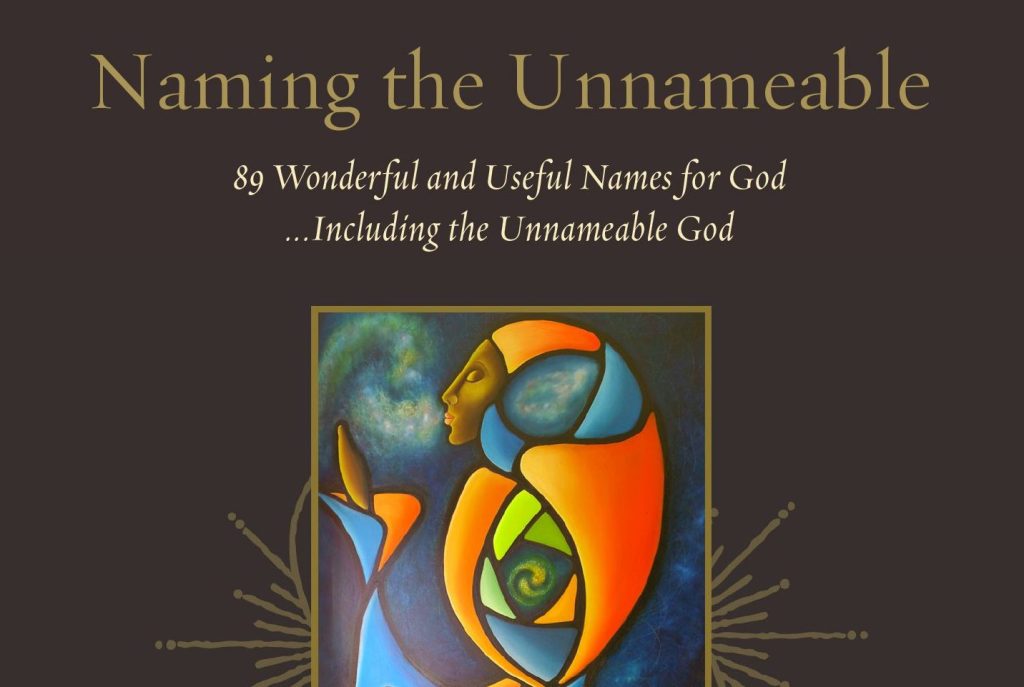
The following is based on a portion of Naming the Unnamable: 89 Wonderful and Useful Names for God, a brand-new release from esteemed Creation Spirituality theologian Matthew Fox. 

Join Matthew for a free video event to revisit the groundbreaking teachings of St. Thomas Aquinas and Julian of Norwich to stay grounded in these uncertain times. Register here!

God Has a Trillion Faces

The ancient Vedas of India tell us that “The One Existence the wise call by many names.”

How many names for Divinity are there? Do the names for God change? Ought they change as humans evolve and as circumstances of life evolve around us? Are we among the “wise” that the Vedas speak of who are eager to call the One Existence by many names? Do we have permission—and maybe a serious responsibility—to change our understanding and naming of God as we mature as individuals and as we evolve as a species and as we face a critical time – a ‘turning time’ – in human and planetary history?

The great medieval mystic Meister Eckhart declared: “I pray God to rid me of God.”

Apparently he was so convinced in the need to allow God and our names for God to evolve that he actually prayed to God to move on from being “God.” He challenges us further when he declares: “The highest and loftiest thing that a person can let go of is to let go of God for the sake of God.”

How many names for God have humans come up with? And which ones might serve us besttoday and what new ones beckon us? One answer to that question is a simple one:There are as many names for “God” as there are languages in the world, for each language calls God by a different word. Examples: God (English); Gott (German); Dieu (French); Dios (Spanish); Allah (Arabic); Gut (Norwegian);Theos (Greek); Deus (Portuguese); Bog (Russian);Dia (Irish); Elohim (Hebrew); Marta(Polish); Kalou (Fijian), etc. etc.

But that is by no means the whole story. For one thing, each language may well have multiple words for “God.” For example in English we can talk of Divinity; Spirit; Creator; Deity; Godhead; Goddess; and much more. If this is true in English no doubt it is true in other languages as well.

Every Religion offers its name for the Divine: Brahmin; Krishna; Tao; Buddha; Tara; Allah; Yahweh; Adonai; Tagashala; Wankan Tanka; Oshun; Isis; Christ – to name but a few.

So where else do we come up with alternative names or images of God? The Sacred Scriptures of the world are one such place; and the mystics of the world are another; and science is another. The Muslim tradition boasts a powerful practice of reciting the “99 Most Beautiful Names” of God; in many ways, this practice has inspired my newest book, Naming the Unnamable, wherein I present 89 current names for Divinity that I think are most beautiful and wonderful and useful for our times. I am grateful for that Muslim practice to which I am indebted and which I have often prayed myself.

The ancient scriptures of Hinduism known as the Bhagavad Gita tell us this: “God has a million faces.”

St Thomas Aquinas, medieval theologian and mystic, goes even further. He says that every being is a name for God when he says: “Even the very ones who were experienced concerning Divinity, such as the apostles and prophets, praise God as the Cause of all things from the many things caused.” Aquinas, in this amazing passage,goes on to name 49 names for God that sixth century Syrian monk Dionysius the Areopagite found in Scripture alone and discussed in his foundational work, The Divine Names.

What follows from his statement is that there are literally multiple trillions upon trillions upon trillions of names for God. Countless creatures—therefore,countless faces, countless names. But at the end of his treatise he says nobeing is a name for God because “God surpasses all things.”

If there are trillions upon trillions of names for God, who am I – and who are you – to dare to choose only 89?

Well, first of all, my book is unfinished. It is open-ended, and the last pages of each section are left blank so that you may add your own most wonderful and useful names for God.

Secondly, while there may be trillions upon trillions of names for God, it is clear that we humans are limited. We can only take so much input, and reflect deeply on avery finite number of thoughts, concepts and names. So this book presents avery finite number, a working number, of possible names for God. Hopefully they might prove useful and inspire other useful names from the reader.

In this book I seek to offer a finite number of names for God that I sense might be useful for us in the difficult ‘in-between’ times in which we find ourselves at this dawning of the post-modern era. I include a modest meditation with each name to assist a kind of ‘unraveling’ and unpacking of each name. I invite the reader to deepen the experience by his/her own meditation and investigation. Some have called our times ‘apocalyptic’ and philosopher Theodore Richards points out that ‘apocalypse’ also means ‘revelation.’ Perhaps, in dire times, deeper mysteries are revealing themselves, unveiling themselves, to us. But we need to listen deeply. We need to develop our muscles of contemplation. We need to cease projecting and to learn anew to let go so that we can listen truthfully to the ‘hidden Word’ of silence. From this hidden place of silence, this “cave of the heart” as Father Bede Griffiths calls it, might emerge some new and fresh language for a spiritual awakening, for rich names for Divinity, for a global renaissance. Hopefully, Naming the Unnamable can assist that important task.

As humans undergo deep changes, so too does our understanding of God or Divinity. Both Meister Eckhart, a medieval mystic activist, and Alfred North Whitehead, a twentieth century scientific philosopher, agree that Divinity evolves. “God Becomes where all creatures express God,” notes Eckhart. Thus, our names for God increase in possibilities and evolve as evolution continues all around us. Deepak Chopra sees God’s evolution this way: “What actually evolved was human understanding….we think that God changes, because our own perception waxes and wanes. The messages keep coming though and God keeps showing different faces….as awareness evolves, so does God. This journey never ends.”

Which, among the trillions upon trillions of God-names might serve us the best today? And serve the planet the best? And therefore serve God the best? That is the question that this book is presenting. Hopefully, it will be useful, for  as Aquinas insisted, a “little knowledge about important things is far more important than a lot of knowledge about unimportant things.”

A fresh understanding and language about Divinity may assist us to come up with fresh understandings of ourselves and thus the societies and institutions we feel called to give birth to as we struggle to assist other species to survive and to survive ourselves, to be sustainable, even to thrive and become beautiful and worthy of our holy existence.

Meister Eckhart warns us that when we talk about God we stutter and stumble. This is important information, that no word does God justice and no person or ideology holds a trademark on the word “God.” Humility and reverence are required evento enter into the conversation. A certain receptivity is required to enter into authentic God-talk. Hopefully that spirit of reverence, humility and receptivity imbues Naming the Unnamable and those who pick it up.

Here are but two of the 89 names and facets of God we explore…

God is the Newest and Youngest Thing in the Universe

In the ancient Vedas from India, God is called “most youthful.” Meister Eckhart says that “God is novissimus,” meaning the newest and youngest thing there is in the universe. He also says that “when we say God is eternal we mean God is eternally young.” There is something youthful and “in the beginning” about God—this is why both the Hebrew Bible and the Christian Bible (John 1.1) begin with the words “In the beginning….” To return to the beginning is to return to God therefore. And we do return to the beginning, to our “unborn selves,” as Eckhart puts it, and to the person you were before you were born. Buddhism tootalks of recovering our “original face” which we possessed before we were born.”

God is the Ancient One of Ancient Days, the ‘One Beyond Time’

Not only is Divinity young and youngest; it is also ancient and before time; and beyond time. Eckhart says: “God is eternity” who dwells in “the fullness of time. There everything is present and new.” But what is eternity? “Eternity is the peculiarity “that being and being young are one.” Because “both newness and life are proper to God,” our dwelling in the eternal now is dwelling in newness and life, vitality and the source of energy.

Hart says that “God is eternal, not in the sense of possessing limitless duration but in the sense of transcending time altogether. Time is the measure of finitude, of change, of the passage from potentiality to actuality. God, however, being infinite actual being, is necessarily…the One beyond time, comprehending all times within his eternal ‘now’.” We have glimpses of this “eternal now” when we undergo mystical experiences in moments of creativity or of great joy and ecstasy. At such times the past and future come together in the deep present and they are often accompanied by a deep Presence and a suspension of time—“Where did the time go?” we ask. This deep Presence can also communicate as a very ancient presence.

Praise for Naming the Unnameable

“Matthew Fox elegantly offers a contemplative practice that transforms the names of God to the experience of God.”
— Deepak Chopra, MD, author of Reinventing the Body, Resurrecting the Soul and Why Is God Laughing?

“Naming the Unnamable offers a smorgasbord of spiritual delights that will enrich the prayer life of both believers and nonbelievers. Fox’s radiant images and creative appellations transform the generic “God” into a vibrant, intimate Source for personal communion. Even those who have abandoned conventional religion will find wisdom and inspiration in these beautifully articulated reflections.”
— Estelle Frankel, author of Sacred Therapy and The Wisdom of Not Knowing

“How refreshing! Fox shows how we can think about God in so many different ways, freeing our minds and liberating our imaginations. It is easy not to believe the narrow conception of God that atheists do not believe in, but it is hard not to be inspired by a God who is energy, breath, life, flow, love, joy and the cause of wonder. This book is timely, important and admirably brief, it is also open ended.”
— Rupert Sheldrake, author of Science Set Free and Science and Spiritual Practices: Transformative Experiences and Their Effects on Our Bodies, Brains, and Health

“These are not just names but 89 theories of God across the ages and the planet, each focusing on the characteristic it deems most divine. Matthew Fox leads us on a startling and beautiful journey through humanity’s capacity to envision God, showing every way of looking at God is legitimate if it raises the aspirations of its adherents and their ability to carry them out. Is there objectively a God? What ‘God’ even means explodes in this little book like fireworks in the mind.”
— Nancy Abrams, author of A God That Could be Real: Spirituality, Science, and the Future of Our Planet

“This is a simple book written by a brilliant man who gives us a democratic vision of the names of God. It will be sure to appeal to readers of many faiths, scientists, and nature lovers as well.”
— Steven Herrmann, author of Spiritual Democracy

“Matthew Fox leads us on an important yet easily absorbable exploration of the multiplicity of forms in which we perceive the Divine in our lives. While we so readily seek to differentiate, define or even dispel the sacred, we desperately need teachers like Fox who show us the unity in diversity. I suspect that anyone can find some names in this book that resonate for them, whether scientist or artist, believer or atheist, old or young, female or male. Fox’s depth of insight and abundant compassion is felt throughout the pages as he helps us embrace and share in the wholeness of who We are.”
— Sky Nelson-Isaacs, M.Sc. Physics and author of Living in Flow

“I’ve always experienced the Divine as expressing through everything around me: the squirrel chattering up the oak tree, the waves crashing on the shore, my baby boy looking me in the eyes. Matthew Fox in Naming the Unnameable allows us to explore all of the many and dynamic ways that God speaks and breathes and plays in the world.”
―Jennifer Berit Listug, co-author with Matthew Fox and Skylar Wilson of Order of the Sacred Earth

“In Naming the Unnameable, Matthew Fox generously brings ‘God’ down to Earth and us into contact with the Great Mystery that dances all around and within us. He brings the arch of Western Religion back home …and with it, opens up a sense of the sacred for all to experience all-ways.”
―Skylar Wilson, co-author with Matthew Fox and Jennifer Berit Listug of Order of the Sacred Earth

Matthew Fox has been called a maverick, a rebel, and by some a heretic. In his quest for a viable spirituality he discovered the ancient (but often suppressed) creation spirituality tradition that honors the sacredness of all creation. He has worked closely with Native spiritual leaders, feminists, scientists, activists, and others, and got himself in trouble with his mother church and the pope. He has written nearly 40 books on spirituality and culture now translated in 67 languages and is a visiting scholar at the Academy for the Love of Learning and a professor at the new Fox Institute for Creation Spirituality. Among his books are Original Blessing, The Coming of the Cosmic Christ, The Lotus & The Rose, Naming the Unnameable: 89 Wonderful and Useful Names for God, A Way To God: Thomas Merton’s Creation Spirituality Journey, Meister Eckhart: A Mystic Warrior for Our Times, and The Hidden Spirituality of Men: Ten Metaphors to Awaken the Sacred Masculine.


Join Matthew for a free video event to revisit the groundbreaking teachings of St. Thomas Aquinas and Julian of Norwich to stay grounded in these uncertain times. Register here!

The Darkness of the Womb: #MeToo and the Black Madonna | Jasmin Morrell


Mike’s note: What follows is an Advent reflection from my brilliant wife, Jasmin – part of our Make Advent Great Again lineup.

Yet no matter how deeply I go down into myself, my God is dark, and like a webbing made of a hundred roots that drink in silence.
–Rainer Maria Rilke

In this season, I drink in silence whenever I have the opportunity to engage it, whenever I become aware that I need it.

No matter how hard I try each year to create space around the holidays, to be less busy, to say no to overload, I find myself craving even more simplicity, more presence offered and received.

In the past week, I arrived an entire day early to not one, but two different appointments! I had to smile ruefully at myself for allowing my calendar to descend into chaos. And in those moments, after something has fallen through the cracks, I take a breath and let the silence do its work.

It’s interesting what happens then: sometimes grief’s sinewy fingers tighten around my throat; sometimes my thoughts continue to race and that spot just between my eyebrows feels achy and tight; sometimes love warms my belly and bleeds into my fingertips; sometimes joy feels like a sunrise in my chest.

There are not many icons that speak to me, but the Black Madonna arrests me every time I catch an image of her. She reminds me that birthing the Christ – that the incarnation of hope, revolution, freedom, and truth – is an embodied process that begins with me. She tells me that my dark skin and woman’s body has a place in this process. Even though I can be relegated to the margins, this birth – with all the agony, joy, mess and radiance – belongs to me, too.

Me too. This confessional social media hashtag-turned-movement informed us all that a campaign of empathy and connection can create the beginnings of powerful shifts in a culture deeply entrenched in patriarchy. There was a long waiting for such a time as this, and there is still more waiting in the darkness to be done. But I love they way Sikh filmmaker and activist Valarie Kaur chooses to describe it: “What if this is not the darkness of the tomb, but the darkness of the womb?”

Or, put another way: Many of us know that sleeping in an environment as close to total darkness as we can get is the most nurturing sleep we can have. Our nervous systems need darkness to activate the healing and quieting responses that are available to us. Our bodies show us that creation and healing both begin in darkness.

We are not meant, of course, to continually dwell in silence and darkness. But integrating them into the center of our being is one of the ways to access the full breadth of our humanity and our divinity. So often in my own life, silence precedes my ability to give voice to some aspect of my story, and darkness precedes a morning where I am able to begin again because I’ve been renewed. In this process we experience freedom, and because our liberation is bound in the liberation of others, we can participate in the work of dismantling systems that thrive on suppression and oppression. Mary our mother and Christ our brother; we’re participating in the family’s work, rooted in mercy and restorative justice, grace and truth.

As Advent draws to a close and Christmas dawns, let the darkness finish its work, and the birthing begin.

Jasmin Pittman Morrell is a writer and collaborating editor for The Porch: a slow conversation about beautiful and difficult things. She is also the producer of the Movies and Meaning Experience, a festival and conference held in Asheville, NC.

She’s been an editorial consultant for numerous authors and publishers, and social media director for Love Wins and the Wild Goose Festival.

Jasmin lives in Asheville with her husband, Mike, and their two daughters.