Are We the Miracle We’re Waiting For? A Christmas Uprising

Where have you heard this story?

In the occupied territories, tens of thousands lie dead. Infants freeze as their parents are forced to flee their homelands. A decree has stripped houses of worship, schools, and places of healing of their sanctuary. Armed enforcers pursue the displaced even to the doors of prayer. An insecure, re-appointed leader seeks to ‘cleanse’ the land of the foreign-born.

You’d be forgiven if you thought I was talking about the Nativity story in first-century CE. I’m talking about right here, right now.

Religious leaders are arrested for sheltering refugees while others are pepper-sprayed by ICE agents. Congregations create protest installations depicting the holy family as displaced persons—the infant bound, the mother masked, the signs reading “ICE Was Here.” In Bethlehem, after two years of mourning, celebrations return tentatively—a city residents describe as “a big jail” hosting fragile hope while imperial forces still patrol. In Sudan, a forgotten war has displaced twelve million—the world’s largest exodus—with churches shuttered and believers persecuted by all sides.

It isn’t so much that these stories happened, as that they happen.

It turns out, a first-century refugee mother, her partner, and their problematic, prophesied, poverty-crushing progeny have a lot to say to us right now.

Clearly, our planet is in need of a Christmas miracle.

The question is, where should we look?

If in Advent the waiting is, indeed, the hardest part, what are we waiting for?

Let’s look back to look forward.

In first-century Palestine, a young unwed mother was told she would bear the Divine. Her homeland was under imperial occupation; her social standing and familial status was uncertain. So what did she do when she received word that she’d become Theotokos, bearer of God-with-us?

Mary of Nazareth couldn’t contain herself:

With all my heart I glorify the Lord!
In the depths of who I am I rejoice in God my savior.
God has looked with favor on the low status of God’s servant.
Look! From now on, everyone will consider me highly favored
because the Mighty One has done great things for me.

Holy is the Name.
God shows mercy to everyone,
from one generation to the next,
who honors God as God.

God has shown strength with a mighty arm.
God has scattered those with arrogant thoughts and proud inclinations.
God has pulled the powerful down from their thrones
and lifted up the lowly.

God has filled the hungry with good things
and sent the rich away empty-handed.

God has come to the aid of God’s beloved children,
remembering Divine mercy,
just as was promised to our ancestors,
to Abraham and to his descendants forever.
— Luke 1:46-55 (Inspired by the NRSVue)

In 20th-century Germany, Dietrich Bonhoeffer, a theologian, instigator, and (ultimately) martyr against Hitler’s Nazi Party’s co-opting of God and country, drew inspiration from Mary’s defiant prayer for a decidedly different kind of Christmas. He said:

The song of Mary is the oldest Advent hymn. It is the most passionate, most vehement, one might say most revolutionary Advent hymn ever sung. It is not the gentle, sweet, dreamy Mary that we so often see portrayed in pictures, but the passionate, powerful, proud, enthusiastic Mary, who speaks here. None of the sweet, sugary, or childish tones that we find so often in our Christmas hymns, but a hard, strong, uncompromising song of bringing down rulers from their thrones and humbling the lords of this world.
— From Dietrich Bonhoeffer’s Christmas Sermons, edited by Edwin H. Robertson.

A doll representing the baby Jesus is zip-tied in the Nativity scene outside of Lake Street Church of Evanston, in Evanston, Ill. / AP

Bonhoeffer drew Christmas strength from this uncompromising carol—a song not likely to be piped in as mall muzak to mollify the masses. Mary’s melody inspired Bonhoeffer and his Underground Seminary to release their religious pretense and practice the arcane discipline of ‘prayer and righteous action’—a faithfulness in the face of what looked like impossible odds.

Theirs were testimonies of resistance to the violently fashionable Christianity that was making Germany great again.

Girded with Mary’s Christmas carol of hope and resistance, and the Son that it heralded, the steadfast of Germany’s Confessing Church movement stood against genocide and the totalizing hijacking of faith for nationalistic ends—even unto death.

It’s not so much that it happened, as that it’s happening.

Once again, our planet is in need of a Christmas miracle.

The question is, what are we waiting for?

In this same plot of Germanic land where Bonhoeffer dwelled, some seven centuries prior, the Dominican mystic and preacher Meister Eckhart lived through a similar period of upheaval and need for fulfilled hope. In direct response to their own dire challenges, he asked his 13th-century Rhineland community:

What is my name?
What is your name?
What is God’s name?

He answered his own questions in this way:

Our name is: That we must be born.
The Creator’s name is: To bear.
We are all meant to be mothers of God.
What good is it for me that Christ was born a thousand years ago in Bethlehem, if he is not born today in our own time?

(Note: You can listen to a beautiful guided Advent meditation based on these Meister Eckhart reflections, narrated by Jennifer Helminski, here.)

In 2025, American churches are answering Eckhart’s question with their bodies. Across the country, congregations are creating protest nativity scenes: Baby Jesus with zip-tied wrists, wrapped in emergency blankets. Mary wearing a gas mask. Roman soldiers donning tactical vests labeled ‘ICE.’ Empty mangers with signs reading ‘ICE WAS HERE.’

Rag-tag soldiers in the Revolutionary ‘Army’ of the Infant Jesus are waking up from our slumber. Mary’s Magnificat is spilling into the streets, interrupting routine, hot in our lungs as testimonies of resistance to an inversion of Christianity being weaponized for nationalism. These are acts of remembering that the Holy Family were themselves refugees, fleeing state violence, finding sanctuary where they could.

In the 21st century, feminist music icon and pastor’s kid Tori Amos re-visioned the classic Christmas hymn Star of Wonder. I hear its refrain as a prophecy of sorts:

Some say a star will rise again
in the hearts of humankind
Some say we have been in exile
What we need is solar fire!

How do we reignite this Solar Fire that once lit our horizons so brightly?
How do we reflect the Son who blazes like a Sun of love and justice?
How do we warm our weary hearts and become all flame?
We’ve been exiled for too long. What if we summon the courage to return through this hinge of history?

As we say goodbye to 2025 in all its upheaval and prepare to greet a brand new year, let’s  Stay Woke —present and witnessing the birth pangs of God being birthed again from the womb we’re growing:

In our bodies, our communities, our planet, and in this moment where chronos becomes kairos.

Our survival as a species and an ecosystem demands that we become the answer to our prayers.

Dare we pray as mother Mary prayed?
Dare we birth as Meister Eckhart midwifed?
Dare we shelter as sanctuary churches shelter?
Dare we die, if needs be, as Brother Dietrich died?

Might it be—in anticipation, grace, and faithful action—that we’re drawing down transcendence in imminent frame?

Can we wake up as the incarnations of Christ we are?

Could we be the ones we’re waiting for?

Three Ways to Answer the Christmas Call in 2026:

Palestinian Christian children at worship.

As Advent gives way to Christmas, let’s stop waiting and start acting. Here are three concrete ways to become the answer to your prayers:

  1. Make Your Church a Sanctuary Space

U.S. bishops have spoken: “We oppose the indiscriminate mass deportation of people.” But opposition without action is merely sentiment. Over 1,500 congregations across traditions—Lutheran, UCC, Catholic, Orthodox, Presbyterian, Methodist, Baptist, Quaker, Mennonite—have declared sanctuary.

Start here:

  1. Stand with Palestinian Christians and All Gaza Families

Cardinal Pizzaballa, visiting Gaza this Christmas, declared: “Christ is not absent from Gaza. He is there—crucified in the wounded, buried under rubble.” Palestinian Christians continue their ministry of presence amidst unimaginable suffering—500+ people sheltering in St. Porphyrius Church compound, clergy refusing to abandon those in need.

Take action:

  1. Remember the Forgotten: Support Sudan Relief

While the world’s eyes turn elsewhere, Sudan’s civil war has created the world’s largest displacement crisis. A Sudanese pastor pleads: “Please tell the leaders of the churches and anyone with a Christian conscience to put pressure on the belligerents. Try sanctions. Try something. Anything. Just stop the dying.”

Respond:

✧ ✧ ✧

“What good is it for me that Christ was born a thousand years ago in Bethlehem, if he is not born today in our own time?”
— Meister Eckhart

May this Christmastide find us laboring — not just waiting.

Deconstructing Without Destroying: A Pastor’s Journey | Keith Long

I haven’t left because I still feel like there’s a way to wrestle with it that isn’t just dogmatic… Radical grace, being inclusive, taking risks, speaking truth to oppression—these are things that matter. You don’t have to believe exactly the way you grew up believing. You don’t have to dismiss it altogether either. — Keith Long

What happens when a pastor begins doubting everything he’s supposed to teach—while still standing in the pulpit every Sunday?

Keith Long is a Lutheran pastor who has done something most clergy won’t: he’s been radically honest about his skepticism. In his book Doubting Faithfully: Confessions of a Skeptical Pastor, Keith explores what it looks like to lead a congregation while wrestling with profound questions about the resurrection, biblical literalism, and whether critical thinking has any place in institutional religion.

This isn’t your typical deconstruction story. Keith hasn’t left the church—he’s stayed to create space for doubt as a spiritual practice, treating questions not as threats but as invitations to deeper growth.

Keith and I sat down to talk. In this conversation, we explore:

  • How his atheist friend Carl taught him more about grace than seminary ever did
  • The “shock to the system” of unexplained infertility that shattered his cause-and-effect worldview
  • Why he compares church to ancient Greek public discourse * His mystical encounter in Gettysburg (yes, really)
  • The difference between “wandering” and burning everything down
  • How Fourth Way inner work and contemplative Christianity can inform a life of sacred unknowing

If you’re a mystical misfit, a post-evangelical seeker, or someone who loves the Christian story but can’t do biblical literalism anymore, this conversation is for you!

Check out Keith’s website here.

Here’s my review of Keith’s excellent book, Doubting Faithfully.

Navratri & Michaelmas: A Time to Defeat Our Demons | Michael Van Sciver

You know what pairs nicely with the Archangel Michael Novena? My friends Michael Van Sciver and Brooke Sullivan are co-teaching a Navratri Regeneration Cleanse Fall 2025 course that offers you every inner and outer preparation for this auspicious season of letting go and grounding deeply. This nine-day ritual cleanse begins Monday night, September 21st, and the course support begins now! Through lectures, yoga, breath-work practices, meditations, recipes, plant monographs, and journal prompts, you will be well-supported in your process of clarification. Michael and Brooke are offering $25 off for my readers – just use the code MICHAEL at checkout! Full info and registration here. Here’s a guest reflection by Michael Van Sciver…

Navratri and Michaelmas are analogous holidays.  They each wear the clothing of their respective cultures; but at their essence, they are celebrating the same cosmic principles, honoring the same natural phenomenon, and have the same anatomical and spiritual goals.

There are different times of year where most or all the World Heritage Wisdom Traditions agree on appropriate timing and intention, marking these times with harmonious holidays.  The time of the equinoxes is a striking example.  These are times of great change.  At the equinoxes, our Northern and Southern Hemispheres of Earth are moving divergently from a predominance of dark or light to their opposite.  This marks a stark contrast in the terrain, externally and internally.  This combined with other shifts, like that of the speed at which Earth travels around the Sun, make these times ripe to “slay our demons” according to the holy days of our different spiritual lineages.

Michael & Durga

I see Michael and Durga as Subtle Realm projections of the same Causal Realm phenomena.  The Causal Realm is that of Primordial Brilliance.  It is the storehouse of divine emanation.  Cosmic principles, the archetypes of Nature/Godhead, are often experienced by us individually in our minds and imaginations with the influences of our ancestral and modern cultures.  In Sanskrit this is related to a term “Ishwara,” which means that God comes to us in the forms to which we best relate. In Christianity this is the principle of “Incarnation.” These primordial forces are also contained within each of us, presenting practical applications.

Michael and Durga are both famous defeaters of seemingly otherwise-unstoppable demonic beings. They each are depicted using the single-pointedness and concentration of effort held in a specific weapon. For Michael it is his sword and for Durga the lance, each representing Truth, Divine Will, and Focus—the transmutative properties of Unconditional Love.

In the Vedic Traditions, and especially from the lens of the Ayurvedic Healing System, Navratri is a 9-night cleanse.  This is a gentle cleanse in which we touch the dark, unconscious and subconscious aspects of self with the light of our awareness; we deliver our demons from evil to Wholeness/Holiness. I believe that Michaelmas is the same dynamic 9-night holiday, but for many has become a static day on the calendar.  I think we who celebrate Michaelmas can look to the Vedic tradition to recover some of our cultural roots lost to time. [As well as looking to a traditional nine-day novena with Archangel Michael like this one – Michael M.]

What is a demon?

Both the stories of Durga and Michael contain rich character development for their adversaries, which is well worth exploring in-depth.  Generally speaking, demons (or asuras in Sanskrit) represent ignorance and deluded senses of “self.”  They represent parts of ourselves, or of society, that do not have desire in alignment with need. This misalignment can take many forms. It is like the bratty prince/princess archetype which is non-other than the incoherent version of the Exalted King/Queen archetype. Think of that part of you that wants to binge watch tv instead of doing something you know is a nourishing form of rest.  Think of a child screaming for ice cream when they are hungry. This feeding of disharmonic desire can take some seriously perverse, demonic forms when left unchecked.  As we become adults, we become adulterated, losing our connection to our innate innocence, which divorces us from our Christlike, enlightened potential.  These desires feed our suffering instead of our hunger.  The practices of Navratri allow us to reclaim our childlike wonder and purity of perception, re-empowering us with the magical, co-creative, reverent relationship to Life.

In a physical sense, these demonic forces can be seen as the opportunistic organisms that have grown beyond their healthy presence in our bodies—parasites, viruses, bacteria, fungi, etc.

Psychologically speaking, these are the limiting stories of doubt and fear that cycle through our thoughts and crystalize in the physical body.

It is also all the undigested things that we have taken in through our five senses that clogs our gross and subtle bodies—food, media, experiences.

The astronomical and seasonal forces at this time of year allow us a second opportunity to process the unprocessed, transmute our faulty desires with loving-kindness, and to establish ourselves deeper in coherence, health, vitality, joy, and Grace.


A reminder: My friends Michael Van Sciver and Brooke Sullivan are co-teaching a Navratri Regeneration Cleanse Fall 2025 course that offers you every inner and outer preparation for this auspicious season of letting go and grounding deeply. This nine-day ritual cleanse begins Monday night, September 21st, and the course support begins now! Through lectures, yoga, breath-work practices, meditations, recipes, plant monographs, and journal prompts, you will be well-supported in your process of clarification. Michael and Brooke are offering $25 off for my readers – just use the code MICHAEL at checkout! Full info and registration here.

Michael Van Sciver (pronounced MY-kel VAN-SKY-ver) is the owner of Joyful Forest Medicine in Nevada City, California, where he practices as a Clinical Ayurvedic Specialist and Clinical Herbalist. A self-described “born biologist” raised in rural South Jersey, Michael’s path to healing began with a deep childhood communion with gardens, fields, and forests, which eventually led him from conventional pre-medical studies to the holistic traditions of Ayurveda, permaculture, and clinical herbalism. With over a decade of study spanning Buddhist and Yogic theory, Western biology, and traditional healing arts, Michael specializes in what he calls “world bridging”—weaving together Eastern and Western wisdom traditions to address the root causes of imbalance in both individuals and our interconnected world. His practice integrates aromatherapy, sound yoga, meditation, and botanical medicine with the foundational principle that healing happens when we work with nature’s rhythms and the five elements to “restore Innate Joy.” Trained at the California College of Ayurveda and deeply influenced by his studies in permaculture and Buddhist contemplative practices, Michael approaches each client with the understanding that true healing requires not just addressing symptoms, but honoring the sacred connections between environmental health, seasonal cycles, and the eternal wisdom found across all spiritual traditions.


Forbidden Hymns | John Francis O’Mara

Wesleyan Vile-tality

The following is description of the album Forbidden Hymns by John Francis O’Mara. It’s a featured Speakeasy selection, and you can preorder it here.

In his first full-length album in a decade, Irish-American singer-songwriter, John Francis O’Mara offers Forbidden Hymns, a collection of thirteen songs encompassing Alt-Country, Americana, Folk, and Rock, exploring social justice, theology, hope, and heartbreak due October 10, 2025. Produced by Ken Coomer (GRAMMY winning producer, and drummer for Wilco, Uncle Tupelo, Steve Earle) and delivering with O’Mara in the studio for the Forbidden Hymns band are guitarist Kenny Vaughan (Marty Stuart, Lucinda Williams), multi-instrumentalist Chris Scruggs, John Lancaster on keys, the late great bassist Dave Roe (Johnny Cash, John Mellencamp, Dwight Yoakam) and backing vocalist, Vinchelle Woods. John Carter Cash (son of June and Johnny) joins O’Mara with the co-written “No One Gets Out of Here Alive,” –  a deeply human and empathetic reminder to “love pure and strong while there’s time.” In addition to his career as a singer-songwriter, O’Mara is an ordained Epsicopalian priest and Liberation Theology scholar, (Princeton and General Seminaries) currently working toward his Doctorate in Theology with a Social Justice focus, from Howard University School of Divinity.

“But, why ‘Forbidden’? Look around! The social and political landscape has taken a very dark and ugly turn,” says O’Mara of his album. “Stateside, the innocent and most vulnerable are being kidnapped and denied basic civil and human rights, while literal genocide and starving children’s screams are live-streamed in real time. Elites and the billionaire class rule from their ill-gotten thrones. Truth, beauty, and conscience are being legislated into silence, banned, and literally ‘forbidden’. The soul of America, and the very soul of humanity, is at stake. Many among us are being made to fear raising our voices.”

“Many among us are not afraid! I’m here to tell you, not on my watch,” the songwriter continues. “This is the precise moment many of us have been preparing for, and I will not be silenced. We who believe that a world full of empathy, justice, dignity and love is possible, will not be silenced! This record will not be silenced! Time to turn up the volume! Time to sing Forbidden Hymns.”

Forbidden Hymns opens with dynamic, “Walking In Babylon,” where O’Mara’s dulcet and soul-stirring, tremolo-tinged vocals and Kenny Vaughan’s reverberating guitar hook, are on full display.  The track opens with an a cappella fragment of Bob Marley’s, “Rastaman Chant,” – drawn from The Book of Revelation. O’Mara uses the ‘Babylon’ metaphor as referring to an occupying imperial force, under which ‘we the people’ suffer in exile. “In the shadow where the empire spreads, me and my brothers are breakin’ bread’. In the framework of the song, that empire is marked by brutality, poverty, and racial violence, particularly against black and brown bodies. The songwriter outcries, “if you can’t breathe, I can’t breathe…another brother layin’ in a chalk outline.” The song’s questioning lament is punctuated with a plea: “Somebody tell me that hope’s not gone? Everybody’s sayin’ they’ve had enough! Let the people sing, ‘what about love?!’”

The guitar groove of “Lately Mary” invokes early Elvis Costello, and this very sticky hook, straight ahead folk, pop-rock song winks at Springsteen. True to the motifs of the album, O’Mara bellows out core human questions, yet relevant for our times. “How we  gonna fill these mouths to feed? Gonna take more than a rosary bead,” he sings. O’Mara critiques the nauseating trend of many religious people in the face of tragedy, poverty, and despair, which is to offer ‘thoughts and prayers,’ rather than substantial, empathetic help. In this song, we see “Mother Mary” as she was, in her plain humanity,  a homeless, refugee, single mother facing her reality where “it seems again there’s no room at the inn.” Note that the cover art centers an historically accurate, brown-skinned, Palestinian, Mary. Caution: song causes contagious call and response crowd participation.

The delicate and acoustic, “Jesus Walked on Water,” features O’Mara’s intricate finger-picking, and pedal steel, driving this newborn classic. A title that might suggest another Gospel song from O’Mara, but this ballad is a curve ball. The songwriter asks a close loved one, “do you still believe in me? All this time it’s taken me? All this time been breakin’ me?” The song is a tender, direct and open-chested surrender, and an admission that he is no miracle-worker, and no prophet, just a man with nothing to offer other than, “for you, I would die.” O’Mara whispers a universally human question, “can you see me?”

“Often, things fall apart,” says the songwriter, speaking from experience. “Dreams and hopes burn down. We are left with nothing but wreckage and ash.” “Ashes, Ashes,” is a subtle rocker, opening with a blues inspired guitar lick.  Originally a piano ballad, John Francis pulled this treasure of an alt-country/Americana, guitar driven rocker, out of the smoldering ashes with the help of his longtime collaborator, melodic guitar-slinger Kenny Vaughan (Lucinda Williams, Marty Stuart). The first single released from Forbidden Hymns, “Ashes, Ashes” is reminiscent of early Wilco, in no small part due to the drumming and production of Ken Corner (Wilco, Uncle Tupelo). Bassist for Johnny Cash and Dwight Yoakom, the late great Dave Roe (for whom the record is dedicated) rounds out the low end of this reflective rallying cry about the aching beauty found in ashes, and the dazzling light behind the curtain of a world of shadows.

A soft, waltzy, guitar ballad, “Maria, I Would Dance With You But My Hands Are On Fire,” finds John Francis examining a biblical theme from an unexpected angle.  Rolling Stone Magazine reviewed Dylan’s John Wesley Harding saying it was the “first Biblical Rock ’n’ Roll record.” Dylan might have been the first, but O’Mara’s is the newest. In fact, the chorus, which is also the title, is a direct quote from Bob Dylan. In the immediate aftermath of Dylan’s notorious Newport Folk Festival ‘going electric’, Maria Muldaur reached out to Dylan, and asked him to dance. Declining her invitation, Dylan gave her a very Dylanesque reply, “Maria, I would dance with you but my hands are on fire.” O’Mara borrowed this line of dialogue, reframed it, and breathed it into the refrain for this poetic piece. In the epic love ballad, O’Mara conjures pillars of fire in the wilderness, stages like cages, cosmic loneliness, and “canyons quaking like young lovers waking in the shelter of each other’s bodies.” Like Leonard Cohen before him, O’Mara consecrates religious and erotic thematic images, and lets them bleed into one narrative. The sacred and the sensual coexist when he serenades, “with God as my witness / the only prayer on my lips is / the poem of her sweet name.”

With its groovy guitar work punctuated by a tambourine playing double time, the earcandy folk-rock, poppy hooks and crooning of “Miracle,” invokes one of O’Mara’s heroes, the original Irish soul man, Van Morrison. Already in heavy rotation when leaked as a single in Switzerland, the songwriter sings, “she’s an angel in flight as she glides across the kitchen floor, into my arms…my, my, my!” There is supernatural magic in the romantic swooning of new love, “Miracle,” sings the praises of passionate bonds. O’Mara woos, “Woman, you’re the only woman in the world I’m wantin’.”

In a remote log cabin in the deep woods of central Tennessee, John Carter Cash (son of Johnny and June) and John Francis O’Mara were minding their own business one brisk morning, when a song came knocking. The two good friends stopped what they were doing, and let the new song in. The theme and feel of it brought John Carter back to some of his final conversations with his father. In that moment, JFO and JCC channeled a song that would soon tug on the heartstrings and water the eyes of audiences far and wide for many years to come. “No One Gets Out Of Here Alive,” is a hauntingly stark and vulnerable call to imbue each moment with the courage to love boldly, because life is fleeting. A deeply human and empathetic reminder to “love pure and strong while there’s time / keep the ends out for the ties that bind / let love be your only song, til the day that you die…,” lest we forget that our days are numbered. John Francis and John Carter performed ‘No Gets Out…’ for a live PBS taping, for 20,000+ fans in the Arkansas State arena, on the inaugural ‘Johnny Cash Music Festival’, also featuring George Jones, Kris Kristoffeson, and Rosanne Cash. The official DVD of the event was released globally, and featured this co-written masterpiece.

John Lancaster’s churchy Hammond organ and O’Mara’s solitary vocal open, “Mighty Power.” Written to be a gritty, spiritual marching order, to get to shoutin’ in both sanctuaries and saloons, and then spill out into the streets. “It is a declaration of spiritual empowerment. This is not a religious song, yet it rings out like a massive bell,” says the songwriter. Vinchelle Wood’s backing vocal delivery sweeps us right up into the rapture of a Black church revival. “There’s a mighty power inside of me, stronger than the wind and the waves / stronger than the sting of the grave / stronger than the poison I used to put in my veins…” O’Mara grabs us by the shoulders, shakes us, and invites us to encounter what some folks call a “higher power”, and then testify that it is ‘stronger than the Pharaoh and his armies / stronger than the twisted chains of slavery / stronger than the sorrow a-hangin’ on your city..”. Throughout, Chris Scruggs’ lap-steel talks in a heavenly tongue. Like a young Robert Plant, O’Mara shrieks, “Do you feel the power!!” asking the listener: “well, do you?”

O’Mara may be known for being “ripe with the kind of honest questions we used to rely on guys like Dylan and John Prine to raise” (Philadelphia Inquirer), but goddamn he can write a heartbreak song of love gone wrong. “Secrets Are Safe” is one of them, although the irony isn’t lost on us, because O’Mara is literally telling secrets. “Secrets Are Safe” hits like one of those songs that’s always been around, opening with the lines, “I guess I lost you somewhere between the moon and the falling snow / Or did I lose you out there, where my wheels were full of road?” O’Mara finds hidden treasure in the darkness of loss and pain, drags it out, and dusts it off to share it with the listener.

Forlorn and inconsolably sad songs are one of O’Mara’s signatures, though the  phenomenon of “schadenfreude” comes to mind when listening to the lyrics of, “Maybe.” The listener can’t help but to glean resonant satisfaction from closure after all that pain. “Shadows stretch across our bed / across the words that we had said / how long have you known that you don’t know?” O’Mara is true to form as an Irish songwriter, and as G.K. Chesterton said of the Irish, “…all their wars are merry, and all their songs are sad.” This is a high and lonesome breakup song.

Touching the hem of U2’s garment, O’Mara’s band here is pulsing and driving, dynamic in tension and release. The tag at the end is gutwrenching, “My mouth still remembers the shape of your name.” Joining “Secrets Are Safe” and “Maybe,” “Wild Bleeding Heart” is third in the line-up of the broken-hearted trilogy on Forbidden Hymns. Once again, O’Mara spins together mythological images and literary figures to populate his landscape of cosmic loneliness.

Punching in at track 12, O’Mara delivers a riveting folk-rock pop song, in the vein of U2 or early Coldplay with the penultimate, “Heart Be Still” – an unabashed, tell it like it is, love song. The songwriter asks, “Love, could it be, that for love, the whole world bends the knee? / So come here to me! Come here! Come here! Come here! Come here to me!” Anyone who has longed to be near someone – and that’s everyone – knows this desire. “Gotta let your heart be still…next to mine.”

Closing the LP is the soaring, “Let it Be So,” which shines when the guitar solo nods at George Harrison, and the backbeat hits like Ringo. The song is the proclamation that another world is possible; a better world. If we are waiting for an anthem of change with a chorus to be echoed by everyone who still believes in justice, peace, dignity, and equality for all, our wait is over. John Francis O’Mara delivers that anthem, with the perfect ending to an exquisitely realized album:  “Somebody say ‘Amen!”

About the Artist

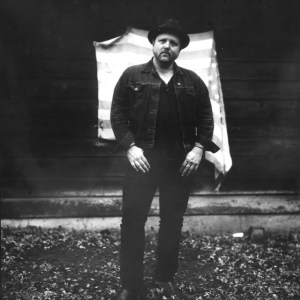
John Francis O’MaraJohn Francis O’Mara is an Episcopalian priest, theological scholar, activist, and acclaimed songwriter whose work bridges the sacred and the profane. With advanced degrees from Princeton Theological Seminary (M.Div) and General Theological Seminary (STM), and now pursuing a doctorate in Theology and Social Justice at Howard University, O’Mara roots his ministry in Liberation Theology and a tapestry of faith traditions including Celtic Christianity, Black Liberation Churches, and Native American spirituality. Hailed by Sojourners as “haunting as Springsteen,” dubbed by Wild Goose Festival as “one of the most prophetic voices of his generation,” and praised by Shane Claiborne as a “poet and instigator of movements,” O’Mara has performed everywhere from cathedrals to prisons, from UN gatherings to city streets, and alongside artists such as Sinead O’Connor, Mavis Staples, and Kris Kristofferson. Whether leading marches, teaching youth, or offering workshops and concerts worldwide, O’Mara shares stories and songs with theological depth, hard-earned experience, and transformative hope.

John Francis O’Mara’s Website

Forbidden Hymns Website


Troubling the Waters: Navigating Apocalyptic Currents with Jim Perkinson

Have you ever had a conversation that you wished you could immediately replay after it finished? I did, after this recording withI James W. Perkinson—theologian, poet, and street activist—exploring what it means to practice political spirituality in an age of ecological collapse. From the embattled streets of Detroit to the ancient wells of biblical memory, Perkinson weaves together insights from Black urban culture, Filipino wisdom, and indigenous teachings to offer a fiercely grounded hope for our unraveling times.

In our riveting back-and-forth covering ground from his book Political Spirituality for a Century of Water Wars The Angel of the Jordan Meets the Trickster of Detroit and beyond, Perkinson shares his remarkable journey from evangelical charismatic to street theologian, shaped by decades of learning from low-income African American communities in Detroit’s inner city, his marriage to a Filipina scholar, and deepening relationships with indigenous teachers. Through his involvement in Detroit’s water wars—where emergency managers imposed by the state shut off water to thousands of predominantly Black households—Perkinson discovered water not merely as a resource, but as ancestor, portal, and rebel.

Our conversation explores several key themes:

  • The Bible as “a book of weather” – Perkinson reveals Jesus as a “water warrior” and uncovers indigenous wisdom buried beneath layers of state-sponsored text
  • Ancient resistance to empire – How the Hebrew scriptures preserve a minority report of peoples who lived symbiotically with the land before extractive city-states
  • Ecological pedagogy in scripture – From the Exodus narrative as de-imperializing journey to the Sabbath-Jubilee tradition as teaching sustainable relationship with land
  • The overwhelming scale of crisis – Grappling with the 60-145 million indigenous people killed in the Americas and our daily extinction of 100-200 species without falling into justification or collapse
  • “Walking on two legs” – Perkinson’s practice of responding to immediate emergencies while asking deeper questions about ultimate aims
  • Animist re-enchantment as resistance – How developing personal relationships with the more-than-human world becomes both spiritual practice and political action

Throughout our dialogue, Perkinson challenges the assumption that technological progress equals moral progress, arguing instead that we need to learn from cultures with track records of living sustainably in place for generations. His work in Detroit includes everything from delivering water to families facing shutoffs to developing relationships with red cardinals outside his window—practices that have taught him to listen to the more-than-human world in revolutionary ways.

The episode concludes with Perkinson’s vision for urban dwellers seeking to reconnect with wild nature and ancient wisdom traditions. His work challenges listeners to become “seeds”—people worth descending from—who plant ourselves in the soil of this moment for futures we may never see, but nonetheless can prepare for.

Watch here!

To find more about James Perkinson’s poetry, insights, and work in the world, please check out his online home.