Hubert and Jan van Eyck. Ghent Altarpiece (Adoration of the Mystic Lamb). 1432, St. Bavo’s Cathedral, Ghent.
On Trinity Sunday, I took us on a journey to Cappadocia, Konya, Kars — three points on Anatolian soil. I introduced you to three voices singing the misunderstood Trinitarian mystery, in three distinct keys.
Today, I’m going to make the case that voices like these are in fact singing a three-party harmony, inviting us deeper into this Divine Dance of creation, cosmos, and communion.
While I might employ some lyrics that sound unfamiliar to ears dulled by the twin monotonies of fundamentalist religion and secular materialism, you don’t need a theology degree to fathom the gist. Your only requirement is a heart that has loved and been left…which is to say, only a heart.
The first voice — let’s call it the Cappadocian–Zizioulas voice — says: Each dancer is real. You are not an interchangeable part. The persons of the Trinity are not three masks covering one bored actor; they are genuinely distinct, vulnerably turned-toward each other, and their distinctiveness is not a problem to be dissolved into oneness but the very thing that makes this love love. This is the conviction Richard Rohr and I kept circling in The Divine Dance: Whatever is going on in God is “a flow, a radical relatedness, a perfect communion between Three.” God, the old mystics dared to say, is not merely a dancer but the dance itself. Apply this to your own life and it lands like a blow and a blessing at once: as Pope Leo affirms in his ground-breaking encyclical Magnifica Humanitas — issued, of all the providential timing, the very week I began this series — each of us is irreducible, “a face not merely a function,” never to be flattened into “data and performance.” You are not a smudge of generic humanity. You are a particular, peculiar, unrepeatable face: and you become more yourself, not less, the more deeply you give yourself away.
The second voice is Catherine LaCugna — a Catholic theologian who, in 1991, almost single-handedly hauled the Trinity back from the West’s museum and put this Divine dynamism to work. In her paradigm-shifting God for Us: The Trinity and Christian Life, LaCugna traces how, over a thousand years, we let this doctrine “defeat” itself: we split God into an inner life of communion that no one could perceive and an outer life of redemption, whose impacts we could observe. And then we became fascinated by the inner one — speculating about the private mathematics of the Godhead while the world burned. But as I’ve noted elsewhere, God, in God’s Trinitarian unfoldment, is not a math problem. LaCugna’s prophetic correction is bracingly simple: there is only one dance. There is no secret divine ballet happening behind a curtain that we’re meant to admire from our seats. There is one single movement of self-giving love that begins in the depths of God, becomes flesh in Jesus, breathes out as Spirit, and sweeps through the whole creation — and we are already in it.
You’re on the floor. You were on the floor before you heard the music.
And here is where LaCugna gets her teeth. If there is only one dance, then whoever gets shoved to the edge of the dance floor exposes a lie about the self-appointed bouncers. The personal is political, she said — shifting this sentiment from slogan to a Trinitarian song. Every structure that humiliates, every wall that says you can look but you cannot touch, every arrangement that ranks some of God’s faces above others — these aren’t merely unkind; they’re walking heresies with skin on. They tell a lie about who God is. Because the God revealed in the Feast of Holy Trinity is the God Whose very Being is the refusal to hoard, the refusal to exclude, the Endless making-room.
LaCugna drew the curve. She bent those two old circles — the inner and the outer God — into one great arc sweeping across all times and worlds. But she drew it, by her own admission, with the tools mainstream Western theology handed her, and those tools could only take her so far. She could trace the shape of the curve. She couldn’t quite say what the curve was made of. For this, we need to go back to the trickster-sage from Kars.
The third voice, then, is Bourgeault‘s — and through her, Gurdjieff‘s, and behind them both, oddly enough, a Renaissance shoemaker named Jacob Boehme. At the final keynote address last fall in Gyumri, at Armenia’s Black Fortress, Cynthia Bourgeault makes a claim about Gurdjieff so audacious it should come with a seatbelt: that the wild man of Kars may be the finest Trinitarian theologian Christianity ever produced. Not despite his strangeness but because of it. In the adroit hands of Gurdjieff and his Fourth Way students — philosophers and builders, artists and engineers, composers and gardeners — the Trinity ceased being speculation about God’s private inner life and was recast as a cosmogonic template, a pattern for how anything new comes to be, at any scale, in any realm. The ongoing impact of Gurdjieff’s Sacred Triamazikamno or Law of Universe Creation “gives the Trinity legs,” she says in her accompanying essay for the recent Special Gurdjieff Issue of the Journal of the Sydney Society of Literature and Aesthetics. He made this immobilized doctrine get up and walk. And what this third voice adds is the aspect the other two leave out:
The dance is going somewhere.
Trinity isn’t like a record on a turntable, spinning forever in place. They are a parabola — a great arc that descends all the way down into matter, into time, into the particular constraint of a body and a death, reaching its lowest and densest point in Jesus, and from this hinge begins to rise again, carrying everything it gathered on the way down. In the pages of The Eye of the Heart Bourgeault calls this “blueshift,” overturning the old, weary religious tale in which spirit is up and clean and matter is down and dirty, turning planet earth into one giant escape room with Spirit found only past the exits. This is one of the worst ideas of so-called Gnosticism, unfortunately repeated and reified by Perennialism, especially in its Traditionalist school.
But No, says a stubborn stream of Incarnationist, Emmanuel God-with-us lovers, exemplified by the peculiarlineage Bourgeault highlights. God does not lose energy by plunging into form. The descent is the method, not a tragedy. The way down is the way home.
And here is the turn that should give us pause, recollection, and repose. If the way down is the way home — if descent is the very method by which love becomes real — then someone has to pay the freight of all that descending. The cost is not some accident that befalls the dance partway through; the cost is written into the choreography from the first note. Bourgeault, reading Gurdjieff alongside old Boehme, puts it in a paragraph that struck me to my core, bringing my early evangelical atonement ardor, my mid-faith-compost atonement disintegration, and my contemporary atonement-curiosity as a parent and heartbroken human watching the world roil and convulse, full-circle:
“The crucifixion does not begin on the cross; it begins in the Trinity, that primordial djartklom, as the ineffable unity of divine knowledge and purpose willingly submits to its own drawing and quartering in order that anything at all can come into being. Gurdjieff has a deep feeling for the cosmogonic suffering involved here, which powerfully undergirds a good deal of his teaching, most succinctly and poignantly captured in his Fourth Obligolnian striving:
The striving, from the beginning of one’s existence, to pay as quickly as possible for one’s arising and individuality in order afterward to be free to lighten the sorrow of our Common Father.
If djartklom is thus the basic involutionary (i.e., incarnational) principle, then the unification of the three into one is the basic evolutionary mechanism. It is how we rise, how we pay the cost of our arising, how we lighten the sorrow of our common Father.”
An iconic scene from Alan Moore’s magesterial imaginal-realm graphic novel, Promethea.
It begins in the Trinity — in that primordial self-emptying by which the ineffable Unity submits to its own restraint, so that anything at all might come to be. Creation through self-limitation, reaching all the way into the cosmogonic heart of God.
Hubert and Jan van Eyck. Ghent Altarpiece (Adoration of the Mystic Lamb) detail.
Which is only the strange Seer of Patmos saying, in his own key, what he saw: the Lamb slain from the foundation of the world. (Revelation 13:8) Not slain at Calvary as an emergency repair. Slain from the foundation — the wound coeval with the world, the self-giving older than time, the kenosis that is the act of creating.
So someone pays the freight. This Someone, thankfully, is the Risen and Crowned Lamb. And this someone, paradoxically, includes you.
Which is where this gets personal, and where it starts to cost something. More on this — and a table of grace that turned me away — next time.
A Trinity Sunday reflection — and a hint of where we’re headed
“They worshiped him, but they doubted.” —Matthew 28:17
There is a sentence in this Sunday’s Lectionary Gospel reading that won’t leave me alone. Eleven men climb a mountain in Galilee because a Risen Man told them to. There they witness him. And then Matthew, who could have given us a tidy triumph, instead gives us this: They worshiped him, but they doubted.
Not some of them worshiped while others doubted.
The same people, in the same breath, did both.
Adoration and uncertainty, fumbling together. And it is into this shuffling, hesitant huddle — not after they get their act together — that Jesus speaks the most expansive words in the whole Gospel: all authority is given to him, all nations are invited to apprentice into his Way, and Remember, I am with you always, to the end of the age. Baptizing those responding to this call, he says, into a Name with three folds in it: Father, Son, Holy Spirit.
For a thousand years, friends of God in the Way of Jesus have kept this first Sunday after Pentecost as the Feast of the Holy Trinity. And for at least three hundred of those years, a good many thoughtful people have wondered why we bother. Immanuel Kant, back in the 18th century, sniffed that “absolutely nothing worthwhile for the practical life can be made out of the doctrine of the Trinity, taken literally.” A bit later, the great theologian Karl Rahner observed — with more sorrow than scorn — that if the Trinity quietly disappeared from Christian life tomorrow, most Christians wouldn’t notice it was gone. We’d keep singing our songs, eating our potlucks. The furniture would still be there.
I want to make a different wager today. I want to suggest that the Trinity is not a piece of doctrinal furniture at all, but something far stranger and more useful that has been sitting inside the furniture this whole time, waiting for someone to turn it around and look at the back.
Cynthia Bourgeault tells a story I love about this, toward the opening of her The Holy Trinity and the Law of Three: Discovering the Radical Truth at the Heart of Christianity. An old couple in eastern Turkey receive a beautiful cabinet shipped from their son in Istanbul. They proudly display their best teacups on it. A visiting friend is puzzled: Why would the son spend a fortune on a tea cupboard? So she unscrews the backing, and finds, hidden inside, a fully operative ham radio. The cabinet was never about the teacups. It was meant to connect them to the one they loved. “That,” she writes, “is an unsettlingly apt analogy for how we Christians have been using the Holy Trinity.” We’ve been setting our prettiest theological china on top of a communications device of staggering range.
So let’s turn it around and look at the back. And to do that, let me take the long way round — through a particular patch of ground that keeps producing people who know how to dance.
Act I: A land that births dancers
Here is something that delights me, and that I came to feel in my own body when I traveled there, to one of my ancestral homelands: an awful lot of our deepest intuitions about a God-in-motion seem to leak out of the same stretch of dry Anatolian highland.
Go back to the fourth century, to Cappadocia — that lunar landscape in what’s now central Turkey, all wind-carved tufa cones and cave churches. Here three friends and kin — Basil the Great, his brother Gregory of Nyssa, and their friend Gregory of Nazianzus, the ones we now call the Cappadocian Fathers — did something genuinely revolutionary, though they’d have been too busy to call it that. The Greek world had a perfectly good word, hypostasis, and an old theatrical word, prosopon — “mask,” the face an actor held up on stage. Borrowed, hollow, a role played and set down. The Cappadocians took that thin word and transmuted it. They made person the most real thing there is. Not a mask over some truer, impersonal stuff, nor an individual, walled off and alone. But a face that exists only in the turning-toward-another — being itself as communion. As one of their great modern interpreters, the late theologian John Zizioulas, puts it:
Outside of relationship there is no person at all; there is only an individual, and an individual, finally, is just a candidate for death.
Can you feel how radical this is? These Cappadocians were saying the ground floor of reality is not a lonely substance that later, optionally, decides to relate. The ground floor is relationship.
Love comes first, and makes the lovers.
Now walk a few centuries forward and a little south and east, to Konya — Rumi‘s city, where I have also stood. The whirling one witnesses isn’t performance; it is a doxology from head to quickly-moving toes.
One hand turned up to receive from heaven, one hand turned down to pour into the earth, the body itself becoming the hinge between the realms, turning and turning around a still center. Distinct language, a cousin faith, and yet — listen — the same intuition the Cappadocians had: that the Real is not a static One but a turning, a giving-and-receiving, and we become most ourselves not by clutching in place but by entering the motion.
Keep traveling forward in time and eastward in distance, up to the rough country near Kars, hard against the Armenian border, where in the 1860s or 70s a boy named Georgij Ivanovič Gurdžiev (known in the West as Gurdjieff) was born into that same Anatolian crossroads, of Greek and Armenian and Sufi and folk-Christian whisperings. He would spend his life claiming he’d recovered an ancient teaching about how reality actually moves: that nothing new ever arrives into being from two forces alone. Two forces lock, like wind against a sail, and the boat just rounds up and stops. Hegel’s endless derivatives and dialectical deadlocks offer us nothing genuinely new.
It takes a third — the hand on the tiller, a heading, a reconciling force — for anything to actually go anywhere. Gurdjieff called this ternary dynamism the Law of Universe Creation, or the Law of Three. And he insisted, with that trickster’s glint, that the Christians had been carrying this secret all along and forgotten what it was for. They’d been using it as a tea cupboard! (I dive more deeply into the Law of Three in last year’s reflection, Contemplation, Community, and Courageous Compassion: A Trinity Sunday Manifesto)
Cappadocia, Konya, Kars.
Three points on a Turkish map.
Three “dancers” born of the same hard, holy ground, each one insisting in their own tongue that God is a verb.
In my friend Paul Young’s novel The Shack, The Holy Spirit (who goes by Sarayu) says it plainly: “I am a verb. I am that I am. I will be who I will be. I am alive, dynamic, ever active, and moving… I will take a verb over a noun anytime.” Humans, she adds, have a knack for taking something alive and full of grace and freezing it into dead noun-ness that reeks of rules over relationality. Which is, more or less, the whole story of what we did to the Trinity — the stultifying tale this trilogy is trying to thaw.
We’re going to follow these dancers further in the days ahead. But first, notice what they have in common — because in the next letter I want to bring three voices into one room: a theologian who insists the dancers are real, a prophet who insists there’s only one dance and we’re already in it, and a wisdom teacher who insists the dance is going somewhere. Between them, I think, is a Trinity worth not just assenting to but living out.
For now, just stand on this dry Anatolian ground a moment longer, and let it tell you what it tells everyone who lingers here: that the Real is not a noun but a verb. Not some ‘thing’ to be possessed, but a motion to be joined.
Clearly, our planet is in need of a Christmas miracle.
The question is, where should we look?
If in Advent the waiting is, indeed, the hardest part, what are we waiting for?
Let’s look back to look forward.
In first-century Palestine, a young unwed mother was told she would bear the Divine. Her homeland was under imperial occupation; her social standing and familial status was uncertain. So what did she do when she received word that she’d become Theotokos, bearer of God-with-us?
Mary of Nazareth couldn’t contain herself:
With all my heart I glorify the Lord! In the depths of who I am I rejoice in God my savior. God has looked with favor on the low status of God’s servant. Look! From now on, everyone will consider me highly favored because the Mighty One has done great things for me.
Holy is the Name. God shows mercy to everyone, from one generation to the next, who honors God as God.
God has shown strength with a mighty arm. God has scattered those with arrogant thoughts and proud inclinations. God has pulled the powerful down from their thrones and lifted up the lowly.
God has filled the hungry with good things and sent the rich away empty-handed.
God has come to the aid of God’s beloved children, remembering Divine mercy, just as was promised to our ancestors, to Abraham and to his descendants forever. — Luke 1:46-55 (Inspired by the NRSVue)
In 20th-century Germany, Dietrich Bonhoeffer, a theologian, instigator, and (ultimately) martyr against Hitler’s Nazi Party’s co-opting of God and country, drew inspiration from Mary’s defiant prayer for a decidedly different kind of Christmas. He said:
The song of Mary is the oldest Advent hymn. It is the most passionate, most vehement, one might say most revolutionary Advent hymn ever sung. It is not the gentle, sweet, dreamy Mary that we so often see portrayed in pictures, but the passionate, powerful, proud, enthusiastic Mary, who speaks here. None of the sweet, sugary, or childish tones that we find so often in our Christmas hymns, but a hard, strong, uncompromising song of bringing down rulers from their thrones and humbling the lords of this world.
— From Dietrich Bonhoeffer’s Christmas Sermons, edited by Edwin H. Robertson.
A doll representing the baby Jesus is zip-tied in the Nativity scene outside of Lake Street Church of Evanston, in Evanston, Ill. / AP
Bonhoeffer drew Christmas strength from this uncompromising carol—a song not likely to be piped in as mall muzak to mollify the masses. Mary’s melody inspired Bonhoeffer and his Underground Seminary to release their religious pretense and practice the arcane discipline of ‘prayer and righteous action’—a faithfulness in the face of what looked like impossible odds.
Theirs were testimonies of resistance to the violently fashionable Christianity that was making Germany great again.
Girded with Mary’s Christmas carol of hope and resistance, and the Son that it heralded, the steadfast of Germany’s Confessing Church movement stood against genocide and the totalizing hijacking of faith for nationalistic ends—even unto death.
It’s not so much that it happened, as that it’s happening.
Once again, our planet is in need of a Christmas miracle.
The question is, what are we waiting for?
In this same plot of Germanic land where Bonhoeffer dwelled, some seven centuries prior, the Dominican mystic and preacher Meister Eckhart lived through a similar period of upheaval and need for fulfilled hope. In direct response to their own dire challenges, he asked his 13th-century Rhineland community:
What is my name? What is your name? What is God’s name?
He answered his own questions in this way:
Our name is: That we must be born. The Creator’s name is: To bear. We are all meant to be mothers of God. What good is it for me that Christ was born a thousand years ago in Bethlehem, if he is not born today in our own time?
(Note: You can listen to a beautiful guided Advent meditation based on these Meister Eckhart reflections, narrated by Jennifer Helminski, here.)
In 2025, American churches are answering Eckhart’s question with their bodies. Across the country, congregations are creating protest nativity scenes: Baby Jesus with zip-tied wrists, wrapped in emergency blankets. Mary wearing a gas mask. Roman soldiers donning tactical vests labeled ‘ICE.’ Empty mangers with signs reading ‘ICE WAS HERE.’
Rag-tag soldiers in the Revolutionary ‘Army’ of the Infant Jesus are waking up from our slumber. Mary’s Magnificat is spilling into the streets, interrupting routine, hot in our lungs as testimonies of resistance to an inversion of Christianity being weaponized for nationalism. These are acts of remembering that the Holy Family were themselves refugees, fleeing state violence, finding sanctuary where they could.
In the 21st century, feminist music icon and pastor’s kid Tori Amos re-visioned the classic Christmas hymn Star of Wonder. I hear its refrain as a prophecy of sorts:
Some say a star will rise again
in the hearts of humankind
Some say we have been in exile
What we need is solar fire!
How do we reignite this Solar Fire that once lit our horizons so brightly?
How do we reflect the Son who blazes like a Sun of love and justice?
How do we warm our weary hearts and become all flame?
We’ve been exiled for too long. What if we summon the courage to return through this hinge of history?
As we say goodbye to 2025 in all its upheaval and prepare to greet a brand new year, let’s Stay Woke —present and witnessing the birth pangs of God being birthed again from the womb we’re growing:
In our bodies, our communities, our planet, and in this moment where chronos becomes kairos.
Our survival as a species and an ecosystem demands that we become the answer to our prayers.
Dare we pray as mother Mary prayed?
Dare we birth as Meister Eckhart midwifed?
Dare we shelter as sanctuary churches shelter?
Dare we die, if needs be, as Brother Dietrich died?
Might it be—in anticipation, grace, and faithful action—that we’re drawing down transcendence in imminent frame?
Can we wake up as the incarnations of Christ we are?
Could we be the ones we’re waiting for?
Three Ways to Answer the Christmas Call in 2026:
Palestinian Christian children at worship.
As Advent gives way to Christmas, let’s stop waiting and start acting. Here are three concrete ways to become the answer to your prayers:
Make Your Church a Sanctuary Space
U.S. bishops have spoken: “We oppose the indiscriminate mass deportation of people.” But opposition without action is merely sentiment. Over 1,500 congregations across traditions—Lutheran, UCC, Catholic, Orthodox, Presbyterian, Methodist, Baptist, Quaker, Mennonite—have declared sanctuary.
Stand with Palestinian Christians and All Gaza Families
Cardinal Pizzaballa, visiting Gaza this Christmas, declared: “Christ is not absent from Gaza. He is there—crucified in the wounded, buried under rubble.” Palestinian Christians continue their ministry of presence amidst unimaginable suffering—500+ people sheltering in St. Porphyrius Church compound, clergy refusing to abandon those in need.
While the world’s eyes turn elsewhere, Sudan’s civil war has created the world’s largest displacement crisis. A Sudanese pastor pleads: “Please tell the leaders of the churches and anyone with a Christian conscience to put pressure on the belligerents. Try sanctions. Try something. Anything. Just stop the dying.”
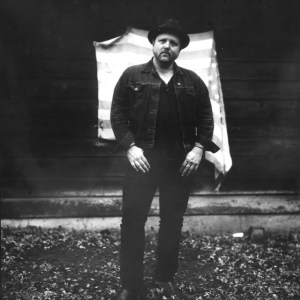
In his first full-length album in a decade, Irish-American singer-songwriter, John Francis O’Mara offers Forbidden Hymns, a collection of thirteen songs encompassing Alt-Country, Americana, Folk, and Rock, exploring social justice, theology, hope, and heartbreak due October 10, 2025. Produced by Ken Coomer (GRAMMY winning producer, and drummer for Wilco, Uncle Tupelo, Steve Earle) and delivering with O’Mara in the studio for the Forbidden Hymns band are guitarist Kenny Vaughan (Marty Stuart, Lucinda Williams), multi-instrumentalist Chris Scruggs, John Lancaster on keys, the late great bassist Dave Roe (Johnny Cash, John Mellencamp, Dwight Yoakam) and backing vocalist, Vinchelle Woods. John Carter Cash (son of June and Johnny) joins O’Mara with the co-written “No One Gets Out of Here Alive,” – a deeply human and empathetic reminder to “love pure and strong while there’s time.” In addition to his career as a singer-songwriter, O’Mara is an ordained Epsicopalian priest and Liberation Theology scholar, (Princeton and General Seminaries) currently working toward his Doctorate in Theology with a Social Justice focus, from Howard University School of Divinity.
“But, why ‘Forbidden’? Look around! The social and political landscape has taken a very dark and ugly turn,” says O’Mara of his album. “Stateside, the innocent and most vulnerable are being kidnapped and denied basic civil and human rights, while literal genocide and starving children’s screams are live-streamed in real time. Elites and the billionaire class rule from their ill-gotten thrones. Truth, beauty, and conscience are being legislated into silence, banned, and literally ‘forbidden’. The soul of America, and the very soul of humanity, is at stake. Many among us are being made to fear raising our voices.”
“Many among us are not afraid! I’m here to tell you, not on my watch,” the songwriter continues. “This is the precise moment many of us have been preparing for, and I will not be silenced. We who believe that a world full of empathy, justice, dignity and love is possible, will not be silenced! This record will not be silenced! Time to turn up the volume! Time to sing Forbidden Hymns.”
Forbidden Hymns opens with dynamic, “Walking In Babylon,” where O’Mara’s dulcet and soul-stirring, tremolo-tinged vocals and Kenny Vaughan’s reverberating guitar hook, are on full display. The track opens with an a cappella fragment of Bob Marley’s, “Rastaman Chant,” – drawn from The Book of Revelation. O’Mara uses the ‘Babylon’ metaphor as referring to an occupying imperial force, under which ‘we the people’ suffer in exile. “In the shadow where the empire spreads, me and my brothers are breakin’ bread’. In the framework of the song, that empire is marked by brutality, poverty, and racial violence, particularly against black and brown bodies. The songwriter outcries, “if you can’t breathe, I can’t breathe…another brother layin’ in a chalk outline.” The song’s questioning lament is punctuated with a plea: “Somebody tell me that hope’s not gone? Everybody’s sayin’ they’ve had enough! Let the people sing, ‘what about love?!’”
The guitar groove of “Lately Mary” invokes early Elvis Costello, and this very sticky hook, straight ahead folk, pop-rock song winks at Springsteen. True to the motifs of the album, O’Mara bellows out core human questions, yet relevant for our times. “How we gonna fill these mouths to feed? Gonna take more than a rosary bead,” he sings. O’Mara critiques the nauseating trend of many religious people in the face of tragedy, poverty, and despair, which is to offer ‘thoughts and prayers,’ rather than substantial, empathetic help. In this song, we see “Mother Mary” as she was, in her plain humanity, a homeless, refugee, single mother facing her reality where “it seems again there’s no room at the inn.” Note that the cover art centers an historically accurate, brown-skinned, Palestinian, Mary. Caution: song causes contagious call and response crowd participation.
The delicate and acoustic, “Jesus Walked on Water,” features O’Mara’s intricate finger-picking, and pedal steel, driving this newborn classic. A title that might suggest another Gospel song from O’Mara, but this ballad is a curve ball. The songwriter asks a close loved one, “do you still believe in me? All this time it’s taken me? All this time been breakin’ me?” The song is a tender, direct and open-chested surrender, and an admission that he is no miracle-worker, and no prophet, just a man with nothing to offer other than, “for you, I would die.” O’Mara whispers a universally human question, “can you see me?”
“Often, things fall apart,” says the songwriter, speaking from experience. “Dreams and hopes burn down. We are left with nothing but wreckage and ash.” “Ashes, Ashes,” is a subtle rocker, opening with a blues inspired guitar lick. Originally a piano ballad, John Francis pulled this treasure of an alt-country/Americana, guitar driven rocker, out of the smoldering ashes with the help of his longtime collaborator, melodic guitar-slinger Kenny Vaughan (Lucinda Williams, Marty Stuart). The first single released from Forbidden Hymns, “Ashes, Ashes” is reminiscent of early Wilco, in no small part due to the drumming and production of Ken Corner (Wilco, Uncle Tupelo). Bassist for Johnny Cash and Dwight Yoakom, the late great Dave Roe (for whom the record is dedicated) rounds out the low end of this reflective rallying cry about the aching beauty found in ashes, and the dazzling light behind the curtain of a world of shadows.
A soft, waltzy, guitar ballad, “Maria, I Would Dance With You But My Hands Are On Fire,” finds John Francis examining a biblical theme from an unexpected angle. Rolling Stone Magazine reviewed Dylan’s John Wesley Harding saying it was the “first Biblical Rock ’n’ Roll record.” Dylan might have been the first, but O’Mara’s is the newest. In fact, the chorus, which is also the title, is a direct quote from Bob Dylan. In the immediate aftermath of Dylan’s notorious Newport Folk Festival ‘going electric’, Maria Muldaur reached out to Dylan, and asked him to dance. Declining her invitation, Dylan gave her a very Dylanesque reply, “Maria, I would dance with you but my hands are on fire.” O’Mara borrowed this line of dialogue, reframed it, and breathed it into the refrain for this poetic piece. In the epic love ballad, O’Mara conjures pillars of fire in the wilderness, stages like cages, cosmic loneliness, and “canyons quaking like young lovers waking in the shelter of each other’s bodies.” Like Leonard Cohen before him, O’Mara consecrates religious and erotic thematic images, and lets them bleed into one narrative. The sacred and the sensual coexist when he serenades, “with God as my witness / the only prayer on my lips is / the poem of her sweet name.”
With its groovy guitar work punctuated by a tambourine playing double time, the earcandy folk-rock, poppy hooks and crooning of “Miracle,” invokes one of O’Mara’s heroes, the original Irish soul man, Van Morrison. Already in heavy rotation when leaked as a single in Switzerland, the songwriter sings, “she’s an angel in flight as she glides across the kitchen floor, into my arms…my, my, my!” There is supernatural magic in the romantic swooning of new love, “Miracle,” sings the praises of passionate bonds. O’Mara woos, “Woman, you’re the only woman in the world I’m wantin’.”
In a remote log cabin in the deep woods of central Tennessee, John Carter Cash (son of Johnny and June) and John Francis O’Mara were minding their own business one brisk morning, when a song came knocking. The two good friends stopped what they were doing, and let the new song in. The theme and feel of it brought John Carter back to some of his final conversations with his father. In that moment, JFO and JCC channeled a song that would soon tug on the heartstrings and water the eyes of audiences far and wide for many years to come. “No One Gets Out Of Here Alive,” is a hauntingly stark and vulnerable call to imbue each moment with the courage to love boldly, because life is fleeting. A deeply human and empathetic reminder to “love pure and strong while there’s time / keep the ends out for the ties that bind / let love be your only song, til the day that you die…,” lest we forget that our days are numbered. John Francis and John Carter performed ‘No Gets Out…’ for a live PBS taping, for 20,000+ fans in the Arkansas State arena, on the inaugural ‘Johnny Cash Music Festival’, also featuring George Jones, Kris Kristoffeson, and Rosanne Cash. The official DVD of the event was released globally, and featured this co-written masterpiece.
John Lancaster’s churchy Hammond organ and O’Mara’s solitary vocal open, “Mighty Power.” Written to be a gritty, spiritual marching order, to get to shoutin’ in both sanctuaries and saloons, and then spill out into the streets. “It is a declaration of spiritual empowerment. This is not a religious song, yet it rings out like a massive bell,” says the songwriter. Vinchelle Wood’s backing vocal delivery sweeps us right up into the rapture of a Black church revival. “There’s a mighty power inside of me, stronger than the wind and the waves / stronger than the sting of the grave / stronger than the poison I used to put in my veins…” O’Mara grabs us by the shoulders, shakes us, and invites us to encounter what some folks call a “higher power”, and then testify that it is ‘stronger than the Pharaoh and his armies / stronger than the twisted chains of slavery / stronger than the sorrow a-hangin’ on your city..”. Throughout, Chris Scruggs’ lap-steel talks in a heavenly tongue. Like a young Robert Plant, O’Mara shrieks, “Do you feel the power!!” asking the listener: “well, do you?”
O’Mara may be known for being “ripe with the kind of honest questions we used to rely on guys like Dylan and John Prine to raise” (Philadelphia Inquirer), but goddamn he can write a heartbreak song of love gone wrong. “Secrets Are Safe” is one of them, although the irony isn’t lost on us, because O’Mara is literally telling secrets. “Secrets Are Safe” hits like one of those songs that’s always been around, opening with the lines, “I guess I lost you somewhere between the moon and the falling snow / Or did I lose you out there, where my wheels were full of road?” O’Mara finds hidden treasure in the darkness of loss and pain, drags it out, and dusts it off to share it with the listener.
Forlorn and inconsolably sad songs are one of O’Mara’s signatures, though the phenomenon of “schadenfreude” comes to mind when listening to the lyrics of, “Maybe.” The listener can’t help but to glean resonant satisfaction from closure after all that pain. “Shadows stretch across our bed / across the words that we had said / how long have you known that you don’t know?” O’Mara is true to form as an Irish songwriter, and as G.K. Chesterton said of the Irish, “…all their wars are merry, and all their songs are sad.” This is a high and lonesome breakup song.
Touching the hem of U2’s garment, O’Mara’s band here is pulsing and driving, dynamic in tension and release. The tag at the end is gutwrenching, “My mouth still remembers the shape of your name.” Joining “Secrets Are Safe” and “Maybe,” “Wild Bleeding Heart” is third in the line-up of the broken-hearted trilogy on Forbidden Hymns. Once again, O’Mara spins together mythological images and literary figures to populate his landscape of cosmic loneliness.
Punching in at track 12, O’Mara delivers a riveting folk-rock pop song, in the vein of U2 or early Coldplay with the penultimate, “Heart Be Still” – an unabashed, tell it like it is, love song. The songwriter asks, “Love, could it be, that for love, the whole world bends the knee? / So come here to me! Come here! Come here! Come here! Come here to me!” Anyone who has longed to be near someone – and that’s everyone – knows this desire. “Gotta let your heart be still…next to mine.”
Closing the LP is the soaring, “Let it Be So,” which shines when the guitar solo nods at George Harrison, and the backbeat hits like Ringo. The song is the proclamation that another world is possible; a better world. If we are waiting for an anthem of change with a chorus to be echoed by everyone who still believes in justice, peace, dignity, and equality for all, our wait is over. John Francis O’Mara delivers that anthem, with the perfect ending to an exquisitely realized album: “Somebody say ‘Amen!”
About the Artist
John Francis O’Mara is an Episcopalian priest, theological scholar, activist, and acclaimed songwriter whose work bridges the sacred and the profane. With advanced degrees from Princeton Theological Seminary (M.Div) and General Theological Seminary (STM), and now pursuing a doctorate in Theology and Social Justice at Howard University, O’Mara roots his ministry in Liberation Theology and a tapestry of faith traditions including Celtic Christianity, Black Liberation Churches, and Native American spirituality. Hailed by Sojourners as “haunting as Springsteen,” dubbed by Wild Goose Festival as “one of the most prophetic voices of his generation,” and praised by Shane Claiborne as a “poet and instigator of movements,” O’Mara has performed everywhere from cathedrals to prisons, from UN gatherings to city streets, and alongside artists such as Sinead O’Connor, Mavis Staples, and Kris Kristofferson. Whether leading marches, teaching youth, or offering workshops and concerts worldwide, O’Mara shares stories and songs with theological depth, hard-earned experience, and transformative hope.
One of the most seminal depictions of interbeing,Rublev’s icon of the Trinity (c. 15th century) depicts three angels at Abraham and Sarah’s table – an image of divine fellowship. Tradition holds that there was space at the front of the table, sometimes depicted with a mirror, inviting us into the circle of communion. This is Trinity – After Rublev, Southwark, by contemporary artist Meg Wroe.
Trinity Sunday is the stealth holiday of the church year – often overlooked, tucked quietly between the fire of Pentecost and the long stretch of Ordinary Time. After the combustive tongues of flame and before “normal life” resumes, Trinity Sunday can feel like an abstract afterthought. Many faith communities admit they don’t know how to speak of, nevermind meaningfully receive, the Triune life of God. As a doctrine, the “Three-in-One” seems elusive, a square monotheistic God attempting to fit in a perichoretic circular hole! Often reduced to a kind of theological math problem, Immanuel Kant once quipped that nothing practical comes from belief in the Trinity; in our modern age of disenchantment this feast has indeed fallen onto hard times. Yet precisely here – in this almost-forgotten lectionary season pause – lies an invitation. Nestled after Pentecost’s blaze, Trinity Sunday offers a sacred breather, a chance to absorb what it means that God is not a distant monarch but a divine circle of Love.
Could this gentle feast actually set an essential pace for the rest of the year ahead?
In our culture, summers often kick off a headlong rush – work projects, family trips, society’s frenetic rhythms. Add to this increasing societal disintegration in the form of essential social safety nets being eroded, masked ICE agents disappearing our neighbors off the streets, and rising authoritarianism. But the liturgical calendar gifts us Trinity Sunday as a moment of reorientation in the midst of chaos. It whispers center down; sit at the table of Divine Hospitality. As the apostle Paul blessed the rambunctious, gifted, fraught first-century assembly in Corinth:
May the grace of the Lord Jesus Christ, the love of God and the fellowship of the Holy Spirit be with you all.
(2 Corinthians 13:14)
Can we receive this grace, love, and fellowship here and now, in the midst of what feels like the erosion of hospitality and democracy’s demise?
Far from being impractical, Trinity’s very mystery can refresh our burdened souls and realign our timetables. This day invites us to step back from the cacophony and recover a trinitarian symphony – a balance of contemplation, relationship, and action – to carry us through the year. Like a musical time signature, the Trinity’s threefold beat can keep us dancing in sync with God’s generous love through every season of life.
Let’s explore connecting with Trinity on three intertwining levels – Esoteric, Mesoteric, and Exoteric – from the innermost contemplative encounter to our shared relationships, to outward arcs of justice and healing. At each level, God’s Triune Presence offers a way to pace ourselves and participate in a momentum of love, justice, and belonging.
Esoteric – The Turning Within
On an esoteric level – the level of inner experience and contemplation – the Trinity isn’t a puzzle to be solved but a relationship to be savored. The early Church mystics dared to call God’s Triune life a perichoresis, a circle dance of mutual indwelling. In this view, the Father, Son, and Holy Spirit are engaged in an eternal embrace – a circular celebration of self-giving love, with room at the table for the whole world. In fact, the famous icon by Andrei Rublev (inspired by the three angels who visited Abraham and Sarah) features an open space at the front. Some speculate that a reflective surface was once there, a mirror – hinting that you, the observer, are invited into the scene. At the heart of reality, then, is not solitary, uni-directional power but a Communion. God is an eternal fellowship – the Holy One presenced in the dynamic and loving action of Three. And astonishingly, that fellowship welcomes us in.
As Fr. Richard Rohr and I affirm in The Divine Dance, the Trinity is not a closed circle; we were “always made for this.” Jesus emerges from the Trinity’s eternal fullness to show us that we each have a place at God’s table – “a participant at this banquet and a partner in God’s eternal dance of love and communion.” Salvation, in this view, isn’t a ticket to a far-off heaven but an invitation into intimacy with God, starting now. The apostle Paul hints at this lived experience when he writes that through Jesus “we have peace with God” and “the love of God has been poured out into our hearts through the Holy Spirit.” (Roman 5:1; In other words, the Trinity’s love is something we feel in our depths – a peace and warmth moving through us from Source to Son to Spirit.
Drawing from early 20th century Armenian teacher G.I. Gurdjieff, contemplative teachers like Cynthia Bourgeault offer subtle perspective about how Trinity is woven into the fabric of reality – a kind of “cosmic law and creative template” for how life generates and evolves. She speaks of the Law of Three: whenever there is dynamism and change, it often unfolds through a dance of three forces – an affirming force, a resisting force, and a reconciling force. The Trinity, she notes, embodies this generative principle: it’s the “inherent capacity of threefoldness to break symmetry and let the differences interact,” yielding something new. In plain terms, God’s One-ness is not static or stingy – it’s creative, playful, even. Proverbs 8 paints Wisdom (whom many see as a feminine image of the Logos or Spirit) as God’s partner before and during creation: “When God marked out the vault of the sky… then I was beside God as a master worker, delighting day by day, playing before him… finding delight in the human race.” At the core of the universe, there is a holy playfulness – a Joy that flows between Creator, Redeemer, and Sustainer, spilling out into creation.
What would it mean to trust that we are already included in that flow of love? For me, it begins in contemplative prayer – sitting still, breathing slowly, maybe repeating a sacred word – essentially hanging out in the Love between Father, Son, and Spirit. I sometimes imagine myself at at that table with Abraham and Sarah, the Trinity gazing at me with infinite acceptance. In those moments of quiet, I touch what theologian James B. Torrance called “the divine fellowship of love” – the original community that birthed our souls. This esoteric encounter is not about intellectual understanding; it’s about intimacy. It is where Jesus’ promise becomes real: “When the Spirit of truth comes, he will guide you into all truth… [Spirit] will take what is mine and declare it to you. All that the Father has is mine; therefore I said that he will take what is mine and declare it to you.” In other words, the Spirit is whispering to our spirit: “You are included. All that love and union I share with the Father – I share with you.”
Allowing ourselves to feast on the Holy Trinity can be profoundly healing. It puts our busy minds on pause and lets our hearts soak in Relationship itself. This is the pacing point Trinity Sunday offers: before rushing back into to-do lists and social struggles, drink from the divine well. Let the unforced rhythm of Father, Son, and Spirit set the tempo of your life. In silence, in centering prayer, in a walk in nature, we practice being held in the Trinity’s embrace. This inner grounding then gives rise to the next layer – how we treat others.
Mesoteric – Trinity in Relationship (Interbeing Among Us)
If the esoteric is about the soul’s direct communion with God, the mesoteric is about the spaces between – the relational field where the Trinity’s pattern can echo in our human communities. The word “mesoteric” literally means “middle” or “in between,” and it points to the shared life among people, plants, animals, ecosystems – the social-spiritual reality we create together. Here the Trinity moves from prayer closet to dinner table, from meditation cushion to meeting circle. What does it mean to say not only that God is a fellowship, but that we are invited to mirror that fellowship in our relationships?
It means reimagining community as sacred. Jesus prayed that all his followers “may be one, Father, just as you are in me and I am in you” (see John 17) – an audacious plea for human unity reflecting divine unity. Trinity isn’t just a doctrine about God; it’s an embodied practice of love, listening, and mutual presence. We glimpse it whenever we experience deep kinship or genuine dialogue. As I said in another Trinity Sunday reflection, “as I’ve sat at God’s table more and more, the fellowship of the Trinity has taken away my power to choose who are the good folks and who are bad ones; I no longer have the freedom to choose who I show respect to…” Once we’ve been loved without measure by God, we lose our taste for the bitter binaries of worthy/unworthy, insider/outsider. The Trinity rearranges our social prejudices. We start to see everyone – everyone – as bearing the divine image, welcomed into the circle.
Author and activist Sara Miles learned this through visceral experience. A San Francisco cook-turned-minister, she wandered into a church one day, ate a piece of communion bread, and it upended her life. In her memoir Take This Bread, she describes hearing a Voice that “advocates for the least qualified, least official, least likely; that upsets the established order and makes a joke of certainty. It proclaims against reason that the hungry will be fed, that those cast down will be raised up, and that all things, including my own failures, are being made new. It offers food without exception to the worthy and unworthy… and then commands everyone to do the same. It doesn’t promise to solve or erase suffering but to transform it, pledging that by loving one another, even through pain, we will find more life. And it insists that by opening ourselves to strangers… we will see more and more of the holy, since, without exception, all people are one body: God’s.”
What is this other than a description of trinitarian life bursting forth in the mess of human relationships? Father, Son, and Spirit live in radical equality and unity, and here they are nudging Sara (and us) to practice the same – to open our tables, hearts, and lives to “the least likely,” to welcome the stranger as our own. The Trinity’s inter-relational love “cracks our convictions open” and upsets our neat categories. Suddenly, we have family everywhere. We find the face of Christ in those we thought we had nothing in common with. We start to realize that relationship itself is holy ground.
In the pages of The Divine Dance, Richard Rohr and I experimented with what we call “we-space” practices – exercises that cultivate authentic presence and connection among people. In fact, some years back we co-created interpersonal contemplative games (yes, games!) to help groups tangibly experience “interbeing.” One simple but profound practice we use is called “Noticing.” It’s essentially mindful dialogue in pairs. One person begins by stating, “Sitting here with you, I notice…,” sharing whatever is arising – a sensation, an emotion, a thought. The partner listens and then responds, “Hearing that, I notice…,” and so on. Back and forth they go, trading awareness, without any crosstalk or analysis. It’s amazing what happens: the room’s buzz dies down, a hush of presence falls, and people who were strangers five minutes ago suddenly find themselves deeply connected – breathing in sync, eyes often moist with a tenderness that wasn’t there before. This simple exercise in shared awareness creates a field of presence. In the words of one participant, “I felt like I was standing on holy ground with my partner – like God was somehow in the space between us.” I get chills even recalling it, because I believe that’s exactly right: God is in the space between us. The Trinity is that space-between, the Love that flows back and forth. When we pay attention together – when I truly see you and you truly see me – the Spirit of Truth moves among us, knitting us into one.
This mesoteric layer of Trinity calls us to practice fellowship as sacrament. Table meals, support groups, friendship circles, neighborhood potlucks, honest family conversations – these become little icons of the divine fellowship. Even (or especially) when awkward or messy! Recall how Abraham and Sarah hurried to host the three mysterious visitors in Genesis 18, setting a meal before them; the icon of those three around a table has become the symbol of Trinitarian welcome. Robert Farrar Capon wryly pointed out that Abraham’s hospitality was far from perfect (Sarah literally laughed in God’s face in skepticism!), yet God still blessed the encounter. In Capon’s words, “The City of God began with a meal that didn’t go right; your spilled milk isn’t going to hold up the building of it too much.” In other words, fear not the fumbles. When we gather – even clumsily – in the Spirit of love, the Trinity is eager to work through our community. The ordinary becomes holy. By simply showing up for one another, we participate in the divine life that holds everything together.
So if you want a practice for Trinity Sunday and beyond: invite a few people over for dinner, or coffee, or a walk. Sit in a circle and share from the heart. Try the “Noticing” practice or just let each person speak without interruption. Embrace silence together – perhaps open with a minute of quiet prayer, acknowledging God’s presence. Read a short scripture (maybe Romans 5:1-5 or John 16:12-15 from this week’s Lectionary readings) and let it spark dialogue. Bless one another. These small acts attune us to the Divine Presence between us. Life in the Trinity is meant to be shared – “where two or three are gathered in my name, I am there among them,” Jesus promised. In a world of social isolation and fragmentation, choosing to cultivate communion – real, tangible, face-to-face love – is downright revolutionary. It is also the training ground for the next step: allowing Trinity love to flow out beyond our immediate circles into the wider world in acts of solidarity and justice.
Exoteric – Love and Solidarity in Action
If contemplation is the inhale and community is the heart, then compassionate action is the exhale of our trinitarian life. The exoteric layer is outward-facing: the way we embody God’s love in public, in the structures of society and the struggles of our neighbors. As Cornell West famously said, “Justice is what love looks like in public.” And public love – solidarity – is what the Trinity looks like when turned outward toward creation. The same flow of love we touched in prayer and practiced in community now propels us to stand with the suffering, speak truth to power, and co-create a more just world.
We live in a time of immense upheaval and need; it’s impossible to contemplate the Trinity as an eternal dance of love without feeling the dissonance of human cruelty and pain. In fact, ignoring that pain would mean we haven’t truly absorbed the lesson of Trinity at all, because the Trinity is not a closed circle of self-concern – God is always pouring Godself out. As theologians say, the Trinity is kenotic (self-emptying) love. God so loved the world that Christ entered our history, and the Spirit groans with us even now. Thus, our participation in the Trinity must lead us to the wounded places.
What does it mean to live the Trinity in the headlines of today? It means we refuse to remain aloof from our siblings’ pain. It means we seek the image of the Triune God even in those our society treats as expendable. Consider Gaza, for instance. This very week, even as some of us sing “Holy, Holy, Holy,” families in Gaza are grieving lost children and shattered homes. The asymmetry of their suffering cries out. How can we honor the Trinity – the God who is relationship and community – and not lament the broken relationships and community in the Holy Land? The Triune God who created all people in the divine image weeps over each life lost, especially on all sides of Abraham’s complicated family tree. To worship this God is to let our hearts be broken with the things that break God’s heart. It also means imagining and working for alternatives: ceasefires, dialogues, justice, and healing – however impossible they seem – because our prophetic imagination refuses to accept that violence and division are the final word.
Or take the plight of immigrant communities in Los Angeles and other U.S. cities. Lately, there have been waves of ICE raids, terrifying predawn operations that round up undocumented neighbors like criminals. Parents drop their kids at school not knowing if a deportation sweep will leave those children orphaned by afternoon. The Trinity teaches us that persons belong with persons – that separation is anathema to God. How then can we not stand up for families being torn apart? To live the Trinity exoterically might mean volunteering with an immigrants’ rights group, accompanying someone to a court hearing, or as simple an act as befriending a newcomer who faces loneliness and fear. It means saying, in effect, “Your family is my family, your suffering is not yours alone – we bear it together.” That is solidarity – love with its work boots on. It’s the outward expression of the inward grace we’ve received.
Even in the natural world, we see groaning and need. The climate crisis threatens the magnificent “very good” creation that the Triune God declared in the beginning. Record heat waves, wildfires, and storms are battering the earth. Just last fall in my own city of Asheville, we experienced Hurricane Helene, a storm of almost biblical proportions. In late September it stalled over the Appalachians and dumped record-breaking rains, causing devastating floods and mudslides across western North Carolina. It was the deadliest, costliest natural disaster in our state’s history. Entire communities were cut off, without power or clean water for weeks. Yet in that valley of shadows, I also witnessed something holy: neighbors becoming the answer to each other’s prayers. While FEMA and Red Cross did their part, much of the real recovery was grassroots. Local mutual aid groups and churches popped up as relief hubs.
One example is BeLoved Asheville, a scrappy community nonprofit long dedicated to the under-served. In Helene’s aftermath, BeLoved volunteers went street by street with food, blankets, potable water, and medical care for those who couldn’t access a shelter. National media cameras eventually moved on, but the local work continues: rebuilding homes, providing counseling for trauma, advocating for those who lost everything. Six months later, when network TV did revisit, they spotlighted how groups like BeLoved were “stepping up to help those in need”, and how people across the country could contribute. It was a striking image of community organizing as an expression of love. I recall one morning standing in a distribution center – it was actually a repurposed church fellowship hall – watching volunteers cook hot meals while others sorted donated diapers and toiletries. A diverse bunch – college students, off-duty firefighters, trans anarchist organizers, old hippie farmers – all working side by side, laughing and crying and passing out supplies. It hit me: This is church. This is Trinity-in-action. It’s messy, but it’s incarnation – love taking on flesh in the here and now.
In moments like that, I hear the resonance of Walter Brueggemann’s words and legacy. Walter – a towering Old Testament scholar and humble servant of God’s Word – departed this life recently, leaving us a treasury of insight. One of his most famous ideas is the “prophetic imagination”, which he defined as the calling to “nurture, nourish, and evoke a consciousness and perception alternative to the… dominant culture around us.” We honor Walter’s memory by refusing to accept the cynicism and despair of our age. He reminded us that every empire wants us either numb or hopeless – because if we can’t imagine a different world, we’ll never work for it. But the prophets – and I’d add, the trinitarian mystics and saints – dare to imagine God’s “reign” on earth as it is in heaven. They hold onto God’s dream of shalom: swords fashioned into plowshares, deserts blooming, exiles coming home, tables big enough for everyone. Brueggemann also spoke of preaching as “dangerous work” because truly prophetic preaching demands an “epistemological break” from the lies of the status quo. It’s emancipatory in that it frees our minds from what we thought was inevitable (say, endless war or poverty) and proclaims, “Another way is possible!” I can’t think of a more trinitarian task. Father, Son, and Spirit – that divine community of hope – is always inviting us toward New Creation, toward liberation. When we join in acts of justice, when we protect the vulnerable, when we speak truth in love to those in power, we are, in effect, preaching with our lives. We become the continuation of that prophetic tradition Walter championed – a people who do not flinch from the world’s pain, yet also refuse to accept that pain as permanent. We become sacraments of the Trinity’s restorative love in the world. Walter often signed off his emails and lectures with an exhortation to “Keep imagining!” – and that is exactly what we must do, in prayerful action, as we face today’s crises.
It strikes me that Trinity Sunday 2025 (Year C in the lectionary) gave us Romans 5 as a reading, and in it Paul says, “we even boast in our afflictions, knowing that affliction produces endurance… and hope does not disappoint us.” How audacious is that? Boasting in affliction! It’s not a masochistic thing – it’s that Way-faring hope knows suffering isn’t the end of the story. Why? Paul continues, “because God’s love has been poured into our hearts through the Holy Spirit.” The Trinity’s love on the inside empowers us to face the suffering on the outside without losing hope. That hope is not wishful thinking; it’s the prophetic imagination at work. It allows us to persevere in loving action, to “show up” again and again at the world’s broken places – with endurance that leads to character, Paul says, and a character that leads to hope. We’ve seen glimpses of that hope: in Gaza ceasefire movements, in immigrant youth (DREAMers) who refuse to stop dreaming, in climate activists planting trees in flooded neighborhoods and in the creative, urgent street theatre of Extinction Rebellion. We see it whenever communities rebuild after tragedy, refusing to abandon one another. This is the Trinity’s footprint in our world. It looks like solidarity and mutual aid. It looks like prophetic protest and courageous peacemaking. It looks like ordinary people doing outrageously loving things, because they know in their bones that all people are one body: God’s, and we truly belong to each other.
So, dear ones, as we mark Trinity Sunday, let’s take it personally and politically. Let’s allow this oft-neglected feast to become a way of life for the months ahead.
Take a deep breath of the Spirit – drink in the reality that at the center of the universe is a Relationship that holds you.
Let that divine Threefold Love calm your anxieties and heal some wounded places in your soul.
Then look around at the people in your life – family, friends, coworkers, even the difficult ones – and remember, you’re all invited to the same table.
Practice a little extra compassion, a little extra patience, maybe even risk a new vulnerability in your connections. The mesoteric Trinitarian path might be as simple as asking someone, “How are you really doing?” and being fully present to their answer. And finally, open your eyes to the wider world. Is there a local struggle or a global crisis that tugs at your heart? Don’t push it aside as “too big” – that tug may be the Spirit’s prompting. Pray about it, yes, but also consider one concrete action. Maybe it’s donating or volunteering, maybe it’s writing a letter to a lawmaker, maybe it’s joining a peaceful vigil or simply educating yourself and others. Whatever you do, know that you never do it alone. The Trinity goes with you – the very Life of God is energizing your humble actions. The Perichoretic ‘Circle Dance’ of all-encompassing Love is already out there on the streets, in the shelters, at the borders, in the hospitals, working anonymously through millions of unsung heroes. Go join them. Join us! This is the opti-mystic way – optimistic mysticism that prays as if everything depends on God and works as if everything depends on us, all the while knowing it’s Grace from start to finish.
Trinity Sunday may not come with catchy customs or colored lights, but it offers something far better: a recalibration of our lives to the heartbeat of God’s love. It’s a yearly reminder – an invitation – to dance.
To dance inwardly with the Divine, to dance together with our neighbors, and to dance into the world’s pain with hope and courage. As we enter the long green season of Ordinary Time, may we not lapse into ordinary complacency. Instead, empowered by the extraordinary love at the center of the Trinity, may we dream and do extraordinary things. In memory of Walter Brueggemann, let’s nurture that alternative consciousness – that prophetic, trinitarian imagination – and dare to believe that another world is possible. Because the One who is Three is at work even now, “making all things new.” And we – all of us – have a standing invitation to take our place at the table of this transforming, triune love.
So come, take a seat. Taste and see. The dance is just beginning, and there’s space for you.
Grace and peace in the name of the Father, Son, and Holy Spirit.



 Where have you heard this story?


 Theirs were testimonies of resistance to the violently fashionable Christianity that was making Germany great again.