Opti-mystic meditations on Spirit, Culture, & Permaculture
Author: Mike Morrell
Michael Morrell is the collaborating author, with Fr. Richard Rohr, on The Divine Dance: The Trinity and Your Transformation. He's also the founder of Wisdom Camp, a day-retreat for mystical misfits, and a founding organizer of the justice, arts, and spirituality Wild Goose Festival.
Michael curates contemplative and community experiences, taking joy in holding space for the extraordinary transformation that can
take place at the intersection of anticipation, imagination, and radical
acceptance.
Michael is also an avid writer, publishing consultant, author coach, futurist, and curator of the book-reviewing community, Speakeasy. His two children are growing up entirely too fast and he lives in Asheville, North Carolina.
Regular centering prayer encourages our direct knowing, without which there is no actual living Jesus tradition.
While we call Jesus our ascended master, our risen Lord, we act like we’re absentee landlords. Why do we invoke Eucharist in third person as though he’s not here?? Why not second person? Surely he didn’t go away when he died!
[Mike’s note: I love how Cynthia says Jesus “is” and “does” rather than “was” and “did” like so many of her fellow progressive Christians, who do indeed see themselves as absentee landlords presiding over a Jesus Christ estate sale!]
Surely our hearts can pick up a connection with our living master if we’re only shown how.
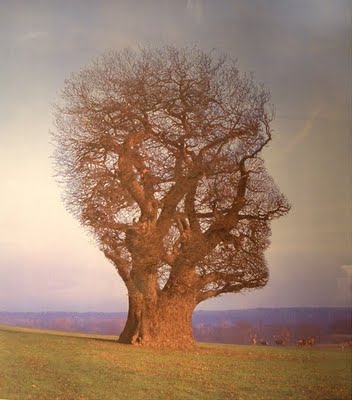
The heart is the original spacecraft, for time travel – connecting us with all that is true, beautiful, and real.
Recognition of power is a profound kriya; Peter walking on water is the perfect example of this. If we want this connection in a similar fashion, we have to become serious students of the heart.
Nondual consciousness must be carried by the heart. Orthodox (Eastern) Christians have known this from the start. “The mind must be in the heart.” If you talk to a good Buddhist, they’ll say they know through the mind, but this carries inherent limitations. Unitive oneness, compassionate action, the grace & clarity we attribute to the saints – this is never attained by the mind alone.
In utero, the heart & brain begin as a single organism (according to an embryologist she spoke to). There can be a feedback loop between the two of them. We are becoming students of the magic of this extraordinary cardiology, opening up a unitive way of seeing.
(A humorous aside – Cynthia visited some older monks who knew Thomas Merton. Their take on Merton: “Oh yes. The little silence he knew, he spoke about very well.”)
I’m not trying in any sense to trash the mind; it’s a wonderful instrument. When the mind and heart work together, they’re brilliant. But anything which makes the mind rigid, fearful, simplistic creates a human being who uses neither the mind nor the heart.
If you’re interested in exploring the myriad of ways in which apprentices to Jesus can navigate change in the 21st century – in our worship, our spiritual formation, our way of engaging the crises and opportunities we face today – I hope you join me at Co-Creation 2012, happening this April 12-15 in the same space where I saw Cynthia. Brian McLaren, Diana Butler-Bass, and Integral Christianityauthor Paul Smith will be joining with the Servant Leadership School of Greensboro, North Carolina and a half-dozen artists and musicians to bring a truly unforgettable, interactive experience. To register, click here; to read more about this in an in-depth blog post, go here.
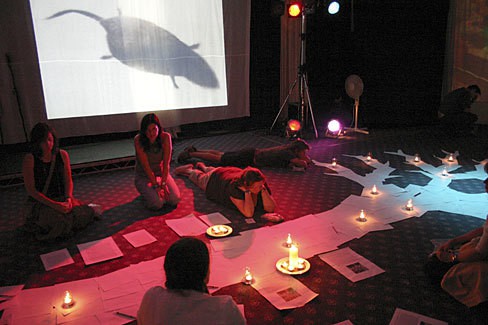
Today’s reflection is sure to raise some ambivalence – but no one processing religion, faith, and spirituality in a post*(everything) world can afford to ignore Matthew Fox – tempestuous, flamboyant, inventive; priest, artist, liturgist and theologian. The defrocked Catholic-turned-Episcopal priest was (with the unlikely influence-pairing of Vineyard revitalizer John Wimber) responsible for inspiring what was arguably the first ever emerging/postmodern congregation in the mid-1980s – the brilliant, controversial, combustible Nine O’ Clock Service. Inspired by a Wimber prophecy at St. Thom‘s in Sheffield and nurtured by Fox’s Creation Spirituality amongst working-class rave culture, the NOS was a potpourri of influences and expression.
The message is as straightforward as it is apparently elusive to many “spiritual leaders” today: The person and message of Christ and the Christian mystery must be not only applied to, but interpreted by, the Janus-faced Crises/Opportunities we face today: political, economic, cultural, and ecological. When we mine our Scripture, tradition, poetry, and luminaries on the one hand, and nature, art, science, and global cosmologies on the other hand, real magic can happen.
“Eyes on a page are not really a way to open the heart up,” says Fox. To see footage from his Cosmic Mass in Oakland, see this video here. If you’re part of a worshiping community, join me in considering: How can we bring more beauty and awe into our worship, drawing from the deep wells of our tradition, from ecology, and from postmodern culture?
Historians tracing the birth of self-consciously ’emerging’ forms of church – if they seek to trace such things – will quibble about where and when, as historians do. But my best case is that a modest Anglican church in a small northern England city visited by Vineyard leader John Wimber in 1985 is the genesis of all that emerges today: An eclectic band of cultural creatives serious about radical discipleship began to craft one of the most creative, aesthetically appealing, and theologically forward-looking congregations ever – for the 1980s/90s or today. The congregation called itself the Nine O’ Clock Service, and its leader was Chris Brain. Under Chris’s leadership, NOS (as it was known) became a model in the Church of England and beyond – a template for what later became Fresh Expressions, as well as the alternativeworshipmovement, which eventually spread (in at least some respects) to American innovators in the Young Leaders Network, which eventually became Terra Nova and then Emergent Village.
With that said, NOS could never fully emerge out from under the ‘radical discipleship’ and ‘shepherding‘ movements that marked the charismatic church – UK and American – in the 1970s and 80s. From the beginning, something was quite…off.
This is everybody’s idea of the perfect cautionary tale. As such, it is also one of the saddest reads in the growing literature about Emergence Christianity; for the Nine O’Clock devolved into scandal instead of evolving into a fresh expression of church. Its story needs to be known, however, by anyone seriously interested in being part of shaping an Emergence community.
It was hastily-written and could have used a better editor, but it’s a treasure trove of relatively-even-handed information and reflection. But more recently, I discovered a documentary that aired in the UK just as the national scandal – yes, national scandal – involving the NOS broke. As much as I’d read, as much as I’d talked to St. Thom’s members, I was unprepared for actual video feed of both NOS’s stunning services and face-to-face interviews with the brilliant/delusional Chris Brain and his co-creators/victims.
If you consider yourself an ally of emergence or a nemesis – or a charismatic movement enthusiast, or antagonist, for that matter – you owe it to yourself to watch this documentary. Here it is:
My reflections? I feel ambivalent. I think it would be all-too-easy to dismiss Chris Brain, when in fact trying great, bold things often seizes hold of our darkest shadows, and leaves open the possibility to great, bold failure. But is it better to have tried nothing? If Brain erred on the side of authoritarianism and prompting anxiety in his co-congregants that was very against the grain of the grace, freedom, and exploration he proposed, well – I’ll just come out and say it: I think that many of today’s emergent leaders (and I count myself in this, sometimes) suffer from a failure of nerve. Because we don’t want to be a “sage on the stage” we become “a guide on the side,” muting our deepest wisdom and most provocative gifts. Because we don’t want to be a Falwell or a Hinn or a Piper or a Mohler, we’re often diminutive in our impact.
I’ll say this: If we had more leaders like Chris Brain today – hopefully who have done substantial shadow work, a la ManKind Project or Women Within, which do fantastic work helping people transform their personal banes into blessings – the Great Emergence that many of us feel is in fact arising right now during our time of cultural transition would be more self-evident to every follower of Jesus today, not to mention the culture at large – whether they ‘agree’ with it or not.
None of this excuses Brain’s excesses, of course, or our all-too-common desire to latch onto a cult of personality.
But who else has stepped up to take eco-spirituality seriously in the past 20 years in a high-impact, visible way?
Who else has stepped up to bring truly beautiful worship into our midst that incorporates the ancient with the postmodern?
If anyone is reading this who used to be part of the Nine O’ Clock service at any level and would like to respond with a comment or even a proposed guest post, please let me know.
Bonus: Download a rare MP3 of a 1992 NOS Planetary Mass here.
Evolution. The very word struck fear into the hearts of 1980s homeschoolers everywhere – myself included. I remember my first encounters with the term, in an Answers in Genesisvideo series that our Douglasville-area homeschoolers association banded together to purchase and watch. Kids 4-17 huddled together in the Prays Mill Baptist Sunday school room, adjacent to the gym, to watch long, sweeping caricatures of evolutionary theory dismissed with two refrains said derisively-yet-sweetly by Australian creationist Ken Ham (who still had red hair back then):
It’s only a theory! and,
Were you there?
This video series (and the accompanying subculture) were all we needed to realize that the universe was created in six literal days 6,000 years ago, with carbon dating a sham and evolution a Satanic plot to discredit the bible and promote abortion, homosexuality, and one world government by the same godless people who took prayer out of public schools and watch Susan Sarandon movies.
Fast forward to college around the turn of the century. A philosophical young lad and fellow student turned me on to Hugh Ross and Reasons to Believe, with his argument that the Big Bang and an old earth/universe was indeed compatible with the biblical narrative of Genesis. I took to Intelligent Design like a duck to water – it was refreshing to not have to believe that God made rocks and stars appear old as a test of faith (as SBTS president Al Mohler apparently believes). It turns out some friends in my Atlanta-area house church were Hugh Ross fans, and indeed he was invited to speak at the school where one of them teaches – so I joined them there one night for a lecture from the man himself. While I was more convinced than ever of the scientific arguments for an old earth and cosmos, I learned that night Ross did not extend the same courtesy to biology that he did to physics – he rejected ‘macro’ evolution outright, seemingly on theological grounds.
From their insights (and the many antecedents they point to), I began to see the evolutionary impulse as emergent nested creativity, a divine spark that is ever-expanding in complexity and empathy, bringing us, quite possibly, to an approximation of Jesuit priest and paleontologist Teilhard de Chardin‘s idea of an Omega Point, where the universe is becoming conscious of itself (vis-a-vis us) and all of reality is forming the cosmic Body of Christ. Celebrating the gifts of the scientific community, these thinkers and idea-leaders embrace science with zest as (to put in Augustine’s terms) God’s other Sacred Book – nature.
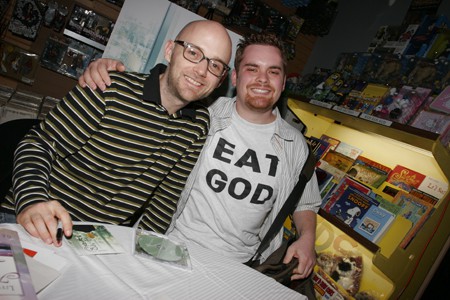
With all this as preamble, I’ve been thinking a lot over the past year about the second creation narrative in Genesis 2-3 – with Adam, Eve, the Serpent, two Trees, God and the garden. I’ve been pondering its significance, and how certain epiphanies in this narrative have led me to substantially re-imagine an eleven-year personal writing project. I’m currently staying in a lovely rural house with friends about 40 miles outside of Raleigh, on a writing ‘semi’ sabbatical. In addition to serving my many clients (don’t worry folks – I am still working!), I’m looking to at long last complete at least the ‘First Act’ of my Four-Act book. The book – and this is the first time I’ve said this publicly in 11 years – is titled Eat God, provisionally subtitled Taste Heaven, Party like a god, and Save the World.
Yesterday, my e-friend Shane Crash asked a pitch-perfect setup question via Twitter and Facebook – the kind of thing that primed the pump for me to road-test some ideas for the book. Here it is:
“People who believe God is punishing humanity because a chick ate an apple. Why?”
There were some fun answers, which you can read if Shane’s privacy settings are sufficiently low (I’m not sure). Here’s what I said, edited slightly for better coherence:
I’m not always fan of Augustine, and I’d like to get away from the idea of “The Fall,” believe me. I enjoy Matthew Fox’s Original Blessing, and I think he makes some compelling arguments for the original and sustaining goodness of creation, affirmed in Scripture and our experience. And yet, I can’t believe that humanity was just blissfully enjoying life when one day some grumpy religious people made up the myth of Eden and the rotten fruit. No…we must have felt something happen, some kind of existential shift, and then told this story of a primal human pair, two trees, and a tragic dietary choice.
Do I believe that God is ‘punishing’ us? No way! Do I believe a literal piece of fruit was ‘eaten’ by some first woman? That is highly debatable. But here’s what I think happened:
For some 200,000 years, homo sapiens enjoyed a pretty good life. Far from being ‘poor, nasty, brutish and short,’ a growing number of today’s anthropologists and archaeologists are pointing to a quite new vision of our deep pre-history. During the paleolithic era, we seemed to enjoy a deep sense of connection to our own bodies, one another, our natural environment, and our sense of the sacred (the last one of which seemed to include a High God/Creator, an immanent sense of the ‘spirit-ness’ of everyday objects and things, plus an ongoing communion with ancestors who have gone before us). We can see this way of living mostly neatly glimpsed in the rare, surviving aboriginal cultures on our planet today.
During most of our history, we shared everything. And there was abudnance – enough. We lived on a relatively ‘virgin’ planet, and population was much lower, for instance. Women were equal to men, and organized warfare was unheard of. I know this sounds like pie-in-the-sky, but read someJaredDiamond or Jetha and Ryan’s Sex at Dawn. It’s astonishing, the new consensus emerging about our original culture.
But then…something happened around 6,000 to 10,000 years ago. A magnetic pole shift, climate change, or the dawn of complex agriculture – there’s debate about which factor(s), but there’s a clear demarcation in our collective psyche, beginning in the Fertile Crescent and radiating outward along trade paths and weather patterns. Suddenly (over a period of 2,000-4,000 years – but ‘suddenly’ in geologic time), something changed in our fundamental psychological functioning. Whereas before consciousness was distributed through our entire bodies, now it all rushed up into our heads. Where we used to be instinctual, feeling, tribal creatures, every condition was now in place for us to be discursive reasoning, thinking, individual decision-makers. Psychologists call this until-now-unheard-of process self-reflexive consciousness.
Self-reflexive consciousness, the ability to reflect on ourselves “as though” from the outside, turned out to be a burden as well as a blessing. Over the milennia it’s given us planes, trains, and automobiles, but also war, pestilence, and famine. It’s given us art and ache, innovation and envy. This development of the ego is fundamental to all that is recognizably human. And yet, it is what gives us this undeniable feeling of four-fold alienation: from God, self, others, and our environment.
I think that the Hebrew bible and it’s narrative arc is wise beyond it’s years, but of course we (whether fundamentalist or modernist) over-literalize and argue about details. In its broadest strokes, though, I think that the break with ‘oceanic,’ interconnected ways of knowing to this four-fold alienation is “the fall.” I think that the Tree of Knowledge represents self-reflexive consciousness, dualistic thinking, and discursive reasoning, whereas the Tree of Life represents a kind of non-dual seeing, a holistic living in the present moment that embraces all of life as it arises.
This ‘Tree of Life’ consciousness, which is more a practice than anything (a practice I call eating God), is both backward-reflecting on our deep-time roots as humanity and forward-looking to our aspiration of integration: Taking the best attributes of our recent 10,000-year adolescence in division, judgement, and Fruit of Knowledge indigestion, putting us on a Tree of Life de-tox regimen so that unripe knowledge is purged from our systems, making way for the ripened fruit of the Wisdom we need before it’s too late for us as a species or an ecosystem.
[As a parenthesis, the story of Cain vs. Abel is the story of ascendant complex agrarianism (on its way to nascent urbanism) clashing with hunter-gatherers and simple pastoralism. God prefers the worship-connection of the hunter-gatherers over those of the upstart agrarians – the violent farmer knows this, and murder is born. For more on this perspective, see Brian McLaren‘s novel The Story We Find Ourselves In, and Daniel Quinn‘s fascinatingIshmaeltrilogy]
I think that Christ can point the way, or even BE the Way, if we ‘eat Christ‘ and take him as both Life and the Wisdom of God. Seeing what Jesus sees, and knowing what Jesus knows, is the route out from the dead-end of small-egoic consciousness and the on-ramp to four-fold re-connection with God, self, neighbor, and ecosystem.
Moby is a fan of ‘Eat God’…don’t you want to read?
Eat God: Act 1 (‘taste heaven’) transfigures the classical Christian mystical stages of ascent – illumination, purgation and union – into tasting, de-toxing, and digestion – and looks at how to make this practicable every day. It should be juicy. But in the meantime, if you’re interested in these concepts, I’d recommend you check out The Fall: The Insanity of the Ego in Human History. It’s not from a ‘Christian’ perspective (which is fine by me though the author missed some obvious, rich literary material) and the guy could’ve used an editor, but the research he pulls together is pure gold.
Eat God: Acts II – IV weaves all of this together with spiritual practice, Jesus’ subversive meal-sharing habits, and our contemporary food and water crises as a clarion call to a new way of being spiritual and human in the 21st century. It’s rooted in the deep tributaries of the Christian tradition, but incorporates science, poetry, and a good deal of strategic foresight and systems thinking as it applies to our food and water systems.
When Man ate of the fruit of the Tree, he discovered himself in the field of duality instead of the field of unity. As a result, he finds himself out, in exile. The two cherubim placed at the gate are there representative of the world of the pairs of opposites in which, having been cast out of the world of unity, he is now located. You are kept in exile by your commitment to that world.
Christ goes past that – “I and the Father are one” – back into the realm of unity from which we have been expelled. These are the mysteries. Here is an echo and a translation into another set of images of what we ourselves are experiencing. What comes forth now with the grain, as particles of that one life that informs all things, is the revelation of the spiritual unity in all its aspects.
Adam and Eve are separated from God and they are aware of this break in their sense of oneness. They seek to cover their nakedness. The question becomes, how do they get back to the Garden? To understand this mystery, we must forget all about judging and ethics and forget good and evil as well.
Jesus says, “Judge not, that you may not be judged.” That is the way back into the Garden. You must live on two levels: One, out of the recognition of all life as it is without judging it, and the other, by living in terms of the ethical values of one’s culture, or one’s particular personal religion. These are not easy tasks.
So an increasing number of my friends these days are atheists.
I don’t mean that I’m going to Atheist Meetup Groups to make new friends (though that would be fun, I’m sure); I mean that alot of my Christian friends are beginning to conclude that seeing God as an anthropocentric being ‘out there’ is no longer cutting it for them. They’re not (primarily) getting there via Dawkins or Dennett or Harris or Hitchens, though that might be side-reading. They’re getting there more via Dietrich Boenhoeffer’s Letters and Papers from Prison, or Pete Rollins’ The Fidelity of Betrayalor Insurrection – or Zizek or Badiou or Caputo or…you get the idea.
They’re also getting it from life – a lifetime spent doing the things that good (typically evangelical and charismatic, but also mainline and Catholic) Christians are taught to do. The virtue/prayer formulas taught in Deuteronomy or Proverbs (or even by Jesus) don’t seem to be working. The next thing you know, they start reading Mark’s gospel kinda like this, and Ecclesiastes, and voila! Atheist Christian.
What is an atheist Christian, you ask? Well, perhaps I’ll ask Ted Troxell to write me a guest post, but for now I’ll say this: An atheist Christian is a materialist who sees Jesus‘ (and, in many cases, Paul’s) ideals and programme under some soft of social-utopian lens, languaging a relational order in which all are given dignity. The theistic language that accompanied such visions is a necessary fact of the times in which they lived, but need not signify a core part of their ideology, as many of their other ideas (such as the smashing of idols, or the death of an incarnate God on a cross) are actually critical of and subversive toward overt religious claims.
I think I’d go so far as to say that I have more ‘atheist Christian’ friends these days than I do ‘uncomplicated’ Christian friends. How about you? Apparently this is not just a trend among emergent types, as even evangelical publishing house Tyndale has published The Christian Atheist: Believing in God but Living As If He Doesn’t Exist addressing this trend, though I’m not sure if Craig Groeschel‘s prognosis (which seems to be double-down and try more of the same) is really going to cut it with growing numbers of my friends. Atheist Christianity seems here to stay.
In many ways this trend disturbs me – too many of my atheist Christian friends have a nihilistic streak in them a mile wide. If “you shall know them by their fruits” is applied to their deconstruction of faith, well, in many cases their depression, anger, cynicism and disintegrating family life speaks for itself.
On the other hand, you have happy, well-adjusted atheists like Alain de Botton and Carl Sagan. To hear them talk they sound more like mystics, in awe at an interconnected universe. They don’t particularly believe that there’s an underlying, transcendent, conscious intelligence behind said universe, but they’re definitely reverent when it comes to What Is.
Compare this to the pietisms of the world – in Christianity, Pietism has Lutheran, Weslyan/Holiness, Pentecostal, charismatic and evangelical flavors. Puritanism is a close cousin of pietism too. Pietism says that God is a God “out there,” but if you please Him enough (through faith, devotion, good works, discipline, or any number of other requirements), you can feel God in you, transforming you.
Pietism is powerful – a lot of people report feeling God. In the same twentieth century that brought on the Death of God movement, birthed in an Atlanta pub that I’m sure hosts theological conversation to this day, there’s also been an explosion in Pietism as manifested in Pentecostal, charismatic, and indigenous ‘Spirit-filled’ churches throughout the global south and two-third world. Marked by passionate worship, fervent evangelistic preaching, ardent expectations of signs & wonders, (often) prosperity teaching and (usually) the Second Coming of Jesus, these churches are growing by leaps and bounds. It’s estimated that one out of two congregations on earth are one of these types.
I can see why. I grew up in them. There is much to commend about their palpable sense of the reality and goodness and availability of God.
And yet…there is trouble in Pietism.
I began to see this trouble when I startedreadingmystics when I took off for college, in the late 1990s, and started trying to do what they recommended doing – ie, savoring Scripture slowly in lectio divina, chanting Psalms, or sitting in openness before a God who’s rendered unknown at the very site of revelation. I’ve tried and fumbled at these practices as an individual, as well as in groups, ranging from Quakers to house churchers.
Now, at first blush, Christian mysticism is like Pietism on crack. If pop pietism can effuse ‘Jesus is My Boyfriend‘ Top 40-style worship songs, mystics can pen toe-curling erotic poetry to each member of the Trinity. If Pentecostals go to get their Jumpin’ Jehovah & Jesus fix twice a week (Sundays and Wednesday nights!), mystics expect some kind of daily encounter of the availability of God (though many are quick to caution against excessively showy manifestations, which they call ‘consolations’). But there’s a difference: In general, Christian mysticism or the contemplative path is far more subtle than Pietism, with its entire sanctifications, second blessings, and fast-tracks to an explosion of God’s palpable presence. The contemplative programme typically involves a lot of sitting, a lot of awareness, much letting go and a lot of quietly-cultivated love.
The end result of a life lived from this transfigured point of reference: A sense that God is everywhere even if God isn’t terribly overt; a weak God who looks like Jesus (strength made perfect in weakness) who is, nonetheless, All in all. A God in whom we live, move, and have our being – a ubiquitous God who defies description, even descriptors like ‘presence’ or ‘existence.’ It’s a deep ‘down and in’ consciousness of divinity, in which Spirit shows up disguised as your life.
Here’s where an extended quote from Jewish lawyer, activist, and spiritual teacher Jay Michaelson – author of Everything is God: The Radical Path of Nondual Judaism – is going to be awesome: Because I’m thinking is that deep-rooted nondual mysticism and awe-filled atheism are practically the same – at the end of the day, a God who is nowhere and a God who is everywhere might be merely a difference in semantics – a joy-filled word-play that we can each have fun with, riding the dialectic to a happier and more connected life. So here’s Jay:
To many people, spirituality is about having certain feelings, and spiritual practices are those actions which bring the feelings about. Light the candles, and feel “connected.” Pray, and become inspired. One does these practices in order to have certain feelings, or mindstates, to which one may attribute a range of mythic or psychological meaning. Conversely, if a practice isn’t working for you – that is, if you don’t get the desired feeling – drop it.
Secular critics of this type of spirituality (which often is derided as “New Age”) complain that it is narcissistic. Essentially, it’s just another thrill – and one which is then overlaid with delusion. At best, these pleasant delusions are rather pathetic balms. But they may also be deeply counterproductive, as the happy spiritual practitioner blissfully ignores her own problems, and those of the world. At worst, if the spiritual practitioner actually believes Allah, or Jesus, or whoever, is speaking to him, the delusions of the New Age are little different from the fundamentalisms of our era.
Within religious circles, surprisingly similar criticisms are leveled against ‘New Age’ spirituality. First, religious critics argue that New Age spirituality puts the individual before God. Some argue that it improperly values experience over authority, or over ethics – it is immodest, indulgent, and perhapsjust too much fun.
A less common critique comes from within the world of spiritual practitioners itself. Here, the complaint is neither impudence nor egotism but theological error. From a nondual perspective, spiritual practice is not about having a particular feeling, but about waking up to the shocking reality that your conventional self only exists as an appearance, a mirage. Like the Big Dipper, it is “there” in some sense, but not in the deepest sense; it’s not a structure of reality, but merely a way reality appears when looked at from a certain way. Spiritual and contemplative practice, in the nondual view, exist to wake us up from that “certain way,” which also happens to bring about all kinds of suffering, selfishness, and violence.
To do so, nondual spiritual practice must be all-pervasive. If you suppose that God is only present in the pleasant stuff – on a summer’s day but not in a cancer ward, when you’re feeling relaxed but not when you’re tense – then you’ve still making the same dualist error: God is here, but not there. In fact, the best spiritual practice might be one that neither provides the allure of the present nor the expiation of the difficult – but one which is utterly transparent, colorless, and thus always available. (Much more here!)
Michaelson is one of the most fascinating spiritual/religious thinkers, practitioners, and teachers today, precisely because he’s asking how the Western monotheistic faiths of Judaism, Christianity, and Islam might be potentially just as nondual as eastern traditions of Taoism or Advaita Vedanta. Now, for my more traditionally-minded Jesus-following readers who might feel like I’ve completely jumped the shark, don’t worry – I’ll get to my lens and my caveats in a moment. But first, let’s come back to Michaelson, in another article, this one on Prayer and Nonduality:
Nonduality may be understood in at least two ways. First, and traditionally, it proceeds from the theological tenet that God is infinite (Ein Sof in the Kabbalistic locution). Logically, if God is infinite, then every thing is God. “Do not look at a stone and say, ‘that is a stone and not God,'” wrote the sixteenth-century rabbi Moses Cordovero, one of the greatest Kabbalists of all time, “for you have dualized — God forbid. Instead, know that the stone is a thing pervaded by Divinity.”
Nonduality may also be understood from the bottom up (from our own experience), as well as from the top down (from the perspective of theology). The bottom-up inquiry proceeds not from a theological tenet but from a very close observation of our perceptions. Where, for example, is the “essence” (Platonic or otherwise) of the chair on which you are sitting? Take it apart mentally: is it in the wood? The legs? Its property of holding you up — which, if you inquire more closely, has nothing to do with the “chair” and everything to do with molecular properties, strong and weak nuclear forces, and all sorts of other things you and I do not understand? Really, “chair,” and everything else, is an emergent property that usefully describes reality as we experience it, but doesn’t really describe its actual truth. As Joseph Goldstein likes to say, it’s like the Big Dipper — it describes something about how things look from a particular perspective, but we all know there is no Big Dipper really, right?
It’s possible, if the mind is quieted and slowed by meditation, to notice how thoughts pop in and out, how they are all conditioned by other things, and how the idea of the “self” in which all of us are so invested is, like the Big Dipper, just a useful label that describes how things seem from a particular perspective — not how they are. In actuality, to speak of chairs, selves, and other things as existing in their own right is useful but not entirely accurate.
But if there’s no self, what is there?
That question is where pantheism and atheism shake hands, where nonduality in its specifically religious forms becomes quite interesting. God, we might say, is what is left when the self is subtracted from everything else. A Buddhist would say everything is an empty play of conditions: your decision whether or not to keep reading is due not to some homunculus inside your brain but to a myriad of causes, including genetics, what else you have to do today, how well I’m writing, learned behaviors, and so on. A nondual Jew or Christian uses the word “God” to refer to those conditions. (emphasis mine)
If God is All there Is, we can stop looking for the miracle – life is the miracle. We can also stop trying to explain away truly extraordinary, unusual happenings like the spontaneous healings and spot-on ‘words of knowledge’ and bizarre manifestations I’ve witnessed – because everything is God. This does not mean that there is no room for improvement, or that genuine evil and atrocity do not ‘exist’. Indeed, as Ram Dass said, “The world is perfect as it is – including my desire to change it.”
If you are the One, and—out of sheer exuberance, plenitude, superabundance—you want to play, to rejoice, to have fun, then you must first, manifest the Many, and then second, forget it is you who are the Many. Otherwise, no game. Manifestation, incarnation, is the great Game of the One playing at being the Many, for the sheer sport and fun of it.
But it’s not always fun.
Well, yes and no. The manifest world is a world of opposites—of pleasure versus pain, up versus down, good versus evil, subject versus object, light versus shadow. But if you are going to play the great cosmic Game, that is what you yourself set into motion. How else can you do it? If there are no parts and no players and no suffering and no Many, then you simply remain as the One and Only, Alone and Aloof. But it’s no fun having dinner alone. (The whole piece is well-worth reading if you haven’t already)
Now – there’s only one piece of this that doesn’t work for me as a relatively ‘orthodox’ Christian. It’s not God being all-pervasive, which I think is compelling, nor is it the difficulty this entails with ‘the problem of evil,’ which I think all cosmologies share – no, it actually shows up in the subtle-but-huge difference between Wilber and Michaelson’s depictions of nonduality: For Michaelson, ‘God’ often seems like a descriptor we give to the All – ‘God’ is a figure of speech. Eastern paths – and Western paths that tend to be over-accommodating to them – tend to elevate the impersonal over the personal as the highest insight possible. But for Wilber – in this piece at least – God has agency, and personality.
For me – and perhaps this is a weakness of mine, or perhaps this renders my nonduality and atheist-friendliness to be the thinnest of artifices – God must be personal. And God must be ultimately good – or, love – in the ways in which our deepest intuitions imagine goodness and love to be. Which is why I’m so taken by Jesus, and the imaging of God he depicts – ‘the exact representation of the Father’s being.’ Owning that yes, of course ‘Father’ and even ‘Person’ are projections and anthromorphisms, I can affirm that whatever ‘God’ is,
God must be more than personal – but I can’t agree that God is less than personal.
How can I get all of this to hang, cosmologically? Well I’m not sure, but let me throw a sketch out there, that my most theologically-astute friends can hopefully help me or rebut me on: You know how in Walter Wink’s theology, there’s a ‘spirituality of institutions’? How he posits (in The Powers that Beand everywhere) that “the Angel at the Church of Sardis,” et al, is referring to the collective identity of a particular congregation, which has a kind of supra–personality that includes but transcends the sum of its parts? And you know how Wink proposes that ‘the demonic’ is similarly institutionally personal – an ‘Angel’ who has turned against its reason for being? So that everything from the U.S. Military-Industrial Complex to Coca-Cola to the Church of Peter, Paul, and Mary and #Occupy is a principality and a power – either angelic or demonic, for good or for ill? (If you aren’t familiar with this way of thinking about the biblical witness concerning ‘the powers,’ readWink‘s books! They’re borne out of both personal experience with the demonic in helping end South African apartheid, as well as careful scholarship. They’re life-changers.) A corporation or a congregation or a popular mass movement seems to exert actions or behaviors that sometimes override the wills of individual members within it – even those who supposedly occupy influential or top-ranking positions within them. It’s as though the sum total of these groups have a will of their own, in a way that projects an aura of personality that transcends the organizational life of the collective.
Well, what if God is like that, relative to the Universe? If the universe is greater than the sum of its parts, the Personality thus generated is God. This could be a very specific God, revealed in one of the great world religions or philosophies, or perhaps fragments revealed in all of them – including atheism. (Sociologist Rodney Stark explores this possibility in Discovering God). This God could exhibit traits intelligible to humans, and could decide to manifest in one or more of any number of ways.
There are, as I see it, epistemological difficulties with this A-Personal-God-is-a-Projection-of-the-Universe idea. Namely the charge that this is simply pantheism writ large – God IS Reality, albeit personal (whereas most pantheists, like most deists, conceive God as most philosophers to – non-personal). Therefore, the pre-existence and transcendence of God is toast in this view. This need not be the inevitable conclusion, however. Because if time, as I understand Einstein, is a byproduct or co-extensive effect of space, then a God who transcends and includes the sum of the Universe’s parts need not be constrained by all of its strictures. Put another way, words like ‘eternity’ are themselves human creations, and we tend to associate ‘time’ with them when ‘depth’ is closer to their original meaning. Given all that we don’t really understand about quarks, super-strings, and holographic physics, we live in a strange and wonderful Universe that could bear or be borne by a strange and wonderful God.
This is not a ‘God of the gaps’ theory, relying on some sloppy appeal to ‘mystery’ and ‘what we don’t yet know’ to substantiate it. Ultimately, I’m deeply okay if God = The Universe (pantheism), or if God, even while being the personality generated by the Universe, turns out to be in some way outside its strictures and thus ‘transcendent’ over/beyond it (panentheism). Either way, God is All in All, as my Christian Scripture attests in its brightest moments. And either way, a God who emptied Godself in kenosis, and who died rather than seek revenge, who is resurrected nonviolently – this is a God whose ‘weak force’ is strength in a way where ubiquity might as well be non-existence, as ‘existence’ is a category too paltry to contain the Beloved. Instead, we have a Way who empties himself of easy certainty, a pathless path that is co-extensive with life itself. The realization of union with God (which need not come with bells and whistles – only the simple, trusting/experimental acknowledgment) yields a way of seeing in which God is everywhere, and manifest in everything – which might be the true meaning of Bonhoeffer’s ‘religionless Christianity,’ a path that is “utterly transparent, colorless, and thus always available.”
Pietism, then, is a frustrating half-measure – a God who is neither everything nor nothing, and is thus a bridge to nowhere – a dead-end of unmet religious longing leading to dangerous fundamentalism on the one hand and impotent liberalism on the other hand. Could it be that the God revealed in Jesus is a God willing to be broken and poured out , and in Pyrrhic resurrection negate into ubiquity, becoming tastable and handle-able by each of us, power distributed to the whole of us rather than a Power-Narrative all too easily abused by the strongest of us?


 If you’re interested in exploring the myriad of ways in which apprentices to Jesus can navigate change in the 21st century – in our worship, our spiritual formation, our way of engaging the crises and opportunities we face today – I hope you join me at Co-Creation 2012, happening this April 12-15 in the same space where I saw Cynthia. Brian McLaren, Diana Butler-Bass, and Integral Christianity author Paul Smith will be joining with the Servant Leadership School of Greensboro, North Carolina and a half-dozen artists and musicians to bring a truly unforgettable, interactive experience. To register, click here; to read more about this in an in-depth blog post, go here.


 I’ll say this: If we had more leaders like Chris Brain today – hopefully who have done substantial shadow work, a la