
Spirit Week: East Orthodox Spirituality, Charismatics, & the New Monasticism

Tomorrow I’m about to introduce what I feel is the latest significant entree into Pentecostal/charismatic dialogue with emergent/progressive followers of Jesus – but first, I’ve declared this Spirit week on my blog! My ongoing Wisdom Christianity series with Cynthia Bourgeault will be continued next week, but first I want to delve into some older, popular posts exploring the relation of Holy Spirit to fresh emergence. Starting here…

Remember how Thursday in the comments section of my entry I mentioned the 24/7 prayer movement? Okay, maybe not. Well anyway, my friend Lenz Philipp Müller emails me the other day and asks a great question that is related:

“Hi Michael, I’m curious about the book you’re currently reading –Punk Monk: New Monasticism and the Ancient Art of Breathing. [Not be confused with the other punk monk, my friend Brother Karekin M Yarian – though I think he and Andy Freeman would get along if they met!]  I’d cherish your opinion of the book and am wondering if it’s about the Jesus Prayer and hesychasm? I’ve started an exploration of orthodox spirituality and would like to know if and how the new monastics dig into these parts of the cloud of witnesses. On the one side I’m fascinated by the early fathers, on the other hand I don’t see how hermitism is Biblical. So for now, I think even or especially the hermits acquired wisdom and methods and more that are worthy to be rediscovered in our day and age and might even be keys to a spiritual awakening of life in community. Is that an approach Freeman and Greig would ascribe to?”

Lenz is referring to my previous Myspace blog where I display what I’m reading with entries. Punk Monk has been a breath of fresh air to me as I’ve been moving from a kind of theological cynicism in certain places to a second naivete,’ a place of wonder, astonishment, and trust in God that comes out the other side of world-weariness and incredulity. Wow, that’s a mouthful! I’ll try and unpack it in some upcoming entries, not to mention the rest of my life.

So: This book has been a great ride, Lenz, a moving tribute to the power of street-level, embodied prayer and compassion…but it isn’t , alas, dealing directly with hesychasm or the Jesus Prayer–as the subtitle might lead one to suspect. In my reading so far, it doesn’t directly engage Eastern Orthodox spirituality much, though it certainly engages with the Western contemplative tradition, particularly Celtic saints as well as Benedictines and Franciscans. What the subtitle “The Ancient Art of Breathing” refers to is not breath prayer but rather the synergy of action and contemplation, “breathing in” with our lives rest in God’s presence, and “breathing out” with our lives hospitality and acts of compassion. They see this “art of breathing” as key to the spiritual awakening of life in community…and I’m inclined to agree! All in all, its an excellent addition to the growing body of New Monastic literature.

With that said, I’d like to see some post evangelical/charismatic engagements with East Orthodox spirituality–particularly hesychasm and the idea of theosis, or “divinization,” which I feel is a far sexier (or if that language offends you, more evocative) way of framing “sanctification” for the 21st century. Of course, there probably are just such works out there, and I’m just not familiar with ’em–input, anyone?

A fascinating paper comparing the “Glory Dust” phenomenon of certain chrarismatic gatherings for worship and the “Visible Glory” reported on the faces of practicing hesychasts in the East Orthodox tradition can be read here. What on earth is “glory dust,” you ask? I recount my own experiences with it in this blog archive from a few years back.

This was originally posted on August 25, 2007. Coming tomorrow: My brand-new interview with Leif Hetland, author of Seeing Through Heaven’s Eyes.

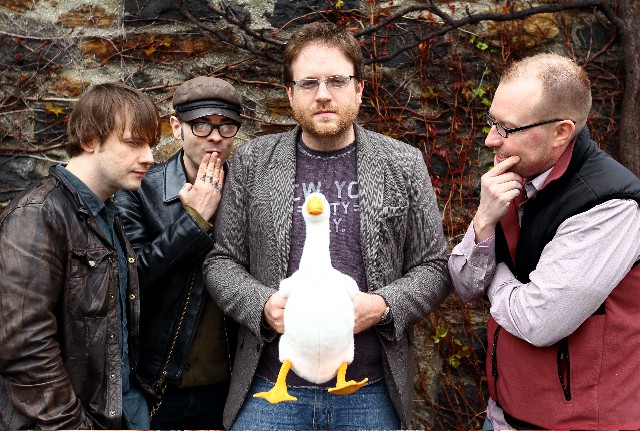
Sunday Devotional: Irish Edition

Happy Lord’s Day!

This morning, if you are worshiping in the temple not built with hands, I want to give you two hot-off-the-presses YouTube videos from two of my favorite Irishmen in all the world – my neighbor Gareth Higgins and epistemological adventurer Pete Rollins (with special guest star Brian McLaren). Enjoy!

(Alas, those cheeky, nu-media-ignoramuses at Duke have disabled embedding! You’ll have to actually watch Gareth’s vid in another window here.)

This was originally posted on December 14, 2008. Since then Gareth has become director of the Wild Goose Festival and Pete has released his incendiary treatise Insurrection.  

I Confess

Christine Sine from Mustard Seed Associates has tagged me for a confessional meme related to Christians Confess. Accordingly, I have three confessions, some “collective” and some personal, addressed to the planet-at-large from those of us who profess to be friends of Jesus.

“Repentence” by Yolanda Parsons

Here they are:

1.) I’m sorry that we in the Christian family have done such a poor job marrying soul to body. So often different streams of the Church pit one against the other, giving you either metaphysical abstraction or weak social proclamation; we draw and quarter Jesus into either “Teacher” or “Savior,” and therefore all give you a weak parody of “life to the full.” I confess that most of our actions as “the Church” have been utterly self-referential for our own perceived survival, taking little risk in truly getting to know/explore/wonder at either God or you. By being neither heavenly-minded nor of any earthly good, we have failed to provide you a true, creative, challenging alternative to life-as-usual.

2.) I’m sorry that I seem so cardboard when I share my faith with you. While I live most of my life being authentically me for better or worse, when it comes to the hope I find through God in Christ I suddenly begin speaking in a cadence that I don’t recognize, like I’m transformed into some kind of used-car salesman trying to get you to buy a Pinto or something. I think this points to my need to be more natural with God and seek out forms of Christian community that foster this honesty before I attempt to foist my idiosyncrasies on you.

3.) This is related to both above–I’m sorry that we as Christians have found it necessary to make you feel bad about yourself in order to share our “antidote,” which by implication is supposed to make you feel about the “symptoms” that we likely induced! Even though we profess that cleansing from wrong-doing and dis-integration with God and neighbor in an atmosphere of ‘no condemnation’ is the entry point to a sacred kind of living, we often resort to shaming and finding fault in order to gain the rhetorical upper-hand with you in our speech about God and Christ.

As it does little good to confess and apologize without metanoia–repentance, changing of the mind and heart–I have some things I’m saying “yes” to publicly here. I resolve to be a more integrated human being, loving and pursuing God with abandon, and having a heart that breaks with the things that break God’s. I will open my mind, will, and emotions to catch up to my human spirit in caring about life in the here-and-now, living fully in the present moment and exercising proper foresight into future opportunities and challenges. I will care more deeply about spirit and my inner development to become a more integrated, authentic person in the way of Jesus; I will pattern my outward actions accordingly, giving myself to you and our shared ecology more fully. And no matter where you are on your spiritual journey, I will honor you as someone in whom God is already at work. Perhaps if we become friends we can share perspectives with one another; I know I can learn alot from you, and I really do have a Hope within me that I’d like to open up about if you’ll give me the chance.

Tag! Absolutely anyone reading this is welcome to confess, but I specifically tag the following five ten folks (the official guidelines call for five, but I simply must ask these ten friends, as I’ll be fascinated by their replies):

Kevin Beck
Jo Guldi
Johnny Thomas
Brittian Bullock
Carl McColman
Jasmin Morrell
Bill Colburn
Gareth Higgins

There are so many others I am thinking of, but I have no idea if you’d be up for such a thing. Feel free to prove me wrong. : )

Here are the guidelines, from Christine’s blog:

“1. Apologize for three things that Christians have often got wrong. Your apologies should be directed towards those who don’t view themselves as part of the Christian community. Alternatively, apologize for things you personally have done wrong towards those outside of the church.
2. Post a comment at the originating post so others can keep track of the apologies.
3. Tag five people to participate in the meme.
4. If desired, send an email with the link to your blog post at the Christians Confess site, giving permission for your apologies to be added to the website.”

Oh…and one last one: I’m sorry for all those who have tagged me in memes previously without my participation! I’m not in this instance obligating myself to every such future invitation, but I probably really meant to act on yours. It’s just that I’m finally blogging now!

–Confessional Mike

This post was originally posted on August 7, 2007. Since that time, I think I have gotten better at #2. 

The Way of the Heart – Cynthia Bourgeault Part 2: See What Jesus Sees; Do What Jesus Does

What Is Nonduality?

It is unitive vision; uninterrupted sight; what the sages and mystics called union with God. It’s seeing from a whole different perspective. Our field of vision does not natively separate the playing field; our unconditioned eye sees from a kind of wholeness, a single grasp of the bigger picture. We call this nondual seeing. And yet we’ve devolved into separation-based seeing. Practices that invite nondual seeing represent an evolutionary advance in thinking and perception.

When Jesus looked out his own eyeballs, he saw a radically different world than we see when we look out of ours – this goes for his apprentices too. Most of his apprentices didn’t get it; they flattened his unitive seeing into dualistic categories. (Ie, “Which of us will sit at your left & your right in the Kingdom of Heaven?”)

Jesus wants us to get over categories like first & last – there is no order in a globe. Jesus is talking about global reality; his apprentices are hearing delayed gratification!

Jesus came as an evolutionary breakthrough in modeling, demonstrating, and seeing what human consciousness is capable of. It was missed in his own time; people flatlanded it. Only today, by God’s grace, are we getting to grasp today what Jesus is getting at in significant numbers.

Our seminaries, churches, and Sunday Schools are largely flatland, passing on a diminished vision.

A kindling is needed, another way of seeing whose roots are in spiritual practice. As we practice, we begin to see the world with Jesus’ eyes.

One of the unfortunate curveballs that Christian theology has given us is immense theological distance from Jesus – ‘Christology’ as it developed was bent no proving how Jesus is different than everyone else, the only Son of God instead of Paul’s “Jesus is the firstborn of many sisters and brothers.” We couldn’t handle this invitational revelation; we needed to admire Jesus more than be Jesus.

Jesus’ self-understanding is that of the Son of Humanity, what the Buddhists might call a Bodhisattva; an enlightened master who chooses to stay in the human condition and bring others with them.

Jesus didn’t say he was an impossible-to-follow act; indeed he said “greater things than I’ve done will you do.” Jesus was inviting humanity to a quantum leap forward – are we ready to listen?

To be continued…to see where Cynthia’s going with this, I highly recommend her book The Wisdom Jesus: Transforming Heart and Mind.

In this series:
The Way of the Heart – Cynthia Bourgeault Part 1: What IS the Path of Jesus?
The Way of the Heart – Cynthia Bourgeault Part 2: See What Jesus Sees; Do What Jesus Does
The Way of the Heart Part 3: Cynthia Bourgealt’s Four Proposals – Beyond ‘The Imitation of Christ’
The Way of the Heart Part 4: Heartfulness Practice Transcends & Includes Orthodoxy
The Way of the Heart Part 5: Upgrading Our Operating System
The Way of the Heart Part 6: A Rorschach Blot for the Mind
The Way of the Heart Part 7: When 20/20 Hindsight Becomes Blindsight
The Way of the Heart Interlude: Kenosis Hymn
The Way of the Heart Part 8: Heart Surgery 

The Way of the Heart – Cynthia Bourgeault Part 1: What IS the Path of Jesus?

Late last month, I was privileged to hang out at the Servant Leadership School in Greensboro, North Carolina. The SLS is a pioneer of spiritual formation and justice mobilization in the Southeast – I’d recommend anyone interested in ‘organic church’ or ’emergent’ faith check them out; they have a 20+ year track record of amazing-ness. Why was I there? To meet and listen to one of my heroes, Christian ‘Wisdom Teacher’ Cynthia Bourgeault. Bourgeault, among the first women ordained for priesthood in the Episcopal church in the 1970s, is delightfully hard to pin down in the categories of ‘liberal’ or ‘conservative.’ She’s so Jesus-centric that she’d make Billy Graham blush, she lauds the apostle Paul’s mystical insights, and she’s not afraid to challenge progressive shibboleths (like the gender of the Holy Spirit or certain other trends in feminist theology). Further, you get the sense that she really believes in a living-today Jesus and both the historicity and contemporary possibility of the miraculous. But before you invite her to speak at the next Purpose-Driven conference, you should realize that she’s also breezily conversant with and appreciative of the so-called ‘Gnositc Gospels’ like Thomas and Mary Magdalene (her commentary here) as well as active engagement of Buddhist and Sufi spirituality in the service of New Testament exegesis.

What emerges in her corpus of thought and practical teaching is a deep comfortability in a specifically Christian path of transformation that is all the same open-armed toward the wider world, in all its richness and complexity. Plus, you just want to wake up and do what she’s talking about!

What follows – today and over the next week or two – are my notes from a day session with Cynthia at the Servant Leadership School. These are mostly Cynthia’s ideas, interpreted through my words and rabbit trails. Enjoy.

The Jesus Path

Globally, we’re at a transition point: A first generation has brought us practices, established them in our lives, and given us a framework for asking the question: Who am I?

A second generation is (hopefully) emerging, who need to work with embodiment, what happens physiologically – a recovery of the prophetic and transformational aspects of the contemplative journey.

Centering prayer Bumped CB into the icon, the energy, the force, at the center of Christianity: Jesus – master, teacher, guide.

But what is Jesus’ path?

The Way of the Heart. Our challenge now is recovering the practice, the path, and the vision at the heart of our tradition.

CB’s journey was motivated into seminary, priesthood, and wisdom work – all spurred on by the cognitive dissonance of arguably the most inclusive, compassionate master (the one and only JC) allegedly inspiring a tradition that tends to present itself in rigid, judgmental, exclusionary ways.

Why did this happen?

The field of Christianity has become a turf war, with people lording over their own little fiefdoms.

Cognitive mismatch between the Koan-like testimony of Scripture and Christ’s living Presence on the one hand, and on the other hand, the sociological patina of Christendom. This motivated a journey to discover how and why we’ve lost our way. This quest led Cynthia through a variety of wisdom voices, including Gurdjieff, Sufi & Buddhist paths, and finally Thomas Keating.

Christianity’s dissonance was built in almost from the get-go was because no one got Jesus right. [At once a bold claim, and yet one that spurs on just about every reform and renewal movement, eh?] Jesus was undoubtedly the first nondual master that the Western world has ever seen.

Nondual? What does that mean?

[Hint: Read this or this, or many of Cynthia‘s excellent writings on the subject. But keep reading here to get her immediate response. To be continued…]

In this series:
The Way of the Heart – Cynthia Bourgeault Part 1: What IS the Path of Jesus?
The Way of the Heart – Cynthia Bourgeault Part 2: See What Jesus Sees; Do What Jesus Does
The Way of the Heart Part 3: Cynthia Bourgealt’s Four Proposals – Beyond ‘The Imitation of Christ’
The Way of the Heart Part 4: Heartfulness Practice Transcends & Includes Orthodoxy
The Way of the Heart Part 5: Upgrading Our Operating System
The Way of the Heart Part 6: A Rorschach Blot for the Mind
The Way of the Heart Part 7: When 20/20 Hindsight Becomes Blindsight
The Way of the Heart Interlude: Kenosis Hymn
The Way of the Heart Part 8: Heart Surgery