
God: Ever-New And Ancient (Naming the Unnamable) | Matthew Fox

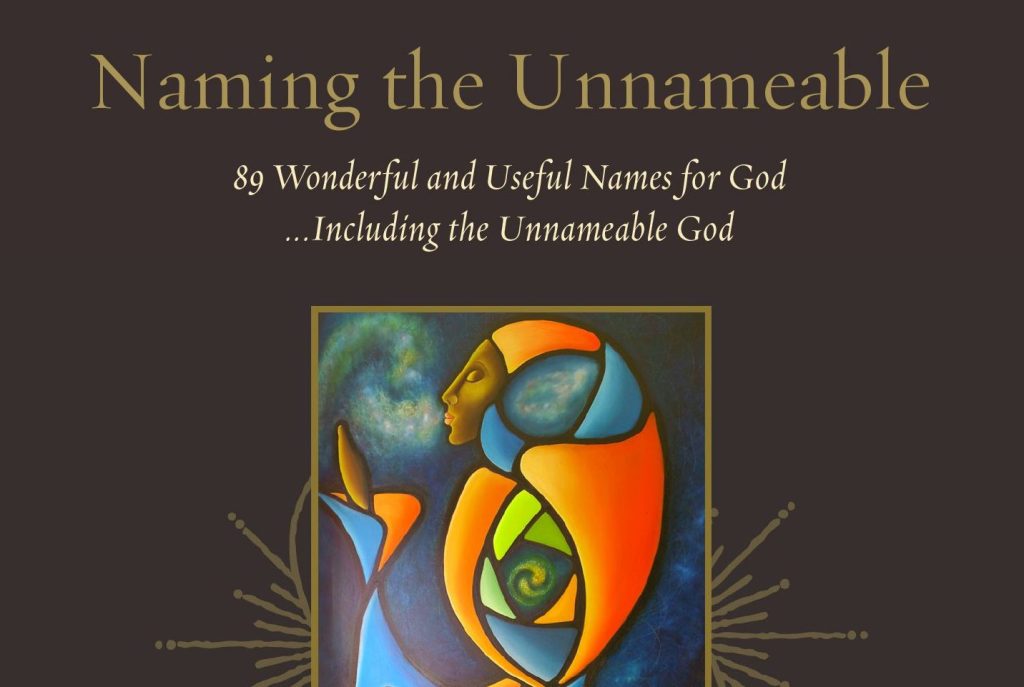
The following is based on a portion of Naming the Unnamable: 89 Wonderful and Useful Names for God, a brand-new release from esteemed Creation Spirituality theologian Matthew Fox. 

Join Matthew for a free video event to revisit the groundbreaking teachings of St. Thomas Aquinas and Julian of Norwich to stay grounded in these uncertain times. Register here!

God Has a Trillion Faces

The ancient Vedas of India tell us that “The One Existence the wise call by many names.”

How many names for Divinity are there? Do the names for God change? Ought they change as humans evolve and as circumstances of life evolve around us? Are we among the “wise” that the Vedas speak of who are eager to call the One Existence by many names? Do we have permission—and maybe a serious responsibility—to change our understanding and naming of God as we mature as individuals and as we evolve as a species and as we face a critical time – a ‘turning time’ – in human and planetary history?

The great medieval mystic Meister Eckhart declared: “I pray God to rid me of God.”

Apparently he was so convinced in the need to allow God and our names for God to evolve that he actually prayed to God to move on from being “God.” He challenges us further when he declares: “The highest and loftiest thing that a person can let go of is to let go of God for the sake of God.”

How many names for God have humans come up with? And which ones might serve us besttoday and what new ones beckon us? One answer to that question is a simple one:There are as many names for “God” as there are languages in the world, for each language calls God by a different word. Examples: God (English); Gott (German); Dieu (French); Dios (Spanish); Allah (Arabic); Gut (Norwegian);Theos (Greek); Deus (Portuguese); Bog (Russian);Dia (Irish); Elohim (Hebrew); Marta(Polish); Kalou (Fijian), etc. etc.

But that is by no means the whole story. For one thing, each language may well have multiple words for “God.” For example in English we can talk of Divinity; Spirit; Creator; Deity; Godhead; Goddess; and much more. If this is true in English no doubt it is true in other languages as well.

Every Religion offers its name for the Divine: Brahmin; Krishna; Tao; Buddha; Tara; Allah; Yahweh; Adonai; Tagashala; Wankan Tanka; Oshun; Isis; Christ – to name but a few.

So where else do we come up with alternative names or images of God? The Sacred Scriptures of the world are one such place; and the mystics of the world are another; and science is another. The Muslim tradition boasts a powerful practice of reciting the “99 Most Beautiful Names” of God; in many ways, this practice has inspired my newest book, Naming the Unnamable, wherein I present 89 current names for Divinity that I think are most beautiful and wonderful and useful for our times. I am grateful for that Muslim practice to which I am indebted and which I have often prayed myself.

The ancient scriptures of Hinduism known as the Bhagavad Gita tell us this: “God has a million faces.”

St Thomas Aquinas, medieval theologian and mystic, goes even further. He says that every being is a name for God when he says: “Even the very ones who were experienced concerning Divinity, such as the apostles and prophets, praise God as the Cause of all things from the many things caused.” Aquinas, in this amazing passage,goes on to name 49 names for God that sixth century Syrian monk Dionysius the Areopagite found in Scripture alone and discussed in his foundational work, The Divine Names.

What follows from his statement is that there are literally multiple trillions upon trillions upon trillions of names for God. Countless creatures—therefore,countless faces, countless names. But at the end of his treatise he says nobeing is a name for God because “God surpasses all things.”

If there are trillions upon trillions of names for God, who am I – and who are you – to dare to choose only 89?

Well, first of all, my book is unfinished. It is open-ended, and the last pages of each section are left blank so that you may add your own most wonderful and useful names for God.

Secondly, while there may be trillions upon trillions of names for God, it is clear that we humans are limited. We can only take so much input, and reflect deeply on avery finite number of thoughts, concepts and names. So this book presents avery finite number, a working number, of possible names for God. Hopefully they might prove useful and inspire other useful names from the reader.

In this book I seek to offer a finite number of names for God that I sense might be useful for us in the difficult ‘in-between’ times in which we find ourselves at this dawning of the post-modern era. I include a modest meditation with each name to assist a kind of ‘unraveling’ and unpacking of each name. I invite the reader to deepen the experience by his/her own meditation and investigation. Some have called our times ‘apocalyptic’ and philosopher Theodore Richards points out that ‘apocalypse’ also means ‘revelation.’ Perhaps, in dire times, deeper mysteries are revealing themselves, unveiling themselves, to us. But we need to listen deeply. We need to develop our muscles of contemplation. We need to cease projecting and to learn anew to let go so that we can listen truthfully to the ‘hidden Word’ of silence. From this hidden place of silence, this “cave of the heart” as Father Bede Griffiths calls it, might emerge some new and fresh language for a spiritual awakening, for rich names for Divinity, for a global renaissance. Hopefully, Naming the Unnamable can assist that important task.

As humans undergo deep changes, so too does our understanding of God or Divinity. Both Meister Eckhart, a medieval mystic activist, and Alfred North Whitehead, a twentieth century scientific philosopher, agree that Divinity evolves. “God Becomes where all creatures express God,” notes Eckhart. Thus, our names for God increase in possibilities and evolve as evolution continues all around us. Deepak Chopra sees God’s evolution this way: “What actually evolved was human understanding….we think that God changes, because our own perception waxes and wanes. The messages keep coming though and God keeps showing different faces….as awareness evolves, so does God. This journey never ends.”

Which, among the trillions upon trillions of God-names might serve us the best today? And serve the planet the best? And therefore serve God the best? That is the question that this book is presenting. Hopefully, it will be useful, for  as Aquinas insisted, a “little knowledge about important things is far more important than a lot of knowledge about unimportant things.”

A fresh understanding and language about Divinity may assist us to come up with fresh understandings of ourselves and thus the societies and institutions we feel called to give birth to as we struggle to assist other species to survive and to survive ourselves, to be sustainable, even to thrive and become beautiful and worthy of our holy existence.

Meister Eckhart warns us that when we talk about God we stutter and stumble. This is important information, that no word does God justice and no person or ideology holds a trademark on the word “God.” Humility and reverence are required evento enter into the conversation. A certain receptivity is required to enter into authentic God-talk. Hopefully that spirit of reverence, humility and receptivity imbues Naming the Unnamable and those who pick it up.

Here are but two of the 89 names and facets of God we explore…

God is the Newest and Youngest Thing in the Universe

In the ancient Vedas from India, God is called “most youthful.” Meister Eckhart says that “God is novissimus,” meaning the newest and youngest thing there is in the universe. He also says that “when we say God is eternal we mean God is eternally young.” There is something youthful and “in the beginning” about God—this is why both the Hebrew Bible and the Christian Bible (John 1.1) begin with the words “In the beginning….” To return to the beginning is to return to God therefore. And we do return to the beginning, to our “unborn selves,” as Eckhart puts it, and to the person you were before you were born. Buddhism tootalks of recovering our “original face” which we possessed before we were born.”

God is the Ancient One of Ancient Days, the ‘One Beyond Time’

Not only is Divinity young and youngest; it is also ancient and before time; and beyond time. Eckhart says: “God is eternity” who dwells in “the fullness of time. There everything is present and new.” But what is eternity? “Eternity is the peculiarity “that being and being young are one.” Because “both newness and life are proper to God,” our dwelling in the eternal now is dwelling in newness and life, vitality and the source of energy.

Hart says that “God is eternal, not in the sense of possessing limitless duration but in the sense of transcending time altogether. Time is the measure of finitude, of change, of the passage from potentiality to actuality. God, however, being infinite actual being, is necessarily…the One beyond time, comprehending all times within his eternal ‘now’.” We have glimpses of this “eternal now” when we undergo mystical experiences in moments of creativity or of great joy and ecstasy. At such times the past and future come together in the deep present and they are often accompanied by a deep Presence and a suspension of time—“Where did the time go?” we ask. This deep Presence can also communicate as a very ancient presence.

Praise for Naming the Unnameable

“Matthew Fox elegantly offers a contemplative practice that transforms the names of God to the experience of God.”
— Deepak Chopra, MD, author of Reinventing the Body, Resurrecting the Soul and Why Is God Laughing?

“Naming the Unnamable offers a smorgasbord of spiritual delights that will enrich the prayer life of both believers and nonbelievers. Fox’s radiant images and creative appellations transform the generic “God” into a vibrant, intimate Source for personal communion. Even those who have abandoned conventional religion will find wisdom and inspiration in these beautifully articulated reflections.”
— Estelle Frankel, author of Sacred Therapy and The Wisdom of Not Knowing

“How refreshing! Fox shows how we can think about God in so many different ways, freeing our minds and liberating our imaginations. It is easy not to believe the narrow conception of God that atheists do not believe in, but it is hard not to be inspired by a God who is energy, breath, life, flow, love, joy and the cause of wonder. This book is timely, important and admirably brief, it is also open ended.”
— Rupert Sheldrake, author of Science Set Free and Science and Spiritual Practices: Transformative Experiences and Their Effects on Our Bodies, Brains, and Health

“These are not just names but 89 theories of God across the ages and the planet, each focusing on the characteristic it deems most divine. Matthew Fox leads us on a startling and beautiful journey through humanity’s capacity to envision God, showing every way of looking at God is legitimate if it raises the aspirations of its adherents and their ability to carry them out. Is there objectively a God? What ‘God’ even means explodes in this little book like fireworks in the mind.”
— Nancy Abrams, author of A God That Could be Real: Spirituality, Science, and the Future of Our Planet

“This is a simple book written by a brilliant man who gives us a democratic vision of the names of God. It will be sure to appeal to readers of many faiths, scientists, and nature lovers as well.”
— Steven Herrmann, author of Spiritual Democracy

“Matthew Fox leads us on an important yet easily absorbable exploration of the multiplicity of forms in which we perceive the Divine in our lives. While we so readily seek to differentiate, define or even dispel the sacred, we desperately need teachers like Fox who show us the unity in diversity. I suspect that anyone can find some names in this book that resonate for them, whether scientist or artist, believer or atheist, old or young, female or male. Fox’s depth of insight and abundant compassion is felt throughout the pages as he helps us embrace and share in the wholeness of who We are.”
— Sky Nelson-Isaacs, M.Sc. Physics and author of Living in Flow

“I’ve always experienced the Divine as expressing through everything around me: the squirrel chattering up the oak tree, the waves crashing on the shore, my baby boy looking me in the eyes. Matthew Fox in Naming the Unnameable allows us to explore all of the many and dynamic ways that God speaks and breathes and plays in the world.”
―Jennifer Berit Listug, co-author with Matthew Fox and Skylar Wilson of Order of the Sacred Earth

“In Naming the Unnameable, Matthew Fox generously brings ‘God’ down to Earth and us into contact with the Great Mystery that dances all around and within us. He brings the arch of Western Religion back home …and with it, opens up a sense of the sacred for all to experience all-ways.”
―Skylar Wilson, co-author with Matthew Fox and Jennifer Berit Listug of Order of the Sacred Earth

Matthew Fox has been called a maverick, a rebel, and by some a heretic. In his quest for a viable spirituality he discovered the ancient (but often suppressed) creation spirituality tradition that honors the sacredness of all creation. He has worked closely with Native spiritual leaders, feminists, scientists, activists, and others, and got himself in trouble with his mother church and the pope. He has written nearly 40 books on spirituality and culture now translated in 67 languages and is a visiting scholar at the Academy for the Love of Learning and a professor at the new Fox Institute for Creation Spirituality. Among his books are Original Blessing, The Coming of the Cosmic Christ, The Lotus & The Rose, Naming the Unnameable: 89 Wonderful and Useful Names for God, A Way To God: Thomas Merton’s Creation Spirituality Journey, Meister Eckhart: A Mystic Warrior for Our Times, and The Hidden Spirituality of Men: Ten Metaphors to Awaken the Sacred Masculine.


Join Matthew for a free video event to revisit the groundbreaking teachings of St. Thomas Aquinas and Julian of Norwich to stay grounded in these uncertain times. Register here!

Re-Thinking Hellfire for a Christianity Without Insanity | Boyd Purcell

The following is an excerpt of Christianity Without the Insanity, a bold-yet-gentle, psychologically-informed and biblically-rooted examination of the idea of hell: What’s in integrity with our spiritual traditions, and what makes for emotionally-healthy spirituality. It’s a featured Speakeasy selection, and there are still limited review copies available for qualified reviewers.

Symbolism in The Holy Bible is bountiful, beautiful, timeless, and cross cultural. Many words, therefore, are not literally true. Thus, fire is a very prominent and significant symbol in the sacred writings of Christianity and other religions. One of the four Biblical definitions of The Supreme Being is “God is a consuming fire” (Deut. 4:24; Heb. 12:29).

In religious literature, suffering and punishment in fire are symbolic of the spiritually corrective nature of metaphorical fire. A literal interpretation of the symbolism of fire is a major cause of fear, spiritual insanity, and spiritual abuse—especially spiritual terrorism, spiritual abuse in its most extreme form.

Tasker, General Editor of the Evangelical Tyndale New Testament Commentaries, stated, in regard to “aeonian” in Mt. 25:46 having been mistranslated as “eternal,” it would be “difficult to exaggerate” the harm that is done “…when ‘fire’ is understood in a literal rather than in a metaphorical sense.”


Judaism

The metaphorical use of fire is a significant feature of Judaism, which includes sulfur and salt symbolism. The story of the destruction of the cities of Sodom and Gomorrah is an excellent case in point (Gen. 19:24-26).

Here we have in Genesis, written about 1,500 years before Christ, a preview of God’s redemptive strategy. This is the whole metaphorical and allegorical picture. Literalists are so driven to prove that this story literally happened that they miss the big symbolic picture. In the previous chapter of Genesis, the Lord informed Abraham that he was going to destroy those two cities due to their wickedness. For those who contend one must not question God, Abraham must have not gotten that message!

Abraham asked two very profound philosophical and theological questions:

“Will you destroy the righteous with the wicked” (18:23)?

And: “Will not the Judge of all the earth do right” (18:25)?

The answers were that God would not destroy the righteous, and He would do right. The Lord thus sent two angels to Abraham’s nephew, Lot, to warn him and save him and his family, since they were the only righteous ones in either city. The angels escorted Lot, his wife and daughters out of range of the fire and brimstone/sulfur and told them not to even look back. But his wife did look back and was turned into a pillar of salt.

What are the spiritual lessons to be learned? God gives ample warning to the righteous and does what is right. Lot and his daughters were saved by grace, the easy way through obedience.

Lot’s wife was turned into salt for disobedience. A question which reveals my analytical bent, I have asked many people, “Why was Lot’s wife turned into salt rather than into some other substance such as petrified wood, stone, bronze, iron, steel, etc.?”

Virtually all Christians know the story; most say the message is to obey God to the letter and never look back. I have yet for anyone to tell me that he or she has ever thought about why she was turned into salt rather than some other substance.

The answer is that salt is a preservative which preserves by purifying!

The Law of Moses required salt to be offered with meat offerings. This was the salt of the Covenant made with fire, symbolizing purification (Lev. 2:13-16). Lot’s wife was saved the hard way of being “salted,” which is also a means of grace.

The backdrop of this metaphorical drama was the wicked people of Sodom and Gomorrah being destroyed by burning sulfur for time, not eternity. Since burning sulfur symbolizes healing/ purification, the wicked will be healed of their sins and eventually accepted into heaven. The ancients readily understood this metaphorical use of fire and sulfur—burning sulfur. Indeed, it is a shame that many modern people, especially conservative Christians, are so literal-minded that they fail to grasp the truth in this beautiful, timeless, cross-cultural symbolic language.

Such symbolism is like international travel signs—no words are needed, just the visual image. To use a modern analogy, if the Bible would have said that, after The Final Judgment, all those infected with sin will be cast into a fiery lake of penicillin, would that not logically symbolize healing sin infection? Sulfur was the wonder drug in the ancient world as penicillin is today.

Isaiah uses fiery language to describe the fury of God toward sin. He comes burning with anger; His lips are full of indignation, and His tongue is as a devouring fire. The breath of God is like a stream of burning sulfur (30:27-33). Isaiah also declared that the judgmental fire of God will be unquenchable (66:24). It will, therefore, purify those who have rebelled against God and have been resisting God’s saving grace. The result will eventually be universal worship of the one living God as evidenced by every knee bowing and every tongue confessing faith in God (45:21-25; 66:23). Zechariah (13:9) and Malachi (3:1-3) also describe the fiery judgment of God. Malachi closes with this commission. The people of the Covenant are told to go forth and tread down the wicked. The symbolism of the consuming fire is continued with assurance that the wicked shall be “ashes” under their feet (4:3).

Christianity

With the final-prophetic message of Malachi, there were 400 years in which no prophet of Israel was heard. This span of four centuries is known by Christians as “The Intertestamental Period.”

Suddenly the long-prophetic silence was shattered by the cry of a baby—the Jewish Messiah who was born of the Blessed Virgin Mary. Jesus was Jewish in every sense. His parents were Jews, His culture was Jewish, and His religion was Judaism. He prophetically proclaimed to his people that the first commandment is, “Hear O Israel; The Lord our God is one Lord” (Mark 12:29). This, of course, is a quotation from the Law of Moses (Deut. 6:4).

Jesus acted totally within the Jewish tradition of great prophets by castigating the people for their sin of failing to live up to their calling as the people of the Covenant. He, like all Jewish prophets of The Torah before him, called the covenantal people to a higher standard. He also continued the metaphorical use of fire.

John the Baptist was in that same-great Jewish-prophetic tradition in the symbolic use of fire. Referring to the people of the Covenant and calling them to be faithful and fruitful, he declared to them, just prior to his baptism of Jesus, that the Messiah would baptize with the Holy Spirit and with fire, and there would be a judgment of unquenchable fire (Mt. 3:10-12).

We can say three things with certainty about Jesus’ use of the word “fire.” He used fire in a metaphorical—not a literal—sense.

He used it not to instill a morbid fear of God in the people of the Covenant but to convey the purifying message of God as the consuming fire in order to call them to a higher standard. Jesus used fire in the same sense as Moses, Isaiah, Zechariah, Malachi, John the Baptist, as well as other Jewish prophets.

Not one used fire in a literal or negative sense, which must be kept in mind as one reads Jesus’ words in regard to hell fire that may appear to teach eternal punishment. A good example of that is Jesus’ teaching about the unrighteous being consigned to the “aeonian” fire prepared for the devil and his angels (Mt. 25:41). Jesus validated the Jewish prophets’ metaphorical use of fire when he stated that the fire of hell will not be quenched (Mark 9:48). Unquenchable does not mean that the fire will never go out, only that it will not be put out or extinguished. But it will burn out when it has accomplished the purifying purpose for which God created it. Jesus left absolutely no doubt about his symbolic use of fire when He stated the purpose of hell:

“For every one shall be salted with fire, and every sacrifice shall be salted with salt” (Mark 9:49).

In the Aramaic which Jesus spoke, speakers expressed themselves in the strongest words possible to make their point. Thus, Jesus used strong though not literal-meaning words.

Mild Accuracy Weakness

Dr. Rocco Errico, a scholar in Aramaic, said in And There Was Light that an Aramaic speaker’s purpose was not to deliver the message in scientifically accurate terms. “He piles up his metaphors and superlatives, reinforced by a theatrical display of gestures and facial expression in order to make the hearer feel his meaning. He speaks as it were in pictures…It is also because he loves to speak in pictures and to subordinate literal accuracy to the total impression of an utterance, that he makes such extensive use of figurative language…he is fond of metaphor, exaggeration, and positiveness in speech. To him, mild accuracy is weakness.”

This understanding of the Aramaic language and culture explains exactly why Jesus’ used all these strong picture words in general and, especially in regard to hell—weeping, wailing, gnashing of teeth, cutting off one’s hands and feet and gouging out one’s eyes, unquenchable fire, being salted with fire, etc., because He needed to communicate in the manner His audience would have readily understood. They would not have taken such word pictures literally. On the other hand, they would have considered mild accuracy weakness! If Jesus had spoken in a mild manner, He may have lost his audience as they became bored and walked away. Even if they had not walked away, they may have missed His point if He were speaking in a style unfamiliar to them.

When trying to correct the inconsistency between what the Pharisees taught and what they did, Jesus could have said in our Western-world abstract style, “Your teachings and your behavior are incongruent.” But Jesus, as an excellent Aramaic speaker, exclaimed, “blind guides,” “child of hell,” “fools,” “hypocrites,” “serpents and generation of vipers,” “strain out a gnat and swallow a camel,” “whitewashed tombs” [clean on the outside but a stench on the inside], and “How can you escape the damnation of hell” (Mt. 23:13-33)?

Doubtlessly, Jesus deliberately mixed the metaphors of fire and salt to make it impossible for literalists to logically interpret this metaphorical language literally. It is, of course, impossible to literally salt anyone or anything with fire. And yet literalists, locked into a mindset of literalism, still interpret Jesus’ words literally.

This is a major cause of spiritual abuse/terrorism and spiritual insanity. Some victims of spiritual insanity become spiritually and mentally insane and homicidal and/or suicidal!

Christian Conceptions of Hell

Extremely Abusive

  1. Hell is worse than literal fire for eternal torture of sinners. This is the view of Bill Wiese in his book, 23 Minutes in Hell and Robert Morey in his book Death and the Afterlife.
  2. Hell is literal fire for eternal torture of sinners. This is the view of Fundamental and many Evangelical Christians.

Moderately Abusive

  1. Hell is not literal fire but symbolizes a torturous existence with sinners in it. This is the view of some Evangelical and most mainline Protestant Christians [if they believe in hell].
  2. Hellfire is for the purpose of annihilating sinners so they will cease to exist. The annihilation may be instant or progressive, but no one will be tormented forever. This is the view of the late Drs. Clark Pinnock and John Stott.

Mildly Abusive

  1. Hell symbolizes nonexistence, but God will not annihilate sinners. They will go to “sleep” at death and never awaken. This view is called “Conditional Immortality.” God will bestow immortality on those who accept Christ as Savior.
  2. Hellfire symbolizes purification of sinners. But sinners will not be saved due to them forever saying “No” to God’s offer of salvation and God not violating their free will. This is the view of Rob Bell in his best-selling book, Love Wins: A Book About Heaven, Hell, and the Fate of Every Person Who Has Ever Lived [whose fate Bell laves uncertain].
  3. Hell fire is for purification, and almost all sinners will be saved. But not all will be saved, because after God, as fire, has consumed all the sin in some people there will be nothing good in them, so the fire that consumes sin will then consume such sinners. This is the view of Sharon Baker in her book, Razing Hell: Rethinking Everything You’ve Been Taught About God’s Wrath and Judgment.

Non-Abusive

  1. Hell fire symbolizes purification of sinners. And, eventually, without coercing or violating free will, all sinners will say, “Yes” to God’s offer of salvation and be saved. Theoretically, in this view, sinners in hell could say “No” to God’s offer of salvation forever, since God will never violate free will. Yet it is certain that they will not say “No” forever, as evidenced by Christ drawing all to Himself (John 12:32), universal submission and confession of faith in Christ (Phil. 2:9-11), all living in Christ and God being all in all (I Cor. 15:22, 28), and universal worship (Rev. 5:13). This is my view and that of these authors who believe in Christian Universalism: Gerry Beauchemin in Hope Beyond Hell: The Righteous Purpose of God’s Judgment; Bob Evely in At the End of the Ages: The Abolition of Hell; Kalen Fristad in Destined For Salvation: God’s Promise to Save Everyone; Eric Stetson in Christian Universalism: Good News For All People; and Thomas Talbott in The Inescapable Love of God.
  1. Other Christian Universalists believe that there is no hell except life on earth being hell. Bell made a good case for this view in Love Wins though this is not his stated position. It is the view expressed by Allan Chevrier in Whatever Became of Melanie?, Julie Ferwerda in Raising Hell: Christianity’s Most Controversial Doctrine Put Under Fire; and Michael Riley and James William in Is God Fair? What About Gandhi? and Gary Amirault at Tentmaker.org. This no-hell view is generally called “Ultra-Universalism.”

With all of these views of hell, and perhaps variations of these, among those who believe the Bible is the Word of God, cannot we Christians just agree to disagree agreeably on the issue of hell? Mature faith will trust God to do the right – not the wrong – thing.

Praise for Christianity Without Insanity

“Boyd C. Purcell Ph.D. has written a book about Christianity that in my opinion is the best I’ve ever read. With over 40 years of ministry in counseling: agency, clinical, pastoral, psychiatric hospital, school, substance abuse, private practice, and chaplaincy—providing spiritual care at the end of life for hospice patients, he is uniquely qualified to address the topic of Christianity Without Insanity. It’s been said that if the shoe fits … It not only fits, it fits like a glove! Boyd paints a beautiful Scriptural picture of what existed for at least the first 500 years of Christianity. This awesome glorious good news is available for everyone. It’s the greatest truth ever told. Christian Universalism! All humanity will ultimately be reconciled to God.”
— David Black, Amazon reviewer

“I rarely read books twice, but this one I am getting ready to read again. It had freeing effect on me—so thorough and hopeful. Boyd brought up points I have not heard in the Universalist movement, and one (I won’t spoil it for you) has continually refreshed me. Boyd starts off the book with a rather shocking and extreme example that I didn’t think related to me, but it turned out to be dead right and incredibly revealing as to effects that have been influencing me that I never would have noticed. This book has helped me to be gentle with myself and others; we are all healing from an incomplete picture that dominant doctrine has provided for so long.”
— Amy H., Amazon reviewer

“This is a really good book for anyone with doubts or concerns about hell and eternal damnation as it is traditionally taught in most of Christendom. Boyd Purcell shares his passion for people of all faiths and denominations to be set free from the insanity preached from the pulpits of of the Christian church, come to the knowledge of the truth that all humanity will eventually be saved and none will forever be burning in an endless torture chamber of fire called hell. Even if you already are aware of the truth about hell as I was before reading this one, I found Dr Purcell’s book very encouraging and filled with information I did not know.”

— John, Amazon reviewer

About the Author

Boyd C. Purcell, Ph.D. is a National Board Certified Counselor, a Licensed Professional Counselor, an Ordained Honorably Retired Presbyterian Minister, and a Board Certified Chaplain. Educationally, he has a Bachelor of Science Degree in Comprehensive Social Studies (World/European/American History, Economics, Geography, Political Science, etc.). He also has a Master of Arts Degree in Counseling, a Master of Divinity Degree in Biblical Studies, and a Doctor of Philosophy Degree in the integration of psychology and theology. In terms of experience, Dr. Purcell has over 40 years of ministry in counseling: agency, clinical, pastoral, psychiatric hospital, school, substance abuse, private practice, and chaplaincy—providing spiritual care at the end of life for hospice patients.

God in My Head? | Josh Grisetti

The following is an excerpt from God in My Head, Josh Grisetti’s divine dialogue memoir with blunt comic undertones. It’s a featured Speakeasy selection, and there are still limited review copies available for qualified reviewers.

I was dead.

In that moment, I knew I had overdosed. With all of the “downers” in my system, my heart rate must have reached a critical low and simply stopped beating, or the muscles around my lungs had become so weak that they could no longer import oxygen. This was the end.

It was the only thing that made any sense as I cowered in front of the Creator of the Universe.

He didn’t have to explain to me who He was, I already knew. I can’t explain how I knew, I just did.

The fact that He was standing in front of me now was terrifying because up until a second ago, I didn’t even believe He existed.

If judgment day had come for me, I was totally f*#%#d. I wasn’t a believer. (And I used words like “f*#%#d”.) I had obviously failed the test of life and arrived at all the wrong conclusions, and now I was going to pay the ultimate price for that mistake. God’s wrath.

I saw a fire burning in God’s eyes – a “righteous anger”, as Christians like to call it. His mouth began to open. A vacuum of air seemed to funnel past me. He was either about to speak or He was about to vaporize me with some kind of holy hellfire, like a dragon incinerating an unworthy knight.

Lucky for me, a voice, not fire, bellowed forth.

It had a booming quality like thunder that rumbled and crashed as He spoke. There was a gravitas to it that truly felt powerful enough to have called the stars into existence, and no part of my cynical mind questioned His authority.

“STOP TELLING PEOPLE I DON’T EXIST,” He roared.

Oh. My. God.

Literally.

The words ripped from His lips and seemed to whip across my body.

He had not spoken in English, mind you, but in some kind of spiritual language that I understood perfectly. It was wondrous and bizarre.

His fiery eyes bore down on me as I cowered before Him.

It seems strange to think of myself, a grown man, shaking with fear at the sight of something so abstractly conjured. Granted, I wasn’t entirely myself in the context of all this. I was a different version of myself. It was me, but without any of the judgmental or cynical chatter that normally buzzes around my mind. It was the most fragile part of my ego, alone, separated from the whole, stripped of all its defenses and utterly exposed. This raw nakedness was the only sense of myself that I could grasp in the moment.

We sat in pregnant silence, as if He were waiting for me to answer for my crimes. Slowly, I opened my eyes and looked up at Him. I choked as I tried to speak.

“I didn’t know you existed,” I stammered.

“Others may have that excuse, but you do not,” He said plainly. “You have always known of my existence. You are angry that I am not more accessible to you, so you deny me and you deny yourself, claiming things you know are false. Has denying my existence made life more bearable for you? Has it made you either happy or wise? No. It has made you lost.”

His words were ego shattering. He was right.

I guess it’s hard to argue with God. He clearly seemed to know me better than I knew myself. Deep inside, I did always believe that there was something out there. I wanted to believe – even if my intellect rejected it. I envied others who found such faith and were content not to question it.

I knew from having watched enough episodes of Law & Order that defendants were almost never encouraged to testify voluntarily at their own trial. Nevertheless, I took the stand, and feebly tried to explain myself while not seeming too defensive or impudent.

“I needed proof,” I said. “There was no proof of your existence. I understand the idea of ‘faith’ – that it’s not about hard evidence. But even in the Bible, when Thomas doubted Jesus’ resurrection, God showed Himself to Thomas and let him put his fingers in Jesus’ wounds. He gave Thomas proof! He gave all of the disciples proof, hard evidence that Jesus had returned from the dead. If hard evidence was necessary for them, why isn’t necessary for the rest of us? Why are we told to forget about our insatiable need for proof. In all other aspects of our lives, we rely on tangible evidence to make decisions. You created us that way. Why, then, are we expected to accept and understand the spiritual world without any hard evidence to support it? And what’s more, how can you come at the end of my life to judge me for being confused by it all?”

Almost assuming a human tone, He replied, “I have not come to judge you.”

“You haven’t?” I asked, genuinely surprised. “I’m not dead?”

“You are not dead,” He answered, partly amused.

Then He corrected my example about Thomas and the disciples. He explained that almost everything I knew about Christ and his early followers was either skewed or completely inaccurate. Apparently Thomas was not given proof of Jesus’ resurrection in the way that the Bible tells it. Nonetheless, even if you take the Bible stories at face value, Thomas was given proof at the precise moment that he needed it, so that he could believe. Likewise, God told me, He was appearing to me now, at this precise moment, so that I could believe.

Praise for God In My Head

“God In My Head is a book for believers and non-believers to truly explore what resonates within themselves.”
— Portland Book Review

“Fantastically original. With thought provoking candor and humor, the author relays the relatable dilemma of having one’s previously held beliefs challenged—a witty, occasionally absurd philosophical romp!”
— BookLife Prize by Publisher’s Weekly

“An often moving account that’s just as outlandish and funny as the author’s bizarre experience. Grisetti’s God is more reminiscent of the alien in Carl Sagan’s 1985 novel Contact than of anything in contemporary Christian literature.”
— Kirkus Reviews

“Josh Grisetti’s book opens a brutally transparent window into an intimate and mystical spiritual pilgrimage. His clear writing style, and his gentle heart, need to be shared with a world that is thirsty for such generosity of spirit.”
— The White Rhino Report

“This unexpectedly poignant memoir, regardless of your beliefs, is a refreshing contribution to the ‘meeting God’ genre, and will inspire personal reflections on important aspects of existence that lie far within and outside the realm of religion.”
— Self-Publishing Review

About the Author

Josh Grisetti is primarily an actor working in theatre and television. He has no formal training in writing, philosophy or religion. This memoir is his first book—and probably his last, as he has no further aspirations as a writer. Josh was born in Washington D.C., grew up just outside of Roanoke, Virginia, and was raised in the Southern Baptist Church. He currently lives in Los Angeles with his dog, Cooter, neither of whom have any specific religious affiliation. Find out more about Josh and his journey at GodInMyHead.com!

Our Resistance, My Resistance: Enough for the Whole World | Making America Great Again | David N Moore

 
The following is an excerpt of Making America Great Again, a winsome and prophetic text by David N Moore. It’s a featured Speakeasy selection, and there are still limited review copies available for qualified reviewers.

Our Resistance

The world slowly divested from South Africa during Apartheid and banned them from the Olympics. Because the resistance was both external and internal, embodied perhaps most in Nelson Mandela, the era ended without military intervention although the country suffered decades of violent repression of its black-majority population and frequent volatile pushbacks from freedom fighters.

Before Apartheid the global community, including the United States, failed Jews by refusing them refuge, and millions were murdered. Some of the history’s greatest Americans were—and are— subjugated today by their own society, simply because they are not white, and we need allies. We have seen, time and again, that the community of western Christians is selective in its service. Some of them certainly will rise to the occasion. We cannot afford to wait for their initiative, though, because we can’t wait. We must raise our voices and be broadly visible to those who want to know who we are. Humans are famous for coming together, becoming more generous and helpful when under duress; there’s nothing like a disaster to create heroes. We must remain committed to the understanding that community is far superior to empire.

People who are comfortable with the policies of the powers are never satisfied with nonviolent resistance. What they want is no resistance. They are infuriated by Ferguson protestors, Colin Kaepernick, Black Lives Matter, Standing Rock and pretty much anything else. We can’t afford to let their patronizing smirks or pelting sneers put out our flame. Stay strong. You are saving lives. And, world? We need you to do all you can—now. This is an invitation to the community of nations to arise with us.

My Resistance

Recently wed Patrisse Khan-Cullors, co-founder of Black Lives Matter, said in an interview with Esquire, “We reflected on the time when marriage was illegal for black people and remembered when it was illegal, just months earlier, for LGBTQ people. We understood our love as an act of political resistance.” Love is resistance. Hope is resistance. Joy is resistance. Let’s live our lives as fully as we can and raise our voices when we get the chance.

I have often heard the statement, “God has a wonderful plan for your life.” There are multiple, joyful pathways before us. A woman asked me once, “Our family is moving to the Midwest, and I don’t know if it’s God’s will,” to which I replied, “if it doesn’t work out, move back, or somewhere else.” Rigid adherence to the idea of “a plan for your life” evades the spontaneity of God. There are surprises out there waiting to be experienced.

My friend, Ashley is Afro-Latina, and it is hard for her to think in binary when it comes to race matters. She also sees that people like her are our hope—in sort of a reverse Tower of Babel way—because of sharper chops for diplomacy. An hour with her might convince anyone that she is right, which gives reason for hope. The prerequisite is awareness. When a person is ashamed of herself, or a part of herself, her capacity to enter effectively into the tumultuous and sometimes raging debate will be limited.

People deprived of their social dignity cannot be satisfied. Free people imagine they are satisfied because their perception is a study in comparisons. Poet Emma Lazarus is known mainly for her sonnet, “The New Colossus,” on the Statue of Liberty’s base. She once wrote, “Until we are all free, we are none of us free.” We will therefore be in restive motion until that day comes because those on the bottom will cry, “I can’t breathe,” and when the stranglehold is not released their children will have the same chant. It is not a country, but its citizens, who will find relief by opening our hearts. I get frustrated, I get tired, I feel like giving up sometimes. And so I am looking for your help.

There’s Enough For The Entire World

A couple of centuries ago diamonds were a rare resource. Then extremely abundant diamond mines were “discovered” in South Africa and other countries of Africa. These reserves threatened to make diamonds cheap. While others trafficked in African slaves, the opportunist Cecil Rhodes said, “I prefer land to n*****s.” He upended and butchered families and nations in a land grab that rivals the worst the world has seen. Zimbabwe was once named Rhodesia for him, because he led British South Africa Company, and because today’s heroes can be tomorrow’s scoundrels. Rhodes established the DeBeers cartel, collaborating with other cartels in order to control international prices of diamonds, otherwise the diamond in your ring wouldn’t cost much more than its gold mount.

Diamonds are artificially expensive. They are not the only thing that should be affordable.

Energy should not be costly. There’s plenty of food. Medical care and education don’t have to be expensive. A proper understanding of the message of Jesus reveals that he died because the powers wanted to limit the supply to their own benefit. They were determined to eliminate any threat to a status quo that lined the pockets of the few and kept the many wanting.

More of us around the world are seeing that we can all do well. When Jesus said, “You will always have the poor among you,” he knew his hearers would remember Deuteronomy 15:11 which says, “There will always be some in the land who are poor. That is why I am commanding you to share freely with the poor and with other Israelites in need.” This was his life’s mission. He identified with the poor. He was the embodiment of the poor and he wanted them to see that. By honoring Jesus’ body, the poor were instituted forever.

Away with graceless Christianity, so full of suspicion and devoid of mercy! Out with the old and in with the new hope of Jesus. Even with its persistent sorrows, ubiquitous disappointments and lingering aches of the soul, life is hopeful. This will be realized increasingly in the days to come as more of us discover how not alone we are. Faith is generous. Hope is strong. Love is limitless. There’s no need to be selfish and stingy because the supply only increases, and access to it, as we share.

Are you lonesome tonight? Powerless people feel less powerless when they know they are not alone. If you would but tease them out, you will find your friends everywhere. You need to know this because the challenge ahead is formidable and we can’t take it on alone if we expect to prevail.

Praise for Making America Great Again

“… an impassioned call for solidarity and unity in a time of political and social uncertainty.”
— Santa Barbara Independent

“I dare you to open this book and take a journey filled with border crossings. At times this journey will make you cry over our silence and blindness to intolerance, but all along the way, you will discover love and be filled with hope. Without finger wagging, David’s unvarnished history helps us connect the dots of our nation’s complicity in oppression. David invites me—a person of white privilege—into his world knowing we are all in this together. Standing in this strange new world of 2017, David calls the Christian community to join with all people of good faith or no faith to be bridge builders and not wall builders.”
— Mark E. Asman, Rector Emeritus, Trinity Episcopal Church, Santa Barbara

“Every ‘woke’ white person I know has truth-telling African-American friends to thank for their awakening. No one speaks the truth in love better than David Moore does. What could the world be like if all white Americans had such trusty friends? Read this book, grow in understanding, and help to heal the world!”
— Carren Sheldon, Interim Rector, Episcopal Church of St. Martin, Davis, California

“Pastor David Moore understands what Dr. King called the ‘fierce urgency of now.’ He is a dedicated and fearless nonviolent activist who consistently fights for the ‘least of these.’ He is engaging, energetic, and prophetic.”
— Ralph Armbruster-Sandoval, Chicana/o Studies Professor University of California, Santa Barbara

“In this thoughtful exploration of race, injustice, Christian spirituality and the complex divisions of our day, Pastor David Moore does something extraordinary. In a time when pointing an accusatory finger is akin to being prophetic, oversimplified statements are the currency of the day, and ingroup/outgroup dynamics dominate our social geography, Pastor David resists dual thinking at every turn. Instead, he beckons us to follow him as he integrates unity with justice, a commitment to orthodoxy with a humble openness to other perspectives, and balances love and truth. May we all listen and learn from this wise scholar-pastor.”
— Christena Cleveland, Associate Professor of the Practice of Organizational Studies Duke Divinity School

About the Author

The Rev. Dr. David N. Moore, Jr. is an ecumenical teacher who tries to be a contemplative and passionate defender of the defenseless. He graduated from UC Santa Barbara with a major in Communication Studies. He earned his Master’s degree from St. Stephen’s University in New Brunswick, Canada, and currently holds an appointment to adjunct faculty there, teaching Ancient Mediterranean History. He holds a Doctorate in Theology from the University of South Africa.  David and his wife, Diane, live in Santa Barbara, California. They have 5 adult children.

What Is Christian Mysticism? | Matthew Fox | The Lotus and the Rose

What happens when a Tibetan Buddhist lama and a Christian minister sit down to talk? And not just any lama and minister, but a renegade Catholic priest silenced by the Church for his progressive and inclusive beliefs and an American-born secular Jew who once embraced Tibetan Buddhism as a student, and now is embraced as a teacher. The result is The Lotus and the Rose, a collection of dialogues between Lama Tsomo and Matthew Fox, spanning over a decade. In this first of two guest-post reflections drawn from the book, Matthew Fox dialogues with a student about the Christian roots of mysticism. This volume is a featured Speakeasy selection.

Join Matthew for a free video event to revisit the groundbreaking teachings of St. Thomas Aquinas and Julian of Norwich to stay grounded in these uncertain times. Register here!

We’re living in an amazing time because the scholarship on the historical Jesus has really come around. So people like Marcus Borg or John Dominic Crossan or Bruce Chilton, great scholars today with the Jesus story, they all agreed that Jesus comes from the wisdom tradition of Israel. And the wisdom tradition is the feminist, the cosmological, and the nature mysticism of Israel. It is the Creation spiritual tradition of Israel. This is why I was so turned on, visiting the Dominicans, chanting the wisdom literature that is Psalms, when I was a teenager. The Psalms are so creation centered. They bring in the sky, and they bring in the Earth, and they bring in the feminine. And they bring in eros, therefore. In fact, the Book of Wisdom says, “This is wisdom: to love life.” That’s the “yes” to life that I think we yearn for as a civilization.

Of course, the whole relationship of social justice and spirituality was absolutely the question for me because I came of age in the 1960s. So the Civil Rights Movement and the Anti-War Movement. And that’s when I was in Paris, and the students brought down the government—and justice and mysticism, or do you, can we?” And really all of my writing has been about that question.

When I did return, I taught four years at a women’s college at Barat College in Lake Forest, Illinois, hearing women’s stories. Now, my family was different because I had a very strong mother and a strong father, but my father learned feminism early. He did. Before she died, my sister reminded me of a story I hadn’t remembered—I have three sisters and three brothers—how when we were teenagers, my dad put us around the table and said, “I don’t make enough money to send you all to college. I make enough to send the girls to college. You boys have to go out and find scholarships because it’s easier for boys to get scholarships.” So my father was pretty well-educated by my mother, you see. I had forgotten that story, but it’s true. So I had the Dominicans pay for my education, I had another brother who went to West Point and had the Army pay for his, and another brother who had Princeton pay for his. So we got the message. And then the Ecological Movement in the 1970s, and the Gay and Lesbian Movement. Integrating all this with spirituality has been my passion and has gotten me into a little bit of trouble along the way, too.

But what I want to stress is that—and it’s been brought up in many of you who came out of Presbyterianism, Catholicism, and so forth—that all of us have been short-changed when it comes to knowing that there is a powerful Christian mystical tradition, beginning with Jesus himself. Jesus was a nature mystic. In fact, I’ll use a word that’s been badly abused, because I’ll use it to wake you up, he was pagan in that respect. Paganus is just a Latin word for a country person. Jesus was a peasant. He was from Galilee, the Wisconsin of Israel, right? The green part of Israel. And the scholarship today is saying, look, he was considered illegitimate in his village, he wasn’t allowed in the synagogue on the Sabbath, so he did what you did: While the others were in the synagogue, he went out to nature to pray. That’s what he had to do. This is why he was steeped in nature, wisdom nature, mysticism. You see it in all of his parables, all of his stories. He was not with his eyes in the book. His was not a book-oriented religion. Wisdom theology in Israel is—first of all, it’s ecumenical from the get-go. It’s ecumenical. Wisdom is not restricted to the Jewish people. Nature is not restricted to Jewish people; it’s cosmological and it’s Earth based. So that’s the first point in terms of this lineage, that Jesus was a creation mystic and, of course, his mentor, John the Baptist.

The second story today, coming out of the latest scholarship, is this guy Paul. Paul was a very well-schooled, well-educated—unlike Jesus, speaking Greek, writing Greek—Jew who was very zealous. At first he was attacking this Jewish sect, and it was a Jewish sect, calling themselves Christians. Then he had this amazing mystical experience that literally changed history. You can say whatever you want to say about it psychologically, sociologically, or theologically, but Paul being struck on the road to Damascus changed history. As Otto Rank said, Jesus was the introvert and Paul was the extrovert in the origins of Christianity. Paul took the movement into Gentile country, into Rome, and into the educated classes through his Greek experiences. He was an amazing figure. The latest scholarship on Paul is stunning; John Dominic Crossan and his book on Paul that came out last year. Now, Crossan is a Biblical scholar, whose emphasis is on justice and liberation theology. Crossan comes from the Catholic tradition of liberation theology. It’s stunning to find in his book this statement that “for Paul, you cannot be a Christian without being a mystic.” Now that’s stunning. Let me say it again. “For Paul, you cannot be a Christian without being a mystic.” Paul is the first writer of Christianity.

The first guy in the Christian Bible, in terms of date, is Paul. And he’s the first Christian theologian and unlike any other theologian, since his stuff is in the Bible. But he’s saying, “You can’t be a Christian without being a mystic.” Well, that’s stunning because 99 percent of Christians don’t know anything about mysticism. We have these churches, we have these seminaries, we have all these edifices, and, believe me, they’re not teaching mysticism. So, whoa, there’s some cacophony, and so no wonder so many Christians have had to go East or someplace to find their mysticism. Not only is Paul insisting all Christians have to be mystics, but for Paul, Christ is a cosmic wisdom tradition.

Praise for The Lotus & The Rose

“Anyone drawn to both Tibetan Buddhism and Christian spirituality owes themselves some serious time with The Lotus & The Rose. Their talk ranges from banter to philosophic discourses, [and] is full of engaging stories and often awash in laughter. Rather than being otherworldly and cut off from daily life, these two spiritual explorers are socially conscious and fully engaged….It covers a bookshelf of issues and history like an extraordinary class that opens a host of doors to a subject you hadn’t realized was so important to you.”
— Paul Chaffee, Editor of The Interfaith Observer

“In these far ranging, wise, juicy, naked conversations, Matthew Fox and Lama Tsomo explore the many profound inter-connections between Tibetan Buddhism and Mystical Christianity. No book I know exemplifies so richly the joy and truth that are born when two authentic mystics of different but inter-linked revelations come together in friendship, mutual reverence, and radical openness to mystery.”
— Andrew Harvey, author of The Hope: A Guide to Sacred Activism

About the Authors

Lama Tsomo teaches Tibetan Buddhist practices in the United States and abroad. Born into a midwestern Jewish household, she followed a path of spiritual inquiry that ultimately led to her ordination as one of the few American female lamas. Working closely with her teacher Tulku Sangak Rinpoche, she is currently overseeing the creation of the Namchak Retreat Ranch in Montana, in addition to teaching workshops and retreats. She is the author of the award-winning Why Is the Dalai Lama Always Smiling?, which introduces modern students to the principles and practices of Tibetan Buddhism.

Matthew Fox has been called a maverick, a rebel, and by some a heretic. In his quest for a viable spirituality he discovered the ancient (but often suppressed) creation spirituality tradition that honors the sacredness of all creation. He has worked closely with Native spiritual leaders, feminists, scientists, activists, and others, and got himself in trouble with his mother church and the pope. He has written nearly 40 books on spirituality and culture now translated in 67 languages and is a visiting scholar at the Academy for the Love of Learning and a professor at the new Fox Institute for Creation Spirituality. Among his books are Original Blessing, The Coming of the Cosmic Christ, The Lotus & The Rose, Naming the Unnameable: 89 Wonderful and Useful Names for God, A Way To God: Thomas Merton’s Creation Spirituality Journey, Meister Eckhart: A Mystic Warrior for Our Times, and The Hidden Spirituality of Men: Ten Metaphors to Awaken the Sacred Masculine.

Join Matthew for a free video event to revisit the groundbreaking teachings of St. Thomas Aquinas and Julian of Norwich to stay grounded in these uncertain times. Register here!