The Gospel of Subversive Love | Jennifer Helminski

I’m really excited to be bringing you this Advent season guest-reflection, by my dear friend and colleague Jennifer Helminski! Here she is…

The nights are getting longer as winter fast approaches. Our plant and animal kin in the northern hemisphere are slowing down and transitioning to rest, hibernation, and going underground for the season– and yet for many of us, this is the busiest and most stressful time of the year. Students (like myself) are slogging through the end of the semester with whatever gas is left in the tank, and many of us are traveling and answering the demanding call of family holiday traditions, of shopping and gift-giving, while hoping to avoid a trinity of surging viruses. At the time of year when we should heed natural rhythms and do the least, we expect ourselves (and sometimes one another) to do the very most.

I don’t know about you, but I am tired. Tired of unnatural, disordered ways of moving through our lives without being deeply rooted in them. Tired of feeling out of touch with the passage of time because I am so busy juggling demands and meeting one deadline after another. Tired of ignoring what my body is telling me about needing to slow down. Tired of the lack of presence in myself and others.

So, you know what I’ve started to do? I’ve started to say no. I’ve become more discerning about what drains me and what fills me up, what erodes me and what brings me joy. With support from others, I am setting new boundaries and creating new habits that are more aligned with my well-being and the life I want to be living.

This has by no means been an easy feat for me, and I imagine the same might be the case for you. And so, I would like to extend this invitation to you, dear reader: if you gave yourself radical permission to live the life you desire, what would that look and feel like? What if we were to interrupt the life-denying forces of capitalism and tradition, which thrive on our unconscious participation, in order to slow down, to breathe into our beings, to take a sacred pause and reassess? What new wonders might we experience? What new modes of being and interbeing? I cannot imagine a more life-giving, redeeming, and joyful subversion.

For those of you who are observing Advent or are familiar with the Western Christian liturgical calendar, you might know that this past Sunday was Gaudete Sunday, or Rose Sunday– the third Sunday of Advent that invites us into a spirit of rejoicing over the coming birth of Christ. As such, I wanted to share the sermon I delivered on Gaudete Sunday last year at St. Mary’s Episcopal Church in Harlem. Here is a link to the lectionary readings from that day – I focus primarily on the Gospel reading from Luke 3:7-18, wherein John the Baptist challenges our traditions, our socioeconomic status quo, with a very clearly subversive message – and the author of Luke declares that this is the good news! Please listen or read on and let me know your reflections.

Today we celebrate the Third Sunday of Advent which is also called “Rose Sunday” or “Gaudete Sunday” from the Latin meaning rejoice! Today is a day all about joy, as we have heard in our readings: “Cry aloud, inhabitants of Zion, ring out your joy…”, “Rejoice in the Lord always…” So we light the pink candle on the Advent wreath to remind us to be joyful in the Lord, that our hearts might open in gratitude and gentleness.

Now, I admit I find it a little funny that the Gospel reading on a day of such joy begins with John the Baptist admonishing a crowd of people that have come to him to be baptized, calling them a brood of vipers. That’s a pretty spicy opener in my book. And he follows that insult with an interesting question: Who warned you to flee from the wrath to come?

I wonder why he asks that. Is there a larger crowd before him than normal? Are those seeking baptism suddenly becoming more numerous? Perhaps he is questioning the intention in their hearts in seeking baptism: are they feeling guided by repentance, by God, by anxiety? Or is this becoming a popular rite of passage, something one does to follow in the steps of one’s family or community but which doesn’t necessarily mark a deep personal transformation? John’s words sound like a judgment–and they are–but they are also a promise.

His preaching is harsh, jarring, and challenging–especially so as we approach Christmas–and that is the intended effect. He is John the Forerunner, who proclaims the coming of Jesus and prepares the way for his ministry. By all accounts, John is a wild man. He lives in the wilderness, clothed in camel’s hair and subsisting on locusts and wild honey. John is not a prophet of comfort like Isaiah who comes to soothe a people in exile; he is a prophet on the wild edge, calling people out beyond what is known and comfortable, beyond the status quo, beyond ourselves. He has come to stir us from our slumber.

He is neither polite nor gentle in his speech. He does not promise the people  protection from the wrath of God through baptism. He does not assure them that they’ve been doing their best, and that that’s enough. And he doesn’t tell them that they will be saved by their faith. No. John tells them in no uncertain terms that they need to radically shift their lives and their values in service to those more disadvantaged than them.

What are we to do? The crowd asks John three times. And how often do we ask this of God in our own lives when every day, every hour, some calamity weighs on our hearts, when the problems of the world seem too big for us to repair? News of violence, disease, conflict, and injustice on a global scale paralyzes us. When life overwhelms us, when we feel powerless, we cry out, What then shall we do? And how does John respond? He doesn’t tell them to change the world, but to change themselves, to live differently. The people who came before him did not have the power to eradicate poverty–they were likely poor themselves–but they could share what they had with the cold and hungry. The tax collectors could not overhaul the tax code, but they could be honest in their dealings. And the soldiers could not end the Roman occupation, but they could act with integrity and not abuse their power. John focuses his guidance on the people and their relationships with one another. His answers are simple and practical.

For those who want to fix the world, John’s answers won’t satisfy. Poverty still remains, unjust systems still exist, and power is still abused. But Jesus didn’t fix the world either. He showed us a different way of being, a different way of living with and relating to one another, different priorities and values, and then he invited us to follow his example. He showed us what it means and looks like to be human, to be the dwelling place of God.


To continue reading Jennifer’s thoughtful invitation into a radically subversive Advent, check out this post on her Substack, here. You can even listen to her reading it to you. And consider subscribing! She’s just getting warmed up. : )
In fact, I can’t help but share her closing reflections, here:

My hope for all of us, myself included, is that we can heed God’s call into radically loving service. Let us walk together at the wild edge of faith to bear fruits worthy of repentance. Let our hands and feet, our words and deeds, do the work of attending to the suffering in this world, of healing sorrow and despair. Clothe and feed your neighbor. Love your neighbor. Struggle for justice for and with your neighbor.

Who knows what blessings come from this sharing. I pray that God blesses us all and continues to guide us in our service. And as we serve, may we remember to rejoice in the Lord, to ring out our joy, and to give thanks to Almighty God for our innumerable blessings.

Surely Advent is about the anticipation of joy, of rejoicing over the imminent arrival of Christ in the world. It’s about our expectation of the good that is to come. And today, in the midst of that joy, John reminds us that the good news is subversive. It upends our false ideas and tells us what the Godly way of living looks like: radical love and generosity.

We are not meant to passively receive Jesus into our lives, but to actively make way for him by burning the chaff within us–the pride, the false self-sufficiency, the apathy, the prejudice–to make room for God. To repent and be transformed. So let us receive the good news and rejoice: Christ is coming to baptize us with fire and the Holy Spirit! And what then will we do? Who then shall we be?

Who, indeed? I’ll remind you that in the guided Advent audio meditation Jennifer shared with us a couple weeks back, she quotes the 14th-century German monk and mystic Meister Eckhart, who said:

What good is it to me if this eternal birth of the divine Son takes place unceasingly but does not take place within myself? And, what good is it to me if Mary is full of grace if I am not also full of grace? What good is it to me for the Creator to give birth to their Son if I do not also give birth to him in my time and my culture? This, then, is the fullness of time: When the Son of God is begotten in us.

To read Jennifer’s full Advent reflection, go here.

And to immerse yourself in this guided audio meditation, go here.

Jennifer Helminski (she/her) is an author, poet, artist, and preacher who has a burning heart for ecological advocacy, sensual exploration, and spiritual renewal. Across her multifaceted vocation, she has recently co-authored federally-funded climate change research, assessed and advocated for the protection of our waters, led congregational chant, composed multimedia eco-chapel gatherings, and facilitated faith-community grief circles.

Jennifer has deep roots across the Abrahamic family of faiths, including Roman Catholicism, Mevlevi Sufism, and open-source Judaism. She is currently training in the ways of interfaith, ecological, and psychedelic chaplaincy.

Jennifer is a Master of Divinity candidate at Union Theological Seminary in the City of New York, where she co-authored Union’s Declaration of Climate Emergency and a 10-year Climate Mobilization Action Plan for the surrounding community.

In her writing, painting, poetry, and preaching, Jennifer explores the intersection of ecology, love, and Spirit, helping all beings find belonging in this fertile and joyful tapestry. You can find her multimedia work at The Pomegranate and the Rose.

Jennifer, who provided this guest reflection, is in urgent need of medical care and could use our support. Please check out her GoFundMe to learn more about her important work and to contribute!

Long Story Short: Reading Revelation Responsibly | Dillon Thronton

If you haven’t spent enough time with the final book of the Bible, Revelation. I don’t blame you. Revelation is full of freaky stuff. The first thing we need to get straight is the title of the book: it’s Revelation, not Revelations. I feel a bit like Hermione Granger in Harry Potter and the Sorcerer’s Stone (“It’s leviOsa, not levioSA!”), but we do need to know the title of the book we’re studying. Revelation is a work of life-altering theology, but its literary form frightens many people away. Most Christians can pick up John’s Gospel or Paul’s Letter to the Philippians and immediately make pretty good sense of what they’re reading. Then these same people turn to Revelation, and they encounter colored horses, a dragon, wicked beasts, and a prostitute. They begin to wonder, “Am I still reading the Bible? Or am I watching Cowboys & Aliens?”

A responsible reading of Revelation begins with an understanding of the genre of the book. To identify the genre of a book is to ask the question “What am I reading? What type of literature is this?” Identifying the type of literature we’re reading is crucial. If you don’t believe me, run to Barnes & Noble this afternoon, pick up a book of Caribbean recipes, and then try to use the book to find your way from Barbados to St. Bart’s. You’ll end up doubly disappointed: hungry and lost. Revelation is

apocalyptic literature. When we hear the word “apocalypse,” we think of some very unfortunate event, an episode involving mass destruction. In the Marvel show Loki, the Variant hides in the apocalypses of the time line. While Loki is indeed a great show, we need to set aside this definition. In the first century, the word “apocalypse” referred not to an unfortunate event but to an unveiling of something. The first words of the book of Revelation are “the unveiling [apokalypsis] of Jesus Christ” (Rev 1:1, my translation).

The goal of apocalyptic literature is to give us an alternative reading of reality. It changes our perception of the world in which we live. Revelation is like the Reality Stone (let the Marvel fan understand). Its power changes our perception of everything around us, but in this case, it shows us the true reality. Revelation reveals that things are not as they seem. There is more to reality than meets the eye.

How does apocalyptic literature accomplish its goal? How does Revelation change our perception? By creating a symbolic world which we enter into so fully that it changes the way we see and experience the world around us. Something similar happens when we become engrossed in an epic film. For those few hours, we enter the world of the film, and what we experience within that world causes us to see the world around us differently; it changes our perspective and awakens our passion. We emerge from the world of Middle-earth with a sense that, no matter how small and unlikely a character we might be, we can fight against the darkness of our day. This is how Revelation works on us, how it changes our perspective of the world: by drawing us into its symbolic world.

Symbolic is a key word. A defining feature of apocalyptic literature is its use of symbols, bizarre images that stand for something else. Many of us have been taught the maxim “Interpret literally except when we are forced to interpret symbolically.” Those who interpret Revelation literally are waiting for the day when a sea monster, an earth monster, and a dragon will appear on the earth, like a scene from Pacific Rim or Godzilla. But this is to disregard the genre of the book. Apocalyptic literature uses symbols. The Lamb is not a literal lamb—not a fluffy, four-legged animal; it’s a symbol for Jesus, the one slain for our sins. The dragon is not a literal dragon—not a medieval, fire-breathing monster; it’s a symbol for Satan, the primeval, lie-breathing leader of all rebellion against God and his people.


My years of ministry experience are now of drinking age. Over the past two decades, I’ve talked with thousands of Christians: from Dunedin, New Zealand to Dunedin, Florida. And among the various traditions and denominations, I’ve discovered a common denominator. Most Christians I’ve met can cite or at least paraphrase certain verses from the Bible: John 3:16; Rom 3:23; Phil 4:13 (usually out of context). But relatively few seem to understand how these individual lines fit into the larger story of the Bible.

Many readers think of the Bible as a confused mixture of entries, episodes, characters, and commands. Sixty-six books, written by some thirty authors, scattered over a period of roughly fifteen hundred years, including virtually every genre known to man. Clearly, the Bible consists of many parts. Yet, it communicates a metanarrative, one great story, the drama of redemption. And when we understand this story, and find our place within it, it brings us unparalleled purpose and hope.

In Long Story Short, I tell the story of Scripture, from Genesis to Revelation. Unlike other Old Testament or New Testament surveys, this book is not intended for seminary students or pastors. It avoids the dense footnotes and scholarly nomenclature common to this category. I hope it will read more like a story and less like a textbook. It’s not intended for highly motivated ministry practitioners, but for crazy-busy parents and plumbers; for elementary teachers and engineers; for software developers and construction workers. This book is for the ordinary, everyday follower of Jesus with a sincere love for his or her Lord, but with no specialization in biblical languages, customs, or history. If you have no idea what year the northern kingdom of Israel fell, and if you couldn’t locate ancient Assyria on a map if your life depended on it, then this book is for you. If you’re the guy who never read the book in high school, always opting for the CliffsNotes, then as Doc Holliday says in the movie Tombstone, “I’m your huckleberry.” In fact, I’ve written this book with the hopes that it might be the first book about the Bible you’ve ever read, and that, in reading it, the Spirit will awaken you to God’s gracious and persistent plan for the world and your place within his plan. Christians, as we will discover together, are not just storytellers; we are story-dwellers. And this marvelous truth changes everything.

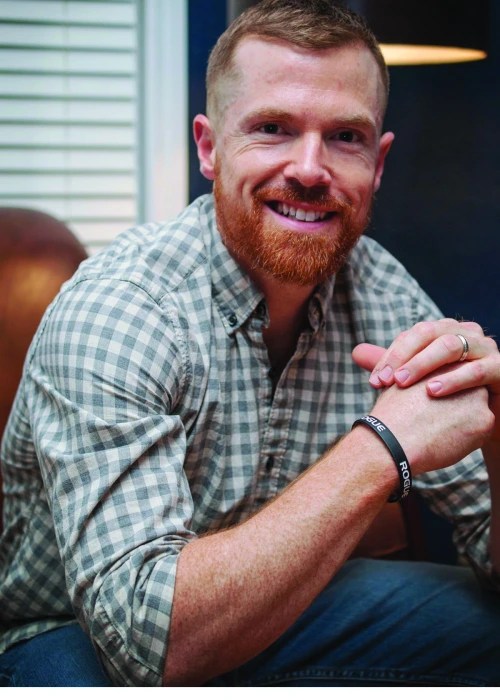
Dillon T. Thornton serves as the lead pastor of Faith Community Church in Seminole, Florida. Before settling in Florida, he ministered in Colorado and New Zealand, aka Hobbiton. Like all hobbits, Dillon loves breakfast foods and a good beer, which he works off by remaining an avid CrossFitter. You can find him online at DillontThornton.com.

The Divine Dance + Bibliotheca: Elements for A Mystical Revolution.

I’m convinced that the greatest dis-ease facing humanity right now isn’t lack of innovation or good intentions, but our profound and painful sense of disconnection.

Disconnection from God, certainly, but also from ourselves (our bodies and authentic essence), from each other, and from creation. 

We see the fruits of this alienation in political corruption, ecological devastation, war and violence, fearing and even hating each other because of our differences — whether in gender, race, religion, or sexual and relational orientations. There has to be a better way forward as a species, as a people.

This is why I’m so passionate about cultivating Opti-Mystic spirituality, right where we live. Far from being a niche hobby for the bored and affluent, mystical flourishing is our birthright and our necessity. 

“Mysticism,” Evelyn Underhill said, “is the art of union with reality.” Our world needs to be reminded of this interdependence, our inherent union with what is. 

“What is,” aka Reality, has already gifted us everything we need to actually know connection, and to enjoy what Jesus calls the abundant life. Living from this reality is a matter of what Dallas Willard called the renovation of the heart, which for many of us begins with releasing inaccurate and unhelpful depictions of God.  

What images come to your mind and heart when you think of ‘God’? 

Visions of an angry, distant, moral scorekeeper — like a Greek ‘high’ god?

Or maybe a supernatural trickster handing out favors to those who say the right prayer — a kind of cosmic Cat-in-the-Hat?

For many of us, the images of God we’ve been handed have become simply unbelievable. 

That’s why I collaborated with Franciscan friar and beloved teacher Fr. Richard Rohr to write The Divine Dance: The Trinity and your Transformation. In its pages, we offer a compelling alternative vision of God — one hiding in plain sight in sacred Scripture. 

Rather than a deity cast in the image of Zeus or Dr. Seuss, we dive into the Bible and the living spirituality of our most loving and service-oriented mystics, poets, prophets, and sages to illuminate an alternative orthodoxy: in the Christian tradition’s deepest revelation, God is revealed to be a Community…a Friendship…a Dance.

I believe this difficult-to-grok Christian experience of Trinity can help us unlearn bad relationship habits and cultivate new ones, teaching us how to live in creative collaboration, valuing and honoring our differences while also serving each other (and the planet) with humility and compassion. 

The Divine Dance is a meditation on how we can begin to live into a new reality — based on connection instead of alienation, interconnectedness instead of walled-off autonomy.

When our book first released it seemed to touch our culture’s collective heart, reaching five bestseller lists and garnering sweet affirmations from Brené Brown, Bono, and many others. And while book publishing (like all contemporary media) moves on with breathtaking speed, this tome still holds a special place in my heart. If you haven’t read it yet, I believe it could help set the tone for your new year. And if you have read it, I have a hunch you might agree with me, and are already thinking of others who would benefit from this gift.

It’s for this reason that I’ve decided to open up my own personal reserve of harder-to-find hardcover editions of The Divine Dance, and offer them in my first-ever ‘Cyber Monday’ sale. It feels like, after all we’ve been through as a planetary culture these past few years, it’s time. 

These beautiful hardcovers (inlaid with a full-color print of Rublev’s Hospitality of Abraham icon in both the front and back) retail for $24, but I’ll sign your copy and mail it to you directly for $22. I’m also happy to personalize any copies, dedicating them to you or your loved ones. 

You may order a single copy, five copies for friends and family, or ten copies for your faith community or reading group.

I have 199 copies on-hand. I’ll keep these available at this price for as long as they last. 

Note: I’ll fulfill each order speedily as I receive them. Ideally, they’ll be your way before Christmas. But I’ll be sending them Media Mail, so there are no guarantees. 

If you’d like to explore The Divine Dance for yourself or your loved ones this holiday season and new year, please select your copies here. 


And…do you know what pairs nicely with a whole new vision of God? 

A whole new way to read the Bible. 

A number of you had questions about the highly unique Bibliotheca Bible set I featured last newsletter, and I wanted to share more about it. It’s become my go-to way of reading Scripture when I’m wanting to encounter the text in a spacious, uncluttered way. I find its gorgeous layout, design, and translation help me clear away preconceived notions and come to this sacred library, anew.

In essence, Bibliotheca is a reader’s bible Bible designed to invite you into an ancient, nearly extinct way of encountering the scriptures.

Exclusive coupon code to save $10 on the next printing: OPTIMYSTIC (valid for pre-orders only). Checkout here.


The complete contents of the Bible—including the Deuterocanonical books (Apocrypha)—are divided across five clothbound volumes, each the size of a modern novel. The text is presented in a single column on each spacious, classically proportioned page. No chapter or verse numbers! No cross-references or section headers. And the translation, a scholar-reviewed update of the ASV (1901), is exceptionally poetic and literal. 

As I look at my own copy, open on my desk as I write this, it calls to mind the unassuming elegance of the oldest extant biblical manuscripts like the Great Isaiah Scroll:


Unlike a typical reference Bible that looks, feels, and, far too often,
functions like a dictionary, these lavish books enable one to engage with the biblical library as a vast and diverse treasury of literature—the way it was experienced by its earliest readers, long before these sacred texts were ever compiled into a single volume or dissected into chapters and verses.

Since its publication in 2014, Bibliotheca has helped tens of thousands of readers engage with the Bible in this fresh yet distinctly ancient way. 

Here are a few reader testimonials pulled from Bibliotheca’s website:

“Six years later, here I am, still using this set nearly every day for lectio divina. I love everything about it: the translation, the font, the layout of the page, the lack of clutter, the binding, everything. It’s the ideal reader’s Bible and beats the competition by cubits and fathoms!”

“Finished Isaiah yesterday! Best read-through of that book I have ever had—and it’s one of my favorite books of the Bible. Simply superb reading experience from all angles … the updated ASV reads so beautifully…”

“I find myself getting lost in the story much more often with Bibliotheca. I never pick it up passively because it’s not a passive Bible … In short, it has reinvigorated my love of scripture.”

As I mentioned last time, I’m told there aren’t many sets left in stock for this holiday season, just a small number waiting to be gifted to a few lucky souls. So order now if you’d like to have this exquisite gift under the Christmas tree.

But if you don’t mind waiting and would like to avail yourself of steeply discounted pricing, consider pre-ordering a set from the next print run, set to be delivered sometime next spring or summer. Plus, take an additional $10 off any pre-ordered set when you use code OPTIMYSTIC at checkout.

Visit the website to learn more: bibliotheca.co 

Luminous Darkness: An Advent Meditation to Embrace Wholeness

Art by Jennifer Helminski, aka The Virtual Oracle


As the days grow shorter and autumn hues give way to winter greys in the Northern Hemisphere, this coming Sunday marks the beginning of a season of yearning that many Jesus-followers call Advent.

Long ago Mary began her long journey to Jerusalem with Joseph to oblige their state’s census while growing the life of Emmanuel (God-with-us) within her.

Now, we attend to life’s obligations while carrying hoped-for Divine deep within us, culminating in our collective celebration of the Christmas season.

But how do we move from life’s hidden gestation to birth?

Can we enter this season without spiritually disassociating? 

Keep reading for a guided audio mediation exploring the promise of integration, leaving nothing out.

Oftentimes, Advent is framed as a contest between ‘daybreak’ and ‘darkness,’ resisting the night to usher in the light. But Drs. Wil Gafney and Alexander John Shaia remind us that the darkness, too, is holy. 

Here’s Dr Gafney:

This good news [of Advent] is framed in the stark language of light and dark, shadow and glory. And it is far too easy for us as [Westerners] to hear those words through our history of race and racism. We are taught from a young age that everything light and white is good, and everything dark and black is bad. Even when we are not thinking about it, it is in the back of our minds. Race is always in the room for us. But it wasn’t for John, Jesus and their world. Identity mattered, whether you were Greek or Jew, slave or free, woman or man, but not the brown of your skin – most skin was brown in Israel then, even Roman legions were largely black and brown, having been filled with conscripts from Africa and Asia.

The mystic Howard Thurman taught us that somewhere between the light and the darkness, between the shadow and glory, there is a space that he called the luminous darkness, others have called it radiant blackness. Think of the night sky spangled with stars or the sheen on black silk or satin, or the glow of beautiful ebony skin. In the age of Black Lives Matter I invite you to take another look at the light and the darkness and see them on their own terms.

In the beginning before God created light there was darkness.

We are afraid of the dark, but God is not.

And Alexander John concurs:

Here is a cosmic and biological truth — all new and fresh energy comes from the depths of a darkness we might call holy.

Scripture affirms this embracing, nondual vision:

“The people remained at a distance, while Moses approached the thick darkness where God was.”
(Exodus 20:18-21)

“Clouds and thick darkness are all around God; righteousness and justice are the foundation of the Divine throne.”
(Psalm 97:2)

“And when the priests came out of the holy place, a cloud filled the house of the Lord, so that the priests could not stand to minister because of the cloud; for the glory of the Lord filled the house of the Lord. Then Solomon said, ‘The Lord has said that he would dwell in thick darkness.’”
(1 Kings 8:10-12)

“I will give you treasures of darkness and riches hidden in secret places, so that you may know that it is I, the Lord, the God of Israel, who call you by name.”
(Isaiah 45:3)

Henry Vaughan, 17th-century Welsh poet, was moved to observe:

“There is in God (some say),

A deep but dazzling darkness.” 

Perhaps the way we receive the blessings latent in this Advent season is not to chase away the darkness that we would hide, deny, and repress in ourselves and our current circumstances — but instead to embrace it.

Swiss psychologist Carl Jung concurred, allegedly saying “What you resist, persists. What you embrace, dissolves.” 

The Messiah whose advent we first anticipated — Jesus of Nazareth — would grow from his nurture in Mary’s dark womb to being a counter-cultural figure with powerful guidance that bucked the prevailing wisdom of his day. While his own brother James would teach the more standard approach of “resist the devil and he will flee from you,” Jesus advocated for embrace:

“Make friends with your Adversary quickly while you are together on the way, so that your opponent may not hand you over to the judge, and the judge to the officer, and you be thrown into prison.” (Matthew, 5:25)

The early 20th-century esoteric Christian teacher G.I. Gurdjieff summarized this subversive path of embrace succinctly:

“If you are meditating and a devil appears, make the devil meditate.” 

Can we cease demonizing the darkness?

Can we hold our shadows close this Advent? 

I’d like to try. And I’d like this effort to be both practical and beautiful. So I’ve teamed up with my dear friend and colleague Jennifer Helminski — a gifted poet, scholar, and preacher — to give us a guided meditation we can immerse ourselves in, right now, to sense and cherish what we might otherwise push away.

Jennifer invites us into the grand story of Incarnation — imaginally placing ourselves in the energies of Mother and Child, Scene and Subject. Please give yourself a few minutes to unite the Divine Darkness and Holy Light within yourself in this rich Advent meditation:  

Did you try the Divine Darkness meditation? How was it for you?

What would this next season of your life be like if you embraced more than you pushed away? Would you like to join me in engaging this meditation regularly this Advent, from now ’till December 24th?

If you intend to join me and care to share, please share below. And as you notice anything shifting, in your inner or outer worlds, feel free to leave a comment here if you want to encourage others! 

This season has its burdens — there’s no use sugar-coating it. But I’m convinced that these burdens are an invitation to go deeper into re-connection, whole-making, and soul-making.

This Advent, we can wait attentively together, as our own being and perhaps new worlds emerge.


About Our Guided Meditation Contributor: Jennifer Helminski
(she/her) is an author, poet, artist, and preacher who has a burning heart for ecological advocacy, sensual exploration, and spiritual renewal. Across her multifaceted vocation, she has recently co-authored federally-funded climate change research, assessed and advocated for the protection of our waters, led congregational chant, composed multimedia eco-chapel gatherings, and facilitated faith-community grief circles.

Jennifer has deep roots across the Abrahamic family of faiths, including Roman Catholicism, Mevlevi Sufism, and open-source Judaism. She is currently training in the ways of interfaith, ecological, and psychedelic chaplaincy.

Jennifer is a Master of Divinity candidate at Union Theological Seminary in the City of New York, where she co-authored Union’s Declaration of Climate Emergency and a 10-year Climate Mobilization Action Plan for the surrounding community.

In her writing, painting, poetry, and preaching, Jennifer explores the intersection of ecology, love, and Spirit, helping all beings find belonging in this fertile and joyful tapestry. You can subscribe to her Substack newsletter, The Pomegranate & The Rose, here.

Note: An earlier version of this reflection was published on Nov 30, 2021.

The American Black Church Experience: A conversation with Dr. Julius Bailey of San Francisco Theological Seminary

I loved getting to sit down with Dr. Julius Bailey, the Eugene Farlough-California Chair in African-American Christianity at San Francisco Theological Seminary, and a professor of Religious Studies in the University of Redlands College of Arts & Sciences. It was an honor to hear his wisdom on questions like: 

  • What roles have traditional African religions played in the formation of American Black Churches?
  • How much do you see the Black Church in America as having been influenced by white settler colonial Christianity and to what degree do you see Black American Christianity as an emancipatory, decolonial alternative to white Christianities?
  • For those who grew up in various streams of American Black Christianity and have left the(ir) church, what do you wish they knew about her diverse expressions?
  • For those who aren’t intimately familiar with American Black churches, what do you wish we knew about her spiritual expressions, cultures, and impacts on American history in general?
  • How have new religious movements and parallel religious streams (such as the Nation of Islam, the Five Percenters, and United Nuwaubian Nation of Moors) influenced Black American Christianity and vice-versa?
  • How has the Covid-19 pandemic impacted American Black Church culture and praxis?
  • …and more!

You can catch our entire conversation right here:


Please let me know which question(s) stirred you the most in the comments!

And if you’d like the opportunity to study directly with Dr. Bailey and other renowned faculty, check out the San Francisco Theological Seminary at the University of Redlands Graduate School of Theology. As a founding member of the Graduate Theological Union (GTU), their students have access to over 200 faculty in the largest consortium of graduate theological education in North America, while maintaining a small, personalized learning environment. I really appreciate their educational approach toward critical thinking, rooted in the intersection of spirituality, theology, biblical studies, and social justice. SFTS runs absolutely brilliant online and on-site programs addressing a variety of urgent spiritual, ministerial, developmental, and even entrepreneurial needs, all with small classrooms and an artisanal level of attention on every student. You can learn more here.