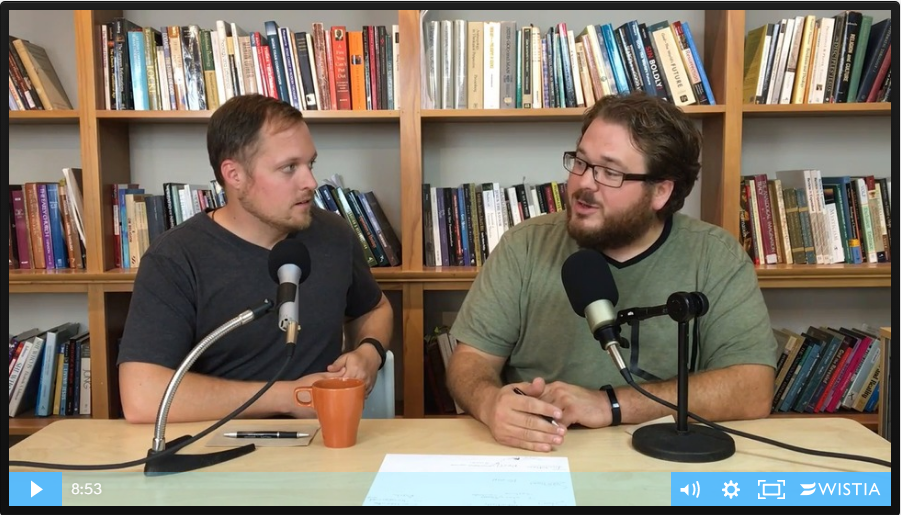
Divine Dance: Dancing the Law of Three | Brie Stoner

To celebrate the release of The Divine Dance: The Trinity and Your Transformation with Richard Rohr and me, I’ve asked some of the most radiant and gifted thinkers, teachers, and practitioners I know to share their reflections on why Trinity matters. This week I share a powerful reflection by friend, musician, dancer, mother and scribe, Brie Stoner! If you don’t already have access to her contemplative chant videos, I recommend you subscribe to her blog at Becoming Ultrahuman and soak in ’em – they’re the perfect soundtrack to this post! 

Suffering holds hidden within it, in extreme intensity, the ascensional force of the world.
– Teilhard de Chardin

It’s all about carrying to term and giving birth.  To let every impression and every seed of a feeling realize itself on its own, in the dark…beyond the reach of your understanding, and to await with deep humility and patience the hour when a new clarity is born…
– Rilke

The ‘Trinity’…what in the world? Is there anything to this particular vision of Divinity? And could it possibly speak to the post-election tumult the United States is facing?

Traditionally, the Trinity is taught and understood as a self-enclosed community of God the Father, God the Son, and the Holy Spirit. Most understand it as a somewhat-speculative foray into the inner life of God, an abstraction created to make sense of Christ’s divinity and humanity. It’s no wonder that Karl Rahner made the statement that if the Trinity were to drop out of our religious lexicon, no one would even notice.

I’m actually pretty fond of this particular Christian doctrine, however, and many of the mystical writers that I’m a fan of (ancient and contemporary) are too:  Bonaventure, Teilhard, Panikkar, Beatrice Bruteau and current wisdom teacher Cynthia Bourgeault all have interesting things to say about the Trinity.  Rather than viewing the Trinity only as three persons, they view the Trinity as dynamic functions of a relational God-in-the-midst-of-the-cosmos.

When seen through the light of evolution and colored by the insights of some of the aforementioned theologians and scholars, the Trinity is no longer simply a theological speculation on the inner life of God; it becomes a dynamic mandala of God’s ongoing creativity in an evolving universe. It becomes, in fact the evolutionary principle.

Threeness, creativity, and evolution are joined at the hip.

How?

If the physical structure of the universe is love, then attraction, frustration, and creativity are all a natural cycle of a universe in motion both at a meta-scale, and in moment-to-moment occurrences.

You could think of it this way: In every circumstance there is a triadic structure at play: a yearning force, an opposing force, and a reconciling force, and these three forces work together to create something new.

What I am describing is a universal principle of change and transformation first articulated George Ivanovitch Gurdjieff’s “Law of Three.”

Gurdjieff (1866-1949), although still not widely known in theological conversation, was an Armenian-born Wisdom teacher who developed a system of spiritual transformation (commonly known as “The Work”) in which the Law of Three was a centerpiece. The Law of Three, or “The Law of World Creation” as he called it, stipulates that

Every phenomenon, on whatever scale (from subatomic to cosmic) and in whatever world, springs from the interaction of three forces: the first active, the second passive, and the third neutralizing.

The new arising from this interaction will in turn form a new triad by which the process continues in its course of creativity.

In other words:  resistance, frustration, and opposition are the essential path by which new creation happens. 

Like the collision of flint that makes a spark, it seems that creativity rests on this principle of friction, and perhaps instead of running to immediately diffuse all tension in our lives, we’re invited to learn how to hold it long enough to allow more being to emerge.

But tension isn’t easy to bear…and anything that entails suffering isn’t something we tend to get excited about as humans.

Sixteenth century German mystic Jacob Boehme wrote a reflection in which he describes the “compression from nothing into something” of God as being mediated through the reconciling point of anguish.  You can feel the meaning of the word in saying it, can’t you?

Anguish.

It conjures up memories for me of being in Ballet with my Russian-born ballet teacher, Olga.  She used make us sit with our backs to the wall, and our arms stretched above us hanging on to the bars, while she would push her heels against our ankles until our legs were painfully stretched open into a perfect 180 degree split.  It was Anguish. She kept us pinned, one after the other, for what felt like an eternity.  If we dared to utter a single complaint to our torturer she’d keep us there longer, smiling all the while and saying with her thick accent, “You will do nothing in ballet if you cannot endure this.”

She was right, of course.  All the hours on the floor stretching and at the bar perfecting form are all the unseen moments of anguish that result in the graceful beauty that takes your breath away as you watch seasoned dancers pirouette and leap through the air, seemingly impervious to gravity.

Teilhard described suffering as “the ascentional force of the world”.  In other words: friction, frustration, and suffering can be thought of as an energetic compression, an occurrence that happens in the process of a converging evolution.

I mean, really….what do we know about how much it hurts to bloom? Or what it costs to grow a pine needle?

We certainly know that the birth of a human being entails some pretty excruciating anguish, so why would the evolution of our consciousness be any different?

Smack-dab in the center of the pressure you’re under at work, the unresolved issue in your relationship, or even in the daily grind of menial tasks is a progression that begins with anguish:  the yearning for something, the energy that seems to push against it…and if we’re patient enough to bear the tension, a third force will arise that will set the seeming impasse into motion.

Hang in there, dancer-in-training.  Don’t run from the next experience of constriction.  Something new is being formed in you through every compression, and if you can patiently ground yourself in the midst of the friction, allowing that threefold tension to do its work, you might just give birth to something you never could have anticipated or imagined.

Gabrielle ‘Brie’ Stoner is a musician, writer, student, and 2015 alumna of the Center for Action and Contemplation’s Living School for Action and Contemplation. Her music, which has been featured in national and international television broadcasting, includes the production and composition of the soundtracks for the NOOMA film series with Rob Bell. Brie has published blogs for The Contemplative Society, Northeast Wisdom, and the Wisdom Way of Knowing websites, and contributed to an anthology dedicated to the work of Teilhard de Chardin and Beatrice Bruteau, edited by Ilia Delio, OSF: Personal Transformation and a New Creation: The Spiritual Revolution of Beatrice Bruteau. Brie currently serves as the content coordinator for The Omega Center, an online education forum initiative of Ilia Delio, a research assistant to Cynthia Bourgeault, and Program Designer for the Center for Action and Contemplation. A mother of two sons, she is currently enrolled in Chicago Theological Seminary‘s graduate program, continuing her studies on Teilhard de Chardin, the fruit of which you can read on her blog, Becoming Ultrahuman.

Democracy! by Cy Chase

Mike’s note: What follows is an excerpt from Godlings, a whimsical retelling of the Biblical creation story. Author Cy Chase charts an alternative history for the human race. Atom and Erg have traveled through time and space to reach earth, their new home. Atom comes from another planet, and Erg from a ball of light. His skill and her insight clash. Erg is new to all things physical, and thus challenges gravity, darkness, and her new mate. Interested in a review copy of Godlings? Copies are available for qualified bloggers via Speakeasy. Find out more here!

    Atom was pleased to predict the whales would be there on the morrow. He and Erg walked hand in hand on the beach at high tide, enjoying the soft sand and the sound of the shorebirds calling to one another.

A wolf, a dog and three puppies gamboled about. None of them liked salt water, but with the seal pounding in and out of the water around them, Pyro finally got brave and tried the surf. He came up for air just as a wave curled over him, and he tumbled over and over to the shore.

Shaking his canine body vehemently, his tongue kept erupting from his mouth with, “Pthaagh – Pthaagh” sounds.

“Tastes weird, doesn’t it Pyro?”

“Pthaagh.” The big dog shook until spikes of fur stuck straight out. But when the sleek and cocky seal slipped up beside him, he was not to be outdone, and he dived back into the breakers. Atom and Erg joined seal and dog, and soon they were all body surfing.

The puppies were more cautious. About three months old, they bumbled at the edge of the water. As a wave receded they followed it down. As another one crashed on the wet beach, they blundered up the beach, usually staying ahead of the water, and sometimes tumbling. Wolfine stayed on the dry sand with the cat. Salt was not her thing.

     Patience was wrung out of Atom at the sounds of tumultuous shouts and laughs and cries. Here came the natives.

Atom had not expected natives. Though they had worked with Atom in the mountains – hunting, mining, blacksmithing, even partying with him – he had his valley, they had theirs.

It wasn’t the whole colony running down to the beach. But dozens had come. They brought lots of children and enough gear to overflow four wagons. It looked like they had come to stay.

Brown bodies of all shades ran around happily. Shore to bushes to river to rocks to shore again. The display of colors awed Erg, as she watched so many cotton frocks of every color tumble and splash and shout.

“What is it?” Atom asked, struggling to hide his annoyance.

Everyone talked at once until Erg singled out a few women and came to Atom. “Marriage.”

“What?” Atom asked testily. “You like it? You don’t like it? What can I do about it?”

After eruptions, one wrinkled woman with white eyebrows splaying in all directions hushed the others, and spoke clearly. “It is not clear who qualifies for marriage.”

Children were playing in the sand, and amid the romp – puppies. Yips and shouts and laughter followed their play. A puppy got caught in a tug of war between two boys, and Erg pounced. “Look kids, these animals are puppies. They are the babies of Atom’s wolf and that big yellow dog over there.” She took one boy’s hand and stroked the puppy gently.

Loudly, she said, “These animals are new to you.” She summoned Pyro who came to her call. She fluffed up his wet fur and asked him to sit. “This is a ‘dog’.” Pyro raised a paw into her hand and licked her fingers. “This one’s name is Pyro. He came from the stars because I asked him to.”

Kids were crawling under grownups’ legs to pet the puppies. Erg caught the chamois that Atom threw to her. While people milled around nearby, she toweled her dog until he was fluffy.

“Funny looking wolf,” one man said.

“It’s not a wolf,” she explained, and raised her voice to carry. “This is a dog, a domestic animal whose puppies will become dogs. These sweet and smart animals will hang out with humans, warn you of danger, guard your children. They’ll need you to include them in your meals because they are not wild and will not develop hunting skills. Also, because each dog chooses to include a family in his or her pack.”

By now the whole crowd was watching. Erg found a fat log of driftwood and stood taller. Her hands beckoned the rest of the kids and their parents. “These animals are sent from the heavens to be our friends. Each dog will eventually choose the person it wants to spend its life with, but you must honor that trust. To keep a dog you have to earn it. They are to be treated with sacred respect.”

People circled around, and Erg gathered the other puppies. Pyro and Wolfine stood over them. “These dogs are mortal angels.” People pointed and petted, and shushed each other.           “Each dog will show you unconditional love that is hard for a human to emulate. Like they will greet you with joy, even if you have left them behind for a hunting pursuit. They will forgive you, even if you keep tripping over them in the camp circles. They will yip with joy at your triumphs and grieve with you over your losses. A better friend you will never find.”

People rearranged themselves so everybody got to pet Pyro and cuddle a pup. Even Wolfine was sociable.

“It is no coincidence that their title, ‘dog’ is actually ‘god,’ backwards.”  The public tried out both sounds and elbowed each other, nodding at the paradox. It was a quick intro, but Erg hoped they got it. “Dog” was ordained.

The folks out of earshot came into the gathering. “What are they?” asked one. “It’s a Dog!” announced another. And then, “Isn’t that Atom’s wolf?” and “Oh, look at that yellow one!” and “Not a wolf.” And one kid hollered, “He’s god, backwards.”

Moms and dads reached down to fondle puppies, and Pyro waved his tail as he checked each puppy, nosing them, licking them, claiming ownership.

A very pregnant mom approached the gallant sire. Pyro sat and held up one wrist, paw dangling. She laughed, and took it. He licked her hand. She scruffled his ears. He stood and pushed his head up against her swollen belly. “Oh, he’s sweet! I think he knows I have a baby in here.”

With instructions shouted to children to stay close and wait for a grownup before going in the water, folks pursued their marriage cause. They surrounded Erg with shouts and arguments.

Erg spread her arms and invited people to sit down in groups of agreement. “Choose one spokesperson each to tell us how marriage is stirring up such a muddle.” Content that their kids were safe nearby, folks separated into three groups, and were busily conferring.

Despite passionate outbursts, there was an effort to be civil. Erg’s eyes surveyed the clusters of earthfolk looking to herself and her mate with hope. It was as she feared – these people assumed starfolk knew more than they did.

She looked to Atom, who was looking out to sea. His mind was on his marine entourage. Erg was on her own.

Erg moved from group to group, listening to them argue. Her voice rose above them. “Will everybody sit, and then you will take turns speaking your views.” Even this caused altercation, but Erg kept circulating until most of them sat.

Erg searched faces for Zyra and Vizak. Must still be doing weddings back in the jungle, she thought. She stood before the crowd, her brows raised, her hands beckoning for input. Two people rose, but Erg gestured no, and insisted on one speaker.

“It’s because they think marriage is only for making children. Only to increase family and create a ruling clan,” said this one.

Someone else jumped up, but Erg’s hands reached out, palms down. They took the hint and sat. “One speaker from a group who thinks mating is only to make children,” she called.

Three stood from one side, and Erg beckoned to a calmer woman.

“Well what’s the point of mating for life if there are no kids to hold the bond together?” she said.

Half a dozen stood, and shouting prevailed. Atom rolled his eyes to the sky and stepped closer to the water’s edge. Erg spoke clearly, but softly enough that people couldn’t hear if murmurings continued. “One at a time! This first time, only, I will lead the discussion and enforce the one-at-a-time rule. Watch how I do it so you can lead the next one.”

Pyro loped up to her with a long bleached and gnarled stick of driftwood in his mouth. “Oh, thank you, Pyro!” She petted him and stood the stick, as tall as she was, on end beside her.

“First, I must formally introduce my dog. His name is Pyro. He is named after fire because he sort of looks like fire. Also because he was a ball of fire before he came to earth.”

The crowd looked on, enchanted. “More tame than Atom’s wolf, Pyro will get to know all of you. He will visit your camps, lick your children, and eat whatever scraps you care to give him.  But please don’t ever give him bird bones. They are hollow and will splinter as he chews. They could poke holes in his guts. Agreed?”

People nodded and Pyro sat and licked Erg’s hand. He licked a nearby child’s cheek and grinned ear to ear, his tongue lolling out to the side.

“Don’t mind his licking. Dogs do that with their puppies and litter mates… a form of affection. Their mouths are clean, carrying no germs that are communicable to humans.”

Erg leaned down and picked up one ear. She spoke above the dog’s head so the crowd could hear. “Pyro, will you mill around among all those who are sitting and let them get to know you?”

The dog wagged and scuffed through the sand, stopping only to greet the folks who were sitting. They all sat, and he continued to schmooze among fifty-some people. The ire in the air abated.

“Good boy.” She raised the crooked stick. “This is the Speaker Staff. Only the one with the staff may speak. Do you agree?”

Nodding, muttering, shuffling brought rearrangement into a messy, multi-row semi-circle so each could see the others. Erg’s eyes sailed across the three groups, her heart swelling.

Someone from the middle pushed one girl up, and she said, “We’re the group that doesn’t agree with these other two groups.” Erg planted the speaker staff beside her.

The girl was young and bubbly, and hugged the staff to her face as she rose up and down on her toes. “We…” she pointed to a lad sitting at her feet, “We want to be married but our parents want us to wait to see if they can find others they like better.”

“How old are you?”

“Seventeen years,” the couple said together.

“Can you both put together enough tools and trade to live without your parents’ support?”

They eyed each other, dismayed, and then nodded.

“You must be sure. Marriage is long, often hard, but should be stable and secure. Can you?”

The lad stood up beside his lass and said boldly, “Definitely.”

Erg chuckled. Her eyes swept around the circle. “Is it uncommon for youth to choose their own mates?”

A young, squat woman, nursing a baby, stayed down but spoke up. “If parents get a chance to choose, they do. If the kids make a baby, parents butt out.”

Erg smiled at the eager couple. “But making a baby isn’t a promise to stay together. The baby needs that.”

The girl was jumping up and down. “We promise!”

“Then I don’t see why you can’t marry.” She looked over the mumbling crowd. “Do you all agree that seventeen-year-olds can marry?”

There was a riot of positives and negatives, so Erg walked before them to settle the mood. A shout, “Kids do it anyhow.” was answered with, “Set a limit!”

Erg whispered to Pyro, and he walked into the noisiest group. As they quieted, Erg looked over other clusters. “Will all those who agree that seventeen is the age limit to marry please raise one hand?”

She hurried to one end to ask a woman to count hands. Then she scurried to the other end for the same. The two counters concurred, and the number was announced.

“Now, all those who favor no age limit on marriage.” The two lovebirds in front raised their hands, plus a noisy cluster of youth off to one side. They were a minority.

Erg took the speaking stick and declared: “Age seventeen, marriage limit. That was a vote, folks. Your first act of democracy.”


About the Author: Cy Chase is a biologist with a passion for nature, animals, and laughter. She sees science as a relevant truth in all our doings and weaves it into gutsy orbits of activity. Chase’s flow of fiction is influenced by Robert Heinlein, Madelynne L’Engle, and J. K. Rowling. Her stories are uplifting and funny, carrying her readers into higher levels of consciousness. Chase lives with her husband and Goldendoodle amid volcanic mountains tucked into the red rocks of Utah.

How to Overcome Time-Wasters and Take Back Your Life

2016 has been such a paradox for me. Nationally, globally, and in the lives of many of my friends, it’s been a steady stream of sorrow if I don’t sugar-coat it.

But personally? While feeling into all our larger cultural shifts, it’s been amazing in so many ways: My girls are growing up, Presence continues to reach new frontiers, Speakeasy is connecting amazing authors with incredible bloggers, I was able to collaborate on a best-selling book with one of my heroes, and I started classes in the Center for Action & Contemplation’s Living School.

Life is full. I am grateful.

And.

If I’m honest, this rich, full life I’m living highlights a glaring weakness among the glories of my year:

I suck at time management.

Half-days can pass like minutes; social media can rob my attention and my peace. I’m late for appointments; deadlines become blurred lines.

I know a lot of people live their entire lives like this, where “I’m so busy” becomes a mantra, and overwhelm is a badge of honor.

But I can’t help but think there’s a better way to be productive – heck, to be human – in relation to time and how we pattern our days. What do you think?

When my friends Spencer Burke and Tripp Fuller of The Hatchery LA told me that they’ve partnered with entrepreneurial coach Joshua Millage to create an interactive online class on productivity and platform-curation for community leaders, ministry types, and communicators, they got my attention.

After all, I cut my teeth working with Spencer on the late, lamented TheOOZE.com, and launched one of my first businesses with him. And Tripp is one of the single most productive people I know: A theologian, writer, teacher, speaker, and podcaster extraordinaire, who still finds time to be an amazing husband, dad, and friend?

Sign me up.

No, really – sign me up.

I’m going to take Tripp and Joshua’s Hatchery Certification in Transformational Architecture, starting early next year – because I’m up to too much not to.

You might be interested in taking this certification course along with me – or maybe not. Either way, if you want to overcome inertia and reclaim your time, 15 minutes at a time, check out this free video series from Tripp and Joshua. In this short series, they show us how to say “no” to what doesn’t serve our highest path, how to develop new patterns of “yes,” and how to lead our lives with integrity.

I’m grateful for the value they’re bringing to this series. Whether their Certification is for you or not, I think you’ll find alot to glean in these videos. You can get access here.

I’m curious: If you find yourself productive – even if in just one area of your life – what do you do to dwell there? Share your superpower on the blog here!

Divine Dance, Divine In-Dwelling: Invitation to a Trinitarian Theology of Religions by Bruce Alderman


To celebrate the release of The Divine Dance: The Trinity and Your Transformation with Richard Rohr and me, I’ve asked some of the most radiant and gifted thinkers, teachers, and practitioners I know to share their reflections on why Trinity matters. This week I share an Integral Post-Metaphysical deep-dive by John F. Kennedy University Professor Bruce Alderman! 

Richard Rohr and Mike Morrell have written a very accessible and engaging book on a topic typically confined to abstruse theological treatises: the perichoretic relations of the 3 Persons of the Trinity (and, by extension, of all creatures participating in the divine being of God).  I have not yet finished The Divine Dance: The Trinity and Your Transformation, but I am more than halfway through it, and they have thus far successfully avoided ever mentioning theology wonkish terms like perichoresis or circumincession.  But these concepts – of the “dancing around,” dynamic interpenetration, and mutual in-dwelling of the divine Persons of the godhead – are central to the gently subversive and radically relational psychocosmology they unfold.  So I hope you will forgive my indulgence in them here.

Although no longer a practicing Christian myself, I have remained interested for many years in Trinitarian thinking as a distinctly Christian expression of nondual spiritual insight – and have wished for just the sort of unpacking and broad metaphysical application as it receives in The Divine Dance.  (See Raimon Panikkar‘s The Silence of God: The Answer of the Buddha for a more specialized and rigorous philosophical analysis of Trinitarian perichoresis in light of the core Buddhist concepts of emptiness and dependent co-origination).  Readers of my 2015 paper, Integral In-Dwelling: A Prepositional Theology of Religions, will know that my own recent theological and (post-)metaphysical reflections have been animated by the potential of Trinitarian insights to inform an integral-pluralist model of interreligious relationship.  As I argue in the paper, a generalized concept of Trinitarian “circumincession” – the entanglement or in-dwelling of each being by all beings – opens the door, I believe, to a deeply participatory and relational (or post-pluralist) understanding of religious diversity, particularly when applied not only to persons but to religious communities as well.

Rohr and Morrell acknowledge this potential early on in the book:

Once you look out at reality from inside the Trinity, you can and will know, love, and serve God in all that you do.  The metaphors, rituals, and doctrines of other religions are no longer threatening to you, but often very helpful.  God as Trinity makes competitive religious thinking largely a waste of time.

There have been several recent attempts to build models of religious diversity on a Trinitarian foundation – with perhaps the most well-known examples being S. Mark Heim‘s books, The Depth of the Riches: A Trinitarian Theology of Religious Ends and Salvations: Truth and Difference in Religion. But Heim’s approach still treats the Trinity in the “substance-oriented” vein of traditional Christian metaphysics that Rohr and Morrell (rightly) critique: it conceives of each person of the Trinity rather statically as representing a particular ontological and phenomenological domain that may be accessed by different religious traditions for distinct soteriological ends (with only the Christian tradition providing access to all three Persons or Domains of the Godhead, and thus to the fullest soteriological possibilities).

The Divine Dance, however, locates the liberative power of Trinitarian thinking not in the individual substances of the Persons themselves, each concretely defined, but rather in the dance between them – shifting from a nounal object-orientation to a more verb-al one which emphasizes flow and inter-being. Rohr and Morrell suggest that substance metaphysics traditionally has inclined Christian metaphysics toward a pyramidal model of being, with God at the top as the supreme substance. I would suggest this has contributed to the pyramidal inclusivism common to Christian interreligious relations as well (where other traditions are recognized and included – if they are at all – as partial revelations of the greater Christian truth).  Heim’s approach still operates under this model.  A truly Trinitarian (perichoretic) orientation, on the other hand, would promote a more circular, entangled, multiplistic metaphysics – a participatory metaphysics of kenotic love and entangled co-becoming.

In Integral In-Dwelling, I explored the concepts of perichoresis (divine “dancing around”) and circumincession (the mutual in-dwelling of each being by all beings) in prepositional rather than verbal terms – highlighting the creative, pre-positioning power of with and in, around and through, for instance: to set the vectors, the clearing, for the unfolding dance of being.  A prepositional theology is a theology of relations.  And prepositions, I suggest, function somewhat like light:  in the very act of presenting the various objects and elements of experience (in what-ever configuration), they tend to absent themselves.

Rohr and Morrell also comment on this light-like play of God:

Light is not really what you see; it is that by which you see everything else. God is the Great Empowerer, taking the forms of inherent grace and constant evolution. Trinity is so humble that it does not seem to care who gets the credit. Like light, you do not see God; but God allows you to see everything else through really good eyes.

And Rohr and Morrell invoke the divine dance in prepositional terms as well when they speak of the persons of the Trinity in the sacred roles of for (Father), alongside (Son), and within/between (Holy Spirit):

God for us, we call you Father.
God alongside us, we call you Jesus.
God within us, we call you Holy Spirit.
You are the eternal mystery that enables, enfolds, and enlivens all things.
Even us and even me.

This is the kenotic, gifting agency of the divine community.  Like salt and light, working in and for. This is the direction, I believe, in which a circumincessional theology of religions would lead us: a theology of in-dwelling is a theology of co-presence, a vision in which each being, each religious practitioner or tradition, can be seen to enfold the totality, or the potential for the realization of any aspect of the totality.  Prepositionally, we exist with/in and through, for and against, and as one another, with our light and life between and beyond.

Does a Trinitarian theology of the mutual in-dwelling of traditions vitiate interreligious relationships? Does it undermine the need for dialogue across traditions – rendering each tradition a self-sufficient whole, with no need to interact with or learn from others? The possibility for such an interpretation is present, of course; but in my opinion, in light of the prepositional orientation I’ve hinted at above, the principle of co-presence or universal circumincession has great potential to effect the opposite result: that is, to enrich and reinforce the entire field of interreligious relationship. For, while each being or form is in-dwelt by the totality of all forms (or at least the alethic truth of those forms), and therefore has the potential to realize some aspect of each, in reality we only ever actualize a limited amount of that potential – developing richly along certain evolutionary pathways, perhaps, while leaving many others relatively untrod.  In interfacing closely with other traditions, we are afforded the opportunity to learn something about our own implicit capacities and potential forms of being, which we may then unfold in our own unique ways. As Richard Kearney (2010) argues in Anatheism, his wonderful book on religious hospitality after the death of God, “Only through the shock of affinity through alterity does something new emerge.”

Interreligiously, such a model might inspire modes of encounter similar to Deleuze’s becoming-animal: Not a process of imitation, not a conscious choice to adopt a costume or to mimic another being’s ways, but the invitation to draw close to the other until, imperceptibly, in that zone of maximal proximity and indeterminacy, becoming eventuates. We awaken what is always already, but in so doing, it becomes what it never (yet) was.

Put differently, a practice founded on the recognition of perichoretic and circumincessional co-presence, of being inseparably with and in, is a practice which invites us also to put ourselves in-between, in the thick midst of our co-becoming.  For in any of our projects of becoming, as William Desmond (1995) reminds us, we are always delimited and sustained by an overdetermined excess – the ontological excess which is our milieu, an overflowing betweenness which always escapes final dialectical synthesis in our individual projects of self-determination (or systematic theology). This excess of the in-between, I would argue, is inseparable from our being-with/in-one-another.  The “/” of with/in is never finally erased. And as Desmond (1995) observes, this excess has the capacity to startle us into agapeic astonishment – into the primal innocence of appreciative wonder at and for the other as other. In practice, this is a call to gelassenheit, to a hermeneutics of care (Levin, 1989) and the exercise of the imperative method (Panikkar, 2015): a knowing which doesn’t take co-presence to mean that our interpretive categories fully exhaust or capture the being of another, or that our light leaves no shadows, and yet which trusts its assurance that mutual illumination – mutual incandescence – is always possible.

In my view, The Divine Dance issues a strong Yes to such possibilities, and represents for our time the welcome flowering of seeds long dormant – or at least frequently suppressed and crowded out – in the Christian tradition.  As a non-Christian, I’ve remained theologically and philosophically connected to some of the richness of the tradition through folks such as Raimon Panikkar, Catherine Keller, and William Desmond, and I’ve explored several different trinitarian visions over the years in my own personal reflections, but often a lot of the re-translation of Christianity for modern contemplative tastes strikes me as a “stretch” – trying to get more mileage out of a failing car.  But Rohr and Morrell’s trinitarian contemplative theology strikes me as fresh and “indigenous” (enough) to the tradition to be compelling. So I will close with a small confession: This is the first book in very many years to make me consider Christianity again as an attractive and compelling path for myself.

Richard and Mike, thank you:  may this vision flourish.

This Post, the Bibliography: 

Alderman, B. (2016). Integral In-Dwelling: A Prepositional Theology of Religions.  Retrieved from Consciousness: Ideas and Research for the Twenty First Century | Fall 2016 | Vol 1 | Issue 4.

Desmond, W. (1995). Being and the Between. New York: SUNY Press.

Heim, S.M. (1995). Salvations: Truth and Difference in Religion. Maryknoll, NY:  Orbis

Books.

Heim, S.M. (2001). The Depth of the Riches: A Trinitarian Theology of Religious Ends. Grand Rapids, MI:  Wm. B. Eerdmans

Publishing Co.

Kearney, R. (2010). Anatheism: Returning to God After God. New York: Columbia University

Press.

Levin, D.M. (1989). The Listening Self: Personal Growth, Social Change and the Closure of Metaphysics. New York: Routledge.

Panikkar, R. (1989). The Silence of God: The Answer of the Buddha. Maryknoll, NY: Orbis

Books.

Panikkar, R. (2015). Religions and Religions: Opera Omnia Volume II. Maryknoll, NY: Orbis Books.

Rohr, R. and Morrell, M. (2016). The Divine Dance: The Trinity and Your Transformation. New Kensington, PA: Whitaker House.

Bruce Alderman is adjunct faculty in the College of Graduate and Professional Studies at John F. Kennedy University (JFKU). He received his master’s degree in Integral Psychology, with an emphasis on Transpersonal Counseling Psychology, from JFKU in 2005. He teaches Paradigms of Consciousness, Fundamentals of Transpersonal Psychology, Fundamentals of Psychology, World Spirituality, Living Systems Theory, Integral Life Spiritual Practice, Psycho-spiritual Development, and Integral Meditation. Bruce has served as a thesis and final integrative project advisor, and has published several articles on Integral spirituality in the Journal of Integral Theory and Practice, has two chapters appearing in forthcoming anthologies on Integral meta-theory and philosophy, and has recently won Best Paper Awards at the 2013 and 2015 Integral Theory Conferences. Prior to working at JFKU, he worked and studied abroad for several years, including teaching courses on creative writing and inquiry at the Rajghat Besant School, a Krishnamurti school in Varanasi, India. His current areas of interest include Integral Theory and practice, transpersonal psychology, integral postmetaphysical spirituality, the time-space-knowledge vision, transformative arts, dream yoga, and interfaith dialogue.

Cruci-fixation: Religion’s Deadly Habits – and Jesus’ Antidotes by Morgan Guyton

Note: This guest post is by Morgan Guyton, a dear friend who’s both a prophetic and pastoral voice to college students in New Orleans. You can read more about him in the bio below, but for now know that his campus ministry NOLA Wesley Foundation, is the only LGBT-affirming campus ministry in the state of Louisiana and they’re facing a budget shortfall. Please consider helping keep their doors open by supporting their year-end fundraising campaign right here!

Have Christians become the very thing that Jesus came to liberate us from?

It’s a question that haunts me as an American evangelical Christian who lives in a time when our culture wars have alienated so many good people from ever giving Jesus a chance. Why do the loudest Christian voices today sound so much like the religious authorities who crucified Jesus? Did Jesus really win after he was raised from the dead? Or was his movement co-opted over the centuries by the spiritual heirs of the very people who had him killed?

Some people blame Constantine, the first Roman emperor to convert to Christianity, for turning an outsider movement into an imperial conquest. Other people point the finger at Augustine, the brilliant fourth-century theologian whose misgivings about his sex life may have helped to shape the unhealthy relationship we Christians have with our bodies. Others say it was the medieval nominalists, who taught that words mean only whatever God says they mean, which means that God could hate and call it love.

Of course, there has always been a beautiful Christianity sharing the same church with the loudmouths who get all the headlines. There were the Egyptian desert mystics, who, whenever they got robbed, would chase after the thieves to tell them they forgot something. There was Francis of Assisi, who never met a leper whom he didn’t kiss. There was Julian of Norwich, the first Christian woman to write a book in English, who claimed that her visions revealed a God who was purely benevolent and mostly motherly, without an ounce of hate, despite the bubonic plague that was devastating her people.

Still, it seems as if the loud, mean Christians are the ones who always win. But perhaps this makes sense in a strange way. If Jesus’ cross is the heart of Christianity, then maybe Jesus has never stopped being crucified by his own people, and the ones who really get Jesus are crucified along with him. John 1:11 says, “He came to what was his own, and his own people did not accept him.” How do we know this is talking only about Jesus’ original life on earth? What if Jesus keeps coming back to “his own” and we keep on rejecting him?

When Jesus was on the cross, he said something that applies to Christians who crucify him today as much as it did to the religious leaders who first crucified him. He said, “Father, forgive them, for they do not know what they are doing” (Luke 23:34). Jesus knew that the religious leaders who crucified him thought they were doing so out of genuine allegiance to God. They thought he was ruining everything about their religious system—and indeed he was. They didn’t realize that he was actually God incarnate, come down to fix what they had screwed up.

The religious authorities had good reason to think that they were supposed to put Jesus to death. In the ancient Bible stories they had read, God commended those who killed out of zeal for his holiness. When the Israelites built a golden calf to worship instead of God, their leader, Moses, told the sons of Levi, “Go back and forth from gate to gate throughout the camp, and each of you kill your brother, your friend, and your neighbor” (Exodus 32:27b). When the sons of Levi obeyed Moses and slaughtered three thousand random people, Moses told them, “Today you have ordained yourselves for the service of the Lord” (Exod. 32:29). Thus, the Levites, one of the most important Israelite religious orders, was established by an act of terrorism almost as massive as 9/11.

Likewise, when the Israelite men started sleeping with Moabite women and worshiping their gods, Moses’ great-nephew Phinehas saw an Israelite take a Moabite woman into a tent. He followed them, took a spear, and thrust it through both of them while they were making love. As a reward for this double murder, Phinehas and his descendants were given “a covenant of perpetual priesthood, because he was zealous for his God, and made atonement for the Israelites” (Numbers 25:13).

If holy priesthoods are rewarded to those who kill for God’s honor, then crucifying a man who claimed to be God is the ultimate expression of righteous zeal. Likewise, it was perfectly righteous for a religious zealot named Saul of Tarsus to persecute the followers of this Jesus. In Acts 7, Saul oversaw the stoning of the first Christian martyr, Stephen. Then he went on a tear, dragging Christians from their homes and throwing them in prison (Acts 8:1–3).

Saul was every bit as passionate about standing up for God as many Christians are today. But one day, on his way to persecute Christians in Damascus, Saul was blinded by a light and fell to the ground. A voice came out of the bright light saying, “Saul, Saul, why do you persecute me?” Saul said, “Who are you, Lord?” And the voice replied, “I am Jesus, whom you are persecuting” (Acts 9:4–5).

As a result of this dramatic encounter, Saul stopped persecuting Christians and became the apostle Paul, the greatest Christian missionary of all time. Christians often see Paul’s Damascus Road encounter as a biblical paradigm for how salvation happens. But Jesus didn’t save Saul from anything so much as he saved the world from Saul. I wonder if this recognition would be helpful to how Christians understand salvation today. How would Christians live differently if we believed that Jesus needs to save the world from us?

I really do mean us. All of us. Not just the Christians I define myself against, but Christians who posture exactly the same way I do. I really believe that being authentically Christian amounts to believing that the world needs to be saved from me, instead of thinking I have to save the world from them (whoever “them” is). British writer G. K. Chesterton gave a famous two-word response when a newspaper asked its readers to share what they thought was wrong with the world. “I am,” he wrote back.

I’ve identified twelve toxic Christian attitudes from which Jesus needs to save us and twelve antidotes that Jesus uses to save us. He’s saving the world from our disingenuous posturing, our exhibitionist martyrdom, our isolationism, our disembodiment, our moral cowardice, our ideological certitude, our divisiveness, our anxious overprogramming, our moralistic meritocracy, our prejudice, our pursuit of celebrity, and our quest for uniformity. He’s saving us by filling our hearts with genuine worship, wounding us with his mercy, emptying our spiritual clutter, breathing vitality into our bodies, awakening our sense of honor, captivating us with his poetry, letting us taste true glory, showing us the beauty of his temple, sticking up for people who screw up, liberating us from social conventions, modeling his way of servanthood, and calling us deeper into his kingdom.

The discomfort that you feel at what you’ve seen around you is the Holy Spirit awakening the church. We have so many problems in our day: police brutality against people of color, a generation of severely indebted college graduates, the greatest wealth inequity our society has known in generations, unjust trade and immigration laws, a climate that has been heavily damaged by our waste. I feel pretty helpless in the face of these serious problems, but I do have one piece of good news: Jesus is saving the world from us, one Christian at a time.

Morgan Guyton and his wife Cheryl are co-directors of the NOLA Wesley Foundation, the United Methodist campus ministry at Tulane and Loyola University in New Orleans, LA, part of the affirming, inclusive, gospel-centered Reconciling Ministries Network. In addition to his blog at Mercy Not Sacrifice, Morgan has contributed to Huffington Post, Red Letter Christians, Ministry Matters, Think Christian, and the United Methodist Reporter. Morgan is also known to DJ in an ecstatic, perichoretic rave style! This post is based on an excerpt of his debut book, How Jesus Saves the World from Us: 12 Antidotes to Toxic Christianity from WJK.

Please help keep the doors open at NOLA Wesley Foundation – the only LGBT-affirming campus ministry in Louisiana – by supporting their year-end fundraising campaign right here!