Opti-mystic meditations on Spirit, Culture, & Permaculture
Author: Mike Morrell
Michael Morrell is the collaborating author, with Fr. Richard Rohr, on The Divine Dance: The Trinity and Your Transformation. He's also the founder of Wisdom Camp, a day-retreat for mystical misfits, and a founding organizer of the justice, arts, and spirituality Wild Goose Festival.
Michael curates contemplative and community experiences, taking joy in holding space for the extraordinary transformation that can
take place at the intersection of anticipation, imagination, and radical
acceptance.
Michael is also an avid writer, publishing consultant, author coach, futurist, and curator of the book-reviewing community, Speakeasy. His two children are growing up entirely too fast and he lives in Asheville, North Carolina.
Through my work with many gifted authors via Speakeasy, two of the most frequently asked questions I get are:
1) How do I get people to read my blog – and actually make money blogging?
and
2) I’m a new author and I want to know how I can find the readers I know are out there. In fact, I’d love to hit a best-seller list while I’m at it. What separates the word-of-mouth phenoms from the hundreds of thousands of forgotten books published each year?
Because I’ve worked to help launch best-selling books like Paul Young’s The Shack, Francis Chan’s Crazy Love, and Brian McLaren’s A New Kind of Christianity, I’ve learned a thing or two about what makes the difference between ubiquity and anonymity. My experience using movement-building social media strategies to help grow events, including one I grew from just an idea to 1700 attendees in its first year can be used to grow your readership as an author.
So I decided to co-create a seminar to show you just how to do this – while earning a steady living as a full-time blogger, if you’d like. I wanted to help create a seminar that helps youcreate Buzz – around your passion, your message, and your writing. And so, The Buzz Seminar was born.
I always say that relationships are my greatest source of wealth; to truly make this seminar be all that it can be, I turned to my long-time friend Frank Viola to co-lead The Buzz. Frank is an amazing teacher with a wealth of experience; he’s mastered earning income through blogging, and five of his books have hit four different best-seller lists.
Frank has distilled all of his knowledge into priceless, practical strategies to help bloggers and authors become successful at their craft. And he’ll be sharing it all in the upcoming Buzz Seminar.
Before we get ahead of ourselves, let me be clear on what this 2-day seminar is and isn’t:
1) The Buzz Seminar is not a faith-based event, nor is it ministry. It’s a business event that’s designed to train any blogger and any author, regardless of their faith orientation (or lack thereof).
2) The Buzz Seminar is not a casual event. It’s a highly intensive training; think of it as an immediately-practicable certification program in the skills of branding and community-creation. The Buzz Seminar provides tools, resources, skills, and expert knowledge on how to use a trade (blogging and writing) that earns real income.
3) The Buzz Seminar is not inexpensive. Like going to school for a trade, the Buzz Seminar is an investment for your career and your future. Unlike so many seminars for platform-builders, we aren’t promising that you will get rich off of your blog or book. But we are telling you that it’s very possible to earn consistent, livable income if a.) You have a compelling message to share, and b.) You put the principles we teach into practice. For that reason, we’re calling this a seminar for “blue-collar” bloggers and authors – ordinary people who are willing to do what it takes to earn a living from their passion.
4) While this event isn’t inexpensive, it is less expensive than any other seminar or workshop covering similar topics. We’ve investigated them all; those other seminars and workshops charge anywhere from $2,000 to $25,000 per person! The Buzz Seminar is less expensive, yet the content is equally (or more) valuable.
Who this seminar is not for:
Casual bloggers who blog as a hobby.
Best-selling authors who already have an enormous platform (Neil Gaiman, Seth Godin, and Anne Rice need not apply! But call me…).
Those who are unwilling to make a financial investment to learn how to earn income.
Those uninterested in earning money by blogging or writing books.
You won’t want to miss this seminar if . . .
You are frustrated that very few people read your blog posts.
You already have a decent readership, but you want to take your blog to the next level.
You want to earn income by blogging.
You want to know how to publish a book – and publish well.
You want to know how to get people to notice and read your book.
You want to learn how to build an audience that regularly reads your work.
You want to know how to hit at least one best-seller list with your book.
You want to network with other bloggers and authors and learn from them.
This breathing-awareness “tunes my heart to sing Thy praise” – re-keying me in (apologies in advance for the pun) I AMbic pantameter.
Unconditional presence. Just as I AM-ness, without one plea.
Opening the eyes of my heart, I imagine myself participating in the uncreated life of the Godhead, dancing in the joy of G-D-as-community, the shared life of the Trinity. Sometimes (perhaps all-to-seldom) this literally sets me moving and dancing. Most often, I experience it in stillness and relative silence while sitting – relaxed yet alert. The center of the Wheel does not move.
You’ve been traveling at a frenetic pace, n’est–ce pas? Both outward and inward.
I wonder if you could slow down…right now…and breathe.
Of course you’re already breathing. And I don’t even mean to suggest that you should change one thing about your breathing…about the quality of your breath. Only that you expand your awareness of your breath.
It was 2007; I was in the Bahamas. Ostensibly working. Helping run a ‘learning party,’ Soularize. Rough, I know. It was the first time I’d spent time with a teacher whom I’ve come to greatly respect, Richard Rohr.
We’d had just over 100 people out at Soularize that year – not the largest of crowds. Even this number was winnowed down, to 35 or so, for a little after-learning-party retreat we were throwing at a supporter’s massive house. Richard was our retreat-master.
In addition to teaching us the Enneagram and typing many of us himself, he told us a story from a science and spirituality conference he’d attended (this one I think).
There was a presenter there who was a Rabbi and a physicist. This gentleman simply and confidently asserted that the divine name I AM – more specifically, YHWH – mirrors the sound of breathing.
Richard modeled for us what the Rabbi apparently modeled for him – breathing loudly, slowly:
YHHHH (on the in-breath)
WHHH (on the out-breath)
YHHH
WHHH.
The first sound a baby breathes in this life – YHWH.
The last sound a person breathes on their way out – YHWH.
G-D’s name, on humanity’s lips from cradle to grave.
Ruah, holy breath, breathing in and through each beloved child of G-D from start to finish.
Breathing in us, as us.
(Now, is this debatable up and down the line? Of course it is. I don’t know if I make that sound when I breathe, or what it would ‘prove’ in any case. But this isn’t a theorem, it’s a poem. It’s an open invitation to experience Divine ubiquity everywhere. And as such, I find it beautiful and moving to consider.)
NOOMA/Pneuma/Ruah/Breath
Richard Rohr is by far not the only person pondering the connections between breath and divinity. To name just one more among many Rob Bell – who’s a big fan of Richard Rohr – ended up making a NOOMA video around this idea called ‘Breathe.’
Rob says – and this is a long quote, but I like how he puts it –
“With all that all of us have going on every day, who actually thinks about their breathing?
Do you ever think about your breath?
Have you ever thought about your breath from a spiritual perspective?
“Do not come any closer,” God said. “Take off your sandals, for the place where you are standing is holy ground.” Exodus 3:5-6 (NIV)
Moses has been walking this land for 40 years. I mean, it isn’t as if the ground all of a sudden became holy. The ground didn’t just change. It’s that Moses becomes aware of it.
Which raises the question for us, ‘Are we standing on holy ground, all the time?’
Passing burning bushes on the left and the right, and because we’re moving too fast and we’re distracted, we miss them.
What do you believe it means to be “standing on holy ground”?
Are we standing on holy ground, all of the time, but are not aware of it?
Moses says to God, ‘What is your name?’
And God responds, ‘Moses, you tell them the LORD sent you.’
Now this name, LORD, if you’re reading it in an English translation of the Bible, the name is spelled capital L, capital O, capital R, capital D.
The name appears in the Bible over 6,000 times.
But it wasn’t originally written in the English language, it was written in the Hebrew language.
And in Hebrew the name is essentially four letters.
We would say Y, H, V, H. But in Hebrew, the letters are pronounced: ‘Yod, Heh, Vav, Heh.’
Have you ever thought about God’s name?
Have you ever thought about God’s name being anything different than just a name?
vayomer od elohim elmoshe ko tomar elbenei yisrael YHVH elohei avoteikhem elohei avraham elohei yitskhak velohei yaakov shelakhani aleikhem zeshemi leolam veze zikhri ledor dor
(Transliterated Hebrew)
God also said to Moses, “Say to the Israelites, ‘The LORD, the God of your fathers — the God of Abraham, the God of Isaac and the God of Jacob — has sent me to you.’” Exodus 3:15 (TNIV)
Some pronounce the name ‘Yahweh’ or ‘Yahveh,’ although in many traditions the name isn’t even pronounced, because it’s considered so sacred, so mysterious, so holy. In fact, the ancient rabbis believed that these letters actually functioned kind of as vowels in the Hebrew language. They believed that they were kind of breathing sounds and that ultimately the name is simply unpronounceable because the letters together are essentially the sound of breathing. Yod, Heh, Vav, Heh.
Is the name of God the sound of breathing?
If the name of God is the sound of breathing, how does that change the way you view yourself as a living being?
How does it change the way you view others?
And the LORD God formed man of the dust of the ground, and breathed into his nostrils the breath of life; and man became a living being. Genesis 2:7 (NKJV)
There’s this paradox at the heart of what it means to be a human being.
We’re fragile and vulnerable, we come from the dust.
And yet at the same time we’ve been breathed into by the creator of the universe.
And this divine breath is in every single human being.
In what ways do you feel fragile and vulnerable?
Are there ways in which you feel sacred and divine?
Do you think it’s possible to feel both ways at the same time?
In the Bible, the word for ‘breath’ is the same word as the word for ‘spirit.’
In the Hebrew language it’s the word ‘ruah,’ in the Greek language, it’s the word ‘pneuma.’
One Scripture says that when God takes away the ‘ruah,’ the breath of all living creatures, then they die and return to dust. But when God sends the ‘ruah,’ the Spirit, they are created.
Breath, Spirit, same word.
If the words for ‘breath’ and ‘spirit’ are the same in biblical context, does that affect your view of yourself and others?
When you let God in, when you breathe, what happens is you become aware of all the things you need to leave behind, everything you need to let go of.
If you were to be totally honest about what’s going on inside of you, is there anything you need right now to breathe out?
What do you have that you need to let go of – what do you need to breathe out?
What can you do in your life to make sure you don’t miss that you’re “standing on holy ground”?
One God and Father of all, who is over all and through all and in all. Ephesians 4:6 (NASB)
You are a sacred creation of God. The divine breath is flowing through you, and it’s flowing through the person next to you and it’s flowing through the person next to them.
You are on holy ground. There is a holiness to the people around us and how you treat them.
Jesus said that whatever you do for them, you’ve done for him.
Do you believe God is inherently in every single person?
If so, when we treat someone disrespectfully, does it mean we’re really treating God disrespectfully?
And if we do things with love and care for others, are we inherently doing it for God?
May you come to see that God is here right now with us all of the time.
May you come to see that the ground you are standing on is holy.
And as you slow down, may you become aware that it is in ‘Yod,’ ‘Heh,’ ‘Vav,’ ‘Heh’ – that we live and we move and we breathe.”
Thanks, Rob.
One.
When I bring the gift of awareness to my breath, feeling Ruah breathing in me and as me, I find that I feel her embrace. And then – sometimes, in this space of YHWH – the sense of me and Ruah being two distinct entities or ideas or instantiations of Being utterly evaporates – replaced by oneness. Replaced by bliss.
I’ll never forget when I first encountered the idea – it was right there in the Bible. It was in the late 1990s, at Harvester, the Presbyterian church where I sort’ve led worship. I was sitting in the back of their then-tiny upstairs sanctuary, waiting for the worship team to show up I think, when I read John 17 straight through for the first time. Here’s Jesus praying this crazy mystical prayer that would surely be deemed heretical (at least by my fellow PCA-ers) if it Jesus wasn’t recounted as praying it, to his originating Abba:
That they may be one even as We are…even as You are in Me and I in You, that they also may be in Us…as You sent Me into the world, I also have sent them into the world…so that the love with which You loved Me may be in them, and I in them.
“Just as” – oneness. No separation.
It’s all summed up in what this breath-name (YHWH) is most commonly translated as: “I AM.” It’s an inherently subversive name, because in speaking it, you can’t help but declare something about yourself even as you’re naming G-D.
I AM.
(I am?)
(Why, yes!)
Being G-D gets a bad rap in conventional Western religion, does it not?
And I get it.
Besides any dogma or beliefs one way or another, it can be dangerously narcissistic to equate the ‘small self’ ego with G-D; voices like Stuart Davis and Marc Gafni do superb jobs showing the pitfalls of this mis-identification from Buddhist and Jewish vantage points, respectively. But both agree with the most sublime mystics, poets, and sages that there is an element of our selves that transcends fragmented, grasping ego – this true Self is the One and Only in all the universe.
And further, it delights this Self to incarnate in our myriad forms – to be G-D having a uniquely ‘You’ experience! And G-D having a ‘Me’ experience.
For me as a student of the Way, I recognize this Advent season as one celebrating the Mystery of the Incarnation – G-D’s re-entry and re-affirmation of the world of matter and meaning, of flesh and blood and spit and sinew – of the incalculable pain and glory of human existence as we’re graced by the kiss of Ruah.
What is the good if Mary gave birth to the Son of God 2000 years ago, if I do not give birth to God today? We are all Mothers of God, for God is always needing to be born.
It’s fitting that in this season, when we celebrate “the true Light that gives light to everyone…coming into the world,” that we honor the common grace given to the spiritual adepts of the monotheistic lineages – Hasids and Kabbalists (Jews), contemplatives and Hesychasts (Christians), and Sufi Dervishes (Muslims) – each have a means of cooperating with grace for the purifying of ego (as in a refiner’s fire), so that True Self and Unique Self might be real-ized, so that our identification with I AM comes from a healthy, vital, and life-giving space. And it all begins with re-membrance of G-D (Davening, Eucharist, Zikhr), and attention to the breath.
Freedom Songs
I invite you now (don’t just bookmark this – why not right now?) to practice this remembrance and breathing –
first toward G-D,
then yourself,
then in the space where G-D and Self are joined in union.
The first ‘song of remembrance’ I offer for your consideration is a bit CCM-ish in sound (as its composer acknowledges), but I find the lyrics inspired:
I tend not to blog about large-scale disasters. It isn’t that I don’t care, but rather that there’s usually an excess of ‘care’ in the blogosphere around such times (in the form of words, words, words), and really, what else is there to say? I had nothing to say about the earthquake in Haiti besides this…until now.
Shaun King is an intriguing cat. He started this multi-ethnic Courageous Church in Atlanta about a year ago; is a student at Candler Divinity School at Emory…right after the Haiti earthquake he blasted to his social network, essentially “Let’s go to Haiti! Right now! Don’t wait for someone else…go!”
I had mixed feelings about this. On the one hand, this seems like sage advice:
How Not To Help With Haiti:Don’t go to Haiti. It’s close to the US, it’s a disaster area, and we all want to help. However, it’s dangerous right now and they don’t need “extra hands”. The people who are currently useful are people with training in medicine and emergency response. If all you can contribute is unskilled labor, stay home. There is no shortage of unskilled labor in Haiti, and Haitians will be a lot more committed than you are to the rebuilding process. If you are a nurse or physician, especially with experience in trauma, and you want to volunteer, email Partners in Health – volunteer@pih.org – and offer your services. Or submit your details to International Medical Corps. They’ll take you if they can use you. Do not go to Haiti on your own, even if you are doctor. You’ll just add to the confusion, and you’ll be a burden to whoever ends up taking responsibility for your safety.
On the other hand, someone whom Shaun encouraged to go did, and he Tweeted this:
Setting out my SoapBox. About to step on it for a few tweets. 1st my opinions then quotes from leaders on the ground in Haiti –
ALL OF THE EXPERTS ARE DEAD WRONG…When the earthquake 1st hit, thousands of you immediately wanted to go and help BE the solution, be the hands & feet of God… But you were told by the experts NOT TO COME. You were told to wait until some magical time when things were much better…
The experts were wrong. Some probably meant well because they didn’t want you to get hurt or be in the way, but let me tell you what is missing in Haiti -passionate, hard-working, unskilled, loving, non-experts. They are in SHORT SUPPLY. I mean RARE.
Consequently, the MAJORITY of supplies are sitting unused & the teams of unskilled non-experts I am advising are regularly…9 days later, regularly the first people to have ever visited orphanages and disaster sites. They ALL tell me that we should have IGNORED the experts.
Let me tell you a story that will kill you: The caretaker of the Notre Dame orphanage told @SpenceNix She heard dozens of dying babies trapped in the rubble scream & cry for 5 whole days before they all died. 55 babies died. Nobody ever came….
One more tweet from me then I want to type you a quote from our team on the ground…It is NOT TOO LATE. If you feel CALLED to go to Haiti GO. GO! GOOOO! It is tough work, but GO! I will help you. Next tweets are direct from our teams on the ground:
“The growing feeling here in Haiti is that the BIG ORGS & government don’t really care. It’s like they are here b/c the world is focused here. If they care, little passion is ever displayed. Seems like a job or obligation. Even my sponsoring organization [name of large Christian org] pretty much just set up a tent, gave us a vest and stickers and said go. No support. No passion. No questions. Large amounts of supplies are just sitting in boxes everywhere. I have seen them there for days while hurting people & doctors need them. This has opened my eyes wider to the wastefulness of large charities and benefit of small, nimble, passionate groups..”
“I have been in Haiti for 6 days and I still have not seen one large Red Cross presence. I honestly think social media has saved more lives since the earthquake than all but 3-4 great organizations here now. Passion. Relationships. Technology has changed the game. We saved so many lives today and it was just us doing it bro.” <<<End of quote.
Shaun King: Thanks for listening.
No doubt the debate can still go on – properly-trained specialists vs. American can-do. But if you’re like me, the debate ended, was wholly sidetracked, by the story of those dying babies. The horror – the insanity. The sense of helplessness. I imagine – no, I know – that those who work in ‘care’ vocations (nurses, prison reform advocates, friends to the homeless) know this far more than me.
One such friend of mine mused, wisely yet perhaps despairingly,
Fragility and morality huh? Isn’t that part of our daily experience?
Indeed. And sometimes, we give and give and give – like poured-out drink offerings – and the gaping maw of humanity displays its thirst anew, unquenchable in every moment. When will the suffering end? Am I deluded to think that there’s meaning here?
Lately I’ve been meditating on the words of Julian of Norwich, a 30-year-old woman who lived during a time of unparalleled plague and persecution. She is famous for her ‘Showings of Divine Love‘ and her mystical encounters with Jesus. This excerpt summarizes her central insight well:
HUMAN SUFFERING
For Julian, Christ is both the symbol of human suffering and the sign of divine triumph over suffering. The meaning Julian derives from her first visitation is not that humans are destined to suffer (though we are), but more important that we have been given a sign through the Passion of Christ that we will ultimately triumph over the frailties of the flesh:
For [God] does not despise what he has made, nor does he disdain to serve us in the simplest natural functions of our body, for love of the soul which he created in his own likeness. For as the body is clad in the cloth, and the flesh in the skin, and the bones in the flesh, and the heart in the trunk, so are we, soul and body, clad and enclosed in the goodness of God. Yes, and more closely, for all these vanish and waste away; the goodness of God is always complete, and closer to us, beyond any comparison. (186)
But the philosophical problem still remains. If, as Julian insists, God resides in us and is “present in all things” (197), how can this goodness share divine space with the presence of evil? Julian states the difficulty of the case with characteristic directness:
Our Lord God . . . is at the center of everything, and he does everything. And I was certain that he does no sin; and here I was certain that sin is no deed, for in all this sin was not shown to me . . . . For a man regards some deeds as well done and some as evil, and our Lord does not regard them so, for everything which exists in nature is of God’s creation, so that everything which is done has the property of being God’s doing. (197-198).
Julian seems to imply here the heterodox view that sin has no reality whatsoever, the acts we label “evil” being merely products of our faulty perception. But a still, small voice within Julian is troubled by this explanation, this act of abolishing sin by linguistic fiat. Inspired both by humility and by curiosity, she presents an argument for the reality of sin from the human perspective:
It seemed to me that if there had been no sin, we should all have been pure and as like our Lord as he created us. And so in my folly before this time I often wondered why, through the great prescient wisdom of God, the beginning of sin was not prevented. For then it seemed to me that all would have been well. (224)
The answer she receives to this childlike query is enigmatic but reassuring: “Sin is necessary, but all will be well, and all will be well, and every kind of thing will be well” (225).
Julian, however, is not quite ready to let go her persistent questioning. After contemplating this reassurance, she again asks “with very great fear: Ah, good Lord, how could all things be well, because of the great harm which has come through sin to your creatures?” (227) Again she receives a measure of condolence: “You will see yourself that every kind of thing will be well . . . . Accept it now in faith and trust, and in the very end you will see truly, in fullness of joy” (232).
There’s more in this analysis, but here’s what this means to me. In the past few years I’ve either been involved with or been close to those involved with human trafficking eradication, ‘people who live outside’ (as my friend Hugh more humanely refers to ‘the homeless’) and the global ‘persecuted church.’ Even more recently, I’ve focused my professional energies and graduate studies to the gargantuan hydra that is our contemporary system of growing, preparing, delivering and eating food. All the greed, systemic evil, seemingly random and senseless acts of barbarism and tragedy can be tough to deal with, to say the least. Stories like the 55 babies dying in Haiti within earshot of people just too busy to do anything about it can be enough to knock the winds out of the sails of Mother Teresa, never mind the rest of us. For those of us who engage this kind of stuff on a regular basis, it can be despairing. We’re supposed to be the healers, the encouragers; where do we go when we need healing or encouraging? To our peer networks – the NGOs or churches or intentional communities that we serve and live with? As most readers of my blog likely know first-hand, they can be some of the most messed-up people in existence…they’re as bad off as you, if not worse! To God? The same God who, it is rumored, stands idly by and allows all these things to happen? Sometimes its easier to be an atheist in aid and social work – that’s one less unsolvable dilemma on your plate (“Why does a good God allow so much misery and suffering?”).
But yet…in the midst of the composted messiness of God, our communities, and ourselves, I’m discovering a deeper equilibrium in the universe, a deep sanity and ‘okay-ness’ that dances on the edge of communicability and wordlessness. It’s not unlike Julian’s divine communication –
All will be well, and all will be well, and every kind of thing will be well. You will see yourself that every kind of thing will be well…Accept it now in faith and trust, and in the very end you will see truly, in fullness of joy.
It’s as though energy is neither created nor destroyed; nothing is ever truly lost – not a tear, not a laugh or bullet wound or orgasm…it’s all saved and cherished. It’s not that good and evil are illusions, but rather that they’re not the final word on what living is about – there is a deeper life that transcends and includes them both – tapping into this Life here and now (and not merely relegating it to the sweet by and by) is the key to our being healers today, what Burke and Taylor call ‘mystical responsibility.’ But – and this is crucial – the superstructure of the kosmos is Grace; heaven and earth to not rest squarely on our own backs and sweat equity. It all depends on us, yet none of it does. Everything is both at the doorposts of our hearts, and beyond our grasp like gripping a fistful of sand. We can relax – we have infinite momentum behind us. It is accomplished. All will be well.
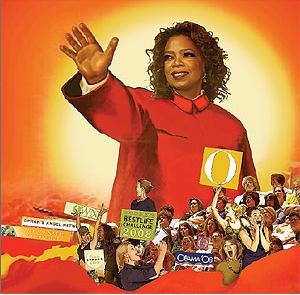
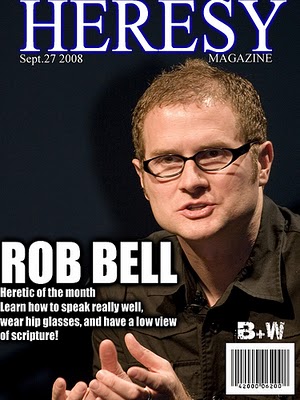
So it’s finally happened: Rob Bell will be on Oprah – her upcoming season of Super Soul Sunday to be exact:
“It’s my dream to encourage other people to connect the dots of spirituality for themselves, to recognize the fullness of their being and to live that fullness. That is where all our potential lies, and getting people to see it is what I was created for. That’s why when you see me on Super Soul Sunday on OWN, vibing with others who want to share their spiritual vision, wisdom, and experience, I am at my happiest and most fulfilled. When Rob Bell—pastor, best-selling author, provocative thinker—recently joined me on the show, we talked for two and a half hours, and I could have kept going. The ideas Rob sets forth in his books Love Wins and What We Talk About When We Talk About God opened my heart and my mind. People like him are the reason I set out to build OWN in the first place: to be able to gather a global community of like-minded seekers. This, by the way, is what I talk about when I talk about God. And yes, it delights me!” – Oprah. (Read more here – HT: Revangelical.)
Given her avid interest in spirituality and her enormous influence, some Christian ministers and pundits have made Oprah their favorite whipping-boy (er…girl?) for years, apparently conflating “talk show host” with “theologian.” They grew positively apoplectic when she begin lending her ginormous platform to pan-spiritual teachers like Byron Katie, Eckhart Tolle, and The Office‘s Rainn Wilson (founder of the totally amazing Soul Pancake) – perhaps in reaction to their own waning influence as the cultural communicators of the day.
I get it. Multi-media ubiquity is a mixed blessing, as comedian Louis CK reminded us this week. We’ve largely lost a sense of the local – the town square, the parish, as a center for communal life. Instead we tune in – to television a generation ago; increasingly, to mobile video and podcast content today – and let increasingly-prominent arbiters of meaning tell us what to believe.
Intriguingly, I believe it was 20th-century Christians who led the way of mass-media engagement of ideas. From Fulton Sheen, Oral Roberts, Pat Robertson, Jim Bakker and Paul and Jan Crouch pioneering television content to personalities as diverse as W.A. Criswell, Aimee Semple McPherson and Robert Schuller trail-blazing the modern megachurch movement (with notables like Bill Hybels and Joel Osteen energizing the second wave), both Oprah and Bell are beneficiaries of the large-format pioneers that came before them.*
And now, they converge. So what are we to make of it when Rob Bell steps into the circle of O?
Is this, as many evangelical and Calvinist brethren will no doubt exclaim, proof-positive that the Love Wins author has undeniably jumped the orthodoxy shark? Is this the ultimate unholy alliance giving renewed relevance to the ‘cult of emergence’s enduring triple-threat alongside Communism and Islam?
Ra-ha-ha-haa!
Sorry. I don’t mean to make light of some people’s concerns – well okay, I do mean to lampoon the newly-baptized Trifecta of Terror. After all, it’s created up quite a stir amongst fundamentalists, and even a brief public spotlight resurgence (if I’m allowed to use that word) for the Great Emergence last month. The larger concern for a “watering-down” of faith – I understand this, too. Raised in Southern Baptist, Assemblies of God, and PCA Presbyterian backgrounds, “right belief” was of crucial importance to us – even when those “right beliefs” were different from one another across denominations and indeed, in some cases, contradicted each other. This all led to a crisis of both meaning and fellowship for me by age 19, where I had to give up odiously-brandished exclusive truth-claims even as I continued to care very much about truth, goodness, and beauty.
I think that Rob gets this creative tension too. He’s centered-set when it comes to the magnetic attraction of Jesus and his Way, recognizing that it’s not about who’s in and out, but what (and Who) we’re headed toward. He’s no ‘universalist’ in the most generic sense of the term – he’s an inclusivist, betting large on the generosity of God and betting small on humanity’s hard-hearted intransigence…just like N.T. Wright.
His centered-set circle includes Oprah and her many viewers…as does mine.
I think Rob thrives when he’s having conversations with spiritual seekers like Oprah or comedian Pete Holmes. Listen to his 2+ hour conversation with the latter on You Made It Weird, and notice how relaxed and engaged he is, in stark contrast to when he’s fighting off the pitchfork-wielding fundies certain moreconservativeevangelicalaudiences.
A winebibber and a glutton – friend of publicans and tax collectors.
Rob Bell: The Lost Interview
As promised, here is exclusive, un-published interview content from a conversation Rob and I had back during his Everything Is Spiritual Tourin 2006. Relevant’s now-defunct leadership magazine Neue published part of it (archived here); I’m not sure why they chose the portions they did. Here’s the full interview for the first time, including the redacted bits.
Mike Morrell: Rob, how do you feel about church growth?
Rob Bell: What do you mean?
MM: I mean the way it’s classically framed in ministry circles, in terms of numerical growth as the sign of the health of the church.
RB: James said that true religion takes care of the widows and the orphans. Are our widows and orphans being taken care of? Are people who can’t make their rent having other people chip in to help them make rent? People with cancer, do they have someone to drive them to chemotherapy? Are people in the local jail getting letters written to them and someone to visit them? That’s exciting church growth right there. It’s not a phrase that we ever use at Mars Hill; it’s not something that we talk about.
MM: That makes sense to me. Do you feel like the call of pastors has changed or evolved in our present context?
RB: A lot of people are rethinking the ways they have understood a pastor functioning in the past. For years, for many people, a pastor was somebody to “do” the ministry. But in Ephesians 4 a pastor is somebody who equips and trains the Body to do the works of the ministry. I think a lot of pastors are rethinking some of those fundamental roles in light of what the Scriptures actually teach. I think there are all sorts of fascinating things going on.
MM: Recently in one of your Mars Hill messages, you were talking about how your church is moving from a concept of “membership” to one of “covenant.” What is the difference in this shift?
RB: Membership sometimes has very static notions attached to it. You join, you’re a part, you pay your dues. You’re in. But a church is a living, breathing thing. It’s a body of people who have centered themselves around the risen Christ, so we wanted something that had a living, breathing, feel to it. Every year you have to renew. Every year we ask the question: is Christ present in our midst? Is the resurrected Christ on display? And we use that for another year of journey. So we’re trying to take it out of static, fixed, unchanging ideas and to move it into a living, breathing covenantal relationship, where we’ve all committed to this thing together. We’re going to journey there and see what happens.
MM: So what would happen if someone honestly assessed their lives and the life of the church, and decided “This year we aren’t going to be in covenant?” What would happen then? Would you all encourage them to find another sort of community?
RB: We have people who leave our church all the time! Yes. We’d say, “Tell us more of your story and let’s sort it through. If this isn’t the community for you, great. If there’s all sorts of junk and you’re running from, things you’re refusing to go on the inward journey and deal with, then let’s talk about that.” There could be all sorts of reasons. For us the issue is always entering into the person’s story and searching for what the Spirit of God is up to here.
MM: It looks like when I’ve read interviews with you the past few years, you keep referring to your church as a church of 10,000. That’s nothing to sneeze at, but it’s been that size for the past few years, hasn’t it? Has Mars Hill hit a plateau at 10,000?
RB: Well, there isn’t any room. We moved into a former mall, so I think that’s how we can fit in three services. Building a bigger building seems to me to be an abomination that causes desolation when so many people in the world don’t have food.
MM: There’s such variety in churches today. I’m a part of a house church community with about 25 people.
RB: I think that’s great. I’m trying to preach messages that will thin the crowds out. Like in John chapter 6 when the crowds get biggest, Jesus starts saying things, and people are like “wow” and they start leaving. So maybe I’ll just start to preach some real sermons and we’ll see what happens.
MM: You make a good point about bigger buildings and global hunger. You said recently that we had the resources to end poverty. Who was the “we” in your statement? Do you think that church initiatives, government initiatives, celebrity initiatives (like the ONE campaign) are doing a good job? And how can we avoid making our “help” just another form of paternalistic colonialism?
RB: If it gives voice to the suffering in the world, it’s a good thing. Often, it’s important to go back a year later and see what’s happening. For us, our passion is always to find those who are in a particular geographical setting with some credibility, who have been there for awhile, who have a proven track record; people we can come in and partner with. In all humility we approach them and say, “Can we serve?” I think that some of the paternalistic colonialism comes with the assumption that we have the answers to others’ problems, and that’s not always true. So at first you have to chuck all results out the window and just listen. Find out if there is any clear and compelling action you can take. I think a lot of some of the negative effects of colonialism come simply from a posture of arrogance, which is probably rooted out of ignorance.
MM: What better theology and better readings of Scripture do you think can help us get the spiritual energy and resources to facilitate humble helping initiatives? Do you think that sometimes the evangelical emphasis on the “Fall” of humanity or the “end times” interferes on a practical level with our ability to reach out with compassion and humility to people?
RB: Ha! That’s an awesome question. First off, in Genesis 1, we’re all created in the image of God. So every human being is created in the image of God, then you have gender, male and female. Next you have location, some moved east to the plains. You don’t really have the birth of religion for a good twelve chapters. So first and foremost, other human beings are fellow image-bearers. So, when Jesus is teaching people to love, it’s not love so that you can… or love because…it’s just love. Period. It’s reclaiming the divine image that’s equal on every human being. And often some of the dangers of past works have been a failure to respect the whole humanity of others. “This person is a convert, this person is a project, this person is a possible notch in the belt,” and in the process, the image of God in every person isn’t respected. And that leaves a bad taste in people’s mouths. First foremost we feed and robe and visit and serve. These are things we do because Jesus said to do them, not because they will get us something. Everything has become “They’re wrong, I’m right, they’re missing, I have…” That whole posture will get in the way of actually blessing people.
MM: Why don’t so many Christians care about the world around us? We seem to almost have contempt for their neighbors unless they happen to convert.
RB: My observations have been that truth appears on the lips of all sorts of people, as does compassion. Grace and love are exhibited by all sorts of people with all sorts of labels and religious affiliation. So we’re back to every single person created in the image of God, breathed into by the divine. And, obviously, all of us are dreadfully in need of reconciliation with our Creator. But I think sometimes there’s a notion that if we beat people into a place of shame, where they don’t actually think they can make a difference, then they’ll receive Christ into their lives. That’s where things get very toxic, very fast.
MM: I agree. In this vein, I’ve heard a general critique about this understanding by some fellow Christians that I’d like to bounce off you. When we talk about a narrative understanding of redemption history, God’s story and our part in it, the critique is that this is humanism, that God’s sovereignty is being threatened in all of this. Do you ever run into the accusation of being humanistic in your efforts at Mars Hill?
RB: Of course it’s humanistic – we’re humans! I don’t even know what that means. This is how God has worked for thousands of years. I have a high view of humanity because I have a high view of God. When people speak against humanity they are speaking against God. The idea that our playing a real role in the divine/human story questions God’s sovereignty implies that humanity doing great things and God’s sovereignty are somehow either/or. This is an extremely limited and ultimately very narrow understanding of the world. The Bible did not drop out of the sky. People wrote it, people exerted a lot of sweat and toil. Luke says I’m writing for this purpose and the author of Proverbs says he writes for our instruction….so if you have a low view of humanity then you must have a seriously low view of the Scriptures, because this is how we got the Bible. If you’re a Christian, the only reason you’re a Christian is because somebody told you about Christ, and someone told them, and someone told them. You must at some point acknowledge that humans are capable of passing this message along to each person who’s so critical of the narrative theology to even have heard the message of redemption in the first place! People who say things like this rarely change the world. It generally just boils down to those who are trying to make a difference. History does not remember nay-sayers much. But we remember Nelson Mandela; we remember Reverend Martin Luther King Jr.
MM: There is so much of how we see God and God’s purposes rooted in how we look at one another. Why do you think that so many of today’s Christians think of themselves primarily as “sinners?”
RB: In the New Testament that is not how people are identified. They’re identified as saints, they’re identified as holy ones, and they’re identified as the Bride of Christ. The whole premise of trusting Christ in the Scriptures is that you have a new identity. If you insist on calling yourself a sinner, you have to do it beyond the Bible. According to the Scriptures you now are somebody new, you aren’t who you were. I understand the value of “I still sin, I still struggle. I still need to be reminded of my fallibility, or my brokenness.” Yes, but you are a new creation. So you’re fundamental identity, and we all still struggle with this as it says in James, your fundamental identity has been radically altered in Christ. We’ll just call it eschatological realism, I’m being pulled into my true identity…
MM: That was the major discovery for me several years ago. It still amazes me how many Bible-believing Christians have a real hard time with that.
RB: These are the kinds of people who put Christ on the cross. Religious people who have a set understanding, an agenda of how way things are supposed to be, and are incapable of understanding or reconsidering the original intent of the Scriptures.
MM: When you first started Mars Hill, you said you wanted a place stripped of the clutter. You wanted a place where God to be freed up to speak. What are some ways we can challenge harmful religious systems in a loving way? To put it another way, how can we repaint our ecclesiological practices? For instance, do you feel like the professionalization of clergy, and the spectator arranged, monologue driven weekly event, ever undercuts the vision of Jesus?
RB: I’m leery of challenging conventional practices. If the intent is simply to challenge or be controversial, that’s never a noble attempt. The attempt for me is always truth, an attempt for the community of people who are learning the way of Jesus as his disciples. So, I don’t think there’s anything wrong with a group of people gathering in a room to hear somebody talk; I don’t think there’s anything wrong with a person in a church who gets a paycheck for their work in equipping the Body to the work of the ministry. What’s dangerous is when we fail to call things what they are. On Sundays at Mars Hill, we would simply say this is just a gathering of the church, or churches. We gather throughout all the days of the week as communities, but we actually journey together in smaller networks of people. So, if you come here on Sunday, you come for an hour and a half for whatever teaching and singing, and get some information, but please don’t say you’re a part of this church. You went to a services of this church put on. So to me, God can use all these different ways. The issue is whether we’re honest about what things are, and we call them what they are, and we don’t place expectations on things that can’t deliver. There are nineteen “one anothers” in the New Testament that are repeated 43 times—love one another, pray for one another—you can only do a couple of those in a church service. So let’s just be clear that when the Bible talks about. Let’s give those services proper weight. They can be extremely important, and at the same time, it’s not the flow of how you live your life day in and day out. There’s always a group of people who say that churches can only be small to be authentic, churches can only be house churches to be authentic. The truth is that people can be fake in a room of ten and they can be fake in a room of 1,000. We tend to have unbelievable moments of the presence of God, in rooms of 10 and in rooms of 1,000. Generally when somebody’s all against something I ask, “So how did you get burned by that group?” The reaction is generally against a bad experience. The issue is whether we’re being honest about the current expression we’re in the midst of.
Fin.
While you’re waiting for the Oprah Interview…Rob Bell’s Greatest Interview Hits
*We could argue that what’s happening today, beginning with the Internet’s popular-use rise in the 1990s through the advent of the mobile web today is a process of de-massification or niche-ification of media creation, but that’s a whole ‘nother blog post.
Me Then: at Wild Goose 2011, riding my all-time high of 284.
A year and some change ago, I’d had enough. I blogged about my sluggish health, and what I felt was a matter of life and death: I had high blood pressure, was chronically tired, and 80+ pounds overweight at a lifetime-high of 284 pounds. Since that post, I went in for a sleep study and was diagnosed with sleep apnea. I began using a CPAP machine at night; I’d experienced incremental gains in health, but was still in a weight plateau, sliding between 275 and 284.
A few months ago I started doing three things consistently; six weeks later, I weighed in at 259. I’ve kept these 25 pounds off for six weeks now, and am about to step up my game for the remaining 59 pounds I’d like to lose. But I’d like to freeze-frame this moment and share the three things I’ve done to get where I am. I have a feeling that many of you are exactly where I’ve been – feeling stuck and wanting to break out of a holding pattern. While your results may vary, here’s what I’ve done:
1.) High Intensity Interval Training (HIIT). When it comes to exercising, I’ve been getting more results in less time using the proven, efficient, and increasingly-popular HIIT approach. I’ve been using my trusty ROM, doing 4-8 minutes each on upper-body and lower-body, for a 12-16 minute workout, 3-4 times per week. And while I always recommend the ROM, there are other ways to achieve HIIT bliss, too; a good overview of HIIT approaches (with video discussion) can be found here.
2.) Living Fuel ‘Fasting.’ Living Fuel is bar-none the best whole-food based meal replacement on the market today. No, that’s not hype – compare this label to anything you’ve ever seen or used. I’ll wait. 🙂 I use their SuperBerry Ultimate, SuperBerry Greens, and Living Protein. If I’m traveling, I’ll use it for breakfast only. If I’m home, I’ll use it twice a day, preferably for breakfast and dinner, with a nice lunch of some kind of protein, and veggies. When I’m feeling particularly plateaued, I’ll drink three shakes a day, having apples and Cocochia bars as sparing in-between meal snacks. (This is the Fuel Fast.)
These two components – exercise and nutrition – have been crucial, but I’ll be honest: I’ve done variations of these for a couple of years with only minimal results, mostly enforcing my body’s status quo. While doing these two are nonnegotiable, the addition of a third component has been necessary for catalyzing my body’s transformation.
3.) Lymphatic detoxification.
At the beginning of this year while visiting him in Myrtle Beach, my buddy (and relationship coach extraordinaire) Rick Williams introduced me to the work of Dr. Robert Morse after I vented my frustration at years of being stuck between eating well and exercising, but seeing no substantial bodily changes. Dr. Morse is a naturopath (with a Doctorate of Science in Biochemistry and a Doctorate of Naturopathy from the Brantridge Forest School in Sussex, England, as well as a Master Herbalist with degrees from many Institutes – full bio here) and raw foodist; he doesn’t mess around. But his clinic in Florida receives clients (both in-person and virtual) from around the world with chronic, supposedly-incurable diseases. This blogger sums up Dr. Morse’s approach aptly:
If given the opportunity, through fasting, cleansing, detoxing, and raw living foods, the human body can and will regenerate and rebuild at the cellular level. However, most people eat acidic meals 3 times a day every day and have never fasted or detoxed even once in their lives. This is equivalent to perpetually running a complex machine 24/7 for years and expecting it never to break down. But over time pipes get clogged, waste backs up, wear and tear take their toll, and the machine ultimately overheats and fails. Only then can repairmen come in, fix the pipes, remove the excess waste, and repair the damage done. It is exactly the same with the human body and our repairmen (self-regenerating cells/tissue) can only clean out and fix the machine when it’s turned off. Fasting gives your internal organs the break they need to repair the damage of overuse. What allopathic doctors refer to as “diseases,” Dr. Morse suggests could be more accurately termed “healing crises.” The allopathic model merely lumps together a bunch of symptoms, gives them a name based on what part of the body they affect, then offers you unnecessary pills, vaccinations, radiation and surgeries that ultimately do more harm than good.
Me Now: Just beforeWild Goose 2013, at a ‘fighting weight’ of 259 and feeling good!
De-toxing, like many expressions of ‘alternative’ health, has its critics – even among proponents of alternative faith expressions (ahem – Tony Jones), and I’ve certainly seen detox done in faddish, superficial, and quick-fix ways. However, I was intrigued by Dr. Morse’s approach and thought I’d give it the ‘ol Life Experiment try. (Sorry, Tony). I took this in-depth Health Questionnaire, and contacted Dr. Morse to see if he could customize his ready-made detox kits for me. He did, focusing on some of my unique brain issues. I received a variation of his Herbal Health Club’s Detox Kit – Weeks 1&2, 3&4, and 5&6, with G.I. Broom. (It’s a twelve-week program in all; I’m halfway through at this juncture.) It involves various tinctures with names like Lymphatic System I, Kidney & Bladder, Endocrine Glands, and Liver/Gallbladder, as well as capsules, that are taken on an empty stomach before meals.
The meals themselves start at a ‘moderate’ austerity level with veggies, fruits, and proteins, and move onto exclusively raw fruits and veggies if you can handle it. I have to confess, I have not yet dived into the ‘deep end’ when it comes to diet, doing mostly the Superfood smoothies and a meal a day, which usually contains a moderate amount of meat. My challenge for weeks 6-12 will be to stick more ‘to the letter’ of what Dr. Morse recommends – I have a feeling this will break me out of the “25 pound zone” of weight loss and into 50 and 80 pounds total lost. But for now I take it as good news that a gradualist approach, as I’ve espoused, has yielded substantial and sustained gains in such a short amount of time.
Almost instantly with the tinctures, I began to feel different. The cliche about fat “melting” away? That’s what I felt like, with frequent trips to the bathroom, even though there are no harsh diuretics in Dr. Morse’s products – it’s all about releasing the stored fat that exists to protect us from all of the harsh toxins we’ve ingested over the course of our lives.
In addition to 25 pounds of weight loss and my blood pressure coming well into ‘normal’ range, a frequent comment I’m getting lately is that I look younger. Not just thinner, but like I’m de-agining; my eyes are looking clearer. (Dr. Morse uses Iridology to assess the soft tissues of the body to help people achieve maximum health through detoxification and regeneration on a cellular level.) I still have a ways to go, but after six weeks of this in-depth de-tox I’m looking and feeling way better.
Here’s the enigmatic Dr. Morse himself on detoxification:
To Summarize:
In early May, I committed to three practices:
1.) High Intensity Interval Training (HIIT). 2.) Living Fuel ‘Fasting.’ 3.) Lymphatic detoxification.
My story is definitely to be continued. And, I’m curious about yours: When it comes to health and weight loss, what’s worked for you? What hasn’t? I’d like to hear in the comments below.