Brother John is also what might be termed Mepkin’s foreman. After morning Mass, the monks without regular positions line up in a room off the church for work assignments, and, with several thousand acres full of buildings, machinery, and a farm with 40,000 chickens, there is plenty to do. (As a daily fixture at the grading house, packing and stacking eggs thirty dozen to a box, I could easily skip this ritual. I never do.
Perhaps it is the way Brother John lights up when I reach the front of the line, touches me ever so lightly on the shoulder, and whispers “grading house” that brings me back every morning. Perhaps it is the humility I feel when he thanks me, as if I were doing him a personal favor.) Yet Brother John keeps it all in his head. Replacing every lightbulb that flickers out somewhere is his responsibility. He supervises when possible and delegates where he can, but as he is always shorthanded, he is constantly jumping in himself at some critical spot. Throughout the monastery, the phones ring incessantly, with someone on the line asking, “Is John there?” or, “Have you seen John?” And through it all, his Irish good humor and gentleness never fades or even frays.
Now, after just such a day, four hours after his usual bedtime, and forty years into his monastic hitch, here was Brother John eschewing Boniface’s baking, a glass of cider, and a Christmas break in order to walk me back to my room under a shared umbrella.
When we reached the church, I reassured him several times that I could cut through to my room on the other side, before he relented. But as I opened the door of the church, something made me turn, and I continued to watch his flashlight as he hurried back for another pilgrim until its glow faded into the night. When I reached my room, I guess I wasn’t as sleepy as I thought. I sat on the edge of my bed in the dark for what I can say, with some conviction, was a very long time.
Over the next week, I went about my daily routine at Mepkin as usual, but inside I was deeply troubled. I was obsessed with Brother John. On one hand, he represented everything I had ever longed for, and, on the other, all that I had ever feared. I’d read Christian mystics say that God is both terrible and fascinating, and, for me, Brother John had become both.
Of course, my obsession had nothing to do with the fact that he was a monk and I was not. On the contrary, Brother John was fascinating precisely because I intuited that to live as he did, to have his quiet peace and effortless love, had nothing to do with being a monk and was available to us all.
But Brother John was also terrible because he was a living, breathing witness to my own inadequacies. Like Alkibiades in Plato’s Symposium, speaking of the effect Socrates had on him,
I had only to picture Brother John under his umbrella to feel as if “life is not worth living the way I live it.” I was terrified that if I ever did decide to follow the example of Brother John, I would either fail completely or, at best, be faced with a life of unremitting effort without Brother John’s obvious compensations. I imagined dedicating my life to others, to self-transcendence, without ever finding that inner spark of eternity that so obviously made Brother John’s life the easiest and most natural life I had ever known. Perhaps his peace and effortless love were not available to all, but only to some. Perhaps I just didn’t have what it takes.
“Meaning. Purpose. Engagement. Those are our modern buzz words. Yet most focus on the purpose of doing, and not the purpose of being who we really are. Turak’s beautiful Brother John gently points us inward and upward toward our ultimate purpose.”
— David W. Miller, PhD, Director, Princeton University Faith & Work Initiative
“Brother John tells a simple story of a life profoundly lived. The depth of this life becomes visible and transformative in a simple act of hospitality and kindness: an act that raises the question of the kind of life we really want to live. The story is made all the richer by Glenn Harrington’s evocative illustrations. Brother Johnis deeply rewarding food for contemplation.”
— William Cahoy, PhD, Dean Emeritus, Saint John’s University School of Theology and Seminary
“In this beautifully illustrated book, August Turak pulls back the curtain of monastic life. Brother John shows us how to bring a little bit of heaven to earth, right now. I highly recommend that you read Brother John and share it with anyone you care about.”
— Mike Morrell, collaborating author with Richard Rohr, The Divine Dance: The Trinity and Your Transformation
“Beautiful illustrations and it was so refreshing to reread Brother John. It’s a powerful reminder of how Brother John lives, how we should all live, and what might be holding us back.”
— Kavita Hall, Director, Corporate and Foundation Relations, The University of North Carolina at Chapel Hill
August Turak is an award-winning author, speaker, consultant and contributor for Forbes.com and the BBC. He is also the founder of the spiritual and educational nonprofit the Self Knowledge Symposium Foundation (SKSF). August retired as a successful entrepreneur and corporate executive. His book, Business Secrets of the Trappist Monks, was published in 2013 by Columbia Business School Publishing. When he is not praying and working alongside the Trappist monks of Mepkin Abbey, he works with his nonprofit and lives on a seventy-five-acre farm near Raleigh, North Carolina.
Two spiky-haired dudes (one of whom being the incomparable Jon Scott) get together and talk about the collapse of empathy in America, the remedy of authentic connection, practicing the presence of each other, and doing what makes us come alive in our vocations. It gets real, folks.
We also talk about two upcoming opportunities to get together with me and some amazing friends: the Healthy and Holy Retreat later this month (February) in the beautiful Western North Carolina mountains, and The Passionate Pen writers’ conference in March near Charlotte!
2016 has been such a paradox for me. Nationally, globally, and in the lives of many of my friends, it’s been a steady stream of sorrow if I don’t sugar-coat it.
But personally? While feeling into all our larger cultural shifts, it’s been amazing in so many ways: My girls are growing up, Presence continues to reach new frontiers, Speakeasy is connecting amazing authors with incredible bloggers, I was able to collaborate on a best-selling book with one of my heroes, and I started classes in the Center for Action & Contemplation’s Living School.
Life is full. I am grateful.
And.
If I’m honest, this rich, full life I’m living highlights a glaring weakness among the glories of my year:
I suck at time management.
Half-days can pass like minutes; social media can rob my attention and my peace. I’m late for appointments; deadlines become blurred lines.
I know a lot of people live their entire lives like this, where “I’m so busy” becomes a mantra, and overwhelm is a badge of honor.
But I can’t help but think there’s a better way to be productive – heck, to be human – in relation to time and how we pattern our days. What do you think?
When my friends Spencer Burke and Tripp Fuller of The Hatchery LA told me that they’ve partnered with entrepreneurial coach Joshua Millage to create an interactive online class on productivity and platform-curation for community leaders, ministry types, and communicators, they got my attention.
After all, I cut my teeth working with Spencer on the late, lamented TheOOZE.com, and launched one of my first businesses with him. And Tripp is one of the single most productive people I know: A theologian, writer, teacher, speaker, and podcaster extraordinaire, who still finds time to be an amazing husband, dad, and friend?
You might be interested in taking this certification course along with me – or maybe not. Either way, if you want to overcome inertia and reclaim your time, 15 minutes at a time, check out this free video series from Tripp and Joshua. In this short series, they show us how to say “no” to what doesn’t serve our highest path, how to develop new patterns of “yes,” and how to lead our lives with integrity.
I’m grateful for the value they’re bringing to this series. Whether their Certification is for you or not, I think you’ll find alot to glean in these videos. You can get access here.
I’m curious: If you find yourself productive – even if in just one area of your life – what do you do to dwell there? Share your superpower on the blog here!
October 30th – it’s my birthday today. I turn 33. So it’s only appropriate that I delve into something that I’ve never said here before: I’m adopted. I was adopted from birth. And nearly two years ago, I connected with my biological parents for the first time.
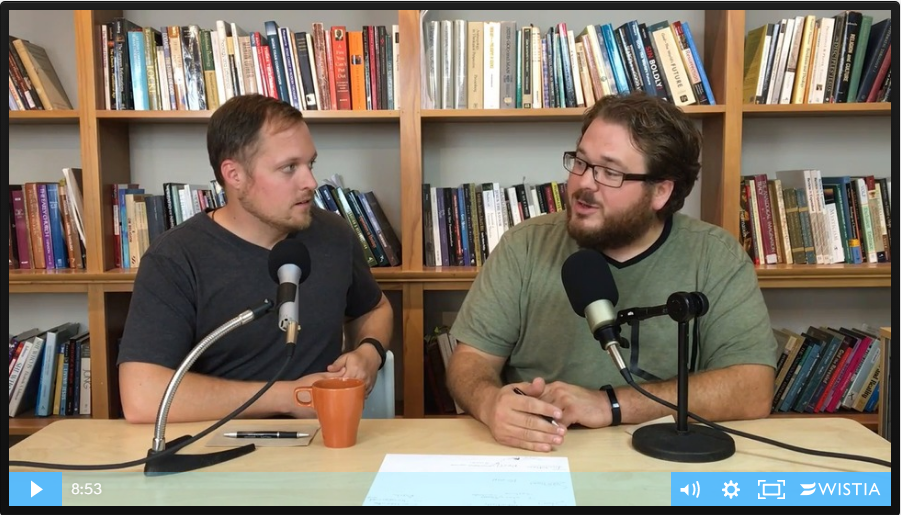
I recently sat down with my friend (and parenting blogger) Jeremy Uriz to discuss what it was like to grow up as an adopted kid, and what impact this has on me now. Jeremy has a vested interest in knowing: as of earlier this year, Jeremy and his wife Jennifer became the proud adoptive parents of a toddler from China, Penelope. Let me tell you, she is a cutie, and ridiculously smart, to boot. Jeremy has been chronicling her life, and their life as parents, at Belonging Together. It’s a treasure trove of information and wisdom on parenting, adoption, cross-cultural parenting/adoption, et al.
In our two-part interview – which you can read as a transcript or listen to as a podcast – we discuss adoption and parenting from all sides. If you want, you can jump right now to part one and part two – otherwise, here are some excerpts…
Jeremy: Recently you had a unique experience among some adoptive people. We’ll discuss that in a little bit. Let me just start out and ask you how sensitive a topic is adoption now versus 10 or 20 years ago?
Mike: Do you mean how sensitive do I think it is in the culture at large?
J: Yes.
M: I would say in most corners it’s way more open now than it used to be. My impression is, and what I’ve gathered, is there used to be a culture of almost shame and secrecy around adoption and now people are far more commonly talking about adoption, either if it’s their children that they have adopted or if they are kids or adult children who were adopted it seems more common now. It’s more out in the open.
J: When did you find out you were adopted?
M: I found out I was adopted when I was, I want to say, 4 or 5 years old. I kept pestering my mom about “birds and the bees” type questions and think I point blank asked her at one point if I grew in her belly. My mom is of the “I will not tell a direct lie” school of ethics, and though it was an uncomfortable topic for her, she decided to give it to me straight. She told me then that I was adopted and that they chose me, my mom and dad chose me, and that they loved me very much because they especially chose me.
Jeremy: That brings me to another question. Did you feel there was a piece of you that was in a sense “filled in” by this connection or did you know it was there, did you not know it was there and you only discovered it when you began speaking to [your birth mother]?
Mike: That’s such interesting question. Connecting with both her, and shortly thereafter my birth father, I did see some aspects in common in terms of they were both very opinionated people, they are both entrepreneurial, and creative. And so there were some cool resonances there but it actually wasn’t as intensely ”Oh I found this missing piece of myself” as I think I may have built it up in my mind. I think there’s a bit of allure that develops around adoption that makes you feel like there’s this sort of ache or primal wound or something that once you find these people you’re going to have a missing piece of yourself.
I was very fortunate to have a wonderful reunion experience with both of my birth parents. I know in some cases the birth parents don’t want to be in touch, or they turn out to be co-dependent, or addicts, or there’s all kind of horror stories out there. I’m really grateful that none of that was the case with me.
At the same time I think that what it confirmed that there are some ways in which I am simply unique. So in the ways in which I felt like maybe I didn’t fit in when I was growing up among my parents, my adoptive parents, that maybe if I ever imagined “well I don’t fit in with them but it’s because I’m more like my birth parents” in some ways I’ve discovered that I’m just a unique person on my own two feet. It’s great as an adult to be in a relationship with the parents I’ve always had as well as my birth parents.But I’m relating to all of them really as an adult.
Yeah, its an interesting process. It’s not over yet by any means so I’m still along for the journey in this regard.
J: So in some respects it offers you a larger palate to work from than other people.
M: Sure.
J: Not necessarily the way people would choose but it’s the hand you were dealt.
M: Yeah, it is the hand I was dealt. [I would add that this is not as grim as it sounds! By and large, I like the upbringing I had, though it’s not without its challenges. I am grateful for how things unfolded, and continue to be grateful for how they unfold today with my big, diverse, interesting family…] And I think increasingly in this day and age there are a lot of adopted children, and lots of blended families, people who have step parents of one sort or another, I think a lot of us are getting to play with larger palates these days as we’re discovering why we’ve developed in the way we have and what’s formed our identity.
J: Now this particular question is going to be important for me and anyone reading, or for a lot of people reading this. What do you feel adoptive parents should know about their adopted children? Is there something about the experience? For Jennifer and I we can’t relate in some respects to the experience Penelope has. What is it that parents should know in this circumstance?
“Jesus (peace be upon him) is unambiguously mentioned over 25 times in the Qur’an,” the young Imam explained to us at the Raleigh Islamic Center this week. “This is many more times than even the Prophet Muhammad (peace be upon him).”
I was learning this in a very unique context – about 30 Christians and 30 Muslims got together Wednesday night for an unusual act of friendship: Sharing our distinctive understandings on Jesus, and sharing a meal.
Apparently, sharing meals in the manner of Jesus is controversial then as it is now: When I posted, later that night, on my Facebook Wall about what a great time I had, my online ‘friend’ count immediately went down. In the past, when I’d posted a positive story (or even neutral observation) regarding Islam, huge fights would break out on my Wall. Once-civilized Christians would say the most ignorant and hurtful things. I’ve had some painful-but-necessary online connection-purges since the initial e-skirmishes a year or so ago, but judging by the self-selection, it looks like I may have missed a few people.
In my more intemperate moments I get fired up – like Paul does in Galatians 2. How can these fellow-Christians and I have anything in common? “This matter arose because some false believers had infiltrated our ranks to spy on the freedom we have in Christ Jesus and to make us slaves,” Paul states flatly of boundary-drawing, rule-imposing Christians in verse four. But! “We did not give in to them for a moment, so that the truth of the gospel might be preserved for you.”
For Paul the Gospel can be summed up in a word: Reconciliation. The good news is that a cantankerous humanity and a divided world has already been reconciled to God via the downward mobility of an incarnate, ascended, indwelling Christ. Now we get to actualize this divine reality as ambassadors of this reconciliation – making things on earth as they are ‘in heaven.’
What shape might the Gospel take in today’s pluralist world? How is this similar to the shape the Gospel took in Paul’s pluralist world? How does meal-sharing reflect both?
Christians interacting with the ‘wrong people’ – especially while sharing a bite to eat – seems to rankle religiously-minded people today as much as it did in Paul’s day. It reminds me of the heat Brian McLaren took a couple of years back when he decided to observe the fasting and feasting of the Muslim holy season of Ramadan; and more recently, the threats an Episcopal Priest faced who decided to observe Islamic prayer during Lent. Crossing boundaries to eat like Jesus is risky business.
Which brings me back to the Raleigh Islamic Center. The main Imam speaking that night – a young, energetic, Egyptian guy – further explained to us that his expression of Islam has a Hadith (number 7015 to be exact) which prominently features Jesus. In this end-times scenario, Jesus leads a great, disturbing battle (not unlike the great, disturbing battles contained in Christian eschatology), after which he presides over a feast with Islamic multitudes:
Allah will send rain which no house of clay or camels’ hairs would keep out; it will wash away the earth until it could appear to be a mirror. Then the earth will be told to bring forth its fruit and restore its blessing and, as a result, there would grow (such a big) pomegranate that a group of persons would be able to eat it, and seek shelter under its skin. Cows will give so much milk that a whole party would be able to drink it.
Jesus, feasting with Muslims at their great eschatological banquet!? A troubling thought to many Christians – religious folk who like to color inside the lines. But wouldn’t it be just like Jesus? The nerve of him, eating with a group that (our) organized religion deems ‘outsiders’? And yet, outsiders in Jesus’ day often became his closest friends and most dedicated followers. Jesus wasn’t picky: Sex workers, government stooges, heretics, even alleged terrorists…these are the kinds of people welcomed to Jesus’ table in the Gospels.
There’s always the question, though, of what shape a world-changing movement will take after the baton is passed from its revolutionary initiator to the next generation. We know full well that many Christians through the ages have ‘fenced’ God’s Eucharistic table, building barriers instead of bridges to an increasingly notional meal – the gradually diminishing breadcrumbs and shot glasses serving an almost prophetic witness against our religious OCD of trying to determine who’s in and who’s out of God’s New Deal.
So – what of Paul, that oft-misunderstood apostle of grace? When he’s put to the acid test in Galatians, will he dumb down Jesus’ shalom demonstration of radically-inclusive table fellowship? We gather from chapter 2 that the great Peter, tragically, already has. Peter – friend of Jesus, rough fisherman, mystic sage and mighty healer – Peter, the veritable ‘rock’ of Christendom! Peter, who was shown great grace by Jesus after his famous three-fold denial, and who was dragged kicking-and-screaming (but ultimately willingly) to inclusion of the ‘great unwashed’ Gentile Christ-followers after witnessing a dramatic heavenly vision (See Acts 10, and also Eric Elnes’ masterful interpretation of this powerful vision in chapter five of his The Phoenix Affirmations). The vision Peter saw while in a trance explicitly tied the inclusion of Gentiles into the family of faith with eating their food – food previously deemed ‘unclean’ in Jewish culture. And yet in Galatians 2, Paul sadly (and a bit snarkily) tells of Peter’s stunning culinary reversal:
But when Peter came to Antioch, I opposed him to his face, because he stood self-condemned; for until certain people came from James, he used to eat with the Gentiles. But after they came, he drew back and kept himself separate for fear of the circumcision faction. And the other Jews joined him in this hypocrisy, so that even Barnabas was led astray by their hypocrisy. But when I saw that they were not acting consistently with the truth of the gospel, I said to Peter before them all, “If you, though a Jew, live like a Gentile and not like a Jew, how can you compel the Gentiles to live like Jews?” We ourselves are Jews by birth and not Gentile ‘sinners’; yet we know that a person is justified not by the works of the law but through faith in Jesus Christ.
Paul, at least in this stage of his life, called baldfaced hypocrisy when he saw it. Peter couldn’t live up to the stringent interpretations of Judaism that certain legalistic Jewish Christians were advocating – Paul excelled at this for awhile but gave it up after he saw what kind of a person it made him – why on earth would Peter now be putting this Buick-sized burden on these nice, innocent pagan folk?
Paul knew that to follow Jesus means to follow him into eating with the unlikliest of people for the sake of the gospel of reconciliation. And he also knew that the temptation to deviate from this lifestyle was great – that if Peter could turn his back on scandalous grace, any of us could! This is why Paul sees being grounded and rooted in the Spirit as far surpassing the fruit yielded by a life grounded in slavish imitation of religious standards. It is in this section of his letter to the Galatians that Paul gives his famous coda, treasured by prophets and mystics alike through the ages:
I am crucified with Christ: nevertheless I live; yet not I, but Christ lives in me: and the life which I now live in the flesh I live by the faith of the Son of God, who loved me, and gave himself for me.
Here I like the King James translation – not only faith in Jesus, which is affirmed elsewhere, but the very faith of Jesus – the living Christ, resurrected in us as we recognized our dying in him. This is the heart of the Christian mystery: In dying before we die, we recognize an eternal kind of life that sprouts in the here and now. This new-creation life replaces our old identifications and allegiances, so that we’re empowered to follow Christ into brave new feasts with the most interesting table companions.
That’s why, after losing some online connections, I posted later that night:
A note to my Facebook peeps: I’ve been known to share meals with Muslims, Neopagans, queer folk, & even people who live outside – & I tend to ENJOY their company immensely. Because I tend to eat rather often (I mean, look at me), I find myself eating with people A LOT. There are unique blessings that flow from breaking bread with those different than us; but if this bothers you, you can ‘unfriend’ me & I won’t be offended.
A little snarky, perhaps – but in the service of wider grace and greater empathy, I’d like to think Paul would approve.



 When we reached the church, I reassured him several times that I could cut through to my room on the other side, before he relented. But as I opened the door of the church, something made me turn, and I continued to watch his flashlight as he hurried back for another pilgrim until its glow faded into the night. When I reached my room, I guess I wasn’t as sleepy as I thought. I sat on the edge of my bed in the dark for what I can say, with some conviction, was a very long time.