Opti-mystic meditations on Spirit, Culture, & Permaculture
Author: Mike Morrell
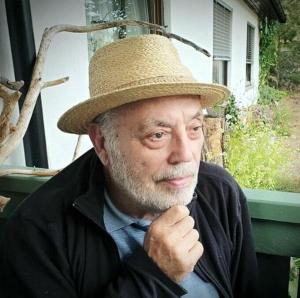
Michael Morrell is the collaborating author, with Fr. Richard Rohr, on The Divine Dance: The Trinity and Your Transformation. He's also the founder of Wisdom Camp, a day-retreat for mystical misfits, and a founding organizer of the justice, arts, and spirituality Wild Goose Festival.
Michael curates contemplative and community experiences, taking joy in holding space for the extraordinary transformation that can
take place at the intersection of anticipation, imagination, and radical
acceptance.
Michael is also an avid writer, publishing consultant, author coach, futurist, and curator of the book-reviewing community, Speakeasy. His two children are growing up entirely too fast and he lives in Asheville, North Carolina.
Whiskey, Tango, Foxtrot
Not long after I got out of the military, I was attending an antiwar demonstration where a young man, a newly minted veteran, was surrounded by cameras as he bawled his eyes out. I had no idea what he was talking about, but I can guess it had something to do with unresolved combat stress. People love a sob story, especially when it comes from “the troops” everybody claims to support. The problem with soldier sob stories is that they feed a civilian savior complex, the hope we have of being able to save/help/fix/repair veterans.
The widely-held assumption, that military families need saving, affirms the widely held belief that grunts are broken, war-weary, damaged goods. It might show vulnerability for a veteran to cry, but it might also be a mask for other emotions he or she isn’t allowed to express. Like anger.
Somewhere in [the midst of a federal civil rights investigation], someone told me I was “all heat, no light.” What they meant was that I was making people angry, getting all “fire and brimstone,” but not giving anyone any hope. Old Testament scholar Walter Brueggemann wrote that the prophetic task must balance criticism with hope, and from outside appearances I was all criticism and no hope. I think the inverse was true, that Christians expect all light and no heat. Why else do you think services for Easter are so much more well-attended than those for Good Friday? We want rainbows and puppies, but we don’t want the rain or to have to pick up dog poop.
In prophetic literature there’s a recurring theme of a refining fire that tests us “as gold is tested” (Zech. 13:9) and that “will smelt away [our] dross” (Isa. 1:25). What good is the light without heat?
It’s easy to look at someone crying out on account of injustice, saying something isn’t fair, and accuse them of being an entitled little shit. But what if, and hear me out on this, something is actually unfair? What if military suicide is not so much about the internal mental health of soldiers and veterans as the human dignity they are denied by civilian society? What if the responsibility to change or improve isn’t on military families, what if soldiers and veterans aren’t the ones who are entitled?
I understand if sometimes we can’t take the heat, if we need “fire, lite” instead of fire and light. I know it can be hard to see anger, but at some point we need to put an end to childish fragility and face the things we have done and failed to do.
One of the things I think Christianity has failed to do for a long time is to treat grunts fairly, in Scripture and our traditions. That is a gaping hole in theology and culture that my battle buddies are falling through.
Eighteen lives a day is eighteen too many. My book God is a Grunt is about ripping open packs of gauze and shoving them into the sucking chest wound that is military suicide. I don’t try to hide the anger and sadness that birthed this book because time is a luxury my battle buddies don’t have. Dr. Ryan Martin, the anger management psychologist, closes by saying, “We should be mad when we’re truly treated unfairly…Were you treated unfairly? Then get mad and let’s do something about it.”
Praise for God Is a Grunt
“In his new book, Logan Isaac invites us to share in the story of Christian soldiers with grit and grace, encouraging the church into more thoughtful conversations about, and meaningful community with, military families. This book could transform and even save lives.”
—James Martin, SJ, author of Learning to Pray
“When one soldier and seventeen veterans take their lives every day in so-called ‘God-blessed America,’ it’s time to have a serious conversation about the Christian faith and military service. God Is a Grunt forces readers to wrestle with brave moral questions about war-waging and peacemaking, mental health and neighbor-love. With a mix of righteous anger and theological imagination, Logan M. Isaac challenges popular misconceptions that will disturb the easy confidence of partisan readers on both sides of the aisle. This book isn’t safe, but it is good.”
—Jonathan Merritt, contributing writer for The Atlantic and author of Learning to Speak God from Scratch
“God is a Grunt is part humorous history lesson, part expose of bad theology in which Br. Logan elbows through the mud of Christian expectations and misunderstandings about those in uniform. A brilliant theological examination of soldiers.”
—Rev. Jaye White, Air Force daughter and Army spouse
About the Author
Logan M. Isaac spent over six years in the United States Army as an artilleryman, including a deployment in support of Operation Iraqi Freedom in 2004. He was discharged as a Noncommissioned Officer in 2006 and went on to earn a BA from Hawaii Pacific University and a Master of Theological Studies from Duke University. Logan spent a year teaching at Methodist University in North Carolina before leaving to study at the University of St Andrews in Scotland, from which he received a Master of Letters in Systematic and Historical Theology in 2015. After returning to a teaching position at Duke University, he went on to earn a Certificate in Business Administration from Georgetown University and start Pew Pew HQ, a social enterprise based in the Washington, D.C. metropolitan area.
Am I queer?It’s a question I’ve wondered about for awhile, though maybe not in the way you might think.
The first inkling I had of my particular flavor of potential queerness (Schrödinger’s queerness?) came when I was only five years old.
I was in Sunday School, gathered with two girls who were best friends with each other — Lynne and Amber. This particular Sunday morning, I was sitting between them. Lynne was holding one of my hands, resting in her lap. And Amber was holding my other hand, resting in her lap.
I felt like I was in heaven. It felt sweet, wholesome, and right. I’m pretty sure we stayed this way throughout the entire felt-board Bible lesson.
Our Sunday School was team-taught by a woman and a man; I’ll never forget what happened after the lesson concluded.
The man put his hands on his knees, leaned in my face, smiled, and said:
“You know, you’re going to have to choose, eventually.”
And I remember thinking at the time: “Why?”
Leaving aside for a moment that this is a hell of a thing for an adult to say to a five-year-old, even then, the idea that I’d have to choose between the affection and companionship of two girls who clearly cared about each other and were enjoying me felt ludicrous.
Of course, this is the messaging I’d continue receiving growing up in Georgia, in the U.S. South, the ‘buckle of the Bible Belt.’ Evangelical Christians in the genre of faith I was raised in somehow ignored the messy, manifold witness of Scripture itself (what with its polygamist patriarchs and serial marriages culminating in twin New Covenant champions, Jesus and Paul, who ostensibly celebrated celibacy above all) in favor of a flattened 1950s-styled nuclear family with a paired dyad at the center, ‘forsaking all others’ becoming a social isolation chamber where other friends, loves, and community had no place.
I’d hear whispers of other possibilities over the years: realizing that alternative religious communities from Mormons to Shakers to the Oneida Community tried experiments in old-school polygamy, sublimated celibacy, or free-love as the elixir to immortality, respectively. In college when my roommate and I launched the proto emerging church Web directory ‘sites unseen,’ we fielded link submissions for ‘the best Jesus-infused websites you never knew about,’ including from a group called ‘Liberated Christians’ or some such thing, which included full-length PDF Christian polygamist romance novels! (We did not include it in our links list.) And my brothers in Christ on campus would sometimes acknowledge in hushed tones, like Nicodemus slipping in under the cloak of night, that they wished they could enjoy multiple loving, romantic relationships during our potentially-freest years of communal living and learning. But alas, it was probably ‘wrong.’ And besides, they didn’t want their girlfriends having these same freedoms.
Years passed. I courted, then married, my highschool sweetheart, who was and is amazing. (We recently divorced after a quarter-century, which I wrote about here.) We started married life amid a house church community where we practiced open, participatory gathering, women were equal to men, and — like the early church recorded in Acts — we sought to share all things in common. Well, *almost* all things!
Rejecting nuclear family norms by intentionally moving into neighborhoods together, throwing our arms around each other while singing, sharing so many meals and caring for each other in sickness and health, had an effect on me. Living a more genuinely tribal life outside of isolated nuclear family, white-picket-fence norms began to water seeds deep in my relational soil.
But tension and conflict was growing within me. I’d feel guilty sometimes for enjoying friendships that felt ‘too’ close — no physical lines were crossed, but my heart felt more open than the relationship structures and expectations of those around me seemed to allow for. I flourished in containers of loyalty, covenant, and commitment, but increasingly *sucked* at exclusivity. And I didn’t want to become good at walling off my heart, my body, or my life from others.
I remember thinking at the time: “Why?”
Years kept rolling on. Our beloved community dissolved, due to conflicting community visions within, as well as in our larger movement. I’d continue connecting with the wider emerging church ‘conversation.’ One day, a dear friend and colleague in that world told me I’d find some soul-solace in a book that had just come out: Sex at Dawn: The Prehistoric Origins of Modern Sexuality by Christopher Ryan and Cacilda Jethá. This pair of anthropological journalists summarized a compelling case that humanity, for most of our history as ‘prehistoric’ immediate-return foragers spanning hundreds of thousands of years, lived in a simpler relationship with the land and creatures around them, not yet stratifying into competing groups based on concentrations of wealth, violence, or gender privilege. Tribal band societies were by-and-large peace-loving, abundantly-grazing, pro-social beings who shared improvised shelter, freshly-gathered food… and love, sex, and bonding.
Sparks of recognition ignited in my heart and understanding. This more primordial, pro-social way of relating has always felt innate to my system — and quite resonant with the itinerant, lilies-of-the-field-venerating, convivial meal-sharing, touching-and-anointing-and-healing-each-other, reclining-and-laying-heads-on-each-other’s-chests Way of Jesus that I grew up learning about in Sunday School, but that folks in ‘big church’ seemed to have a difficult time integrating and living out.
And while it certainly isn’t for everyone in our contemporary world, I began to understand that enjoying multiple loving, romantic, intentional relationships, with the informed and joyful consent of all people involved, is just how I’m wired.
Alternative spiritual teacher and community organizer Morning Glory Ravenheart Zell (1948-2014) coined the term “polyamory” in her May 1990 Green Egg Magazine article, ‘A Bouquet of Lovers.’ It’s a Latin-Greek hybrid term meaning “loving many.”
Of course, we all love many — if we’re neighbors, siblings, parents, children, friends.
It’s part of being alive, even if our civilizational structures seemingly conspire to keep us increasingly tired and disconnected.
And for some of us…maybe your co-workers, neighbors, relatives, maybe even you… also have (or desire) a plurality of intimate partners or companions. Some of us are asexual; some of us are highly sexual. Polyamorous people come from all walks of life, all genders, races, sexual orientations…and faiths.
Yes, even friends of God, aspiring Jesus-followers. Even Christians.
Including me.
I yearn to share in intimate communion with those who naturally resonate with my being. I long to offer my gifts freely and without reservation within relationships that are inherently meaningful. I desire to perceive myself through the eyes of others, to be seen and understood by those who willingly engage in this sacred exchange with me. I seek the liberation of my body, where the giving and receiving flow effortlessly as one.
I crave to meet longing with equal longing, passion with fervor, and hunger with fulfillment. No longer do I wish to squander my energy responding to interest with apathy, passion with indifference, or desire with disdain. I aspire for my world to be opened wide, where my senses can come alive with every new sensation. I explore new heights and savor the depths of experience, cherishing both the novelty of discovery and the familiarity of enduring connections.
Above all, I seek to feel the boundless potentiality that life offers. I am committed to my own growth and to supporting others in their psychological, spiritual and kinesthetic evolution. Most profoundly, I am compelled to practice resurrection — to engage in the timeless dance of transformation, alongside kindred spirits who understand this journey.
For me, embracing omnidirectional loving (within safety, negotiation, and integrity) represents a significant pathway to awakening — a doorway to a more alert existence, embracing life in its entirety. It makes me a better person, better parent, and better follower of Jesus.
So back to my original question: Am I queer?
I’m honestly not sure how to answer this question, which is probably why I waited ‘till near the very end of Pride Month to share this unusual ‘coming out.’ I’ve loved bodies and souls of every gender on the spectrum, and I tend to gravitate toward women and femme folk, most of the time. While it feels a little boring in the gender-expansive spaces I gratefully get to spend increasing time in, I consider myself kinda ‘hetero-flexible’ at best!
And…I’m dedicated to queering relational structures, themselves. Mine first and foremost, and the sorts of spaces that we can catalyze in our communities. Because mutual aid and solidarity in our most intimate loverships contains positively revolutionary potential.
Each of these brave women have lived out their faith and their sexual-relational orientation at great cost. It’s so sad to me that even in allegedly ‘progressive’ and ‘queer-affirming’ Christian spaces, there continues to be so much fear and misunderstanding around those of us who love and relate differently — as though we’re going to steal your spouses and sow moral chaos in your congregations!
We’re not interested in that. We’re too busy co-creating the more beautiful world our hearts know is possible…and syncing up our overcrowded Google Calendars. ; )
Thank you for hearing me, and my story. For my beloveds of queer sexual orientations, please know that I’m happy to meet you on whatever ground feels right to you. If it’s as a fellow queer sibling, wonderful! If instead it’s as a close ‘cousin’ and aspiring ally, thank you. I’m grateful either way.
If you resonate with my journey in any way, I encourage you to meet me at Wisdom Camp: Depth and Desire in just under two weeks. I’ve assembled a collective of dear ones sharing from their own zones of genius about how to create beautiful, sexy, harmonious erotic and relationally-rich lives — whether you’re faithful or doubter, queer or straight, kinky or vanilla, trans or cis or nonbinary, asexual or hypersexual, monogamous or polyamorous or still questioning just what on earth you are. For perhaps once in your faith-community experience, it’s not BS — everyone is welcome: with your questions, your insights, your whole lives.Whether you can make it out to Harmony, North Carolina, in a couple weeks or not, let’s keep finding and supporting each other, okay? Times are tough right now in so many arenas, but I’m convinced that a Divine Kin-dom is rising like yeast in our midst.
More on Wisdom Camp: Depth and Desire…
Our hunger for love, intimacy, and a sense of belonging is a fundamental aspect of being alive, isn’t it? It transcends cultures and backgrounds.
Without authentic intimate connections, we so often experience feelings of loneliness, emptiness, and a lack of fulfillment, regardless of other achievements or pursuits.
Suppressing or ignoring these vital aspects of ourselves often leads to internal conflict, unfulfillment, and the inability to form genuine connections with others.
And religious baggage — from last year or a lifetime ago — is often at the core of our intimacy deprivation.
Discern your path to the conscious love, sexuality, and relationships you’ve always wanted.
Are you seeking a space where your spirituality and sexuality can come together in a hot and holy ‘yes’?
Where you can explore the depths of love, intimacy, and relationship styles without fear or judgment?
Look no further than this year’s Wisdom Camp – a transformative day-retreat for hungry hearts ready to embark on a journey of self-examination and communal growth.
At Wisdom Camp, we invite you to stop apologizing for your wonderings and longings, stepping instead into loving the questions themselves. Instead of shame and shut-down, dive deeply into inner inquiry, collaborative learning, and grounded play.
In a safe(r) and nurturing environment, we’ll delve into questions many are asking: about getting our touch (platonic and erotic) needs met, consent, mindful embodiment, kink, tantra, and alternative relationship expressions. We are on a quest for the inner and collective freedom to create relationships that honor our unique needs and everyone involved.
Throughout our time together, we’ll be guided by the ancient wisdom of venerable contemplative traditions, especially (believe it or not!) the teachings of Jesus – an advocate for scandalous grace and love without limit. Be challenged to hear Jesus’ message afresh, beyond stale assumptions and into the diversity of human experience.
Every body is welcome at Wisdom Camp: Whether faithful or doubter, queer or straight, kinky or vanilla, trans or cis or nonbinary, asexual or hypersexual, monogamous or polyamorous or still questioning, you’re invited to discover, deepen, and celebrate your God-given expressions in ways resonant with your deepest values, including Jesus’ call to love, justice, and abundant living.
Wild Goose Festival is a space where people of diverse backgrounds bravely ask many of life’s most pressing questions, playing and listening to a symphony of responses. Wisdom Camp: Depth and Desire offers a facilitated container inviting curiosity, courage, and collaboration into specific questions with a cohort of fellow learners.
Wisdom Camp: Depth and Desire invites us to reflect on and activate our own sacred sexuality, bringing together mind, body and spirit to live life more abundantly.
Participating in this experience, you’ll be able to:
* Deepen your emotional and physical intimacy with your partner(s).
* Explore and express your desires without inhibition.
* Cultivate more passionate and fulfilling connections.
* Communicate your needs openly and foster mutual understanding.
* Approach intimacy with confidence and presence.
Wisdom Camp: Depth and Desire will give you the tools to:
* Release limiting beliefs and embrace your authentic self. * Foster trust, vulnerability, and emotional safety. * Discover new depths of pleasure and connection. * Develop skills for a more satisfying intimate life. * Nurture greater self-acceptance and self-love. * Seamlessly, joyously weave your spirituality and sexuality into a tapestry of Love
Our time together will free you to:
* Celebrate your desires without shame or judgment. * Experience intimacy with an open heart and mind. * Strengthen the bonds of love and companionship. * Embody your most confident and radiant self. * Embrace intimacy as the sacred path of growth you always knew it could be.
In one carefully-curated day, you’ll receive:
* Guidance to heal past traumas and limiting narratives. * Tools to enhance communication and emotional attunement. * A supportive space among fellow journeyers to explore intimacy without fear. * Insights into cultivating deeper presence and mindfulness. * A roadmap to nurture lasting passion and connection.
We hope to see you here! For full lineup of teachers, experiences, and to register, go here. You can also invite friends on Facebook here. You can save 20% off Wild Goose Festival registration with my discount code, OPTIMYSTIC, at checkout!
Why You Benefit From Reading This Book
Looking at the facts based on scientists and our own observations, things aren’t looking all that great for our planet right now. Climate disasters are following each other in rapid succession: droughts, fires, floods, temperature extremes, and so on. In addition, these are turbulent times in many economic, political, and cultural systems and the values they represent. Not surprisingly, on a personal level, many people seem to be in a constant state of elevated stress even if they don’t live in disaster zones. All this has been exacerbated by the recent COVID pandemic.
These are not random, isolated events. They are part of larger, interwoven systems. Causes have effects, and these effects become causes for yet more effects, which may even provoke each other. For example, economic decisions and their anticipated effects influence politics and the ensuing policy decisions (or lack thereof) have effects on people and the environment, which in turn affect the economy and the stress people are under, which in turn affects politics.
There hardly ever is just one cause and one effect; there are always multiple causes and multiple effects. Or in other words, we can never do just one thing that will have only one effect. This is not just a discernible worldly truth, it’s a mystical truth as well, true at both the larger systems and personal levels.
Imagine that it is possible to start recognizing and understanding the larger patterns of what is playing out in the world today.
Wouldn’t that help to alleviate, or at least reduce, a lot of stress, or even hopelessness or desperation? Wouldn’t that also help to bring a massive sense of empowerment and agency? Is it possible to learn how to better understand and navigate these flows in our disturbed times? We think it is, and that is what this book is about.
Do you know the expression “Not being able to see the forest for the trees.” Can we learn how to see the forest again, and not only the forest, but how that forest is part of a larger landscape, watershed, local climate? Can we see how the life-forms that inhabit that forest contribute to the flow of water, materials, pollination, and so on?
Evolution and associated transformation is the key principle of the Universe and of Earth, and also, therefore, of us. This can be put in religious or spiritual terms and it can also be put in hard-nosed evolutionary, biological terms. There is no (eco) system without connections, and connections imply that there is flow of energy, materials and information.
This book offers a tool to help you take a step back and learn how to observe and recognize the bigger picture of what is likely playing out in the world. Once you start recognizing these larger patterns, then you can also see which human actions align and which don’t. And you’ll see what’s needed to align and go with the flow, which will bring meaning, joy, and purpose.
Your Purpose and Passion
Once you start seeing something, a pattern, a behavior, a link, it becomes impossible to unsee. Once you see the connections, it becomes impossible to ignore them. So, seeing this grander perspective in and of itself is really empowering! But it also becomes a responsibility.
A quick word on purpose because it’s going to pop up many times in this book. We all have a purpose in life or perhaps more than one. Purpose may shift or become more clear over time, and that’s all fine. Your life purpose consists of the central motivating aims of your life—the reasons you get up in the morning. This can be a big purpose or a small one. Note that those are just labels that human egos have come up with.
Once you have gained a good bit of this grander perspective, placed it into context, and mastered any of the associated wisdom, you are called to apply it. You are evolving and transforming, changing. We believe many of us know that in our hearts. The question is how and where can you apply your unique skills and wisdom to make an impact without wasting precious energy or time.
The number of books on personal change and development is overwhelming. This book deliberately stays away from recommending a specific method or theory. Instead, it focuses on really getting this principle (of continual evolution and transformation) in its broadest implications. Really getting this principle is a spiritual leap and a necessary one. But isn’t that what the Universe/God may actually have been asking of us all the time? Except that now this is becoming more urgent. We believe the message of this age is loud and clear: “Hello humans! It’s now time to evolve and grow and do it fast!”
In fact, “the only thing that is constant is change.” Heraclitus said that around 500 BC and so have Buddhists. It’s an example of a natural law or principle. There is always transformation, so the sooner we really get this principle, the better off we are. And we can consciously work on our own evolution and also, of the world around us simultaneously. And in the meantime, have more peace of mind, time, and attention for family, community, and the environment. Later in this book, we will take a deep dive into this principle and other natural principles, because knowing and applying them as best you can is the key to optimizing your life in service of the whole and thriving in this disrupted world.
Are There Any Guaranteed Outcomes?
Of course there are no guaranteed outcomes. It’s just that we are at the end of a post-WW2 period where we rigged up human and technological systems that made it appear as if we can control everything and keep things the same or get them to grow, as in more of the same.
Once we accept that uncertainty is a given, that brings a kind of ease, a relief, which in turn helps us navigate the current situation. We embrace this uncertainty instead of fighting it. Isn’t it better to literally go with the flow and trust ourselves rather than build safeguards, walls, or dams and put all our hopes into such rigid structures? This principle and the associated invitation to evolution and transformation requires us to become agile and nimble, both in spirit and in practical life.
Uncertainty is inherent to transformation or change. When the path of life is uncertain, unexpected obstacles and challenges are likely to emerge. This is part of life, and we have a tendency to dread this. Yet, if this is so, wouldn’t it be possible that helpful, innovative insights and solutions can emerge just as well? Imagine how great it would be to become super adept at recognizing such “positive” emergence and knowing how to increase the likelihood of it happening, for ourselves and on a larger scale.
This book invites us to move from reacting to consciously making educated, best choices with trust and confidence to navigate the turmoil of these times with new wisdom and skills. Imagine that we set out with renewed confidence on our life’s journey, even if we don’t know what that future will look like and even if there is no proof.
Once we accept that we will not know what the future will look like, we can actually settle in, be present, skillfully navigate, and do the best we can for ourselves, our family, communities, and for all life on the planet and its ongoing evolution and unfolding.
Praise for The Cosmic Lens
“The Cosmic Lens is a book that offers a needed spark of hope in our time of great confusion and conflict. It is written in an easy to understand style, tells a message with stories and quotes and thoughtful analysis. I recommend it heartily.”
—Dr. Suzanne Cook-Greuter, Independent Scholar, internationally known as the leading expert in mature ego development and self-actualization
“I read this book enjoying every moment, at this point in time when we are surrounded by chaos and living in uncertain times. The Cosmic Lens is helping me determine where I can contribute more effectively with hope, integrity and joy to the global social and environmental causes I am passionate about and I will use this approach over the next few decades.”
—Amazon Reviewer
“At last, a practical working framework for survival of the human psyche amid constant change. Michiel Doorn presents a unique perspective on the way forward from both a worldly and a spirituality based foundation. He honors our culture’s arrival to this point in our existence and gives homage to principles of natural law that enlighten internal evolution as an antidote to withdrawal. Our movement toward purposeful living in a challenging world now has a map to guide and direct our efforts. Buy this book. Do the work. Watch as positive changes emerge.”
—Amazon Reviewer
About the Author
Michiel Doorn is one of the world’s foremost Spiral Dynamics experts using this model to assess how individual and/or organizational value systems can be nudged to change and better aligned. He has been a consultant and coach for most of his career. He has a master’s degree in applied resource sciences from Delft University of Technology in the Netherlands, ranked by QS World University Rankings among the top 10 engineering and technology universities in the world. Michiel lives in North Carolina and has worked in the Netherlands, Germany and the Caribbean. He has a son and three grandchildren. The book is available on Amazon. You can also request the free workbook via TheCosmicLens.com.
Birgit Viertlböck an expert in self-healing—she helps people to free themselves from their fears, blockades and traumas in order to regain access to themselves and their self-healing powers. She has a PhD and a habilitation in veterinary medicine and worked for 17 years at the Faculty of Veterinary Medicine in Munich in research and teaching. There she pursued basic research in the field of immunology and was awarded numerous prizes for this. Since 2019, she has been a naturopath and coach and now works in human medicine in her private practice and with all her methods online as well. She lives in Munich and has four children.
Feeling free in my body — a little silly — and loving life. : )
Hi friends,
On this blog and in my ‘Opti-Mystic Meditations’ newsletter, it gives me joy to bring you the very best resources in spirituality. As a teacher and fellow seeker, I love sharing gems that actually meet us where we live in our daily lives, bringing us into greater communion with God, ourselves, each other, and our world.
From my deep roots in Christianity to flowering branches in Sapiential (Wisdom) streams from across history and the planet, I’m no stranger to the power of imagination and hypothesis. At the same time, esoteric engagement has to lead me to real results to be enduring — if it isn’t practical, it isn’t spiritual, my house church mentors used to say.
And as the brilliant, complicated North African bishop Augustine of Hippo (354–430) is summarized as saying, “All truth is God’s truth.”
Has your search for truth brought you to strange places sometimes?
Places that former — more fearful, constricted, fundamentalist versions of yourself — would condemn as bad, wrong, or dangerous?
And did you move forward regardless?
Where has seeking after truth (no matter the cost) brought you in life?
Seeking truth in all her guises has cost me a lot, but the search (and the finding) is an investment I wouldn’t trade for anything.
When Truth alchemizes in the fires of reality-testing, it transmutes into Wisdom. And Wisdom, personified as a feminine face of the Divine in ancient Scripture, is rightly valued:
Receive my instruction, and not silver, And knowledge rather than choice gold; For wisdom is more precious than rubies;
nothing you desire can compare with her. (Proverbs 8:10-11)
Wisdom is priceless.
And there is indeed a cost.
For instance, whenever I’ve shared about cultivating an authentic, life-affirming sexuality in these pages (for instance, featuring Tara TengAnna DuPree, or Michael Hrostoski), my unsubscribes are nearly double what they are if I’m exploring ‘safer’ theological or spiritual territory. Not even when I talk about politics or public witness is the reactivity of some so high.
And I’ll level with you: Even though I’ve shared a lot of my personal odyssey as a spiritual weirdo with you over the years, this reactivity has me wanting to hide my own journey from you, sometimes.
For instance, even though we announced it on social media, I’ve not yet shared with you —dear blog readers — that my highschool sweetheart and I finalized our divorce several months ago. It was amicable, but as anyone who has been divorced (or through an otherwise-significant breakup) knows, this kind of undoing is unraveling on a core family and identity level, even under the best of circumstances.
Now, I’ve never been one of those ‘bleed all over social media and the Internet’ types. With all respect to those who choose to narrate their day-by-day play-by-plays online and find value in this, I’m grateful for dear friends, healthy spiritual community, and good therapy that happens offline. With the exception of requesting prayer and blessing for sudden illness or other life urgencies, it matches my vocation and temperament to share what I’ve digested a bit, so it can potentially be food for you.
Even so, I’ve been keeping some food back, rotting in the storehouse out of fear of what some of you might think of me.
And so moving forward, I’m committing to share with you more vulnerably of where my search for Truth and discovery of Wisdom has taken me. Where my journey into the heart of Trinitarian fellowship — where I discover myself hidden with Christ in God, incarnationally alive as more fully human and divine — is authentically bringing me.
Like Methodist minister Roger Wolsey, whose recent groundbreaking teaching memoir has him ‘coming clean’ about how practices like Circling, Authentic Relating, ecstatic dancing and plant medicine have enhanced his and others lives alongside more stalwart Christian practices like Scripture study and Centering Prayer (seriously, read Discovering Fireif you haven’t already), if you choose to keep reading I owe it to you to offer my unvarnished experience — living my one, precious life in all its animal grit and angelic glory.
Part of claiming what my friend and colleague Micky ScottBey Jones has popularized as ‘brave space’ means sharing even more — and more personally — about sexuality. Not as the sole focus of of this blog / Opti-Mystic Meditations (don’t worry, I won’t be abandoning the contemplative and nerdy reflections and interviews you’ve come to enjoy spanning history, ecology, sociology, scripture and other areas of praxis!), but as an important missing piece for those of us emerging out of the matrix of harmful beliefs, practices, denials and repressions so many of us have suffered through, known collectively as purity culture.
This will be a deliberate, intentional unwinding alongside you over time, not a sudden, titillating info-dump all at once (sorry if that disappoints any of you, especially college roomie David James or personal pastor Tripp, who’ve been pestering me to write my tell-all memoir for years). But don’t worry — I am going to get into something substantial today.
Those of you who know my passion for conscious men’s work and (especially cis, straight) men taking responsibility for our actions in light of the harassment and assault of women and genderqueer folx will hopefully see the lines of congruence to wanting to discern a sexual ethic and way of being in our refining understandings of what it means to live in sexual integrity.
In today’s rapidly evolving world, the landscape of masculinity, eroticism, and healthy sexuality is undergoing a profound transformation.
If you’re a man navigating this new terrain (and I’m going to speak from my experience here as a straight, cisgendered man primarily to those of you who are in the same boat as me, though everyone is welcome to listen in and glean whatever’s valuable here), you’ve likely felt the pressure to adapt and evolve — not just in your professional and personal life, but in your most intimate relationships as well.
Here’s what I’ve been learning: investing in my sexual development is no longer a taboo topic or something to be hidden anymore.
In fact, it’s becoming a rite of passage for men who take their lives, their partners, and their own growth seriously.
From top podcasts openly discussing sex and relationships to friends casually mentioning their latest intimacy workshop, our culture is embracing sexual growth like never before.
And with high-quality partners increasingly viewing emotional intelligence and sexual mastery as non-negotiable traits in those they wish to relate to, the writing is on the wall:
If we want to thrive in this new era of masculinity and cultivate the deeply satisfying, passionate, and sex lives we desire, we can no longer afford to leave our sexual development to chance.
But here’s what I’ve discovered…
I don’t have to navigate this journey alone (and neither do you).
Last summer — when I knew my marriage was ending, when I was grappling with what it meant to be partnered, and what it felt like to be alone — my dear friend and brother Michael Hrostoski wrote this Facebook post. It was so real, so vulnerable, that I knew I had to give the cohort he was offering a try.
I’m so glad I did. The facilitators (Michael H and Rob Kancler) brought an integrative, embodied perspective on sexual discovery and mastery I hadn’t encountered in this way before, in spite of years of reading and immersions in the field.
I got back in touch with my body, my emotions, and my relational history.
I was offered a potent, exciting, and even magical vision of what a fully-expressed sexual and relational life could look like.
And I was given the practical tools + a loving, adventurous community of fellow seekers after truth to bring these disclosures and possibilities back home in my nervous system, body, and my life.
This work has changed so much for me.
I’m not going to go into all of it now, but if you’re interested to hear more I might devote another upcoming post to sharing some of its impacts (write back and let me know what you’d like to hear).
But for now, I want to let you know that Men of Substance is back, for the first time in awhile. Expanded from the ‘beta test’ I first participated in last summer, Michael and Rob have been substantially refining this offering. It’ll be a nine-week a 9-week online intensive for any man who’s interested in letting go of sexual frustration, fear, shame, and setback — and really, any man who wants to make even a good sex life a great one.
One more thing I’ll say here: I’ve discovered that addressing the sexual-energetic dimension of my life actually reverberates into every dimension of my life: my parenting, my work-life, my sense of vocation and calling, my energy levels, physical strength, and overall sense of peace and wellbeing. Even (dare I say) in my relationship with God.
If you’d like to hear Men of Substance co-founder Michael Hrostoski share about his own journey out of religious fundamentalism into his best sexual and spiritual life, check out this video:
And if you’d like to simply see the full Men of Substance offering, just go here.
Thank you for hearing me, and this dimension of my truth.
I’ll keep sharing some things that have been very valuable for me. Practices, insights, and community forms that are having overwhelming positive effects on my happiness, vitality and creativity.
If you feel like you need our digital journey to part ways here, I understand.
But if you decide to stick around (and maybe even invite friends!), welcome.
I won’t count your continued reading as uniformity and 100% agreement with my journeys, discoveries, and life choices. I don’t expect that of any of my friends…that would be boring. : )
My only ask is that you keep an open heart and mind, if you’re so willing. And I promise to do the same.
When I’m facilitating, participating, or recommending groups or transformational work, it’s important to me to be clear on the focus and strengths of a given container, what “lane” they primarily stay in. Thus I think it’s important to note that Men of Substance is tailored to the experiences and aspirations of men in heterosexual relationships, centering discussions around enhancing the pleasure and connection within these dynamics. While the material, discussion prompts, and exercises offered primarily address interactions between men and women, Michael and Rob want to emphasize that all men (cis and transgender) are welcome to participate, regardless of sexual orientation. Recognizing the diversity of participants, Men of Substance encourages open-mindedness and a shared commitment to personal growth and connection. So if this sounds interesting to you, check it out!
PSS – What’s your journey of embracing your authentic sexual nature been like? I’d love to hear your story.
Author’s Introduction: The following selection is from Book Two. Book One is a kind of prologue where the reader is introduced to Morrie and his struggles as an evangelical Christian at Bethlehem College. Everything seems to be breaking down, leaving Morrie in a collapsed state. In Book Two, he meets a spurious and rogue philosopher, Jack Joplin. Early in Morrie’s “mentorship,” Jack introduces him to his philosophical method called the “Doubting Drills.” Enjoy.
During our many meetings, Jack taught me a spurious way of doing philosophy with his own version of the phenomenological method.
“You’ll never learn my method by studying at Bethlehem College,” he told me during our very first lesson together. “Phenomenology, as taught by your egghead professors, is just an idea. They miss the whole point of what they teach. How can any method be an abstract theory? One must do something, and that requires action. Without everyday practice, the very idea of a method is a scam.
“To put my method into motion requires a new way of seeing. Take a flower, for example; one should not ask, ‘What kind is it?’ or ‘How does it function?’ Such are today’s mediocre methods of inquiry. The true phenomenologist asks, ‘ What does it mean? ‘ One does philosophy by reflecting on himself in the world and then grasping its significance.
“Take another example—from modern-day psychology. By viewing human behavior as a mechanism, psychologists eliminate consciousness itself. These so-called scientists err in that while claiming to be describing human activity, they deny their activity of describing is part of the description.”
“Doing psychology is also a human activity,” I said.
“Yes, exactly. My phenomenological method overcomes the distance between the thinking self and so-called objects and does away with the distinctions between them.”
Jack taught me his methods of self-reflection step-by-step. He showed me how the highest realm of philosophy, and therefore life, was the human individual analyzing its own self. The self was a microcosm of the universe, and within this self lay the essence of all existence.
“But,” he added, “to see this essence—who you are and what is—you must set aside all beliefs and interpretations and free yourself from the ignorance of past generations. Every idea, secular and sacred, must be questioned.”
According to Jack, the first step in preparing the mind to see the truth was in the art of doubting.
“To doubt need not mean to deny,” he said repeatedly. “Nor does questioning conventional beliefs mean that they are false. The materialist errs by denying any reality beyond the physical senses. He rejects that which he does not understand.”
Most surprising was when Jack insisted that religious prejudices were not the greatest hindrance to an objective analysis of the self. He once lamented on one of our many walks across the campus, “In these secular times, the rejection of all spiritual realms is the popular thing to do—especially among academics. They’ll write you off as archaic if you evoke the Spirit, those chronological snobs. In truth, that bastardly discipline called the scientific method is, while spewing its material facts, what’s leading the human race away from the Truth.”
Jack was no friend of a religious point of view either. “Whether they admit it or not, most religious people give only lip service to spiritual realities, filling a need to be seen as orthodox. But in practice, they are materialists and slaves to the scientific method.” He often gave the example of conservative Christians who strive to “scientifically prove” the Creation story as recorded in Genesis, and he wondered how anyone could hope to make biblical records more credible by using the scientific method.
“Ha!” he would scoff, “with the mortar of scientific proofs, creationists would cover up their own inability to believe. St. Paul spoke wisely when he said: ‘Ever learning, yet never coming to the knowledge of the Truth.’”
Only reluctantly did he admit that the laws of cause and effect were the greatest competitor to his own phenomenological method. He argued, “Dogmatic arrogance is the bedrock of the natural sciences. Modern science enshrines its beliefs by allowing nothing beyond the physical to be investigated.”
According to Jack, the scientific method was the greatest of all lies. “Especially when they laud it as objective and unbiased. Only my method can rightfully claim that! Their doctrines, having entrenched the minds of several generations, pervert man’s self-awareness. How naïve to think that the five senses can solve the mysteries of the universe. In their sterility, the secularists have to deny the reality of absolutes. Yet, for them, this denial is absolute. Just try touching their sacred cows, and you’ll find the most fanatical dogmatists on the face of this earth.”
Our talks on this subject always ended with a passionate appeal from Jack: “The beauty of my phenomenological method is that, with a proper perspective, the need to prop up belief with dogmas disappears. The darkened glass that shrouds the Truth becomes a crystalline lens. The self penetrates reality, which absolutely reveals itself. Then, and only then, will a person see the heights and depths of his own being.”
Thus, Jack discipled me in his phenomenological method. For starters, he gave me philosophical drills. His instructions he laid out in a workbook with step-by-step exercises in doubting. The very first chapter bore the title: Doubting the tenets of the Christian faith.
“Jack,” I said, pointing to the pages in the workbook. “You can’t ask me to do this. There are certain beliefs that Christians cannot and should not doubt. The very foundation of our religion is the Bible and our Apostolic Confession. How can you ask me to do the opposite?”
Nevertheless, Jack insisted, “If your faith is built on the sinking sand of religious security, it isn’t worth keeping. You’ll go down fast with your feet embedded in a bucket of dried cement.”
“I don’t like it when you talk that way,” I replied. “You know, you’re dangerous. You really are.”
Jack laughed, and I felt his scorn. “Am I now? What is the matter? Are you afraid that what you believe might not be true?”
“Of course not!”
“Well then, what’s your problem?” he asked.
I said nothing and turned away to avoid his incisive eyes.
“Listen, I’ve told you a dozen times: ‘Doubting is different from denying.’ I’m only asking you to do the former, remember?” He placed his hand on my cheek, and turned my head back toward him.
“Yeah, I guess so.”
“If something’s really certain, it can stand a round of objective doubting. If what you believe is true, your faith will become even stronger, like the house built on a rock, having passed the test. Trust me.”
“Trust you? You’re asking me to entrust my faith in Christ to you?” I asked.
Jack chuckled. “Well, now that you put it that way, yes.”
“I’ll think about it,” I said and turned away again.
“Good. That’s all I ask of you. Here, take the workbook. I’ve written it myself.”
Without replying, I stuffed Jack’s workbook in my backpack and started walking.
“And Morrie…”
“Yes?” I stopped.
“I’m asking a lot of you, so it’s all right to be scared. Yes, there are many risks, but you won’t regret it. Remember, anyone can be a biological organism, but to be truly human, you have to choose.”
“I said I’d think about it.”
That night, I returned to my dorm in a whirlwind of confusion. Disconnected images flashed through my mind of my father taking up the offering at our Baptist church, of my mother kneeling inside a Catholic church, surrounded by ivory-colored statues of the saints. All the while, I could literally feel Jack walking around and within the different scenes. Cool and uncommitted, he touched the offering plates and statues that instantly turned into dust as gusts of wind blew them away.
I rushed into my room and flung myself upon the bed. Jack’s workbook lay open before me, open to the page titled Drills in methodical doubting.
“NO!” I shouted, sending Jack’s book crashing against the wall. “I won’t do it. I can’t.”
Too late. The doubting process had already started. Without my asking, a reservoir of repressed doubts came gushing to the surface of my mind as I recalled all those Sunday school teachers, preachers, and youth workers who had forced me to suppress unanswered questions. All had been claiming to be defending my faith. Without having to try, I doubted every evangelical doctrine that Pastor Patterson had so confidently imparted to our family. I doubted the creation story, the account of Noah’s ark, and even whether Russia was Magog. I was skeptical as to whether the born-again experience had any validity, not to mention doctrines like the virgin birth of Christ, the reality of angels, and finally, the very existence of God. Doubting came without effort as if these misgivings had been there all along, lurking in the shadows of my soul.
Throughout the night, I tossed and turned on my bed as memory after memory of religious beliefs sprang to my consciousness. Just as my recollection was exhausted, a new deluge from my forgotten past resurfaced. I would groan, and the process started over again.
Finally, just before dawn, I fell into a deep sleep and slumbered through my morning classes. Nothing had changed; yet everything had changed, as if I believed and disbelieved simultaneously. What a strange sensation! I had never felt more myself.
This was only the beginning! Jack could predict the very areas in me most difficult to doubt. The drills, which challenged the scientific method, proved more difficult than doubting Christianity. Once, when a particular point on the law of cause and effect was especially difficult to doubt, I had to call up Jack in the middle of the night and ask for help.
“I knew you’d seek me out on this one,” he said when answering the phone. “In fact, I stayed up tonight waiting for you to call.”
We would then meet secretly in the basement of my dorm, a little storage room next to the boilers. First, I would lay bare my soul, and he would follow by pressing his hands against my temples and speaking to me with a voice that sounded first like a screeching owl and then like a growling wolf.
He aroused forgotten memories of those grade school teachers who had molded my little mind into conditioned ways of thinking, of science classes where I, as a child, gathered autumn leaves and pressed them between the pages of a Sears catalog. Meanwhile, these mentors would subtly twist my budding mind into believing the “reality” of class and genus. The praises of achievement I received whenever I scored well on a science test, or the feelings of guilt that arose if I answered a question incorrectly held me with indescribable power. Jack snarled at the authority of such teachers. “Mental whoremongers!”
My usual reaction to Jack’s insistence would be one of anger and fear. “I can’t doubt that,” I would cry out, sometimes in a falsetto voice that didn’t sound like me at all. Stubbornly I would writhe in resistance as beads of sweat rolled down my contorted face. I would cough and gag and curl up in a fetal position, and Jack would grab me by the gruff of the neck and force me to look straight into his eyes. He ordered me to doubt and then redoubt every tenet of both modern science and the Bible. Round after round, Jack drove deeper into the roots of my cultural conditioning, and I withstood with all my might.
Having exhausted all possible resistance, Jack forced me to repeat a few short phrases that questioned my belief in the scientific method: “I doubt. I impugn. I balk and demur!” Only after repeatedly shouting these words at the top of my voice did my rigid endurance begin to wane. Finally, after ceasing all inner blocking, my body slumped over limp as if I had had a seizure. The master had extracted my presuppositions by the roots.
“Hang on, Morrie. We’re almost finished!” said a triumphant Jack one night after a strenuous round of doubting. “Soon, the night of your blindness will be over. You are transforming into a new creation—behold, old things are passing away. Your eyes shall no longer be slaves to the impressions of scientific data. Yes, they shall penetrate the world, yea, the universe, and you yourself shall behold its essence.”
He paused and looked up, as if we were under starry skies, and said with a chant-like voice, “The night of the camel carrying its burden into the wilderness is over. The day of the lion, which destroys the beast, has begun. The dawning of the child lies nigh on the horizon.”
Jack continued the excruciating, doubting drills to the end of February. Then, the last time we met in my dorm basement he said, “We have ravaged the walls and have cleared the rubble. New foundations have been laid. Now is the time to build!” With that, Jack ended the first stage of the doubting drills and insisted that I pursue them no longer.
Early spring, and the sun’s warm rays had already won over the cold winter air. Here and there, pale brown patches appeared as the tide of snow drifts retreated and the dead grass laid flattened from its winter blanket.
On March 11, Jack and I were taking one of our many walks around campus. He rested his hand on my shoulder. “Rejoice in your liberation!” he said as we sidestepped the water puddles that dotted our path. “Now you have eyes that really see, and you are no longer the passive observer—bombarded by sense data. I have chosen wisely, and you have performed with skill. But don’t relax. With all judgments suspended, having smashed every idol, you must now create the world anew.”
Jack’s face glowed with conviction. “Look forward to the future, my friend. Finding oneself does not entail woeful introspection. Doubting the past is merely a tool to help you focus on the future and the person you can be. In reality, you are your possibilities. I have prepared you for this moment of awareness. Forget bygone days. Get involved! Let your mind reach out to its horizons and seize your world’s conception. Thanks to the doubting drills, you can now make these choices unhindered by the blindness of prejudice.”
Jack lifted his arms towards the heavens like a mythic hero calling upon the gods. He stopped and faced me. Ecstatic, he could no longer contain himself. Tears filled his eyes; he threw his arms around me and embraced me. “Let us arise and create our world. We shall ascend into the heavens and beyond the heights of the clouds. We shall set our thrones above the stars.”
Author’s note: From here, Jack catapults Morrie into adventures that go beyond his wildest dreams, including winning beautiful women and making enemies with just about everyone—including the school’s administration. Everything backfires, resulting in his downfall and “reconstruction.”
Praise for Caught in the Winds
“Morrie Schiller … tries to come to terms with himself and his pursuits. As love fails, he finds that the love he seeks may be in faith, as a new individual enters his life and challenges him philosophically and spiritually. A thoughtful read of Christianity and coming of age, … a fine read and solidly recommended.”
—Midwest Book Review
“L. D. Wenzel weaves an intriguing story that meanders through a variety of thought-provoking topics … does an admirable job of character development and creates believable plots that make Caught in the Winds an entertaining story.”
—Foreword Clarion Review
“I have read … Caught in the Winds with a great deal of interest. I must say that it is not like anything else that I have read, which is a compliment, since I read many hours every day … Philosophy, theology, mysticism and the quirks of evangelical subculture filter throughout its pages.”
—The Writers Edge, Wheaton, Il
“Wenzel masterfully captures the struggle between love, faith and modernity with a prose that is effective and discerning. Spare, tender and full of surprises, Caught in the Winds makes for a perfect summer getaway.”
—Best Damn Creative Writing Blog
About the Author
L. D. Wenzel grew up in the Midwest and presently lives in Norway. He’s a graduate from Wheaton College (IL) with a bachelor’s degree in philosophy. He specializes in religious fiction, reflective with noir settings and suspense.



 Logan M. Isaac spent over six years in the United States Army as an artilleryman, including a deployment in support of Operation Iraqi Freedom in 2004. He was discharged as a Noncommissioned Officer in 2006 and went on to earn a BA from Hawaii Pacific University and a Master of Theological Studies from Duke University. Logan spent a year teaching at Methodist University in North Carolina before leaving to study at the University of St Andrews in Scotland, from which he received a Master of Letters in Systematic and Historical Theology in 2015. After returning to a teaching position at Duke University, he went on to earn a Certificate in Business Administration from Georgetown University and start Pew Pew HQ, a social enterprise based in the Washington, D.C. metropolitan area.