Opti-mystic meditations on Spirit, Culture, & Permaculture
Author: Mike Morrell
Michael Morrell is the collaborating author, with Fr. Richard Rohr, on The Divine Dance: The Trinity and Your Transformation. He's also the founder of Wisdom Camp, a day-retreat for mystical misfits, and a founding organizer of the justice, arts, and spirituality Wild Goose Festival.
Michael curates contemplative and community experiences, taking joy in holding space for the extraordinary transformation that can
take place at the intersection of anticipation, imagination, and radical
acceptance.
Michael is also an avid writer, publishing consultant, author coach, futurist, and curator of the book-reviewing community, Speakeasy. His two children are growing up entirely too fast and he lives in Asheville, North Carolina.
Mike’s note: What follows is a meditation in the vein of Finding God in the Body, Ben Riggs’ manifesto for embodied spirituality. Interested in a review copy? We still have a few copies for qualified bloggers via Speakeasy. Find out more here!
“They took up stones to stone him,” John writes in Chapter 10, Verse 31. Jesus responds:
I have shown you many good works from the Father. For which of these are you going to stone me?
They answered, as Caiaphas would soon thereafter:
It is not for a good work that we are going to stone you, but for blasphemy, because you, though only a human being, are making yourself God.
You see, moments before Jesus said, “The Father and I are one.” Steeped in Jewish mythology, as Jesus was, he turned to his stone-toting audience and asked, “Is it not written in your book, ‘You are gods’? If those to whom the word of God came were called ‘gods’—and the scripture cannot be in error,” he skillfully continued, “can you say that the one whom the Father has sanctified and sent into the world is blaspheming because I said, I am God’s Son?” Simply put, if I am in error so is the book you believe to be inerrant.
Frustrated by Jesus’s sharp-witted response, the mob tried to seize him, but he escaped. Later, in the Sanhedrin trial, Caiaphas tried to pin Jesus down once again: “I put you under oath before the living God, tell us if you are the Messiah, the Son of God.” Jesus replied, “You have said so. But I tell you, from now on you will see the Son of Man seated at the right hand of Power and coming on the clouds of heaven.”
First he tells Caiaphas, “You have said so. But I tell you…” In other words, what you and I mean by “messiah” are two different things. Jesus then unpacks his messianic vision. He describes “a new heaven and new earth” where “God lives amongst mortals.” In his vision, humankind is at the “right hand of God.” The phrase “right-hand man” refers to someone who does the work of another, usually someone more powerful. Jesus is saying that humankind is the instrument of God’s peace and creativity. And that all the kings, queens, and ecclesiastical hierarchies cannot stop this evolutionary force because it is coming on the clouds of heaven. This is the messianic hope of Jesus.
The messianic hope is realized not by a prefigured savior or by a chosen few, but by the whole of society. “Messianic consciousness is not something that comes in the future; it is our intrinsic nature,” writes Rabbi David Cooper. “It is our birthright, available to all of us here and now. Although obscured over the millennia by clouds of ignorance, its light continues to shine in the divine sparks at the core of our being… In our time, the goal of raising holy sparks is nothing less than the attainment of messianic consciousness for all of humankind. In this context, the individual cannot be separated from the integrated whole; the collective enlightenment of humanity is clearly as relevant as any focus on individual attainment.”
When the messianic impulse is read through the lens of fundamentalism, it leads to complacency. Instead of saying “Yes!” to our adventure, we sit on our hands waiting on our savior. When the messianic myth is read within, it leads to responsibility. We all bear messianic responsibility. “You are the light of the world,” says Jesus. “A city built on a hill cannot be hid. No one after lighting a lamp puts it under the bushel basket, but on the lamp-stand, and it gives light to all in the house. In the same way, let your light shine before others, so that they may see your good works and give glory to your Father in heaven.”
It is our task to transform the world, not by trying to change the people in it, but by recovering the spark of basic goodness that shines within ourselves and elevating that light to new heights. We must allow the flame of God’s Being to consume our whole person. When our life is set ablaze by the fires of basic goodness, others feel that flame burning within themselves. This is how the world is transformed.
Just before his arrest Jesus prayed, “Father, the glory you have given me I have given them, so that they may be one, as we are one.” Jesus did not see himself as the Boss’s Son. He saw the flame of basic goodness in the heart of all people: “God makes his sun rise on the evil and on the good, and sends rain on the just and on the unjust alike.” His message was a universal one. He did not see man, woman, black, white, gay, straight, Jew, or Gentile. Jesus wanted to speed up the day when all of God’s children would answer the call to participate in the Power of God.
Reverberating in the mind of Jesus were the words, “God saw everything that God made, and indeed, it was very good.” This “goodness” is at the core of the gospel message. It is the “good news.” At his baptism, when the heavens parted, Jesus heard the voice of God say, “This is my beloved Son, with whom I am pleased.”
At the top of the mountain, during the transfiguration, Peter, James, and John saw the heavens part and heard a voice say, “This is my beloved Son, with whom I am pleased.”
When we look deep within ourselves, we see that we are good. “Christian life and growth are founded on faith in our own basic goodness, in the being that God has given us with its transcendent potential,” writes Father Thomas Keating. “This gift of being is our True Self.” The light of our True Life may be obscured by the clouds, but it still shines.
On the mantle of Jesus’s baptismal confession was the proclamation of basic goodness, the gift of eternal Being—not immortality but I am-ness. When we place him at the center of our baptismal confession, we become idolaters. When we place Jesus on our altar, we end up loving him more than we love what he embodied, which lives in our body. When we love something more than the indwelling presence of God, we break the first commandment.
Jesus walked the path for us, but not in place of us. He blazed a trail, but it is up to us to walk the path. The Power of Being must be resurrected in our body and no one can do that for us. We have to take up the yoke before us. We have to pick up the tools of self-analysis, study, prayer, and meditation.
So then, remember that at one time you Gentiles by birth, called “the uncircumcision” by those who are called “the circumcision”—a physical circumcision made in the flesh by human hands— remember that you were at that time without Christ, being aliens from the commonwealth of Israel, and strangers to the covenants of promise, having no hope and without God in the world. But now in Christ Jesus you who once were far off have been brought near by the blood of Christ. For he is our peace; in his flesh he has made both groups into one and has broken down the dividing wall, that is, the hostility between us. He has abolished the law with its commandments and ordinances, that he might create in himself one new humanity in place of the two, thus making peace, and might reconcile both groups to God in one body through the cross, thus putting to death that hostility through it. So he came and proclaimed peace to you who were far off and peace to those who were near; for through him both of us have access in one Spirit to the Father. So then you are no longer strangers and aliens, but you are citizens with the saints and also members of the household of God, built upon the foundation of the apostles and prophets, with Christ Jesus himself as the cornerstone. In him the whole structure is joined together and grows into a holy temple in the Lord; in whom you also are built together spiritually into a dwelling place for God.
– Ephesians 2: 11-22, NRSV
What Paul says in this passage, about what God has done to make us a new people, should stun us. That we exist is almost beyond belief. In fact, it is beyond belief, because we do not have to believe in what we can see. Of course, there is the interesting question of whether we can see the Spirit at work, because most of what we see is our unfaithful response to what God has called us to be. But for all our unfaithfulness, for all our warts, for all of our worries about what it means to be followers of Jesus, it matters that we exist. Let me try to elaborate this observation by directing your attention to our passage from Paul’s letter to the Ephesians.
Paul begins by telling the Ephesians that once they were ‘no people,’ but now through the work of the Spirit, they have been made participants in a new humanity. According to Paul, before the Ephesians became followers of Christ, they were people without a shepherd. They had no way to know where they were or who they were. They were quite literally lost in the world. The people of Israel were often unfaithful, but Israel was not lost, because God had storied her – that is, given her a locus –through the covenant. Gentiles were not included in that covenant.
Because Gentiles were a people who were no people, they were without hope, making them strangers to themselves and one another. Yet Paul claims through the flesh and blood of Christ, God broke through the walls of hostility between Jew and Gentile, making those who once were far off, who were without Christ, citizens in the household of God. This is what is called, in language of the current academy, a grand narrative.
It is a story, however, that we are not sure “fits” over our lives. The division of the world into Jew and Gentile is not the way we normally think the world can be divided, today. We know we are not Jews, but we seldom think of ourselves as Gentiles. Nor are we sure we know what it might mean for us to be aliens from the commonwealth of Israel. Will Willimon and I wrote a book entitled Resident Aliens, but the aliens most people assumed we were suggesting Christians might be compared with were from Latin America.
Of course, we think we are Christians, but we are not quite sure what to make of Paul’s extraordinary claim that by being Christian, we have been made citizens of a new commonwealth. Even more startling, he suggests we have been made citizens of a new commonwealth that is constituted by a new humanity.
We just thought being Christian meant we came to church on Sunday. Paul’s claims about our status seem exaggerated. After all, we are first and foremost good democratic citizens. That means we are very careful not to offend the egalitarian and tolerant presumptions of the democratic order in which we live by claiming to be a people with a special status.
Accordingly, we are not at all sure how this famous passage from Paul’s letter to the Ephesians applies to us. Paul’s extraordinary claims about what Christ has done to reconcile Jew and Gentile simply does not seem to map on to our current understanding of what it means to be a human being, nor does such an understanding of ourselves reflect our ecclesial practices. We may have been made one people, but given the character of the current church, such a claim seems to be just that: an arrogant claim that makes us more than we are. Moreover, how claims of Christian distinctiveness have resulted in persecution of Jews, Muslims and secularists by Christians is something we rightly want to avoid.
At the heart of our worries about Paul’s extraordinary claim about who we are is his remark—a remark that he seems to throw out as a side comment—that Jesus is our peace.
What could Paul possibly mean by suggesting that Jesus is our peace?
How can peace be a person?
We tend to think of peace as an ideal for which we ought to strive but seldom achieve. Yet Paul suggests that through the cross, Jesus inaugurated and enacted a new creation and by doing so constituted a new humanity that is peace. According to Paul, Jesus thus became peace for those who were far off as well as for those who were near. Indeed, it seems that such a peace is but a way to say that through Christ we have been drawn into the very life of the Trinity by the Spirit who, with the Son, makes the Father known.
What an extraordinary set of claims. Claims that I hope makes clear why I began by observing what a stunning text we have before us. These sentences from Paul are stunning, because they force us to recognize that to be a Christian means we are made citizens of a people who believe all reality was transformed by an obscure Jew who died over two thousand years ago. We believe that God has made us, his church, the exemplification of the new humanity through word and sacrament. Just as “he is our peace” so we, his church, are a people of the new age, making possible a peace otherwise unknown.
I became aware of the extraordinary character of Paul’s claim that “Jesus is our peace” in, of all places, Japan. I had been asked to preach by my host in Japan. I was honored to be asked and accepted without much thought. The text for the day was this passage from Ephesians. It occurred to me to ask my Japanese hosts if they had ever met a Jew or if they had any idea what it meant to be a Jew. No one in the congregation had ever met a Jew nor did they have any idea what it meant to be a Jew. Yet they were being told that through the blood of Christ, they have been made one with the people of Israel. What could it possibly mean for Japanese Christians to understand that they have been grafted into the people of Israel and thus become for the world God’s peace? Israel’s story of God’s faithfulness to her is now the story that makes Japanese Christians, and American Christians, Christian.
I call attention to my experience of reflecting on this passage in a Japanese context in order to suggest to you that Paul’s claim should strike American Christians just as strange and radical as it would Japanese Christians. We should never take for granted Paul’s radical suggestion that the hostility between those who were near and those who were far off has been overwhelmed, put to death, through the cross of Christ. We have been made through Christ a people of peace. This means that we cannot help but be a missionary people scattered throughout the world, so that the world might know whose they are, and hopefully not be lost.
At Babel, God confused the language of the earth and scattered the peoples. What God meant as a gift to counter the prideful attempt to be God was transformed into a violent alternative in which some tried to secure their survival, even if that meant others must be killed so that they could live. Unable to understand one another, they lived and continue to live in fear one another. War was the inevitable result of Babel, for in such a world there seems no alternative to: kill or be killed.
God, however, had a response to our violence. God called Abraham out of his country to be the father of a people who had to learn to exist by trusting in the One alone who can be trusted. We – that is, God’s church – now stand in that project. We do so because, as Paul says, in Christ we have been made one with God, Israel, and with ourselves and our neighbor. Thus, the extraordinary claim that we – those that have been called into God’s church – are the alternative to violence. Accordingly, we Christians are not called to live nonviolently because we believe nonviolence is a strategy to rid the world of war. Rather, we are called to live nonviolently in a world of war as faithful followers of the one who is our peace. We cannot imagine living in any other way.
In Becoming the Gospel: Paul, Participation, and Mission, Michael Gorman argued that Paul’s understanding of this gift of peace enacted in Christ is not an addendum to salvation.
It is salvation.
It is, therefore, not an idle gesture that Paul writes to his various churches, greeting them in the name of Christ and wishing them to live in peace. He does so because the peace that is Christ is cosmic, making possible a way to live that was once unimaginable. To confess that Jesus is our peace means we, God’s church, are God’s peace for the world. What an extraordinary story. You almost think it more fantasy than real, but it is real because Christ was crucified and resurrected with the result that his church—we—exist.
“He is our peace,” and because he is our peace, we are that peace for the world.
Stanley Hauerwas is the Gilbert T. Rowe Professor Emeritus of Divinity and Law at the Divinity School at Duke University in Durham, North Carolina. He has written a voluminous number of articles, authored and edited many books, and has been the subject of other theologians’ writing and interest.
Dr. Hauerwas has sought to recover the significance of the virtues for understanding t he nature of the Christian life. This search has led him to emphasize the importance of the church, as well as narrative, for understanding faithful existence. His work cuts across disciplinary lines as he is in conversation with systematic theology, philosophical theology and ethics, political theory, as well as the philosophy of social science and medical ethics. He was named “America’s Best Theologian” by Time magazine in 2001. Dr. Hauerwas, who holds a joint appointment in Duke Law School, delivered the prestigious Gifford Lectureship at the University of St. Andrews, Scotland in 2001.
He has been a board member of the Society of Christian Ethics, Associate Editor of a number of Christian journals and periodicals, and a frequent lecturer at campuses across the country.
Mike’s note: What follows is an excerpt from Blessed are the Weird, a field manual for reclaiming your creative soul and healing the world. Interested in a review copy? We still have a few eBook copies for qualified bloggers via Speakeasy. Find out more here!
Sell your cleverness and buy bewilderment. – Rumi
Let’s wade into the deep end of the pool with the likes of Lao Tzu, Buddha, Hafiz, Jesus Christ, Meister Eckhart, Carlos Castaneda, and many others. This is not a sociable group of skinny dippers. They are all so quiet and tend to float off into solitary corners and stare at the sky.
It is hard to get any weirder than mystics. They appear among us and seem to have little use for the way most people see the world. It isn’t that they are always antagonistic to the lesser motivations of their fellow people—mystics often have deep compassion for the struggles of humans being human—it’s just that they soar up to higher vantage points and see things about life, the universe, and everything that boggle our minds.
Mystics have a simplicity about their vision that is almost too pure for this world. What they have to say is usually so straight to the heart of things that our minds have a hard time finding handles for. This is exactly how their messages need to be delivered.
Jesus told parables about birds and lilies and grains of wheat. He sat on a hilltop and gently laid out his vision for a different kind of world.
Blessed are the poor in spirit: for theirs is the kingdom of heaven. Blessed are they that mourn: for they shall be comforted.
Blessed are the meek: for they shall inherit the earth.
Blessed are they which do hunger and thirst after righteousness: for they shall be filled.
Blessed are the merciful: for they shall obtain mercy. Blessed are the pure in heart: for they shall see God. Blessed are the peacemakers: for they shall be called the children of God…
He went on to tell his followers,
You are the salt of the earth… you are the light of the world.
He was talking to men and women who were exhausted and bruised by life. His audience was filled with people who had been abused by oppressive rulers for many generations. He was telling them that not only was the kingdom of heaven within them, but also that they would gain it in the most paradoxical ways. Humility, meekness, mercy, purity, and peacemaking were to be the currency of the new powerful rather than swords and shields. It made no sense, but he said it anyway.
After many years of being raised in a fundamentalist Christian cult, I left the church and turned away from all things Bible. I learned how it had been stitched together, curated, twisted, and fabricated to serve the purposes of various powerful groups down through time. In my first book, there is a scene in which the main character’s Bible was burned by his guides so that he could experience life without the rigid framework of beliefs he had been taught since birth. Later in the story, he encountered another guide who told him this:
Your particular sect is an extreme case, but most who call themselves Christians hold a similar view—that their truth is the only truth. You are being called to see beyond one form and appreciate the vital Truth that flows through all. One day you will return to the dead ashes of your old Bible and discover new meaning. It will become an entirely different book for you. For now, trust that your journey afield will not leave you lost and abandoned.
I began to understand that, whoever this Jesus person was, when he referred to God or the “kingdom of heaven,” he did not mean the same thing about them that traditional religion would have us believe. He was expressing a mystical way of experiencing the Big Everything.
We should not be surprised that they killed him for it.
The world has been misunderstanding and abusing mystics since day one for their audacity to suggest that things are much more than they appear to be.
Lao Tzu is said to have written the Tao Te Ching. Like Jesus, exactly who he was—or even if one man by that name really existed— is shrouded in the mists of history. I love one of the legends about how the strange and powerful words of the Tao came to be written:
Lao Tzu grew weary of watching the moral decay of society in Chengzhou and became certain that the kingdom was falling into decline. He escaped west on a water buffalo to live as a hermit in the great, unsettled desert frontier at the age of one hundred sixty. At the far border of the kingdom, a guard who was also secretly a disciple of his teachings recognized him. The sentry held him for several days and demanded that he write the teachings of the Tao for the good of the world before he would be permitted to continue on his journey.
Lao Tzu reluctantly agreed and what he wrote was said to be the Tao Te Ching with its eighty-one passages.
The first section of the Tao Te Ching reads—
The tao that can be told is not the eternal Tao
The name that can be named is not the eternal Name.
The unnamable is the eternally real.
Naming is the origin of all particular things.
Free from desire, you realize the mystery.
Caught in desire, you see only the manifestations.
Yet mystery and manifestations arise from the same source.
This source is called darkness. Darkness within darkness.
The gateway to all understanding.
Lao Tzu and the other mystics express truths that rattle our reality tunnels. They walk a lonely path because most humans are invested in seeing through a fixed belief window. Mystics help us understand that there is a lot more to the whole picture. Even though we might not understand their paradoxes and metaphors, something in us thrills to know that we are connected to an intelligent system so imponderably massive that our minds cannot comprehend the wholeness of it for more than split seconds at a time.
Meister Eckhart wrote, “If the only prayer you said in your whole life was, ‘thank you,’ that would suffice.”
In this simple, potent sentence, he strips layers of sacred paint off the idea of prayer. What if we forget everything we know about prayer and just turn life into one continuous thank you? “Thank you for everything. Thank you for this next breath. Thank you for the ability to be here as myself for the tiny moment known as my life.” His statement isn’t complex, but it is mind-bending and life-changing. That’s what mystics do.
Human potential researcher Abraham Maslow talks a lot about the “unitive experience” in which a person suddenly breaks into a feeling that everything is somehow One Thing. He said,
The great lesson from the true mystics, from the Zen monks, and now also from the Humanistic and Transpersonal psychologists, is that the sacred is in the ordinary, that it is to be found in one’s daily life…in one’s own backyard.
Self-actualizing people have a deep feeling of identification, sympathy, and affection for human beings in general. They feel kinship and connection, as if all people were members of a single family.
I read his book, The Farther Reaches of Human Nature, when I was struggling to find my place after several years of mystical breakthrough (and, truth be told, simultaneous nervous breakdown) during which I was not sure that I would ever be able to navigate the normal world again. He helped me understand that I was not alone and also that people who have these peak experiences eventually need to come down from the mountain top and walk among their fellow humans. Otherwise, what they have experienced is wasted because it is isolated and so lofty that it cannot be used in real life.
He pulled me out of the clouds with this thought:
The person in peak experiences feels himself, more than other times, to be the responsible, active, creating center of his activities and of his perceptions. He feels more like a prime-mover, more self-determined (rather than caused, determined, helpless, dependent, passive, weak, bossed). He feels himself to be his own boss, fully responsible, fully volitional, with more ‘free-will’ than at other times, master of his fate, an agent.
In other words, a mystical episode becomes practical when it activates this tremendous sense of personal power and a responsibility to live deeply.
The reason any of this matters to us now is because we are called upon by the age in which we live to self-actualize. We have never reached such a peak of potential as a species before and, if we are going to do anything with it, we must step into the power of ourselves that lies beyond the common way of humans. Our era is begging us to do it.
Modern mystic Thomas Hübl said it well. “Responsibility is not a duty. Responsibility is my ability to respond authentically to the world.”
To put this in immediate terms, you matter. I matter. Our own mystical experiences and epiphanies matter too. The moments of what C.S. Lewis called “flashes of pure northernness” that reveal our unbreakable connection to All That Is often come out of thin air. It is easy to ignore them with the rational thought of “…well, that was weird,” but, when the mirror-sky cracks above us and we see times beyond time, for just a moment, we have experienced the mystical and ourselves as mystics. Most of us will never make the mystical life our full-time occupation. That job seems to be reserved for just a few in the world. But we can take our place alongside those visionaries who have gone before with no sense of unworthiness, because this anomalous way of seeing is part of our design. It is our long-forgotten birthright.
Most painters, writers, poets, troubadours, misfits, and heretics are mystics to some degree. The act of creation is mystical and we often cannot explain exactly how inspiration comes to us. Scientists like Albert Einstein, Nicola Tesla, and Buckminster Fuller spoke of what led to their discoveries with humility and awe. Mozart was a degenerate fool in most areas of his life, but when he sat down to write music, he tapped something transcendent. When we reach beyond the realm of common reason, we connect with the vast energetic matrix of information. When we bring some of it back to share with the world, we are doing the work of mystics because we are accessing the same Source.
Mysticism keeps men sane. As long as you have mystery, you have health; when you destroy mystery, you create morbidity. The ordinary man has always been sane because the ordinary man has always been a mystic. He has permitted the twilight. He has always had one foot in earth and the other in fairyland. He has always left himself free to doubt his gods; but (unlike the agnostic of today) free also to believe in them. He has always cared more for truth than for consistency. If he saw two truths that seemed to contradict each other, he would take the two truths and the contradiction along with them. His spiritual sight is stereoscopic, like his physical sight: he sees two different pictures at once and yet sees all the better for that. Thus he has always believed that there was such a thing as fate, but such a thing as free will also.
Mystics have always asked us to see the world through different eyes. They call us forward on the journey of meaning and purpose and destiny. They invite us to carry our own visions of what might be back to our lives and assist in the forward progress of evolution.
My friend Teresa “TJ” Phillips is a quiet, gentle spirit. As a young child, she had a prelude to the eternal self while gazing up at the stars. She saw herself and the whole world through eternal eyes. Her life was never the same after that. An Near-Death-Experience (what she calls a beyond-this-life experience) in her twenties shifted her perspective of this awareness from the body-self to an effortless understanding of the All and Nothing, and it became her natural state of being.
She has lived an essentially normal life of unconditional love and compassion for all, but has faced feeling like an outsider and being misunderstood while growing up; then difficult marriages, financial challenges, and poor health through what she calls the unfocused years. Through all of it, she carried an unshakeable knowing about life on this planet, a sense of peace amidst the chaos, and an insatiable fascination with living. It wasn’t until recent years, after meeting people like me, that she understood how differently she sees this existence. She has a profound wisdom and has been instrumental in helping many people touch what is real and true in themselves. She came alongside me years ago and we have spent hours on the phone at times. There was something in her presence that helped me to become clear about my gifts. Sometimes during a long-distance chat, the sound of a passing train will overwhelm the usual stillness of her Midwestern home, and we will have to wait until it roars and rattles away into the night before resuming our conversation.
In recent years, she has grappled with death more than once. Twice, after surgery, she fell into a coma. Her body was frozen, but she was able to see and hear discussions about “end of life options.” She came out of the coma, but despite her powerful awareness, this experience rattled her human self and left behind a trail of trauma that has required her to undergo therapy and reach out for support from family and friends in a way she never had before. When I talk with Teresa now, she has even more compassion for her fellow humans and how we all struggle to be here in this life.
Teresa is not a famous mystic, preferring to share insights through conversation, stories, poetry and social media as Believe in the Moment. I include Teresa in this book out of gratitude for how she touched my life—and still does. She struggles with the ugly, painful stuff of being human and she also shows up with reminders that life is good, that my spirit is on a beautiful journey here as me, and that all of this is worth it.
“Blessed are they who can laugh at themselves, for they will never cease to be amused” is her favorite saying and way of letting me know everything will be all right.
That’s what mystics do.
Jacob Nordby is a writer. He is also a starer-at-the-sky and a breather and a hill-walker and a sushi eater.
Jacob is the proud father of three children who often leave the door open like they are trying to heat the whole damn neighborhood—and who have taught him about life, love, and acceptance.
Jacob is the founder and teacher of Creative UnBootcamp – A Course for Writers…and those who want to be. He offers intuitive coaching sessions that are designed to help people solve their creative puzzles. People often come to him for guidance on writing but these sessions often extend into other areas as Jacob is convinced that “creativity is not something we put in a little room or a box and visit when it’s convenient for us.”
Happy is the one who is forgiven
Whose wound is healed
Happy the one restored to your harmony
In whose spirit there is no more deceit
When I held my silence
My bones grew brittle with crying all day
For by day and night your hand lay heavy on me
And my life’s moisture dried up
Through the long droughts of summer
But then I turned toward my mistakes and shortcomings
Knew my unworthiness, did not cover it up
I said, “I will confess all this, since it is so”
And you forgave me for what I am
Therefore let all the faithful
When they find their confusion find you
And pray that the waters of self-delusion
Won’t crest to crush them in their time
You are my shelter
You help me withstand my suffering
I endure it warmed in the winds of your exultant songs
I will instruct and I will teach the way to go
I will counsel, my eye is on you
Don’t be like a horse or mule
That has no understanding
That must be led with bridle and bit
His constant ornament
Lest he bump or push or go off course
Many are the pains of the heedless
Those who hold back from you
But the one who trusts self all to you
Will swim in your kindness
So the upright rejoice in you and are glad
The upright in heart shout for joy
This rendition of Psalm 32 touched me, in its poetry and emotional honesty.
From Opening to You: A Zen-Inspired Translation of the Psalms, by Zoketsu Norman Fischer.
Today I’m sharing a powerful reflection from the late Bayard Rustin, notable change-maker for civil rights, nonviolence and a reconciled world. I have to state up-front that I share this reflection with some trepidation. If you’re white and reading this, I invite you to resist with me the temptation to idealize Rustin’s courageous nonviolent approach as the ‘ideal behavior’ for people of color and other oppressed peoples, while leaving the violent normalcy of our own structures of white supremacy intact. In my experience this weaponizes the ideal of nonviolence itself, against black and brown movements for justice that don’t pass the muster of our armchair criticism.
Instead, I invite you to see yourself in the various white folks in Rustin’s account: the belligerent bus driver, the sadistic ‘law enforcement,’ and – yes – the people who intervened and stayed on as witnesses to ensure that justice would be served. If you’re most tempted – as am I – to identify with the latter interveners and witnesses, then I encourage you to pay greater attention in your life, actively putting yourself in the harm’s way that our black, brown, immigrant, and non-Christian sisters, brothers, and non-binary siblings face on a routine and involuntary basis. If you see something, say something. And if you’re not seeing anything, consider making a change of venue part of your routine. This post by Chris Crass is an excellent starting point for aspiring allies like you and me.
Now: Please read Brother Bayard’s painful, dignified, and transformational account with your whole heart.
RECENTLY I WAS PLANNING to go from Louisville to Nashville by bus. I bought my ticket, boarded the bus, and, instead of going to the back, sat down in the second seat. The driver saw me, got up, and came toward me.
“Hey, you. You’re supposed to sit in the back seat.”
“Why?”
“Because that’s the law. N****** ride in back.”
I said, “My friend, I believe that is an unjust law. If I were to sit in back I would be condoning injustice.”
Angry , but not knowing what to do, he got out and went into the station. He soon came out again, got into his seat, and started off. This routine was gone through at each stop, but each time nothing came of it. Finally the driver, in desperation, must have phoned ahead, for about thirteen miles north of Nashville I heard sirens approaching. The bus came to an abrupt stop, and a police car and two motorcycles drew up beside us with a flourish . Four policemen got into the bus, consulted shortly with the driver, and came to my seat.
“Get up, you n*****!”
“Why?” I asked.
“Get up, you black -”
“I believe that I have a right to sit here,” I said quietly. “If I sit in the back of the bus I am depriving that child” – I pointed to a little white child of five or six – “of the knowledge that there is injustice here, which I believe is his right to know. It is my sincere conviction that the power of love in the world is the greatest power existing. If you have a greater power, my friend, you may move me.”
How much they understood of what I was trying to tell them I do not know. By this time they were impatient and angry. As I would not move, they began to beat me about the head and shoulders, and I shortly found myself knocked to the floor. Then they dragged me out of the bus and continued to kick and beat me.
Knowing that if I tried to get up or protect myself in the first heat of their anger they would construe it as an attempt to resist and beat me down again, I forced myself to be still and wait for their kicks, one after another. Then I stood up, spreading out my arms parallel to the ground, and said,
“There is no need to beat me. I am not resisting you.”
At this three white men, obviously Southerners by their speech, got out of the bus and remonstrated with the police. Indeed, as one of the policemen raised his club to strike me, one of them, a little fellow, caught hold of it and said, “Don’t you do that!”
A second policeman raised his club to strike the little man, and I stepped between them, facing the man, and said, “Thank you, but there is no need to do that. I do not wish to fight. I am protected well.”
An elderly gentleman, well-dressed and also a Southerner, asked the police where they were taking me.
They said, “Nashville.”
“Don’t worry, son,” he said to me. “I’ll be there to see that you get justice.”
I was put into the back seat of the police car, between two policemen. Two others sat in front. During the thirteen-mile ride to town they called me every conceivable name and said anything they could think of to incite me to violence. I found that I was shaking with nervous strain, and to give myself something to do, I took out a piece of paper and a pencil, and began to write from memory a chapter from one of Paul’s letters.
When I had written a few sentences, the man on my right said, “What’re you writing?” and snatched the paper from my hand. He read it. then crumpled it into a ball and pushed it in my face. The man on the other side gave me a kick.
A moment later I happened to catch the eye of the young policeman in the front seat. He looked away quickly, and I took renewed courage from the realization that he could not meet my eyes because he was aware of the injustice being done. I began to write again, and after a moment I leaned forward and touched him on the shoulder. “My friend,” I said, “how do you spell ‘difference’?”
He spelled it for me – incorrectly – and I wrote it correctly and went on.
When we reached Nashville, a number of policemen were lined up on both sides of the hallway down which I had to pass on my way to the captain’s office. They tossed me from one to another like a volleyball. By the time I reached the office, the lining of my best coat was torn, and I was considerably rumpled. I straightened myself as best I could and went in. They had my bag, and went through it and my papers, finding much of interest, especially in The Christian Century and Fellowship.
Finally the captain said, “Come here, n*****.”
I walked directly to him.
“What can I do for you?” I asked.
“N*****,” he said menacingly, “you’re supposed to be scared when you come in here!”
“I am fortified by truth, justice, and Christ,” I said. “There’s no need for me to fear.”
He was flabbergasted and, for a time, completely at a loss for words. Finally he said to another officer, “I believe the n*****’s crazy!”
They sent me into another room and went into consultation. The wait was long, but after an hour and a half they came for me and I was taken for another ride, across town. At the courthouse, I was taken down the hall to the office of the assistant district attorney, Mr. Ben West. As I got to the door I heard a voice, “Say, you colored fellow, hey! ” I looked around and saw the elderly gentleman who had been on the bus.
“I’m here to see that you get justice,” he said.
The assistant district attorney questioned me about my life, the Christian Century, pacifism, and the war for half an hour. Then he asked the police to tell their side of what had happened. They did, stretching the truth a good deal in spots and including several lies for seasoning. Mr. West then asked me to tell my side.
“Gladly,” I said, “and I want you” – turning to the young policeman who had sat in the front seat – “to follow what I say and stop me if I deviate from the truth in the least.”
Holding his eyes with mine, I told the story exactly as it had happened, stopping often to say, “Is that right?” or “Isn’t that what happened ?” to the young policeman. During the whole time he never once interrupted me, and when I was through I said, “Did I tell the truth just as it
happened?”
And he said, “Well … ”
Then Mr. West dismissed me, and I was sent to wait alone in a dark room. After an hour, Mr. West came in and said, very kindly, “You may go, Mister Rustin.”
I left the courthouse, believing all the more strongly in the nonviolent approach. I am certain that I was addressed as “Mister” (as no Negro is ever addressed in the South ), that I was assisted by those three men, and that the elderly gentleman interested himself in my predicament because I had, without fear, faced the four policemen and said, “There is no need to beat me. I offer you no resistance.”
My dear friend and occasional collaborator, queer Northern Irish writer and activist Gareth Higgins, first introduced me to Bayard Rustin. He offers us this reflection:
Bayard Rustin was born on March 17th, St. Patrick’s Day, which is a happy coincidence, for he did something in his life that warrants if not sainthood, st least a parade in his honor. But given that probably his greatest achievement was managing the 1963 Civil Rights March on Washington, I’m not sure he really needs another parade. Some would say that Rustin was the person who taught Gandhian nonviolence and to Martin Luther King; if you watch the footage of the rally at the Lincoln Memorial, you might spot Rustin in the background, not taking an upfront role.
He didn’t get the public profile that his wisdom, experience and courage deserved, partly because of one other fact of his life. He was gay, and his sexuality was seen by some as a reason to keep his profile low. St. Patrick has become an excuse for kitsch parties, dyeing rivers green, and drinking to oblivion. That’s sad, because what St. Patrick really did was to champion the dignity of Irish people. At a time when most others considered us to be primitive, sub-human, or otherwise less-than, Patrick taught that we were worthy of the human dignity inherent in the teachings of Jesus. Whether or not you’re religious, such a teaching could be life-giving.
Bayard Rustin embodied just such a teaching: that at a time when his people were oppressed, he helped lead a movement centered on the dignity of all people. The humanity he called for was surely not unconnected to his experience as a gay man, whom others sought to marginalize not just for the color of his skin, but for whom he loved. On March 17th – coming up next week – I celebrate St Patrick, and Bayard Rustin: men who saw the healing of our most oppressed people as bound up with the healing of us all.
And next month, from April 27-30, I’ll be co-creating the third annual Movies & Meaning Festival for a long weekend of art, storytelling, and tooling up for social justice work and community healing. Over one weekend, participants will be inspired and challenged by artists, activists, and spiritual leaders who work at the intersection of creativity, peace, spirituality, and social change.
We’ll hear from Alice Walker, Pulitzer Prize-winning author of The Color Purple; Brian McLaren, author, activist, and theologian; Malidoma Somé, West African Elder and international teacher; Mona Haydar, poet and Muslim interfaith activist; and myself. My hope is that we’ll be reenergized by the brilliant diversity of human stories and experiences, and renewed in our work to undo suffering and oppression in all its forms—both inside and out.
Alice Walker says of the festival, “This is exactly what we should be doing. Unless we really start to fortify ourselves spiritually, and affirm who we are and what it is we really value, a lot of our energy is going to seep away in the froth of resistance, and we won’t be able to move very far. I have no doubt whatsoever that this is the right thing to do. We are actually creating something that will have some strength.”
A master strategist and tireless activist, Bayard Rustin is best remembered as the organizer of the 1963 March on Washington, one of the largest nonviolent protests ever held in the United States. He brought Gandhi’s protest techniques to the American civil rights movement, and helped mold Martin Luther King, Jr. into an international symbol of peace and nonviolence.
In the pacifist Fellowship of Reconciliation (FOR), Rustin practiced nonviolence. He was a leading activist of the early 1947–1955 Civil Rights movement, helping to initiate a 1947 Freedom Ride to challenge with civil disobedience racial segregation on interstate busing. He recognized Martin Luther King, Jr.’s leadership, and helped to organize the Southern Christian Leadership Conference to strengthen King’s leadership; Rustin promoted the philosophy of nonviolence and the practices of nonviolent resistance, which he had observed while working with Gandhi’s movement in India. Rustin became a leading strategist of the civil rights movement from 1955–1968. He was the chief organizer of the 1963 March on Washington for Jobs and Freedom, which was headed by A. Philip Randolph, the leading African-American labor-union president. Rustin also influenced young activists, such as Tom Kahn and Stokely Carmichael, in organizations like the Congress on Racial Equality (CORE) and the Student Nonviolent Coordinating Committee (SNCC).
Despite these achievements, Rustin was silenced, threatened, arrested, beaten, imprisoned and fired from important leadership positions, largely because he was an openly gay man in a fiercely homophobic era.



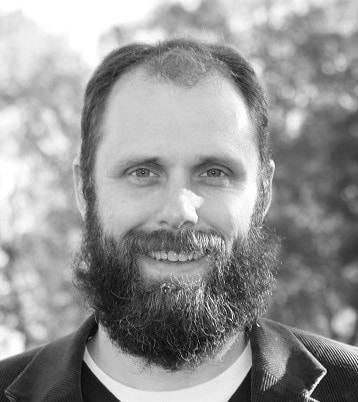 Ben Riggs is the author of Finding God in the Body: A Spiritual Path for the Modern West, a featured columnist for Elephant Journal, host of the Finding God in the Body podcast, and director of the Refuge Meditation Group in Shreveport, LA. Ben has studied Buddhism and Contemplative Christianity for the past fifteen years in both Christian and Buddhist monasteries in India and the U.S. He lives in Shreveport, Louisiana with his wife and son.


