
Forbidden Hymns | John Francis O’Mara

Wesleyan Vile-tality

The following is description of the album Forbidden Hymns by John Francis O’Mara. It’s a featured Speakeasy selection, and you can preorder it here.

In his first full-length album in a decade, Irish-American singer-songwriter, John Francis O’Mara offers Forbidden Hymns, a collection of thirteen songs encompassing Alt-Country, Americana, Folk, and Rock, exploring social justice, theology, hope, and heartbreak due October 10, 2025. Produced by Ken Coomer (GRAMMY winning producer, and drummer for Wilco, Uncle Tupelo, Steve Earle) and delivering with O’Mara in the studio for the Forbidden Hymns band are guitarist Kenny Vaughan (Marty Stuart, Lucinda Williams), multi-instrumentalist Chris Scruggs, John Lancaster on keys, the late great bassist Dave Roe (Johnny Cash, John Mellencamp, Dwight Yoakam) and backing vocalist, Vinchelle Woods. John Carter Cash (son of June and Johnny) joins O’Mara with the co-written “No One Gets Out of Here Alive,” –  a deeply human and empathetic reminder to “love pure and strong while there’s time.” In addition to his career as a singer-songwriter, O’Mara is an ordained Epsicopalian priest and Liberation Theology scholar, (Princeton and General Seminaries) currently working toward his Doctorate in Theology with a Social Justice focus, from Howard University School of Divinity.

“But, why ‘Forbidden’? Look around! The social and political landscape has taken a very dark and ugly turn,” says O’Mara of his album. “Stateside, the innocent and most vulnerable are being kidnapped and denied basic civil and human rights, while literal genocide and starving children’s screams are live-streamed in real time. Elites and the billionaire class rule from their ill-gotten thrones. Truth, beauty, and conscience are being legislated into silence, banned, and literally ‘forbidden’. The soul of America, and the very soul of humanity, is at stake. Many among us are being made to fear raising our voices.”

“Many among us are not afraid! I’m here to tell you, not on my watch,” the songwriter continues. “This is the precise moment many of us have been preparing for, and I will not be silenced. We who believe that a world full of empathy, justice, dignity and love is possible, will not be silenced! This record will not be silenced! Time to turn up the volume! Time to sing Forbidden Hymns.”

Forbidden Hymns opens with dynamic, “Walking In Babylon,” where O’Mara’s dulcet and soul-stirring, tremolo-tinged vocals and Kenny Vaughan’s reverberating guitar hook, are on full display.  The track opens with an a cappella fragment of Bob Marley’s, “Rastaman Chant,” – drawn from The Book of Revelation. O’Mara uses the ‘Babylon’ metaphor as referring to an occupying imperial force, under which ‘we the people’ suffer in exile. “In the shadow where the empire spreads, me and my brothers are breakin’ bread’. In the framework of the song, that empire is marked by brutality, poverty, and racial violence, particularly against black and brown bodies. The songwriter outcries, “if you can’t breathe, I can’t breathe…another brother layin’ in a chalk outline.” The song’s questioning lament is punctuated with a plea: “Somebody tell me that hope’s not gone? Everybody’s sayin’ they’ve had enough! Let the people sing, ‘what about love?!’”

The guitar groove of “Lately Mary” invokes early Elvis Costello, and this very sticky hook, straight ahead folk, pop-rock song winks at Springsteen. True to the motifs of the album, O’Mara bellows out core human questions, yet relevant for our times. “How we  gonna fill these mouths to feed? Gonna take more than a rosary bead,” he sings. O’Mara critiques the nauseating trend of many religious people in the face of tragedy, poverty, and despair, which is to offer ‘thoughts and prayers,’ rather than substantial, empathetic help. In this song, we see “Mother Mary” as she was, in her plain humanity,  a homeless, refugee, single mother facing her reality where “it seems again there’s no room at the inn.” Note that the cover art centers an historically accurate, brown-skinned, Palestinian, Mary. Caution: song causes contagious call and response crowd participation.

The delicate and acoustic, “Jesus Walked on Water,” features O’Mara’s intricate finger-picking, and pedal steel, driving this newborn classic. A title that might suggest another Gospel song from O’Mara, but this ballad is a curve ball. The songwriter asks a close loved one, “do you still believe in me? All this time it’s taken me? All this time been breakin’ me?” The song is a tender, direct and open-chested surrender, and an admission that he is no miracle-worker, and no prophet, just a man with nothing to offer other than, “for you, I would die.” O’Mara whispers a universally human question, “can you see me?”

“Often, things fall apart,” says the songwriter, speaking from experience. “Dreams and hopes burn down. We are left with nothing but wreckage and ash.” “Ashes, Ashes,” is a subtle rocker, opening with a blues inspired guitar lick.  Originally a piano ballad, John Francis pulled this treasure of an alt-country/Americana, guitar driven rocker, out of the smoldering ashes with the help of his longtime collaborator, melodic guitar-slinger Kenny Vaughan (Lucinda Williams, Marty Stuart). The first single released from Forbidden Hymns, “Ashes, Ashes” is reminiscent of early Wilco, in no small part due to the drumming and production of Ken Corner (Wilco, Uncle Tupelo). Bassist for Johnny Cash and Dwight Yoakom, the late great Dave Roe (for whom the record is dedicated) rounds out the low end of this reflective rallying cry about the aching beauty found in ashes, and the dazzling light behind the curtain of a world of shadows.

A soft, waltzy, guitar ballad, “Maria, I Would Dance With You But My Hands Are On Fire,” finds John Francis examining a biblical theme from an unexpected angle.  Rolling Stone Magazine reviewed Dylan’s John Wesley Harding saying it was the “first Biblical Rock ’n’ Roll record.” Dylan might have been the first, but O’Mara’s is the newest. In fact, the chorus, which is also the title, is a direct quote from Bob Dylan. In the immediate aftermath of Dylan’s notorious Newport Folk Festival ‘going electric’, Maria Muldaur reached out to Dylan, and asked him to dance. Declining her invitation, Dylan gave her a very Dylanesque reply, “Maria, I would dance with you but my hands are on fire.” O’Mara borrowed this line of dialogue, reframed it, and breathed it into the refrain for this poetic piece. In the epic love ballad, O’Mara conjures pillars of fire in the wilderness, stages like cages, cosmic loneliness, and “canyons quaking like young lovers waking in the shelter of each other’s bodies.” Like Leonard Cohen before him, O’Mara consecrates religious and erotic thematic images, and lets them bleed into one narrative. The sacred and the sensual coexist when he serenades, “with God as my witness / the only prayer on my lips is / the poem of her sweet name.”

With its groovy guitar work punctuated by a tambourine playing double time, the earcandy folk-rock, poppy hooks and crooning of “Miracle,” invokes one of O’Mara’s heroes, the original Irish soul man, Van Morrison. Already in heavy rotation when leaked as a single in Switzerland, the songwriter sings, “she’s an angel in flight as she glides across the kitchen floor, into my arms…my, my, my!” There is supernatural magic in the romantic swooning of new love, “Miracle,” sings the praises of passionate bonds. O’Mara woos, “Woman, you’re the only woman in the world I’m wantin’.”

In a remote log cabin in the deep woods of central Tennessee, John Carter Cash (son of Johnny and June) and John Francis O’Mara were minding their own business one brisk morning, when a song came knocking. The two good friends stopped what they were doing, and let the new song in. The theme and feel of it brought John Carter back to some of his final conversations with his father. In that moment, JFO and JCC channeled a song that would soon tug on the heartstrings and water the eyes of audiences far and wide for many years to come. “No One Gets Out Of Here Alive,” is a hauntingly stark and vulnerable call to imbue each moment with the courage to love boldly, because life is fleeting. A deeply human and empathetic reminder to “love pure and strong while there’s time / keep the ends out for the ties that bind / let love be your only song, til the day that you die…,” lest we forget that our days are numbered. John Francis and John Carter performed ‘No Gets Out…’ for a live PBS taping, for 20,000+ fans in the Arkansas State arena, on the inaugural ‘Johnny Cash Music Festival’, also featuring George Jones, Kris Kristoffeson, and Rosanne Cash. The official DVD of the event was released globally, and featured this co-written masterpiece.

John Lancaster’s churchy Hammond organ and O’Mara’s solitary vocal open, “Mighty Power.” Written to be a gritty, spiritual marching order, to get to shoutin’ in both sanctuaries and saloons, and then spill out into the streets. “It is a declaration of spiritual empowerment. This is not a religious song, yet it rings out like a massive bell,” says the songwriter. Vinchelle Wood’s backing vocal delivery sweeps us right up into the rapture of a Black church revival. “There’s a mighty power inside of me, stronger than the wind and the waves / stronger than the sting of the grave / stronger than the poison I used to put in my veins…” O’Mara grabs us by the shoulders, shakes us, and invites us to encounter what some folks call a “higher power”, and then testify that it is ‘stronger than the Pharaoh and his armies / stronger than the twisted chains of slavery / stronger than the sorrow a-hangin’ on your city..”. Throughout, Chris Scruggs’ lap-steel talks in a heavenly tongue. Like a young Robert Plant, O’Mara shrieks, “Do you feel the power!!” asking the listener: “well, do you?”

O’Mara may be known for being “ripe with the kind of honest questions we used to rely on guys like Dylan and John Prine to raise” (Philadelphia Inquirer), but goddamn he can write a heartbreak song of love gone wrong. “Secrets Are Safe” is one of them, although the irony isn’t lost on us, because O’Mara is literally telling secrets. “Secrets Are Safe” hits like one of those songs that’s always been around, opening with the lines, “I guess I lost you somewhere between the moon and the falling snow / Or did I lose you out there, where my wheels were full of road?” O’Mara finds hidden treasure in the darkness of loss and pain, drags it out, and dusts it off to share it with the listener.

Forlorn and inconsolably sad songs are one of O’Mara’s signatures, though the  phenomenon of “schadenfreude” comes to mind when listening to the lyrics of, “Maybe.” The listener can’t help but to glean resonant satisfaction from closure after all that pain. “Shadows stretch across our bed / across the words that we had said / how long have you known that you don’t know?” O’Mara is true to form as an Irish songwriter, and as G.K. Chesterton said of the Irish, “…all their wars are merry, and all their songs are sad.” This is a high and lonesome breakup song.

Touching the hem of U2’s garment, O’Mara’s band here is pulsing and driving, dynamic in tension and release. The tag at the end is gutwrenching, “My mouth still remembers the shape of your name.” Joining “Secrets Are Safe” and “Maybe,” “Wild Bleeding Heart” is third in the line-up of the broken-hearted trilogy on Forbidden Hymns. Once again, O’Mara spins together mythological images and literary figures to populate his landscape of cosmic loneliness.

Punching in at track 12, O’Mara delivers a riveting folk-rock pop song, in the vein of U2 or early Coldplay with the penultimate, “Heart Be Still” – an unabashed, tell it like it is, love song. The songwriter asks, “Love, could it be, that for love, the whole world bends the knee? / So come here to me! Come here! Come here! Come here! Come here to me!” Anyone who has longed to be near someone – and that’s everyone – knows this desire. “Gotta let your heart be still…next to mine.”

Closing the LP is the soaring, “Let it Be So,” which shines when the guitar solo nods at George Harrison, and the backbeat hits like Ringo. The song is the proclamation that another world is possible; a better world. If we are waiting for an anthem of change with a chorus to be echoed by everyone who still believes in justice, peace, dignity, and equality for all, our wait is over. John Francis O’Mara delivers that anthem, with the perfect ending to an exquisitely realized album:  “Somebody say ‘Amen!”

About the Artist
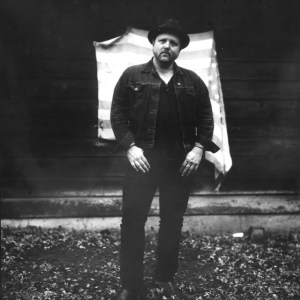
John Francis O’MaraJohn Francis O’Mara is an Episcopalian priest, theological scholar, activist, and acclaimed songwriter whose work bridges the sacred and the profane. With advanced degrees from Princeton Theological Seminary (M.Div) and General Theological Seminary (STM), and now pursuing a doctorate in Theology and Social Justice at Howard University, O’Mara roots his ministry in Liberation Theology and a tapestry of faith traditions including Celtic Christianity, Black Liberation Churches, and Native American spirituality. Hailed by Sojourners as “haunting as Springsteen,” dubbed by Wild Goose Festival as “one of the most prophetic voices of his generation,” and praised by Shane Claiborne as a “poet and instigator of movements,” O’Mara has performed everywhere from cathedrals to prisons, from UN gatherings to city streets, and alongside artists such as Sinead O’Connor, Mavis Staples, and Kris Kristofferson. Whether leading marches, teaching youth, or offering workshops and concerts worldwide, O’Mara shares stories and songs with theological depth, hard-earned experience, and transformative hope.

John Francis O’Mara’s Website

Forbidden Hymns Website


What we can learn from Christianity, Paganism, and…Psychedelics? Roger Wolsey on ‘Discovering Fire’!

Welcome, dear friends. In this dialogue we are blessed with the presence of Roger Wolsey — a minister, spiritual director, author and speaker whose journey mirrors mine in many profound ways. As children of the church, we’ve each treasured the gifts Christ brings to our lineage while venturing beyond conventional religious boundaries, exploring the rich tapestry of global spirituality, American pragmatism, counterculture, and the human potential movement. We’ve each found unique ways to synthesize these experiences, creating something deeply resonant and transformative for ourselves and many others.

In Roger’s book Discovering Fire, he doesn’t advocate for thoughtless religious syncretism, but he does recognize that our lived experiences often transcend the neat boxes of religious or spiritual categories. He draws inspiration from Methodist pioneer John Wesley and his holistic pastoral care, which led Wesley into diverse areas of advocacy—from economic aid to herbalism to early forms of electroshock therapy.

Our shared background allows us to delve deeply into conversations, often finding a rhythm that is both spontaneous and enlightening. In our interview, we cover ground like:

  • Why is religion in crisis today?
  • What are the benefits and drawbacks of ‘spirituality’ as a standalone pursuit? (We respond to this one from our paradoxical experiences living in the ‘spiritual’ hubs of Boulder and Asheville.)
  • Why being both spiritual and religious is arguably the most countercultural way-of-being today.
  • The interplay between revelation and pragmatism in religious belonging and spiritual practice
  • Adaptive spiritual technologies as God’s way of helping us reconnect and thrive in a world of fresh challenges
  • What are three emerging practices from the wider culture we wish Christians would embrace?
  • What are three practices from the Christian tradition that we believe our spiritual-but-not-religious friends should explore?
  • How can Methodist pioneer John Wesley’s approach guide us in following Jesus and embracing the full spectrum of ‘fiery grace’ available to us today?

Our discussion touches on practices including:

  • Centering Prayer
  • Lectio Divina
  • Choir singing
  • Acts of service
  • Authentic Relating and its intersection with spiritual growth
  • Shadow Work
  • and yes, plant medicine.

Roger’s chapter on plant medicine is one of the best introductions to the topic I’ve encountered. He highlights the surprising continuities between Scripture, Christian tradition (thank you Hildegard of Bingen!), and indigenous wisdom. He presents a balanced view, considering both the promises and the perils of working with our plant siblings. He also addresses the complexities of cultural adaptation, potential pitfalls of cultural appropriation, and the consumerism of ‘Big Shamanism.’ I highly recommend you pick up Discovering Fire for this chapter alone.

Thank you for joining us. I invite you to dive into this rich conversation with open heart and mind:

To connect with Roger further, including for spiritual direction and coaching, see this helpful section on his website!

Read an excerpt of Discovering Fire here!

About the Author

Roger WolseyRoger Wayne Wolsey is a free spirit who thinks and feels a lot about God and Jesus. He’s a progressive Christian who identifies with people who consider themselves “spiritual, but not religious.” A trumpeter, Roger grew up during the “Minneapolis Sound” era of the 1980s and ‘90s. These experiences contribute to a musical approach to his theology. Roger studied philosophy and political science, graduated magna cum laude and Phi Beta Kappa, from Macalester College in St. Paul, MN, and earned a Master of Divinity degree at the Iliff School of Theology in Denver, CO. Roger is an ordained pastor in the United Methodist Church. He has taught classes as an adjunct instructor at Graceland University in Lamoni, IA, and at the Iliff School of Theology in Denver, CO. He has served as a pastor for churches in Minnesota, Iowa and Colorado. Roger was president of the board of directors of the Boulder International Fringe Festival. He currently serves on the Board of Directors of Progressive Christianity.Org. Roger blogs for Patheos (as The Holy Kiss), Sojourners, Elephant Journal, and Huffington Post. Roger is a speaker for numerous festivals and conferences. Roger is available for speaking, retreat facilitation, and spiritual direction — check out his offerings here.

A Tale of Two Brigids: What the Goddess & Saint Can Teach Us about Pagan-Christian Friendship


My dear friend and colleague
Saro Lynch-Thomason is offering an unprecedented learning experience called Singing the Wheel of the Year. Which got me thinking about our braided spiritual paths… 

As I’ve shared before,  I grew up in the spiritually-enchanted, Christ-haunted Bible-belt of the American South, where we took our faith very seriously. At age four I had a full-on ‘born again’ experience in a Baptist Sunday school, turning from my life of nascent nefariousness and casting my lot with Jesus. I’ve since let go of many attitudes, beliefs and practices that don’t actually serve the kind of spiritual and social vitality promised by this unlikely Messiah, but I’ve always stuck with Jesus. 

Turns out, I’d follow him to unexpected places! 

Like a decade + ago, when I got the weirdest Facebook friend request of my life. The note accompanying it said “Hello Mike. I think I might be your birth mother. Please disregard if I’m mistaken!” This was the penultimate moment in my years-long quest to discover my biological origins as an adoptee, beginning a relationship with my birth mom, Renee, that thankfully flourishes to this day. 

But it wasn’t always easy.

You see, her dad was a Juilliard-trained, Candler/Emory-educated, United Methodist minister who was active in the Civil Rights movement and penned hundreds of hymns. Like many fathers, ministers, and human beings, David Robb was at-turns wonderful and complex, gifting Renee a Christian faith that sometimes seemed more complex than wonderful. 

She ultimately opted for a gift-exchange, paving her own path which included finding her place in the contemporary Neo-Pagan revival. In Asheville, the Appalachian mountain city I’d eventually call home too, Renee was one of the founders of the Mother Grove Goddess Temple (and later, Elder Moon). 

And boy, that was initially uncomfortable for me, even as a “composting” and open-minded Christian.

Maybe almost as uncomfortable as she felt visiting our progressive Baptist church with me!

Many of us are, of course, only too aware of the suspicion, strife, and outright bloodshed that’s possible when we react from the most fearful and reactionary potentials of our social, cultural and religious conditioning instead living from their unique zone of genius. Pagans and Christians have taken turns persecuting each other throughout history, leaving wounds that persist in our cultural memory — from feeding Christians to lions in ancient Rome to witch hangings in not-so-ancient Salem. Sacred writings and secular histories alike can be sampled in ways that dig the gulfs between us ever-wider.  

But people build “tension bridges” when they love each other. And when we actually walk across, we often find them to be surprisingly sturdy! 

Mutual appreciation and growing trust was the experience between me and Renee, and I find friendships between Pagans and Christians flourishing in so many quarters these days, led by voices like Gus diZerega, Sophie Strand, John Morehead, Rebekah Berndt, Martin Shaw, Dougald Hine and Carl McColman, among many others. 

When it comes to deepening my understanding of ‘pagan’ (literally meaning ‘of the land’) folkways, understandings, and rites, I know few more reliable guides than Saro Lynch-Thomason. As an award-winning singer, song leader, folklorist, documentarian, and illustrator, Saro has been studying and teaching traditional song and balladry from Appalachia, the American South, the British Isles and Ireland for over a decade, as well as leading in heart-centered activism including the international ecological anthem, More Waters Rising.

As I mentioned, Saro is launching Singing the Wheel of the Year very soon. When I asked her how this embodied learning journey through the sacred cycle of the pagan year might relate to friends and followers of Jesus, she reminded me of the unique dual identity of the enigmatic Celtic figure, Brigid, and her role as a bridge between these sacred worlds. Saro says it better than me — and teaches us a chant, to boot! So without further ado, I leave you with her wisdom:

Burning, Yearning, Blessing: Bríg, Brigid, and Divine Abundance  
by Saro Lynch-Thomason 

The goddess Bríg (pronounced Breej), known by many in her modern manifestation as the Irish Saint Brigid enjoys a special relationship…with herself. They are distinct beings in the annals of Irish literature and cosmology, and yet it’s almost certain they are, for all intents and purposes, the same holy woman. The deity known as Bríg was a triple goddess of smithcraft, poetry and healing. “Bríg” probably originally meant “Exalted One” or “High One.” The medieval Irish text known as Cormac’s Glossary states that she was the patron goddess of poets and afforded great honor and affection.

Then we have St. Brigid, a woman who in medieval sources is credited with founding an abbey at Kildare in the 5th century, as well as performing a great number of miracles in her lifetime. Today she is Ireland’s only female patron saint. There is much debate about the origins of St. Brigid: Was she a real historical figure? Was she generated through folklore as a way to continue veneration of the goddess Bríg? The truth may likely lie in the middle: This 5th century abbess perhaps did exist, and qualities of the goddess Bríg became attached to her over time.

There are an astounding number of attributes and stories associated with both the goddess Bríg and her later counterpart Brigid, but for me, the core of this divine woman’s gifts have to do with her abilities as a bringer of hope, a tender of flames, and a nurturer of mothers and children. We can trace these qualities through this invocation for St. Brigid, which is meant especially to be recited on her feast day of February 1st:


February 1st is also the traditional date given for Imbolc, the opening of spring in Celtic tradition. The overlap of the saint’s feast day with this ancient holiday leads many to believe that this day may have first had special associations with the goddess Bríg, with St. Brigid taking her place sometime in the middle ages. 

Our lines begin: 

Oh to hear the newborn lambs

Bleating, bleating

Many of the miracles attributed to St. Brigid have to do with abundance: In some accounts she produces amazing supplies of milk and butter from cows, and in others she’s said to have had a limitless larder of food. These qualities would have had a special relevance at Imbolc, when the sheep were giving birth and beginning to produce milk that their hungry human caretakers would have also deeply needed in the starvation-prone period of late winter.

Oh to see the sun so early 

Greeting, greeting

May your fires burn away

Sin and sorrow, oh we pray

Saint Brigid has strong associations with fire: Hundreds of years after her death, a 12th-century traveler described that an eternal flame was still being tended in her honor by 19 attendant nuns at her religious house in Kildare. Her associations with fire are also reinforced by her feast day at Imbolc, a time when the strength of the sun is slowly returning. Her counterpart Bríg, with her associations of the forge, also hearkens to the comforts of hearth and home during the winter months.

This night as you make your way

Bless us as we’re sleeping

From Cornwall to Ireland to the Hebrides of Scotland, St. Brigid is said to visit and bless local homes on the eve of her feast day, and one can tell if she has passed through the house by looking for disturbed ashes in the fireplace. The tradition of this annual domestic blessing is also a reminder of her close guardianship of mothers and children. In Scottish folk tradition, St. Brigid is said to have been a midwife to Mary and the foster mother of Jesus. In those same traditions, she’s credited as providing easy and healthy births for mothers whom she favors. And in one account of her from Ireland, she also uses her divine powers to make the fetus of a pregnant nun disappear, furthering, in some ways, Brigid’s qualities as a midwife, since such women historically also often aided in birth control. 

Bríg/Brigid’s many qualities of flame and hearth, returning abundance, and nurturer create a powerfully soothing image for us at a time when we descend into winter. Though her feast day- and the returning spring- are many months away, this invocation can serve as a balm as we enter into what is often a frightening and desolate period of the year. This flame keeper, this bringer of fresh milk, this potent master of fertility, invites us to nestle in by the fire and accept her hospitality and protection. Saint or goddess — she may not mind what form she takes — as long as the gifts she so eagerly and easily dispenses are accepted with gratitude. 


If you’d like to explore deeper natural-world attunements and devotional practices for every season of life on our planet, Saro’s offering Singing the Wheel of the Year is likely for you.

Starting next week, this year-long, song-based exploration of the eight neo-pagan holidays helps you learn traditional and modern songs for each holiday, sharing these songs in ritual. 

Saro will teach a mix of ballads, rounds, chants and layered songs ranging from proto-Celtic to middle English to new compositions by Saro and other amazing song leaders. You can sample ritual songs by Saro here (this is a song for the casting of circles) and here (a song for Beltaine).

This course is for anyone who’s interested in bringing consistent, powerful seasonal ritual into their lives, learning new songs that go beyond pagan classics, and getting a grounding in many of the traditions associated with the old holidays. You can take the course as part of an online cohort, or in-person if you live in Western North Carolina. Students will receive practice tracks, liner notes and bonus materials throughout the year. You can learn more and register right here.

In any case I hope you continue bridging the differences in your circles, with courage and verve. 

A Time For Reckoning: North American Christianity and Indigenous Cultural Genocide

The doors of St. Paul’s Co-Cathedral in downtown Saskatoon, Saskatchewan, Canada, June 2021. Photo credit: Donna Heimbecker.

Content Notification (CN): Abuse, Oppression, Genocide.

“From the 19th century until the 1970s, more than 150,000 Indigenous children were forced to attend state-funded Christian boarding schools in an effort to assimilate them into Canadian society. Thousands of children died there of disease and other causes, with many never returned to their families.

Nearly three-quarters of the 130 residential schools were run by Roman Catholic missionary congregations, with others operated by the Presbyterian, Anglican and the United Church of Canada, which today is the largest Protestant denomination in [Canada].” (Source: Indian Country Today)

Other children were abused and even killed.

The U.S. government ran a parallel ‘residential school’ system to ‘re-educate’ Native American children, that recruited Christian denominations in the 19th and 20th centuries, seizing on feelings of cultural and religious superiority to “kill the Indian and save the man.” Thanks to incoming Secretary of the Interior Deb Haaland, member of New Mexico’s Laguna Pueblo, the U.S. is launching the Federal Indian Boarding School Initiative, to search U.S. schools for possible burial sites of Native children.

So far, nine schools have been searched and the bodies of over 2,000 children have been found on the school grounds, mostly in unmarked graves. Between Canada and the U.S., there are still 497 schools to go.

As a consequence, churches in Canada and the U.S. are burning. And being what the mainstream calls ‘vandalized,’ though it would be more accurately named as inscribed with the pain and outrage of this silent genocide that’s been carried out within North America’s borders as a consequence of the deadly, hubris-filled Doctrine of Discovery.

Statues are toppling, too. Of Queen Victoria, Queen Elizabeth and other imperial figures.

Friends, we are in for a reckoning. These first days of July brought us ‘Canada Day’ and ‘Independence Day,’ and many of us were too heartsick to celebrate. This isn’t to say that there aren’t elements of our heritage worth celebrating, but — for those of us of European descent in particular — we need to reckon with our identity as settler colonizers, living on stolen land. Indeed, the idea of fixed private property in general is foreign to the lifeways of this continent, and these acquisitive habits have contributed to the objectification and dying of the planet, not only her human inhabitants.

If you consider yourself an aspiring follower of Jesus, please hold these children in your conscience and consider his words:

“If anyone causes one of these little ones—those who believe in me—to stumble, it would be better for them to have a large millstone hung around their neck and to be drowned in the depths of the sea.” (Matthew 18:6)


What Can We Do? (Inside and Out)

Jesus warned humanity—and his aspiring followers in particular—that there really are no secrets. Formerly-celebrated practices that we’ve buried in selective amnesia will come back into cultural memory, and will be judged accurately:

“The time is coming when everything that is covered up will be revealed, and all that is secret will be made known to all. Whatever you have said in the dark will be heard in the light; what you have whispered behind closed doors will be shouted from the housetops for all to hear!” (Jesus in Luke 12:2–3, New Living Translation)

Before we consider what we might be able to ‘do’ in the face of such atrocity, it’s important to begin digesting this pain, outrage, and shame on the level of being. As yet another of history’s tragedies comes into our awareness, we do well not to flinch away. If you’re a North American of European descent, you can hold your ancestors with respect while recognizing that their destructive attitudes and actions toward the original inhabitants of this land were rooted in delusional white supremacy. I invite you to breathe into this reality, holding it with grace and truth.

I encourage you to integrate this reality through prayer (either silent, contemplative prayer, or conversational, emotionally-honest prayer), and journaling. Perhaps do some mirror work, or silent connection with another, as described in the appendix of my book with Fr. Richard Rohr, The Divine Dance (and in the bonus chapter you can access for free, here.) Let the reality that many Christian denominations eagerly took place in the cultural erasure and bodily harm of Native American and First Nations children settle into your nervous system. You don’t have to hold this painful truth in your heart alone; you can let your heart resonate with the sacred heart of Jesus, who bears all sorrows and transforms them, through kenotic release.

And when you’re ready to walk out this repentance—a changing of direction—here are some practical things you can do. Some of what follows is lightly adapted from Healing for Churches at boardingschoolhealing.org, and an article from Healing Minnesota Stories profiling the same organization. (Thanks to Jonathan Stegall for bringing these to my attention!)…

History and Background

During the 19th and into the 20th century, Native American children were forced or pressured to attend Christian and government-run boarding schools or day schools. The purpose was to ‘kill the Indian and save the man.’

The churches may have taken on this mission with the best of intentions, given their shared beliefs at the time. But in fact, the schools carried out a deliberate policy of ethnocide and cultural genocide. Children were punished for speaking their native languages, banned from conducting traditional or cultural practices, shorn of traditional clothing and identity of their native culture. Many were sent far from their homelands and cut off from their family. Most were taught that their culture and traditions were evil and sinful, and taught that they should be ashamed of being Native American. Countless children were frequently neglected and even abused physically, sexually, and psychologically.

As Dr. Martin Luther King, Jr. so poignantly put it:

“Our nation was born in genocide when it embraced the doctrine that the original American, the Indian, was an inferior race. Even before there were large numbers of Negroes on our shore, the scar of racial hatred had already disfigured colonial society. From the sixteenth century forward, blood flowed in battles over racial supremacy. We are perhaps the only nation which tried as a matter of national policy to wipe out its indigenous population. Moreover, we elevated that tragic experience into a noble crusade. Indeed, even today we have not permitted ourselves to reject or feel remorse for this shameful episode. Our literature, our films, our drama, our folklore all exalt it. Our children are still taught to respect the violence which reduced a red-skinned people of an earlier culture into a few fragmented groups herded into impoverished reservations.”


Which Churches Were Involved?

In 1872, as the boarding school program got underway, the Board of Indian Commissioners allotted 73 Indian agencies to several denominations, as follows (with the number of schools each denomination ran in parentheses):

  • Catholic (80)
  • Presbyterian (21)
  • Quaker (15)
  • Methodist (12)
  • Episcopal (9)
  • Baptist (4)
  • Jesuit (4)
  • Dutch Reform (2)
  • Evangelical (2)
  • Mennonite (2)
  • Protestant (2)
  • Anglican (1)
  • 7th Day Adventist (1)
  • Unitarian (1)

What Congregations and Individual aspiring Jesus-followers can do:

  • Join the Coalition as an ally at boardingschoolhealing.org.
  • Conduct and disseminate research on your denomination’s involvement as operators, promoters, managers, teachers, and funders of Indian boarding schools.
  • Through processes of reflection and repentance, develop and adopt official statements of acknowledgement and apology.
  • In consultation with the Coalition and the affected Native communities, take appropriate actions to make amends.
  • Call on Congress and the President to establish a National Commission to learn the truth about the historic and ongoing impacts of the boarding schools on Native families, and recommend actions that support truth, reconciliation, and healing.

Denomination-Wide Action:

Many churches and religious organizations around the world have already started to take action. Will you join them? Go here to see if your denomination is already taking action to address these atrocities.

Recommended Reading:

Recent decades have unearthed a rich vein of reflection from authors, activists, and leaders who are both Native American and Christian. Here are my top recommendations:

The Four Vision Quests of Jesus and Ladder to the Light: An Indigenous Elder’s Meditations on Hope and Courage by Steven Charleston

Unsettling Truths: The Ongoing, Dehumanizing Legacy of the Doctrine of Discovery by Mark Charles and Soong-Chan Rah

Native: Identity, Belonging, and Rediscovering God by Kaitlin B. Curtice

Rescuing the Gospel from the Cowboys: A Native American Expression of the Jesus Way by my late friend Richard Twiss

Shalom and the Community of Creation: An Indigenous Vision by Randy Woodley

North American Institute for Indigenous Theological Studies (NAIITS) Journal

Finally: Celebrate Indigenous Art + Joy

This is something I’ve learned from my wife, Jasmin Pittman Morrell, as she names in film reviews in publications like The Porch Magazine: While awareness of the suffering of marginalized communities is important, art produced by white people (or for the ‘white gaze’) often fetishizes BIPOC (Black, Indigenous, and People-of-Color) suffering, while ignoring BIPOC joy.

Pain and joy often go hand-in-hand, of course. And some of the most beautiful art emerges from the cauldron of grace under fire. But if all we think about when reflecting on Native American and First Nations people is poverty, oppression, and death, we continue dehumanizing the original inhabitants of our continent while diminishing our own cultural appreciation.

Do yourself a favor: Consider one of your favorite art forms, and then Google Native American and First Nations creators! You’ll be glad you did. Here are a few ideas to get you started:

Read comic books and graphic novels by indigenous creators

Watch the acclaimed new FX / Hulu series Reservation Dogs

Listen to the energizing beats of The Halluci Nation (formerly known as A Tribe Called Red) and Tanya Tagaq


As we continue to digest this aspect of white supremacy’s harmful legacy in the land we now occupy, let’s be understanding as acts of grief and protest continue.

Let’s open our hands and hearts with appropriate humility.

Let’s admit that we don’t know how to face what our ancestors have done and what we still benefit from: Materially, emotionally, relationally.

Let’s be slow to speak and quick to listen, especially to BIPOC.

Let’s lament. And be teachable. It’s our only way forward with any degree of healing and integrity.

Together, we can pray and act into a new way of being.

Better Day Now | the Songs of Nathan Wheeler

I’ve been listening to an album on repeat lately, full of both realism and hope. I asked the artist, Nathan Wheeler, if he’d share a little bit about it. Here’s what he has to say for himself. — Mike

I’ve written songs for most of my life. Sitting by myself, with my thoughts, trying to process it all. I didn’t think of myself as an artist, but in my own way creating these musings helped me. Every so often I share these songs with others, hoping to get over the embarrassment of being vulnerable with other people.

Music has always been an important part of my life. Many people’s music has brought me so much joy, healed my pain, helped me see the world differently. I’d never been confident in my ability to offer the same experience to others through my own music. So, for years I’ve just listened to others create while I just kept writing, playing, singing for me.

Toward the end of 2019 I started to feel differently about my words. That maybe they would mean something, to someone, somewhere. That there might be room in the cosmos for my thoughts. If anything, 2020 taught me that life is so precious, fragile, unpredictable. And so I’ve released this EP.

Better Day Now came to me when I was sitting in my den, during a global pandemic, social and societal unrest, sorting through my feelings that at the time were filled with pain and hope for what may become of myself and this world. A personal longing for better days. Here’s a sample:

Our fears and shame
seem to be what drives this charade
Time to face ourselves and tell the truth
Everything can come back

Hey now we might find a better day now
One foot in front of the other
Hey now we might find a better day now
One hand stretched to another

With our hands stretched out to others
With our prayers lifted for one another
With our love the same for others
With our care welcoming for another

The lyrics for A Part of Me started after a few people in my life lost friends and another a beloved pet. I think we all have experiences of deep loss. We never get over it, it latches onto us. We are a culmination of all we have loved and lost. And we can either choose to let it always haunt us or live with it. This song is about holding the pain of that and the love we received from it at the same time.

One night feeling a bit overwhelmed with all that was happening, I wrote the words to Some Advice. A reminder to myself that there are some things to be focused on and others to let go of. Some advice for the journey.

I offer up these words to say thanks for taking the time to listen, and hope you enjoy it.

Born and raised in Tennessee, Nathan Wheeler currently resides in Memphis, TN.

You can find Nathan online at:

Bandcamp

YouTube

Instagram

Facebook

Twitter

Spotify