
Forbidden Hymns | John Francis O’Mara

Wesleyan Vile-tality

The following is description of the album Forbidden Hymns by John Francis O’Mara. It’s a featured Speakeasy selection, and you can preorder it here.

In his first full-length album in a decade, Irish-American singer-songwriter, John Francis O’Mara offers Forbidden Hymns, a collection of thirteen songs encompassing Alt-Country, Americana, Folk, and Rock, exploring social justice, theology, hope, and heartbreak due October 10, 2025. Produced by Ken Coomer (GRAMMY winning producer, and drummer for Wilco, Uncle Tupelo, Steve Earle) and delivering with O’Mara in the studio for the Forbidden Hymns band are guitarist Kenny Vaughan (Marty Stuart, Lucinda Williams), multi-instrumentalist Chris Scruggs, John Lancaster on keys, the late great bassist Dave Roe (Johnny Cash, John Mellencamp, Dwight Yoakam) and backing vocalist, Vinchelle Woods. John Carter Cash (son of June and Johnny) joins O’Mara with the co-written “No One Gets Out of Here Alive,” –  a deeply human and empathetic reminder to “love pure and strong while there’s time.” In addition to his career as a singer-songwriter, O’Mara is an ordained Epsicopalian priest and Liberation Theology scholar, (Princeton and General Seminaries) currently working toward his Doctorate in Theology with a Social Justice focus, from Howard University School of Divinity.

“But, why ‘Forbidden’? Look around! The social and political landscape has taken a very dark and ugly turn,” says O’Mara of his album. “Stateside, the innocent and most vulnerable are being kidnapped and denied basic civil and human rights, while literal genocide and starving children’s screams are live-streamed in real time. Elites and the billionaire class rule from their ill-gotten thrones. Truth, beauty, and conscience are being legislated into silence, banned, and literally ‘forbidden’. The soul of America, and the very soul of humanity, is at stake. Many among us are being made to fear raising our voices.”

“Many among us are not afraid! I’m here to tell you, not on my watch,” the songwriter continues. “This is the precise moment many of us have been preparing for, and I will not be silenced. We who believe that a world full of empathy, justice, dignity and love is possible, will not be silenced! This record will not be silenced! Time to turn up the volume! Time to sing Forbidden Hymns.”

Forbidden Hymns opens with dynamic, “Walking In Babylon,” where O’Mara’s dulcet and soul-stirring, tremolo-tinged vocals and Kenny Vaughan’s reverberating guitar hook, are on full display.  The track opens with an a cappella fragment of Bob Marley’s, “Rastaman Chant,” – drawn from The Book of Revelation. O’Mara uses the ‘Babylon’ metaphor as referring to an occupying imperial force, under which ‘we the people’ suffer in exile. “In the shadow where the empire spreads, me and my brothers are breakin’ bread’. In the framework of the song, that empire is marked by brutality, poverty, and racial violence, particularly against black and brown bodies. The songwriter outcries, “if you can’t breathe, I can’t breathe…another brother layin’ in a chalk outline.” The song’s questioning lament is punctuated with a plea: “Somebody tell me that hope’s not gone? Everybody’s sayin’ they’ve had enough! Let the people sing, ‘what about love?!’”

The guitar groove of “Lately Mary” invokes early Elvis Costello, and this very sticky hook, straight ahead folk, pop-rock song winks at Springsteen. True to the motifs of the album, O’Mara bellows out core human questions, yet relevant for our times. “How we  gonna fill these mouths to feed? Gonna take more than a rosary bead,” he sings. O’Mara critiques the nauseating trend of many religious people in the face of tragedy, poverty, and despair, which is to offer ‘thoughts and prayers,’ rather than substantial, empathetic help. In this song, we see “Mother Mary” as she was, in her plain humanity,  a homeless, refugee, single mother facing her reality where “it seems again there’s no room at the inn.” Note that the cover art centers an historically accurate, brown-skinned, Palestinian, Mary. Caution: song causes contagious call and response crowd participation.

The delicate and acoustic, “Jesus Walked on Water,” features O’Mara’s intricate finger-picking, and pedal steel, driving this newborn classic. A title that might suggest another Gospel song from O’Mara, but this ballad is a curve ball. The songwriter asks a close loved one, “do you still believe in me? All this time it’s taken me? All this time been breakin’ me?” The song is a tender, direct and open-chested surrender, and an admission that he is no miracle-worker, and no prophet, just a man with nothing to offer other than, “for you, I would die.” O’Mara whispers a universally human question, “can you see me?”

“Often, things fall apart,” says the songwriter, speaking from experience. “Dreams and hopes burn down. We are left with nothing but wreckage and ash.” “Ashes, Ashes,” is a subtle rocker, opening with a blues inspired guitar lick.  Originally a piano ballad, John Francis pulled this treasure of an alt-country/Americana, guitar driven rocker, out of the smoldering ashes with the help of his longtime collaborator, melodic guitar-slinger Kenny Vaughan (Lucinda Williams, Marty Stuart). The first single released from Forbidden Hymns, “Ashes, Ashes” is reminiscent of early Wilco, in no small part due to the drumming and production of Ken Corner (Wilco, Uncle Tupelo). Bassist for Johnny Cash and Dwight Yoakom, the late great Dave Roe (for whom the record is dedicated) rounds out the low end of this reflective rallying cry about the aching beauty found in ashes, and the dazzling light behind the curtain of a world of shadows.

A soft, waltzy, guitar ballad, “Maria, I Would Dance With You But My Hands Are On Fire,” finds John Francis examining a biblical theme from an unexpected angle.  Rolling Stone Magazine reviewed Dylan’s John Wesley Harding saying it was the “first Biblical Rock ’n’ Roll record.” Dylan might have been the first, but O’Mara’s is the newest. In fact, the chorus, which is also the title, is a direct quote from Bob Dylan. In the immediate aftermath of Dylan’s notorious Newport Folk Festival ‘going electric’, Maria Muldaur reached out to Dylan, and asked him to dance. Declining her invitation, Dylan gave her a very Dylanesque reply, “Maria, I would dance with you but my hands are on fire.” O’Mara borrowed this line of dialogue, reframed it, and breathed it into the refrain for this poetic piece. In the epic love ballad, O’Mara conjures pillars of fire in the wilderness, stages like cages, cosmic loneliness, and “canyons quaking like young lovers waking in the shelter of each other’s bodies.” Like Leonard Cohen before him, O’Mara consecrates religious and erotic thematic images, and lets them bleed into one narrative. The sacred and the sensual coexist when he serenades, “with God as my witness / the only prayer on my lips is / the poem of her sweet name.”

With its groovy guitar work punctuated by a tambourine playing double time, the earcandy folk-rock, poppy hooks and crooning of “Miracle,” invokes one of O’Mara’s heroes, the original Irish soul man, Van Morrison. Already in heavy rotation when leaked as a single in Switzerland, the songwriter sings, “she’s an angel in flight as she glides across the kitchen floor, into my arms…my, my, my!” There is supernatural magic in the romantic swooning of new love, “Miracle,” sings the praises of passionate bonds. O’Mara woos, “Woman, you’re the only woman in the world I’m wantin’.”

In a remote log cabin in the deep woods of central Tennessee, John Carter Cash (son of Johnny and June) and John Francis O’Mara were minding their own business one brisk morning, when a song came knocking. The two good friends stopped what they were doing, and let the new song in. The theme and feel of it brought John Carter back to some of his final conversations with his father. In that moment, JFO and JCC channeled a song that would soon tug on the heartstrings and water the eyes of audiences far and wide for many years to come. “No One Gets Out Of Here Alive,” is a hauntingly stark and vulnerable call to imbue each moment with the courage to love boldly, because life is fleeting. A deeply human and empathetic reminder to “love pure and strong while there’s time / keep the ends out for the ties that bind / let love be your only song, til the day that you die…,” lest we forget that our days are numbered. John Francis and John Carter performed ‘No Gets Out…’ for a live PBS taping, for 20,000+ fans in the Arkansas State arena, on the inaugural ‘Johnny Cash Music Festival’, also featuring George Jones, Kris Kristoffeson, and Rosanne Cash. The official DVD of the event was released globally, and featured this co-written masterpiece.

John Lancaster’s churchy Hammond organ and O’Mara’s solitary vocal open, “Mighty Power.” Written to be a gritty, spiritual marching order, to get to shoutin’ in both sanctuaries and saloons, and then spill out into the streets. “It is a declaration of spiritual empowerment. This is not a religious song, yet it rings out like a massive bell,” says the songwriter. Vinchelle Wood’s backing vocal delivery sweeps us right up into the rapture of a Black church revival. “There’s a mighty power inside of me, stronger than the wind and the waves / stronger than the sting of the grave / stronger than the poison I used to put in my veins…” O’Mara grabs us by the shoulders, shakes us, and invites us to encounter what some folks call a “higher power”, and then testify that it is ‘stronger than the Pharaoh and his armies / stronger than the twisted chains of slavery / stronger than the sorrow a-hangin’ on your city..”. Throughout, Chris Scruggs’ lap-steel talks in a heavenly tongue. Like a young Robert Plant, O’Mara shrieks, “Do you feel the power!!” asking the listener: “well, do you?”

O’Mara may be known for being “ripe with the kind of honest questions we used to rely on guys like Dylan and John Prine to raise” (Philadelphia Inquirer), but goddamn he can write a heartbreak song of love gone wrong. “Secrets Are Safe” is one of them, although the irony isn’t lost on us, because O’Mara is literally telling secrets. “Secrets Are Safe” hits like one of those songs that’s always been around, opening with the lines, “I guess I lost you somewhere between the moon and the falling snow / Or did I lose you out there, where my wheels were full of road?” O’Mara finds hidden treasure in the darkness of loss and pain, drags it out, and dusts it off to share it with the listener.

Forlorn and inconsolably sad songs are one of O’Mara’s signatures, though the  phenomenon of “schadenfreude” comes to mind when listening to the lyrics of, “Maybe.” The listener can’t help but to glean resonant satisfaction from closure after all that pain. “Shadows stretch across our bed / across the words that we had said / how long have you known that you don’t know?” O’Mara is true to form as an Irish songwriter, and as G.K. Chesterton said of the Irish, “…all their wars are merry, and all their songs are sad.” This is a high and lonesome breakup song.

Touching the hem of U2’s garment, O’Mara’s band here is pulsing and driving, dynamic in tension and release. The tag at the end is gutwrenching, “My mouth still remembers the shape of your name.” Joining “Secrets Are Safe” and “Maybe,” “Wild Bleeding Heart” is third in the line-up of the broken-hearted trilogy on Forbidden Hymns. Once again, O’Mara spins together mythological images and literary figures to populate his landscape of cosmic loneliness.

Punching in at track 12, O’Mara delivers a riveting folk-rock pop song, in the vein of U2 or early Coldplay with the penultimate, “Heart Be Still” – an unabashed, tell it like it is, love song. The songwriter asks, “Love, could it be, that for love, the whole world bends the knee? / So come here to me! Come here! Come here! Come here! Come here to me!” Anyone who has longed to be near someone – and that’s everyone – knows this desire. “Gotta let your heart be still…next to mine.”

Closing the LP is the soaring, “Let it Be So,” which shines when the guitar solo nods at George Harrison, and the backbeat hits like Ringo. The song is the proclamation that another world is possible; a better world. If we are waiting for an anthem of change with a chorus to be echoed by everyone who still believes in justice, peace, dignity, and equality for all, our wait is over. John Francis O’Mara delivers that anthem, with the perfect ending to an exquisitely realized album:  “Somebody say ‘Amen!”

About the Artist
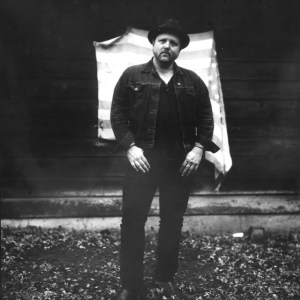
John Francis O’MaraJohn Francis O’Mara is an Episcopalian priest, theological scholar, activist, and acclaimed songwriter whose work bridges the sacred and the profane. With advanced degrees from Princeton Theological Seminary (M.Div) and General Theological Seminary (STM), and now pursuing a doctorate in Theology and Social Justice at Howard University, O’Mara roots his ministry in Liberation Theology and a tapestry of faith traditions including Celtic Christianity, Black Liberation Churches, and Native American spirituality. Hailed by Sojourners as “haunting as Springsteen,” dubbed by Wild Goose Festival as “one of the most prophetic voices of his generation,” and praised by Shane Claiborne as a “poet and instigator of movements,” O’Mara has performed everywhere from cathedrals to prisons, from UN gatherings to city streets, and alongside artists such as Sinead O’Connor, Mavis Staples, and Kris Kristofferson. Whether leading marches, teaching youth, or offering workshops and concerts worldwide, O’Mara shares stories and songs with theological depth, hard-earned experience, and transformative hope.

John Francis O’Mara’s Website

Forbidden Hymns Website


Conversation Over Cancellation: Janet Kellogg Ray on Science, Faith & the Evangelical Mind

There’s a phrase that’s haunting me: “Monkey-god science.” A slur hurled at biologist and Christian Janet Kellogg Ray during the early days of COVID, when she dared suggest that public health precautions might be a form of love-thy-neighbor. It wasn’t the insult itself that stuck with her—it was what it revealed. As she writes:

“The description of my masking position as ‘monkey god science’ was not really offensive—it was more perplexing… I wasn’t talking about the science of evolution. I was talking about medicine, vaccines, and public health policy.”

But that’s precisely the point: in much of white American evangelicalism, it’s all part of the same Venn diagram—evolution denial, COVID skepticism, and climate change dismissal overlapping like so many cracked tectonic plates. This dissonant triad forms the beating heart of The God of Monkey Science—a book that, while not solving the rift between faith and science, dares to sit in the divide, bear witness, and sketch a better way forward.

This is very personal for me — COVID killed my mom, in what likely could have been a preventable death had her evangelical, Bible-belt town took mask mandates and other public health measures seriously.

Like me, Ray is not an outsider to the evangelical world. She grew up steeped in it—“twice on Sunday, and again on Wednesday night,” the kind of faith where The Wizard of Oz was off-limits because it aired during church. Evolution? Not just wrong, but unthinkable. She shares:

“We would have no more questioned the Genesis creation story than we would have questioned the existence of Jesus.”

And yet—she fell in love with science. It began with awe. Moved through doubt. And landed in what many post-evangelicals might recognize as a quiet form of heresy: refusing to lie about what she knew to be true. Evolution wasn’t a threat to her faith—it was a revelation of how God might actually work.

Ray’s tone is part Sunday school teacher, part veteran scientist, part cultural detective. She unpacks how anti-science sentiment isn’t just an intellectual failure—it’s a deeply emotional, social, and political one. As she puts it:

“Evolution, climate science, and COVID appear to be some sort of denialist package deal.”

She traces that package to its origin: the 1925 Scopes “Monkey Trial,” where William Jennings Bryan made evolution sound less like a scientific theory and more like a societal cancer. Bryan didn’t bother arguing the data; he painted evolution as a moral danger. Ray writes:

“What the people heard were the consequences of evolution… to their families, to their faith, to their freedoms.”

This—Ray insists—is the evangelical denialist playbook, on repeat:

  1. Cast the science as shoddy or incomplete.
  2. Insist it will erode faith or morality.
  3. Frame acceptance as a threat to personal liberty.

It’s a script she sees re-used, nearly verbatim, when it comes to vaccines, climate science, and even geology. (Her Kansas public school erased chapters about mosasaurs and the Western Interior Seaway because, apparently, fossils are too threatening.)

But Ray isn’t merely deconstructing. She’s not here to shame the evangelical world she still, somehow, claims. She writes:

“I’m not critiquing evangelicals as an outsider… Am I in agreement with everything I hear at church? No, but then I don’t agree with myself of twenty years ago.”

This is where The God of Monkey Science truly shines: in its commitment to conversation over cancellation. Ray models a kind of intellectual hospitality that many of us hunger for. She engages science honestly without weaponizing it. She defends her faith without pretending it hasn’t caused harm. She invites us to hold multiple stories at once, even when they sting.

And she’s not afraid to call out the real stakes. During COVID, she notes, the consequences of science denial turned fatal. White evangelicals, as a demographic, were among the least vaccinated, most mask-resistant, and most hostile to public health guidelines:

“The COVID pandemic revealed a deeply ingrained and carefully cultivated distrust of science by those in the evangelical world.”

This isn’t a neutral point of view. It’s an indictment—but not a blanket one. Ray knows her readers. She knows many feel torn, caught between the wonder of their scientific education and the fear-based tribalism of their inherited faith. She sees you. And she offers a way out that isn’t abandonment—it’s integration.

What I find most refreshing is her emphasis that this isn’t a battle of facts. It’s a question of trust. Who do we believe when science shifts or evolves? Whose story gets centered? Who mediates reality—pastor or professor? Politician or peer-reviewed journal?

Ray gets that this is as much about formation as information. The modern evangelical mind has been shaped by decades of messaging, from creationist rafting trips to homeschooled curricula and Christian radio soundbites. If you’ve grown up swimming in these waters, it’s not as simple as “just follow the science.” As Ray notes, even saying that phrase has become politicized.

And so, she offers not just critique, but tools: discussion prompts, digestible explanations of core scientific principles, and gentle questions meant to spark real conversation. This book is made for church basements and Wednesday night study groups. For deconstructing college students and curious parents. For pastors willing to risk the wrath of their board by opening up hard questions.

Ray closes not with certainty, but with invitation:

“As Christians, we are called to truth. Speaking it. Defending it. Living it. Why be afraid of science? If God is truth, all truth is God’s truth, including scientific truth…

Science and faith are not enemies. Science does not have all the answers. With a mind for Christ, may we live as people of faith in a modern scientific world.”

In that spirit, I find The God of Monkey Science to be a liturgy of re-enchantment. A call to love God with heart, soul, and mind. A balm for those of us who still believe in miracles, but want them to sit comfortably next to mitochondria.

For more on Janet Kellogg Ray:

Spiritual Brewpub Podcast Interview
The Deconstructionists Podcast Interview

Doubt as Devotion: An Appreciation of ‘Doubting Faithfully’ by Keith Long

Author Keith Long, having a good ponder.

Keith Long’s Doubting Faithfully: Confessions of a Skeptical Pastor is the kind of book I wish more pastors wrote—and more congregants read. In this age of tectonic religious shifts and growing numbers of “nones,” Long doesn’t offer a frantic defense of faith or an apologetic Band-Aid for a bleeding Western church. Instead, he offers something far more radical: vulnerability, honesty, and an invitation to grow through our doubts rather than despite them.

As someone raised in the swirl of evangelical intensity and steeped in the language of spiritual certainty, I’ve come to believe that the best kind of faith is the kind that’s metabolized—chewed on, digested, and even spit out sometimes, only to be reimagined through lived experience. Long gets this. His book isn’t a deconstruction manifesto or a bitter sendoff. It’s a love letter to what faith can be when we trust the tether even as we fall.

“Over twenty years later and questioning my faith as a leader in the church feels just like that fall. I feel the dread of leaving the familiarity and safety of my beliefs as well as the thrill of jumping into the unknown.”

This isn’t abstract metaphor for Long. He begins with the literal story of jumping off a bridge as a college student—yes, on purpose—and equates that adrenaline-drenched leap with his plunge into spiritual uncertainty. What makes this memoir stand out is that Long doesn’t use his fall as a cautionary tale or a triumphant arc. Instead, he sits with it. He confesses, explores, and even celebrates it.

Throughout Doubting Faithfully, Long walks us through the internal dissonance many spiritual leaders experience but rarely articulate. Whether in his reflections on confirmation students like Evan—deeply skeptical yet richly curious—or his own seminary wrestling matches, Long’s voice is never didactic. It’s conversational, confessional, and often funny.

“I had been perfectly content to check my brain at the door for many years… and then I fell in love with knowledge. Learning suddenly became as enticing as beauty.”

As someone who resonates with this trajectory—from fundamentalist fury to contemplative flame—Long’s words feel like running into a long-lost cousin at a family reunion you didn’t know you needed. His hunger for integration, his refusal to split spirit from intellect, evokes Owen Barfield’s plea to reunite perception with imagination. And when Long dares to explore the evolutionary impulse within faith itself, I hear echoes of the mystical wisdom of Teilhard de Chardin and the unflinching honesty of Barbara Brown Taylor.

Perhaps the heart of Doubting Faithfully lies in Long’s refusal to “resolve” the tension. Doubt, for him, is not a problem to solve but a presence to befriend. He invites us to “test the tether,” to fall not as a sign of failure but as a necessary step toward trust:

“Trusting the tether was the first and best lesson I learned… Unfortunately, not all of our falling comes by choice.”

Long’s own spiritual tether is built not only of theology and ecclesiology, but of lived, flesh-and-blood friendships. One such tether is Carl, a brilliant friend diagnosed with ALS whose essays and conversations offer Long—and us—a vision of embodied grace outside of traditional religious frameworks. Carl forgives, accepts, and even teaches Long to let go—not because of a celestial reward but because of the clarity that mortality brings.

“I forgave myself… for the things I did not do. All the times I was too conservative, too cautious, and didn’t act… I forgave others… there was a freedom, a liberation, in putting things behind me and moving on.”

Reading this reminded me of conversations I’ve had with friends facing mortality too young, whose courage and clarity never hinged on belief systems but on love, presence, and unflinching truth. Like Long, I’ve witnessed the sacred beyond the bounds of doctrinal fidelity, and Doubting Faithfully affirms this sacredness without apology.

And yet, this is no easy grace. Long is honest about the cost. As a pastor who confesses doubt from the pulpit, he knows the edge of community, the whispers, the quiet exits. But he also knows the sacred trust of those who stay—and those who draw nearer because of the honesty.

“If my vulnerability in disclosing these religious doubts… allows others to embrace their doubts and questions, then this work will have been worth every risk and consequence.”

As someone who often writes at the intersection of doubt, beauty, and belonging, I felt a kinship here. Long doesn’t offer a new dogma to replace the old. He offers a practice. A way. A lens. He writes as one who’s been undone by the mystery and decided, somehow, to love God and neighbor through it anyway.

In a world hungry for certainty, Doubting Faithfully reminds us that faith is not certainty’s opposite, but its dance partner. “I would be consumed for love; and I would consume,” goes the second-century Hymn of Jesus. Long doesn’t quote it, but he lives it.

For anyone who has ever found themselves “on the edge of faith,” staring into the void with more questions than answers, this book is a companion. For every former believer trying to make sense of inherited dogmas, for every pastor holding space for congregants even as their own beliefs wobble, and for every spiritual weirdo (like me) trying to love God with heart, soul, mind, and strength—Keith Long offers a faithful doubt and a doubting faith worth living into.

I’ll close with Long’s own invitation:

“May the following words… resonate, encourage, and help you to articulate who you are, where you’ve been and what you’ve learned. And may that contemplative thinking lead to your transformation as Doubting Faithfully has for mine.” (p. 3)

Amen to that.

About the Author

Keith LongKeith Long is the author of three books, Doubting Faithfully: Confessions of a Skeptical Pastor, Growing Spirit Wise: A Heretic’s Guide to Resurrection and Eternal Life, and Moviemakers, a novella. Keith has also written for New Testament scholar, speaker, and consultant Bart D. Ehrman and is a Lutheran (ELCA) pastor in Minnesota, where he resides with his family.

Doubting Faithfully on Bookshop
Keith Long’s Website
Keith Long on Instagram
Keith Long on Facebook

Clean Water as Daily Grace: Five Years with the Waterdrop G3

Waterdrop Reverse Osmosis has served my family well for a half-decade.

There’s something almost sacramental about turning on a tap and receiving clean, pure water. It’s one of those everyday miracles we rarely pause to consider—until something threatens to take it away.

For the past five years, the Waterdrop G3 Reverse Osmosis Water Filter System has been a quiet, faithful presence in our Asheville kitchen, across two different houses. Day after day, it has transformed our municipal water into something that tastes like what water should taste like—clean, crisp, with that almost ineffable quality of purity that makes you want to drink more of it. I’ve filled countless glasses, coffee pots, and water bottles from this system, and it has never failed to deliver.

For those unfamiliar with the technology, reverse osmosis works through an elegant process of patient filtration. Water is gently pressured through a semi-permeable membrane—think of it as an incredibly fine sieve—that allows water molecules to pass through while blocking contaminants. The system removes up to 99% of the things we don’t want in our drinking water: chlorine, lead, heavy metals, bacteria, pesticides, and countless other impurities that can affect both taste and health. What emerges is water in something close to its purest form.

The process involves multiple stages of filtration, each with its own purpose. Pre-filters catch larger particles and remove chlorine that could damage the delicate membrane. The heart of the system—that semi-permeable membrane—does the heavy lifting of removing dissolved contaminants. Post-filters then polish the water, removing any remaining tastes or odors. It’s a methodical, thorough process that treats water with the respect this fundamental element of life deserves.

But it wasn’t until Hurricane Helene devastated our region that I truly understood what a gift this system has been.

As I wrote about extensively just after the storm, western North Carolina faced catastrophic flooding and infrastructure damage. When our water service was finally restored after nearly two months without, the municipal advisories were sobering: boil water notices, warnings about potential contamination, uncertainty about what exactly was flowing through the pipes. In those vulnerable months of early recovery, when so much felt unstable and unsafe, having our reverse osmosis system felt like having a guardian angel in the kitchen.

While neighbors were buying cases of bottled water or boiling every drop they consumed, we could turn to our trusted filtration system with confidence. It became a source of stability for our family and a way to offer hospitality to friends and neighbors who were still struggling with water concerns. There’s something beautiful about being able to offer truly clean water to someone who needs it—it feels like one of the most basic forms of care we can provide.

The system has been remarkably low-maintenance over these five years. The occasional filter changes are straightforward, and the unit itself has been utterly reliable. No leaks, no breakdowns, no drama—just consistent, excellent performance that has more than justified the initial investment.

If you’re considering upgrading your home’s water quality, I’d encourage you to explore what’s available. The folks at Waterdrop have put together an excellent Reverse Osmosis system buying guide that explains the technology and helps you understand what to look for in a system.

For those ready to make the leap, I’m able to offer readers a 5% discount with the code MIKE5. In a world where so much feels uncertain, investing in the simple assurance of clean, great-tasting water feels like a form of practical hope—a daily reminder that we can create small oases of safety and care, even in challenging times.

After five years and one natural disaster, I can say with confidence: some investments pay dividends in ways you don’t expect until you need them most.

Cigars, Stolen Cookies, and Sacred Chaos: The Return of ‘The Best Christmas Pageant Ever’


Friends, can we talk about Christmas? Not the sanitized, mall-Santa version, but the wild, beautiful mess of what actually happens?

You know what’s opening my heart right now? This story called The Best Christmas Pageant Ever (or as they brilliantly call it down under, The Worst Kids in the World). It’s like God took my favorite themes of radical inclusion and divine disruption and turned them into a movie!

Here’s the thing about transformation, my friends – it usually comes through the people and places we least expect. Enter the Herdman children: society’s outcasts, troublemakers, the ones we’ve collectively decided don’t belong in our neat spiritual boxes. But – and this is where it gets so good – these kids encounter the Christmas story with absolutely no preconceptions, no religious baggage, no “proper” way of doing things!

And you know what? They get it in a way that should humble all of us jaded religious (or post-religious) folks. When they hear about Mary and Joseph being turned away from appropriate lodging, about Jesus being born among animals – their hearts break in recognition. Because they know what it means to be the ones society pushes to the margins.

This is the essence of “beginner’s mind” – these beautiful chaos agents crash into our comfortable religious traditions and show us what we’ve been missing! The Divine Mystery loves to work through holy disruption of our calcified expectations.

And now? This transformative story is coming back to us as a new film with the incredible Judy Greer, Lauren Graham, and (yes) Pete Holmes! It’s like a sacred reminder saying, “Hey, remember that thing about Spirit showing up in unexpected places? Still true!”

Listen, in these times when we’re all carrying so much heaviness, maybe we need this reminder that grace often comes wearing mismatched socks and a slightly singed attitude. This isn’t just a Christmas pageant – it’s a revolution of the heart, showing us that the most authentic expressions of divine love often come from the most unexpected messengers.

Don’t wait until December – this holy disruption arrives November 8th! Let’s allow these “worst kids in the world” to teach us, once again, about the upside-down, inside-out nature of Divine love that keeps showing up in all the wrong people, all the right ways.

Because here’s the beautiful truth: sometimes it takes the “worst” among us to reveal the best in all of us. And isn’t this precisely how Love does her finest work?

You won’t want to miss this, y’all. Reserve your seats today.